Immagine

Trasforma le intuizioni dell’IA in azioni concrete

Unisciti oggi alla lista d’attesa di AeroGenie!

Tendenze

Categories

Consultation Begins on Zurich Runway Extension for Safety Improvements
May 28, 2026By ePlane AI
Consultation Begins on Zurich Runway Extension for Safety Improvements
0
0
Zurich Airport
Runway Extension
Flight Safety

Consultation Begins on Zurich Runway Extension for Safety Improvements

Addressing Safety Concerns at Zurich Airport

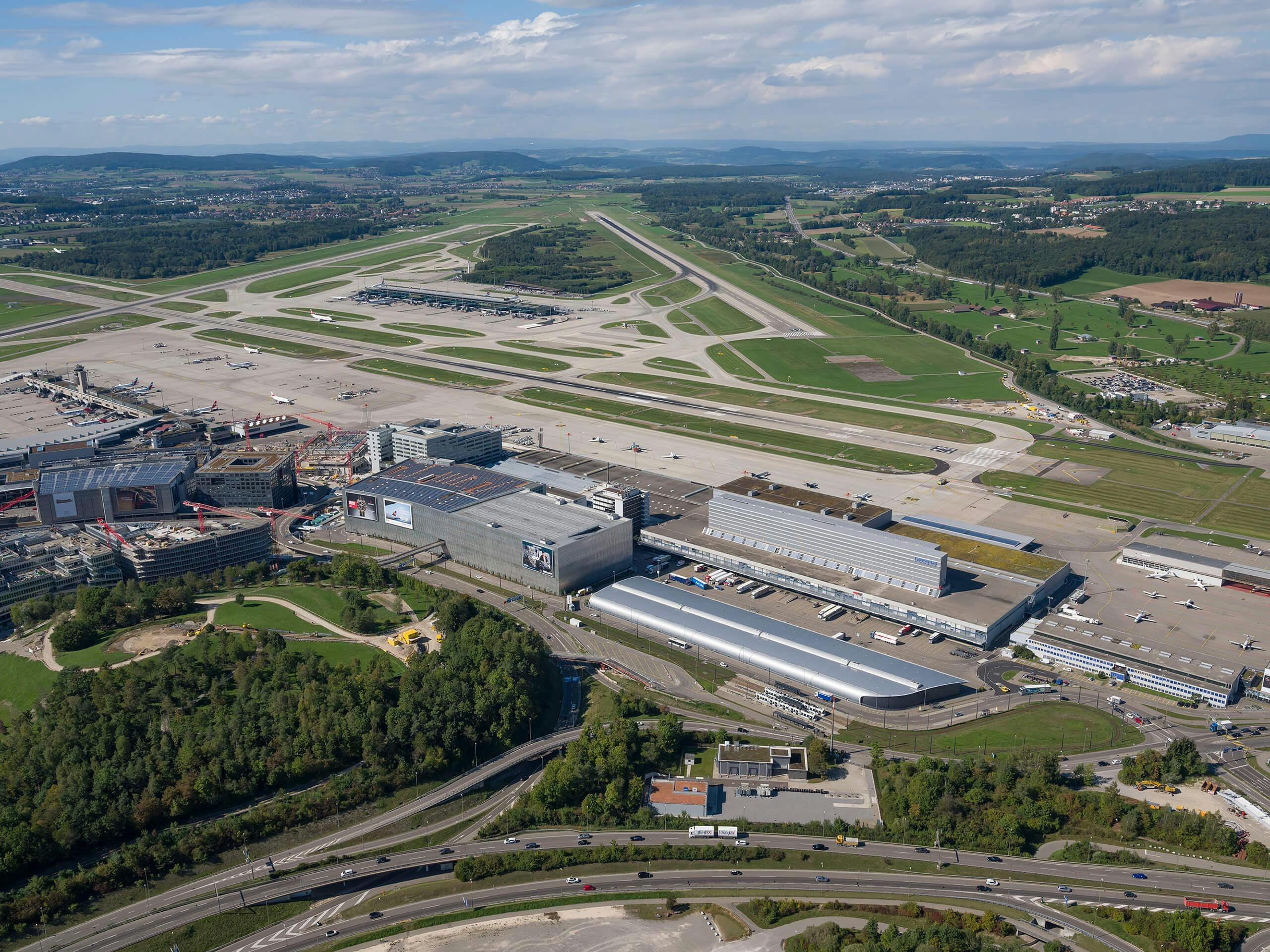
Switzerland’s Federal Office of Civil Aviation (FOCA) has initiated a public consultation on proposals to extend two runways at Zurich Airport, the country’s busiest air hub. The consultation aims to gather feedback on plans to lengthen runways 28 and 32, a measure designed to address persistent safety issues linked to the airport’s intersecting runway configuration and to enhance operational efficiency.

Zurich Airport currently operates three runways: 16/34 and 10/28, which intersect, and the separate 14/32. The intersecting layout has raised safety concerns, notably following a serious incident in March 2011 when two Swiss Airbus A320 aircraft were cleared for take-off on intersecting runways within 46 seconds of each other, forcing one to abort at high speed. This event underscored the need for operational redesigns to reduce risks and improve ground movement coordination.

Proposed Extensions and Operational Benefits

The proposed extension of runway 32 is intended to enable most departing widebody aircraft to use this runway instead of runway 34, currently the airport’s longest. At present, widebody aircraft must taxi across runway 28 twice to reach runway 34, a process that increases the risk of runway incursions and lengthens taxi times. FOCA asserts that the extension would eliminate these crossings, streamline ground operations, and reduce delays.

Similarly, extending runway 28, Zurich’s shortest runway, aims to reduce the number of approaches diverted to runway 34 during adverse weather conditions. This adjustment is expected to stabilize flight operations and decrease night-time noise disturbances. FOCA emphasizes that these changes are designed to mitigate safety risks, simplify transitions between different operating modes, and will not affect the overall volume of air traffic at the airport.

Consultation Context and Stakeholder Perspectives

The consultation period, which commenced on 1 June and will last for one month, reflects Zurich’s commitment to aligning with international best practices in airport safety. Other major European airports, such as London Heathrow, face comparable challenges with intersecting runways and are also exploring expansion and safety upgrades to manage increasing traffic volumes.

Nonetheless, the proposed runway extensions are anticipated to encounter scrutiny from local communities concerned about environmental impacts, noise pollution, and the financial implications of the project. Aviation industry stakeholders and regulatory bodies are expected to conduct thorough evaluations of the plans, while other airports may observe Zurich’s approach as a potential model for enhancing safety at complex facilities.

FOCA reiterates that the primary objective is to improve safety and operational reliability, particularly under adverse weather conditions, while minimizing disruption to surrounding communities. The feedback received during the consultation will inform the subsequent stages of the approval process for the runway extension proposals.

More news
Platoon Aviation Invests in Citation Longitude Fleet

Platoon Aviation Invests in Citation Longitude Fleet

Platoon Aviation Expands Citation Longitude Fleet, Poised to Lead European Charter Market Textron Aviation has formalized a multi-aircraft agreement with Hamburg-based Platoon Aviation, enabling the charter operator to become the largest owner of Cessna Citation Longitude jets in Europe. Scheduled deliveries of the super-midsize aircraft will commence in 2027, marking a significant expansion for Platoon Aviation as it aims to elevate business aviation standards across the continent. Advancing Business Aviation with the Citation Longitude The Citation Longitude, Textron’s flagship business jet, is designed specifically for long-range charter operations, prioritizing efficiency, passenger comfort, and operational reliability. The aircraft can connect major European business centers nonstop, including routes such as Hamburg to Madrid and London to Athens. It accommodates up to 12 passengers within a flat-floor, stand-up cabin, which Textron touts as the quietest in its class. The jet targets both business and leisure travelers seeking premium private aviation experiences. Deniz Weißenborn, CEO of Platoon Aviation, emphasized the strategic importance of the fleet expansion, stating, “Platoon Aviation is redefining what business aviation can look like in the next decade. The Citation Longitude fleet expansion reflects our commitment to building a future-proof, next-generation aviation platform that combines operational efficiency, sustainability, and uncompromising comfort. The aircraft position us to meet the evolving expectations of modern travellers while giving our clients greater flexibility, reliability, and connectivity across Europe and beyond.” Market Dynamics and Regulatory Challenges Platoon Aviation’s substantial investment arrives amid intensifying competition among business aircraft manufacturers in Europe. As demand for charter services grows, rival original equipment manufacturers (OEMs) are expected to respond with strategic pricing, enhanced service offerings, and fleet modernization initiatives to maintain market share. These competitive pressures are likely to influence customer preferences, with aircraft performance, range, and cost-efficiency becoming critical factors in operator and client decision-making. Furthermore, the European business aviation sector faces potential regulatory changes, including possible revisions to pilot flight time limitations. Such developments could affect operational costs and alter market dynamics, adding complexity to fleet expansion strategies. Despite these challenges, Platoon Aviation’s commitment to the Citation Longitude underscores confidence in the sustained demand for premium charter services. The agreement not only consolidates Platoon Aviation’s market position but also highlights the ongoing transformation within Europe’s business aviation landscape.
AIESL CEO Urges India to Advance Beyond MRO to Become Global Aviation Manufacturing Hub

AIESL CEO Urges India to Advance Beyond MRO to Become Global Aviation Manufacturing Hub

AIESL CEO Urges India to Advance Beyond MRO to Become Global Aviation Manufacturing Hub Sharad Agarwal, CEO of AI Engineering Services Limited (AIESL), has called on India to leverage its engineering expertise to transcend its current role in maintenance, repair, and overhaul (MRO) and establish itself as a global leader in aviation manufacturing. Speaking at the ET Infra Air Summit 2026, Agarwal emphasized that India’s vast talent pool, technical experience, and industrial potential uniquely position the country to become a major player in the global aviation sector. However, he stressed that this transformation requires a concerted effort to align regulatory frameworks, infrastructure development, and human capital with long-term manufacturing ambitions. Engineering Excellence and the Path Forward Agarwal highlighted that Indian engineers are already deeply embedded in the global aviation ecosystem, contributing to complex technical areas such as engine and electronics overhauls, landing gear systems, flight control actuators, and thrust reversal mechanisms. “Engineering is our DNA. The country is producing millions of engineers every year,” he remarked, underscoring the need to build an aviation ecosystem that supports not only MRO but also large-scale manufacturing capabilities. He identified three critical pillars essential for this transformation. First, regulatory harmonization is paramount. Currently, India’s MRO industry operates under a fragmented regulatory environment, encompassing standards from the Directorate General of Civil Aviation (DGCA), the US Federal Aviation Administration (FAA), European authorities, and defense agencies. Agarwal argued that aligning these regulations is vital for India’s aviation services and manufacturing sectors to gain global acceptance and competitiveness. Second, Agarwal warned against India remaining a mere “plug-and-play” assembly hub. He called for strategic investments to develop a robust manufacturing base capable of serving both domestic and international markets over the next two decades. “India needs to invest to become a global leader, where it not just assembles but also manufactures for global needs,” he stated. Third, the development and retention of human capital are crucial. With numerous engineering colleges and 147 approved aviation training schools producing thousands of technicians and engineers annually, India possesses the workforce necessary to support sector expansion. The challenge lies in effectively deploying and retaining this talent within the country’s aviation ecosystem. Challenges and Strategic Imperatives Agarwal also emphasized the importance of sustainability in the aviation sector’s future growth, advocating for the adoption of green energy, resource conservation, and a reduced environmental footprint as integral components of industry development. Despite these opportunities, India faces significant challenges in advancing beyond MRO. The rising demand for MRO services, driven by capacity reductions among Asia-Pacific airlines, has increased operational pressures. Additionally, escalating costs for MRO operators amid the ongoing Middle East crisis and disruptions in raw material supplies due to geopolitical tensions threaten to complicate India’s ambitions. These factors may prompt shifts in the market, with increased investment in India’s manufacturing sector. Notably, global technology companies such as Google are exploring investments in AI infrastructure, server production, and drone manufacturing within the country. Meanwhile, international competitors are likely to strengthen their own manufacturing capabilities to maintain their global positions. In response, Agarwal called for industry consolidation, stronger partnerships with global original equipment manufacturers (OEMs), and continued regulatory reforms. “India needs to become self-sustainable. India needs to be the aviation partner and aviation leader for the world,” he asserted. Ultimately, Agarwal’s message was unequivocal: India’s aviation opportunity depends not only on rising demand but on its capacity to convert its engineering strengths into globally competitive manufacturing capabilities.
HAECO and Central Airlines Partner to Support 777F Maintenance in Greater China

HAECO and Central Airlines Partner to Support 777F Maintenance in Greater China

HAECO and Central Airlines Partner to Support 777F Maintenance in Greater China Strategic Collaboration to Enhance Boeing 777 Freighter Support HAECO, a leading engineering and maintenance specialist, has entered into a Memorandum of Understanding (MoU) with Chinese cargo carrier Central Airlines to establish a strategic partnership focused on the maintenance of Central Airlines’ Boeing 777 freighter fleet. Announced at the inaugural Aviation Week MRO Greater China event in Beijing, the agreement aims to leverage HAECO’s extensive maintenance, repair, and overhaul (MRO) network alongside its technical expertise to deliver mutually beneficial business solutions. The partnership will explore collaboration across a broad spectrum of services, including airframe and line maintenance, engine overhaul and on-wing support, landing gear maintenance, and component repair. The framework specifically targets three core areas: GE90 engine services, airframe maintenance, and component support tailored to Central Airlines’ expanding 777F fleet. Scope of Services and Operational Reach HAECO will deploy its established capabilities in GE90 engine maintenance to provide repair, overhaul, on-wing support, and spare engine services. Airframe maintenance will be conducted at facilities in Hong Kong and Xiamen, complemented by line maintenance support throughout the Greater China region. The partnership also extends to enhanced technical cooperation in landing gear servicing, composite materials, and component repair, reflecting a comprehensive approach to fleet support. Gerald Steinhoff, HAECO’s chief commercial officer, emphasized the synergy between the two companies, stating, “By combining HAECO’s comprehensive MRO capabilities with Central Airlines’ operational ambitions, we look forward to delivering reliable, high-quality support for its Boeing 777 freighter fleet and creating a strong platform for future collaboration.” Liu Qiang, vice president of maintenance and engineering at Central Airlines, echoed this sentiment, highlighting the partnership’s role in fleet growth and service enhancement. “Through this cooperation framework, we aim to further enhance the quality and reliability of our operations and create more value for our customers and partners,” he said. Market Challenges and Competitive Landscape The partnership arrives amid a challenging environment for the aviation maintenance sector. Industry analyses, including those by Oliver Wyman, point to persistent labor and material shortages alongside rising operational costs, factors that may affect the scalability and execution of the partnership’s objectives. Additionally, elevated fuel prices have the potential to suppress demand for maintenance services, as noted by FlightGlobal, which could influence the commercial viability of such collaborations. Competition within the region is intensifying, with other MRO providers like CASL expanding aircraft disassembly operations to capitalize on the growing market for used serviceable materials in China. This development may increase competitive pressures for both HAECO and Central Airlines. Despite these headwinds, the HAECO–Central Airlines partnership represents a strategic effort to enhance operational reliability and maintenance capabilities within Greater China’s rapidly evolving cargo aviation sector. The MoU lays the groundwork for deeper cooperation, contingent on regulatory approvals, as both companies navigate a complex and competitive market landscape.
Joby Aviation Shares Rise 14% Following New York Electric Air-Taxi Demo

Joby Aviation Shares Rise 14% Following New York Electric Air-Taxi Demo

Joby Aviation Shares Rise 14% Following New York Electric Air-Taxi Demonstration Joby Aviation’s shares surged 14% this week after the company successfully completed a landmark electric air-taxi demonstration flight between JFK Airport and Manhattan. Conducted under the federal eVTOL Integration Pilot Program (eIPP), the flight marked the first occasion that Joby’s electric vertical takeoff and landing (eVTOL) aircraft operated within the complex airspace of New York City. This milestone offered a tangible preview of the potential transformation in urban air mobility. Demonstration Highlights and Market Response The demonstration underscored the capability of Joby’s aircraft to significantly reduce travel times between Manhattan and major airports such as JFK and LaGuardia. This prospect has the potential to revolutionize urban commuting by alleviating ground traffic congestion and providing a faster alternative for travelers. Investors responded positively to the event, viewing it as a concrete step toward commercial deployment and a validation of Joby’s technology in one of the most challenging urban environments. While the New York demonstration bolstered Joby’s narrative around commercial readiness, the company still faces substantial challenges. The transition from test flights to revenue-generating operations remains critical, especially as Joby seeks to extend its cash runway. Progress on Federal Aviation Administration (FAA) certification is essential for the commencement of commercial services, and the company’s ability to manage its cash burn will be closely watched by investors. Participation in the federal eIPP program, alongside partners including Delta Air Lines and Uber, positions Joby to potentially initiate early operations across multiple states. However, the speed at which these pilot routes can be converted into paying services will ultimately determine the company’s long-term viability more than any single demonstration flight. Regulatory and Competitive Challenges Despite the optimism generated by the New York flight, Joby faces a complex regulatory landscape. FAA certification remains a rigorous and time-consuming process, and the company must also address the development of new charging infrastructure to support its electric aircraft. Public acceptance of electric air taxis is another critical factor that could influence the pace of adoption. The demonstration may also intensify competition within the emerging eVTOL sector, prompting rivals to accelerate their own development and testing efforts. The broader market’s response will hinge on how effectively these air taxis can be integrated into existing urban infrastructure and whether they can offer a cost-effective alternative to traditional commuting methods. Financial Outlook and Analyst Perspectives Joby projects revenues of $440.9 million and earnings of $31.3 million by 2029, which would require an annual revenue growth rate of 169% and a significant turnaround from its current $1.1 billion loss. Earlier analyst forecasts had been more optimistic, anticipating higher revenues and valuations predicated on smooth certification processes and strong demand fueled by programs like eIPP. However, recent downward revisions in analyst price targets reflect ongoing concerns about the company’s sustained losses and the uncertain timeline for meaningful revenue generation. While the New York demonstration represents a positive milestone, it does not eliminate the financial and operational risks that lie ahead. Joby Aviation’s successful demonstration flight in New York City has invigorated investor confidence and advanced the company’s vision for urban air mobility. Nevertheless, the path to commercial viability remains fraught with regulatory, financial, and infrastructural challenges that will require careful navigation in the coming months.
SkyGrid and ENAIRE Collaboration Redefines Spain's Digital Aviation Ecosystem

SkyGrid and ENAIRE Collaboration Redefines Spain's Digital Aviation Ecosystem

SkyGrid and ENAIRE Collaboration Redefines Spain's Digital Aviation Ecosystem Strategic Alliance to Modernize Airspace Management SkyGrid, a subsidiary of Boeing specializing in secure airspace integration, has formalized a strategic partnership with ENAIRE, Spain’s National Air Navigation Service Provider (ANSP), through a Memorandum of Understanding (MOU). This collaboration is designed to accelerate the development and deployment of U-space and Innovative Air Mobility (IAM) solutions throughout Spain, representing a pivotal advancement in the modernization of the country’s aviation infrastructure. Building upon an existing relationship between Boeing Aerospace Spain and ENAIRE, the alliance establishes a comprehensive framework for joint research, development, and innovation (R&D&I). The partnership focuses on the safe and efficient integration of next-generation autonomous flight operations, including drones and other unmanned aerial vehicles (UAVs), into both national and international airspace systems. Core Objectives and Industry Implications Central to the collaboration is the digital transformation of airspace management. The partners aim to transition from traditional air traffic control methods to a fully digital and sustainable ecosystem capable of seamlessly incorporating emerging aerospace technologies. This includes leveraging global industry expertise to spearhead innovation projects that will redefine U-space capabilities on a national and international scale. The alliance also prioritizes the development of scalable technical and operational solutions to manage autonomous flight traffic safely and efficiently. While the initiative promises to stimulate growth within Spain’s UAV sector and establish a commercial infrastructure for advanced aerial mobility, it must navigate significant challenges. Integrating cutting-edge digital technologies with existing air traffic control systems demands meticulous coordination to ensure compatibility and a smooth operational transition. Market responses to the initiative may initially be cautious as stakeholders evaluate the reliability and effectiveness of the new digital systems. Nonetheless, successful implementation could generate positive momentum and establish new benchmarks within the aviation industry. Furthermore, this partnership is expected to encourage competitors to accelerate their own digital transformation efforts, potentially catalyzing a broader shift toward advanced digital air traffic management solutions across the sector. Leadership Insights Enrique Maurer, Director General of ENAIRE, highlighted the importance of the partnership, stating, “At ENAIRE, we are committed to leading the transformation of Spain’s airspace into a modern, digital, and sustainable ecosystem. Partnering with SkyGrid brings world-class expertise in autonomous systems to enable the development of Innovative Air Mobility.” As SkyGrid and ENAIRE advance their collaboration, their joint efforts are set to redefine Spain’s digital aviation ecosystem, paving the way for safer, more efficient, and technologically sophisticated airspace management.
Nigeria Launches Sovereign-Backed Aircraft Leasing Firm to Support Aviation Sector

Nigeria Launches Sovereign-Backed Aircraft Leasing Firm to Support Aviation Sector

Nigeria Launches Sovereign-Backed Aircraft Leasing Firm to Support Aviation Sector The Nigerian federal government has unveiled a sovereign-backed aircraft leasing company aimed at resolving persistent financial and legal obstacles that have hindered the country’s aviation industry. Led by Minister of Aviation and Aerospace Development Festus Keyamo, this initiative forms part of a broader $7 billion African Development Bank program designed to strengthen Africa’s aviation infrastructure and services. Strategic Financial Framework and Objectives The newly established Nigerian Aircraft Leasing Company will function as a Special Purpose Vehicle (SPV), with private investors and international development finance institutions expected to contribute up to 95% of the required capital. The government will maintain a minority equity stake ranging between five and ten percent, while providing sovereign guarantees to instill confidence among global investors. These guarantees are not intended as bailouts for struggling airlines but rather to secure the legal title and safety status of leased aircraft, thereby mitigating risks for lessors. This financial structure aims to attract foreign direct investment by addressing the longstanding trust deficit that has deterred international lessors from engaging with Nigerian carriers. By insulating public funds from operational risks and positioning itself as the ultimate guarantor, the government seeks to facilitate access to modern aircraft fleets, alleviate currency pressures, and generate revenue through its enabling role in the sector. Addressing Legal and Market Challenges Nigerian airlines have historically faced elevated lease premiums due to legal uncertainties, particularly concerning aircraft repossession. Foreign lessors have encountered significant difficulties reclaiming assets when local airlines default, often facing bureaucratic delays and conflicting judicial rulings. The introduction of sovereign guarantees is designed to eliminate these impediments by mandating cooperation among all relevant government agencies, including the Nigerian Civil Aviation Authority and the judiciary, during repossession proceedings. In cases where the state fails to ensure the prompt return of defaulted aircraft, it will assume financial liability to the lessor. This approach aligns Nigeria with the Cape Town Convention, an international treaty that protects aircraft financiers, and is expected to reduce risk premiums for Nigerian operators, thereby making aircraft leases more affordable and accessible. Navigating a Competitive and Complex Environment Despite its potential, the new leasing company confronts significant challenges. Securing adequate capital remains a critical hurdle, and the firm must compete with well-established international leasing companies that currently dominate the market. Recent developments, such as Ethiopian Airlines’ withdrawal from the Nigeria Air project and Azorra’s acquisition of Airbus A220s from DAE, highlight the dynamic and competitive nature of the sector. Furthermore, Nigerian airlines continue to face operational difficulties, including persistent jet fuel shortages, which may affect the leasing initiative’s overall effectiveness. Market analysts anticipate that both local and international lessors will intensify efforts to expand their presence in Nigeria in response to the government’s entry into the market. Outlook By institutionalizing legal certainty and leveraging sovereign guarantees, Nigeria aims to transform its aviation sector, attract private capital, and offer airlines more competitive leasing options. The ultimate success of the sovereign-backed leasing firm will depend on its ability to overcome capital constraints, operational challenges, and market competition in an increasingly complex environment.
Controversial Aircraft: Crashes, Groundings, and Investigations

Controversial Aircraft: Crashes, Groundings, and Investigations

Controversial Aircraft: Crashes, Groundings, and Investigations Commercial aviation is widely recognized as one of the safest modes of transportation. According to the International Air Transport Association’s (IATA) 2025 safety report, there were only 51 accidents recorded across 38.7 million flights, equating to approximately one accident per 760,000 flights. Fatal accidents are even more infrequent, with just eight incidents reported, or roughly one fatal accident per five million flights. However, when tragedies do occur, they often reveal deeper systemic issues within the aviation industry. The sudden disappearance of a routine flight from radar triggers extensive investigations, relying on wreckage analysis, flight data, and maintenance records to reconstruct the events. Such incidents inevitably raise the question: how could this have happened? Certain aircraft, once celebrated as milestones of technological advancement, have become emblematic of controversy. These planes promised unprecedented speed, comfort, and a new era of air travel, yet they exposed critical design flaws, ignored warnings, and regulatory oversights. In some instances, the signs of impending disaster were apparent well before accidents occurred, prompting uncomfortable scrutiny of industry oversight and corporate decision-making. The Comet: Triumph and Tragedy in the Jet Age The de Havilland Comet, the world’s first commercial jet airliner, symbolized postwar optimism and innovation. It offered higher altitudes, faster speeds, and smoother flights than any previous airliner, briefly positioning Britain as a leader in the emerging jet age. However, this promise was shattered in the early 1950s. On January 10, 1954, BOAC Flight 781 disintegrated mid-flight near Elba shortly after departing Rome. Less than three months later, South African Airways Flight 201 crashed into the sea near Naples. Both accidents involved aircraft operating under normal conditions, indicating that the cause was internal rather than external. Subsequent investigations uncovered a catastrophic design flaw: the Comet’s pressurized fuselage was susceptible to metal fatigue. Repeated pressurization cycles caused cracks to develop at the corners of the aircraft’s square windows, ultimately leading to structural failure after approximately 16,000 cycles. This revelation forced the aviation industry to confront the unprecedented risks associated with high-altitude jet travel, particularly the effects of repeated pressurization on aircraft integrity. The Comet’s failures fundamentally altered aircraft design and safety standards, serving as a sobering lesson on the consequences of unchecked technological ambition. Ongoing Industry Challenges: Groundings, Investigations, and Market Responses The legacy of controversial aircraft continues to influence the aviation sector today. Recent years have witnessed an increase in near-mid-air collisions and fatal accidents, prompting intensified scrutiny of safety protocols. Airlines such as Volaris have responded by pausing fleet expansion plans amid aircraft groundings and escalating fuel costs. Concurrently, regulatory investigations—like the International Trade Commission’s inquiry into Joby Aviation’s trade practices, which has raised concerns from major carriers including Delta—highlight the complex relationship between regulation, competition, and innovation. The industry’s often reactive stance toward safety incidents underscores the enduring tension between technological progress and operational risk. Meanwhile, corporations like Textron are undertaking strategic restructuring, such as divesting their industrial divisions, to adapt to evolving market conditions shaped by government funding priorities and international business uncertainties. Historically, the most controversial aircraft have not merely represented technological failures; they have acted as catalysts for reform, compelling the aviation industry to confront the true costs of advancement. As the sector continues to evolve, the lessons drawn from past crises remain essential reminders that safety, transparency, and vigilance must remain paramount.
Malaysia and Singapore Deepen Aerospace Collaboration with New Widebody Maintenance Hub in Subang

Malaysia and Singapore Deepen Aerospace Collaboration with New Widebody Maintenance Hub in Subang

Malaysia and Singapore Deepen Aerospace Collaboration with New Widebody Maintenance Hub in Subang A Landmark Development in Southeast Asia’s Aerospace Sector The aerospace industry in Southeast Asia has reached a significant milestone with the inauguration of a cutting-edge widebody aircraft maintenance facility in Malaysia. Established by SIA Engineering Company (SIAEC), a prominent provider of maintenance, repair, and overhaul (MRO) services, the new Base Maintenance Malaysia center is located at Sultan Abdul Aziz Shah Airport in Subang. This facility marks a pivotal advancement in regional engineering capabilities and exemplifies strengthened cross-border cooperation between Malaysia and Singapore. Spanning approximately 590,000 square feet, the facility boasts two expansive hangars capable of accommodating up to six widebody aircraft simultaneously. This considerable capacity supports a broad spectrum of services, ranging from routine maintenance checks to complex structural overhauls and sophisticated cabin retrofits. The center’s operational capabilities were showcased with the induction of a Singapore Airlines Airbus A350-900 for its inaugural scheduled C-check, symbolizing a new era of high-volume maintenance as international air travel experiences a resurgence across the Asia-Pacific region. Strategic Expansion and Regional Implications By situating advanced aviation infrastructure and specialized engineering expertise within Malaysia, SIAEC is extending its operational reach beyond its traditional base at Singapore Changi Airport. This strategic expansion not only enhances the company’s footprint but also reinforces industrial ties between the two nations. The timing of this development aligns with the increasing maintenance demands of global carriers operating next-generation long-haul aircraft such as the Airbus A350, Boeing 777, and Boeing 787 Dreamliner. These technologically sophisticated fleets require advanced tooling, certified technicians, and stringent regulatory oversight—capabilities now accessible locally to reduce aircraft downtime and optimize fleet utilization. Despite the promising prospects, the collaboration faces considerable challenges. The regional MRO market is intensely competitive, with established hubs in the Middle East and other parts of Southeast Asia actively vying for market share. While the Subang facility is anticipated to attract further investment, questions persist regarding the long-term economic viability and sustainability of such large-scale projects. Industry analysts observe that competitors may respond with strategic expansions or partnerships, as evidenced by recent moves such as VSE’s acquisition of Precision Aviation Group and Steiner Aviation’s facility growth targeting midsize jets. Outlook for the Asia-Pacific MRO Industry The Asia-Pacific MRO sector is projected to experience robust growth, which will inevitably heighten competition and influence the operational strategies of both Malaysia and Singapore. The success of the Subang hub will largely depend on its ability to deliver efficient turnaround times, maintain rigorous safety standards, and adapt to shifting market conditions. The establishment of this widebody maintenance center in Subang represents both an opportunity and a challenge for the aerospace ambitions of Malaysia and Singapore. It underscores the region’s commitment to advancing aviation infrastructure while highlighting the competitive pressures and strategic decisions that will shape the future of aerospace collaboration in Southeast Asia.
Taiwan’s AI Growth Boosts China Airlines’ Cargo Profits

Taiwan’s AI Growth Boosts China Airlines’ Cargo Profits

Taiwan’s AI Boom Drives China Airlines’ Cargo Profit Surge The rapid expansion of artificial intelligence (AI) infrastructure is transforming global logistics, with Taiwan emerging as a pivotal hub in the international supply chain. China Airlines, Taiwan’s flagship carrier, has reported record-breaking cargo profits amid soaring demand for the expedited transport of AI hardware and components. This surge reflects the growing need for swift and reliable delivery of sensitive electronics essential to powering modern AI applications. Rising Demand for AI Components Fuels Air Freight Growth The global rollout of high-performance computing systems, increased investments in data centers, and the widespread adoption of deep learning frameworks have significantly heightened the urgency for rapid shipment of critical components. Air freight has become the preferred mode of transport over maritime shipping, particularly for high-value items such as silicon wafers, advanced microchips, GPUs, and memory modules. Delays in delivering these components can lead to substantial financial losses for technology manufacturers, underscoring the importance of timely logistics. China Airlines has effectively capitalized on this trend by optimizing its wide-body freighter fleet and refining cargo routes that connect Asia’s manufacturing hubs with key markets in North America and Europe. The airline has also maximized the use of belly cargo space on passenger flights to accommodate overflow shipments, thereby enhancing operational efficiency and sustaining premium freight rates. To safeguard delicate semiconductor cargo, specialized transport conditions—including climate control and vibration mitigation—have become standard practice. Intensifying Competition Amid Shifting Market Dynamics Despite China Airlines’ strong position, the competitive landscape is evolving rapidly. Taiwan’s dominance in the AI server ecosystem faces challenges from companies such as Foxconn Industrial Internet (FII), which has reported robust profit growth driven by soaring demand for AI GPUs and ASICs. Simultaneously, industry leaders like Broadcom and Nvidia are advancing system integration technologies, intensifying competition to upgrade data center network architectures. While hyperscale cloud providers continue to invest heavily in AI infrastructure, rising costs have led to mixed market reactions and divergent investor sentiment regarding AI-related expenditures. On the supply side, Chinese memory chip manufacturers, including YMTC and CXMT, are expanding production capacity, potentially altering global supply dynamics and influencing the flow of AI components. In the air cargo sector, Air China Cargo’s recent order for four additional A350 freighters signals a strategic effort to capture a larger share of the lucrative electronics transport market, directly challenging China Airlines’ cargo operations. Nevertheless, China Airlines’ extensive logistical expertise and strategic fleet management have positioned the carrier to benefit from the ongoing AI-driven boom. Its ability to meet stringent shipping requirements and integrate seamlessly with global supply chains has translated into improved yields and sustained financial performance. As the AI revolution accelerates, the interplay between technological innovation, supply chain logistics, and competitive maneuvering will continue to shape the prospects of carriers like China Airlines, redefining the global air cargo landscape.
ETInfra Air Summit 2026 kicks off today with focus on connectivity expansion, aviation innovation

ETInfra Air Summit 2026 kicks off today with focus on connectivity expansion, aviation innovation

ETInfra Air Summit 2026 Opens in Delhi with Emphasis on Connectivity and Aviation Innovation The second edition of the ETInfra Air Summit commenced in Delhi on Thursday, convening prominent figures from across the aviation sector to deliberate on the future of connectivity, innovation, and sustainable development. The summit serves as a platform to engage stakeholders from various industry segments, including airports, airlines, cargo, maintenance repair and overhaul (MRO), and aerospace manufacturing. It also addresses emerging trends such as drone technology and the advancement of next-generation airport infrastructure. Expanding Infrastructure and Enhancing Operational Resilience A primary focus of the summit is the expansion of India’s airport infrastructure, with particular attention to upcoming privatization opportunities and the development of non-major airports. Discussions are underway regarding the establishment of Twin City Airports to manage the increasing passenger traffic effectively. Panelists are exploring strategies to bolster aviation safety, security, and operational resilience, recognizing the rapid growth trajectory of India’s aviation sector. The summit arrives at a critical juncture as the industry grapples with the challenge of expanding connectivity while adhering to sustainable aviation practices. Recent dialogues at the CAPA Airline Leader Summit have emphasized the necessity of balancing growth with environmental stewardship. In this context, the ETInfra Air Summit features a fireside chat on Sustainable Aviation Fuel, focusing on how Indian carriers and oil marketers are preparing to comply with the International Civil Aviation Organisation’s sustainability mandates. Technological Advancements and Market Dynamics Market dynamics are evolving as airlines intensify efforts to enhance in-flight connectivity and passenger services. The drive for improved Wi-Fi and cabin innovation, highlighted at global forums such as Aviation Week’s AIX 2026, is expected to catalyze technological progress and elevate passenger experience standards. This competitive environment is further amplified by carriers like Air India and Air Seychelles expanding their international routes, reflecting trends observed at major hubs such as Rome Fiumicino, which recently reported record growth and new service launches. India’s ambition to foster self-reliance and innovation in aerospace and defense manufacturing also features prominently in the summit’s agenda. Discussions encompass opportunities for regional aircraft manufacturing and assembly, alongside government initiatives aimed at strengthening research and development in science and technology. The evolving role of drones in commercial and industrial applications is another key topic, with calls for regulatory reforms to accelerate the growth of India’s drone ecosystem. Strategic Positioning in Air Freight and Industry Collaboration India’s strategic location within the Indo-Pacific region positions it as a potential major player in air freight. However, the current dominance of foreign cargo operators in inbound and outbound freight underscores the need for Indian carriers to expand their cargo fleets, a subject slated for detailed discussion during the summit. The ETInfra Air Summit 2026 is supported by leading industry organizations including JLL, Hindustan Group of Institutions (Chennai), AI Engineering Services Ltd, Bharat Petroleum Corporation Ltd, and TCI Express. Association partners comprise the Business Aircraft Operators Association, Air Cargo Agents Association of India, Drone Federation of India, Aero Club of India, Federation of Indian Pilots, and Freight Forwarders' Associations in India. As the summit progresses, the aviation industry remains focused on leveraging innovation, expanding connectivity, and ensuring that growth is both competitive and sustainable.
line









