
Trasforma le intuizioni dell’IA in azioni concrete

Tendenze
Categories
Could AI Agents Turn the Time Between Trips Into a Revenue Channel?

Could AI Agents Turn the Time Between Trips Into a Revenue Channel?
A recent survey conducted by Skift Research, involving nearly 7,000 travelers, underscores the growing complexity of the travel path to purchase. Travelers now discover options through a diverse array of platforms, including search engines, social media, and increasingly, AI tools. More than 60% of travelers aware of AI technologies already incorporate them into their trip planning. Despite this diversification in discovery, bookings remain heavily concentrated within a limited number of channels where factors such as price, trust, and payment flexibility dominate decision-making. This fragmentation presents a significant challenge for airlines striving to maintain a cohesive customer relationship across multiple, often disconnected, touchpoints.
Extending Customer Engagement Through AI Agents
Customer-facing AI agents have begun to enhance discrete service interactions by answering queries, modifying reservations, and resolving issues. The emerging opportunity lies in extending this value over time by preserving context from one interaction to the next. As AI agents increasingly manage disruption recovery, rebooking, upgrades, and loyalty support, airlines face the imperative of developing a unified approach to customer context. Without such integration, disparate systems risk becoming even more difficult to coordinate effectively.
Erik Zahnlecker, agent product manager at Sierra, explains that “long-running AI agents are designed to stay with both the customer and the task over time.” These agents can retain context for days or even months, linking phases of travel planning, booking, service, loyalty, and the often-overlooked intervals between trips into a continuous, persistent relationship. Zahnlecker characterizes current travel discovery as a sequence of one-way touchpoints—travelers read a webpage, scroll through social media feeds, compare offers on online travel agencies, and then move on. AI agents, by contrast, have the potential to transform these fragmented interactions into ongoing conversations, resuming where the traveler left off or proactively engaging when relevant.
Central to this transformation is the agent’s capacity for memory and context. Zahnlecker emphasizes, “What do you know about the customer? What do you remember from prior interactions? That’s what allows you to move from a conversation to a lasting relationship.” Travel planning rarely occurs in a single session; it often unfolds over days, with weeks or months between booking and departure, and frequently another extended period between trips. An AI agent capable of retaining context can recall traveler preferences, resume prior conversations, and continue advancing the traveler’s objectives—thereby reducing repetitive interactions and anticipating needs.
Moreover, this experience can seamlessly traverse multiple communication channels. Zahnlecker notes, “The most advanced version has agents working across chat, email, SMS, and voice. A traveler could say, ‘I’m on the phone, but I need to go. Can you text me?’ and pick up the conversation there.”
Challenges and Competitive Dynamics
Deploying such sophisticated AI agents introduces new challenges. Ensuring the security of AI systems with access to enterprise platforms and sensitive customer data is paramount. Equally important is establishing clear accountability for autonomous decisions and maintaining robust human oversight. As travel agencies and airlines increasingly adopt AI to personalize services and capture greater margins, competition is expected to intensify. Rapid deployment of AI agents may lead to improved customer retention and scalability, as industry players vie to offer more personalized and responsive service.
The market for agentic AI is projected to expand significantly, with enterprises prioritizing measurable productivity gains and cost efficiencies. Vendors are competing to deliver autonomous resolution capabilities and seamless integration with enterprise systems. For airlines, the ability to monetize the months between trips and cultivate deeper customer relationships through AI agents may soon emerge as a critical competitive advantage.

The Cost of De-Icing a Boeing 777 for Airlines
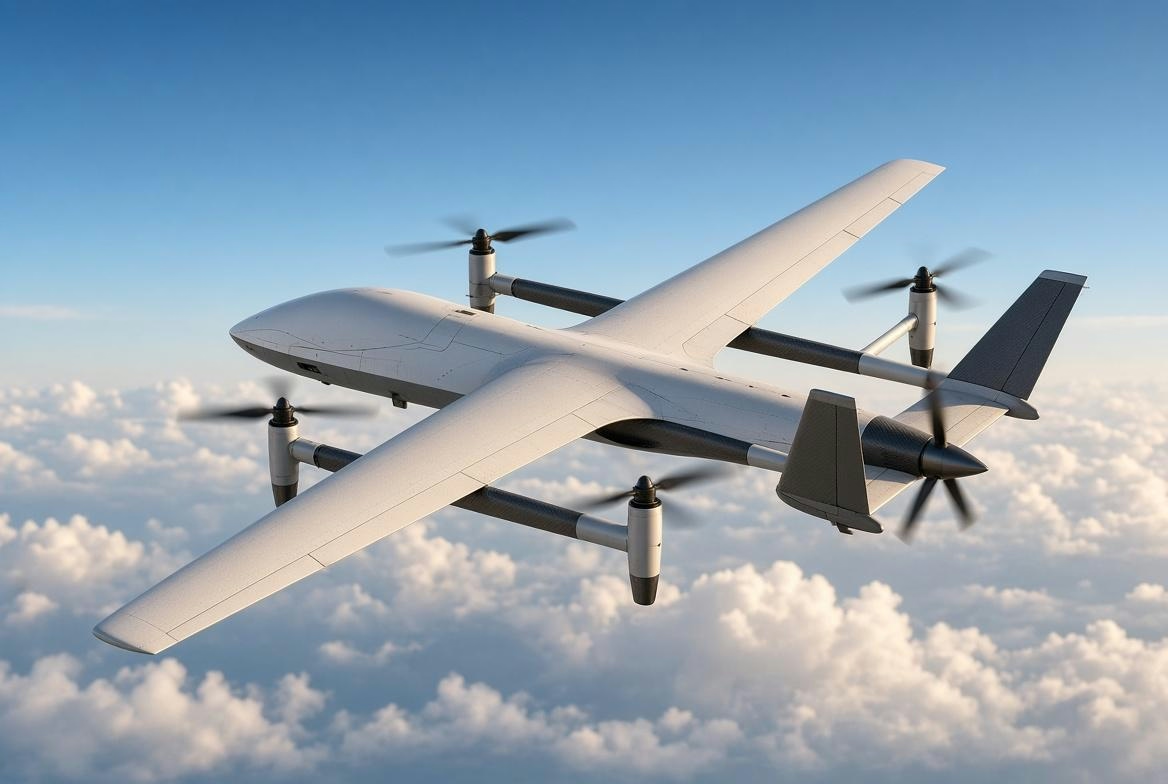
AVAKS-GeoService Patents UAV with Four Lift Propellers and One for Acceleration
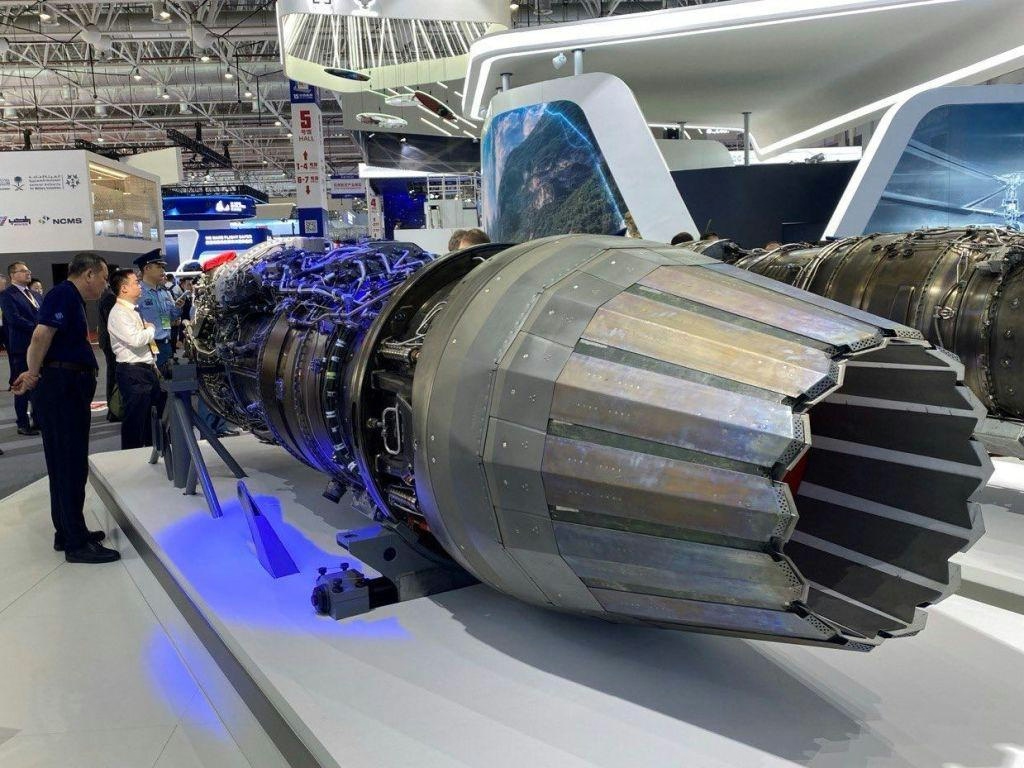
AL-51F1 Engine Extends Su-57's Range Beyond Air-to-Air Missiles
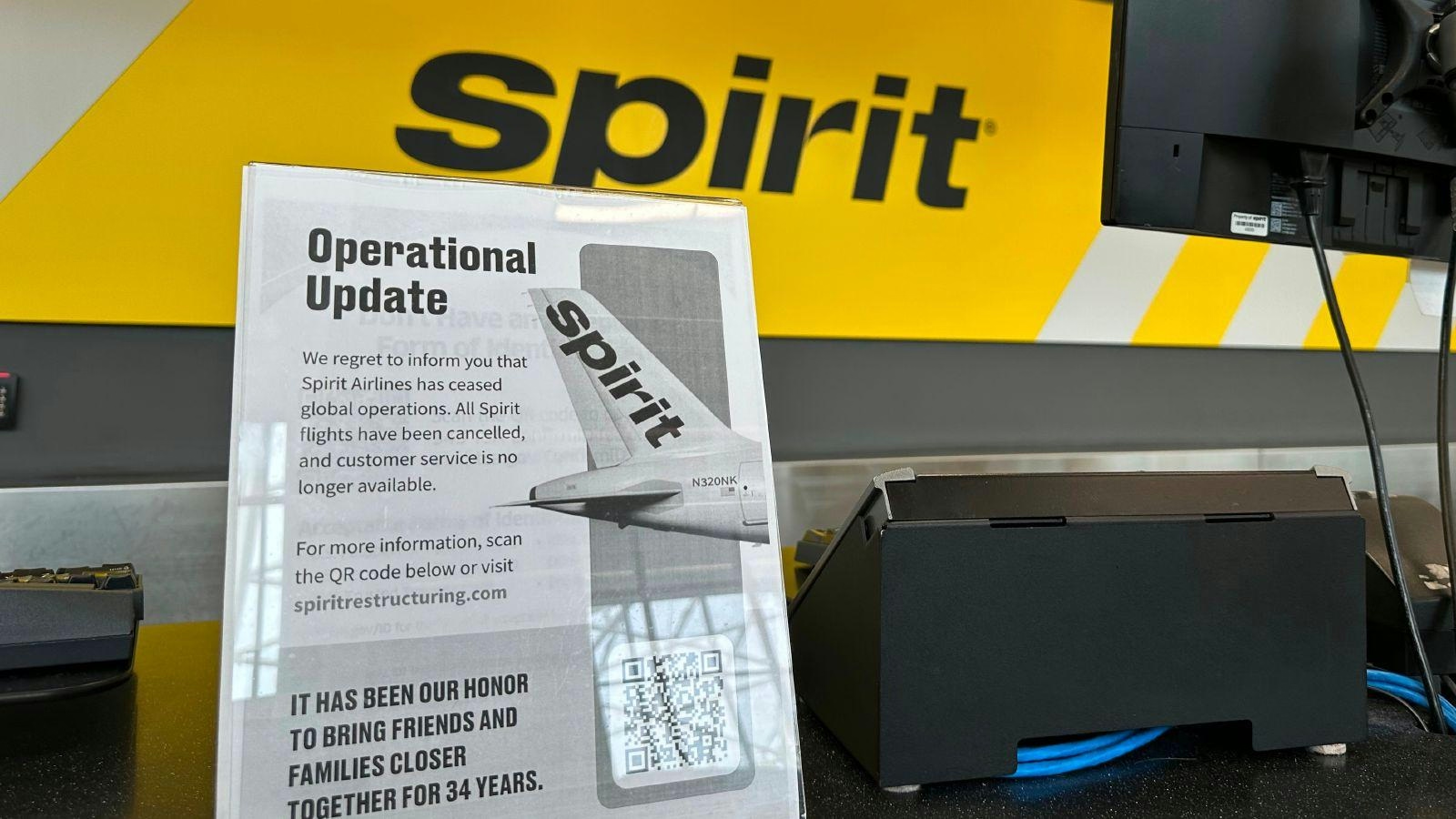
Competition for Defunct Spirit Airlines’ Employee Data Continues
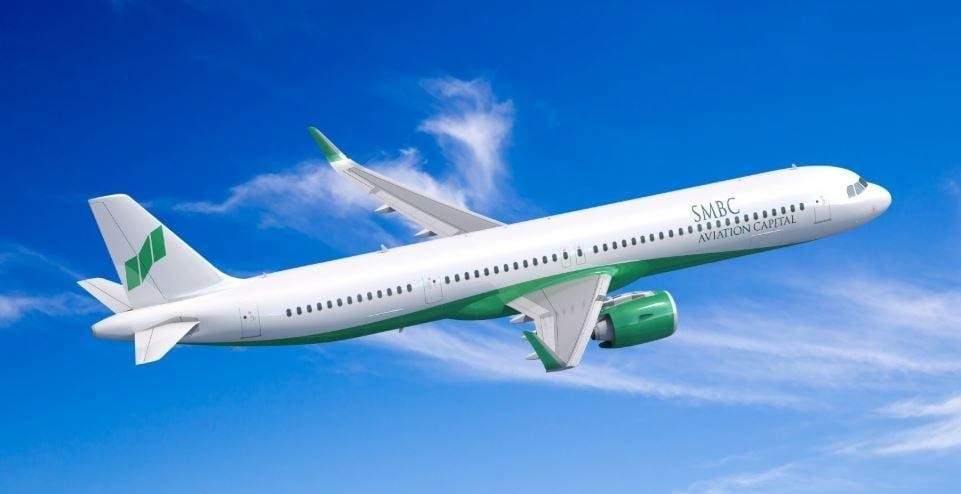
La Caisse and SMBC Expand Leasing Platform to $3 Billion

Harald Gloy Appointed CEO of Lufthansa Technik
PD-8 Engine Not Related to French SaM146
Ethiopian Airlines Finalizes Order for Ten Boeing 777 Freighters
Nayak Aircraft Services Assumes Control of LAS Maintenance
ANA Holdings Orders Eight More Embraer E190-E2 Jets
