
Trasforma le intuizioni dell’IA in azioni concrete

Tendenze
Categories
Could Drone Delivery Routes Affect House Prices?
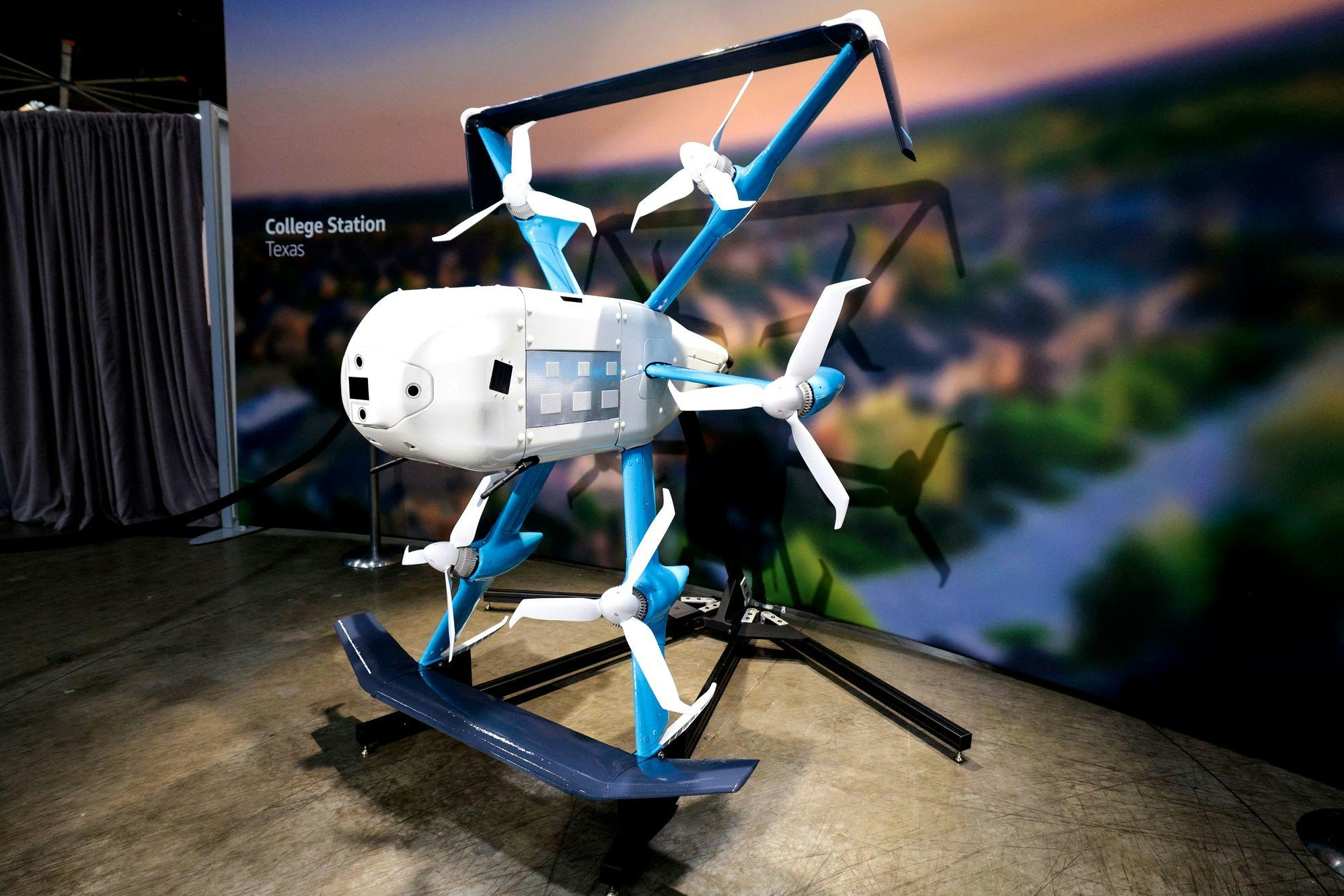
Could Drone Delivery Routes Affect House Prices?
The Emergence of Drone Delivery and Its Impact on Neighborhoods
Drone delivery is increasingly heralded as a transformative advancement in logistics, promising faster parcel arrivals, reduced road congestion, lower emissions, and the convenience of groceries or medical supplies delivered directly to consumers’ gardens. However, as this technology becomes more deeply embedded in everyday life, a critical yet underexplored question arises: what are the implications for homes located beneath these emerging aerial corridors?
Unlike traditional delivery vehicles, drones operate along fixed routes, utilizing established corridors and designated landing zones. This creates predictable flight patterns over specific neighborhoods. With companies like Walmart recently achieving the milestone of one million drone deliveries, it is evident that certain streets, estates, and villages may find themselves repeatedly traversed by drones on a daily basis.
Potential Effects on Property Values and Resident Experience
This development raises concerns familiar to those living near airports, where proximity to flight paths has long been known to influence property prices. Prospective homebuyers invest not only in physical structures but also in the peace, privacy, and enjoyment of their surroundings. The presence of frequent, low-flying drones could disrupt these qualities, potentially leading buyers to reconsider purchases or negotiate price reductions.
The issue extends beyond mere noise levels. Drones emit a distinctive high-pitched whine, and their hovering and abrupt maneuvers can be more intrusive than the distant hum of aircraft or passing vehicles. For residents, this intrusion manifests in everyday life: the ability to relax in gardens, children’s undisturbed sleep, and the feasibility of working from home with open windows may all be compromised. Unlike delivery vans that pass quickly, drones may hover, descend, deliver, and return repeatedly, especially near busy distribution hubs.
Parallels with Aviation and Market Implications
The aviation industry has long grappled with the consequences of concentrated flight paths. Modern air traffic management prioritizes precision and efficiency, which narrows routes but concentrates noise and disruption on fewer households. As drone delivery networks expand, similar patterns of localized impact are likely to develop.
The housing market’s response to these changes is multifaceted. In regions such as New Bern, Wilmington, and Charlotte, North Carolina, property values already fluctuate in response to economic shifts and technological progress. The growing acceptance of drone logistics—supported by regulatory easing and rapid growth in sectors like precision agriculture—could reshape local economies and influence real estate values. In some areas, enhanced accessibility and convenience brought by drone delivery might even increase property desirability.
Nonetheless, the risk remains that homes situated directly beneath busy drone corridors could experience diminished appeal, mirroring the longstanding effects of airport flight paths on real estate. As drone technology continues to evolve and integrate into daily life, its impact on the housing market—both positive and negative—will become an increasingly significant consideration for buyers, sellers, and policymakers.

Etihad and Swissport Extend Global Partnership

Sepehran Airlines B737 Returns to Mashhad After Tyre and Engine Issues

Etihad Deploys Widebody Fleet to Meet Strong Demand

Korean Air Finalizes $36.2 Billion Deal with Boeing

Australia’s RFDS Queensland Section Orders Six King Air 260Cs

Korean Air Finalizes Order for 103 Boeing Jets and Engines

Embraer E195-E2 Features Distinctive Engine Placement Among Regional Jets

What Passengers Can Expect on Boeing’s New 777X Jet

How Ethiopian Airlines Became Africa’s Leading Carrier Amid Gulf Competition

Joby Aviation Extends Autonomous Flight Capabilities with Cross-Country Tour
