
Trasforma le intuizioni dell’IA in azioni concrete

Tendenze
Categories
Could Nuclear Engines Replace JP-8 Fuel in Fighter Jets?
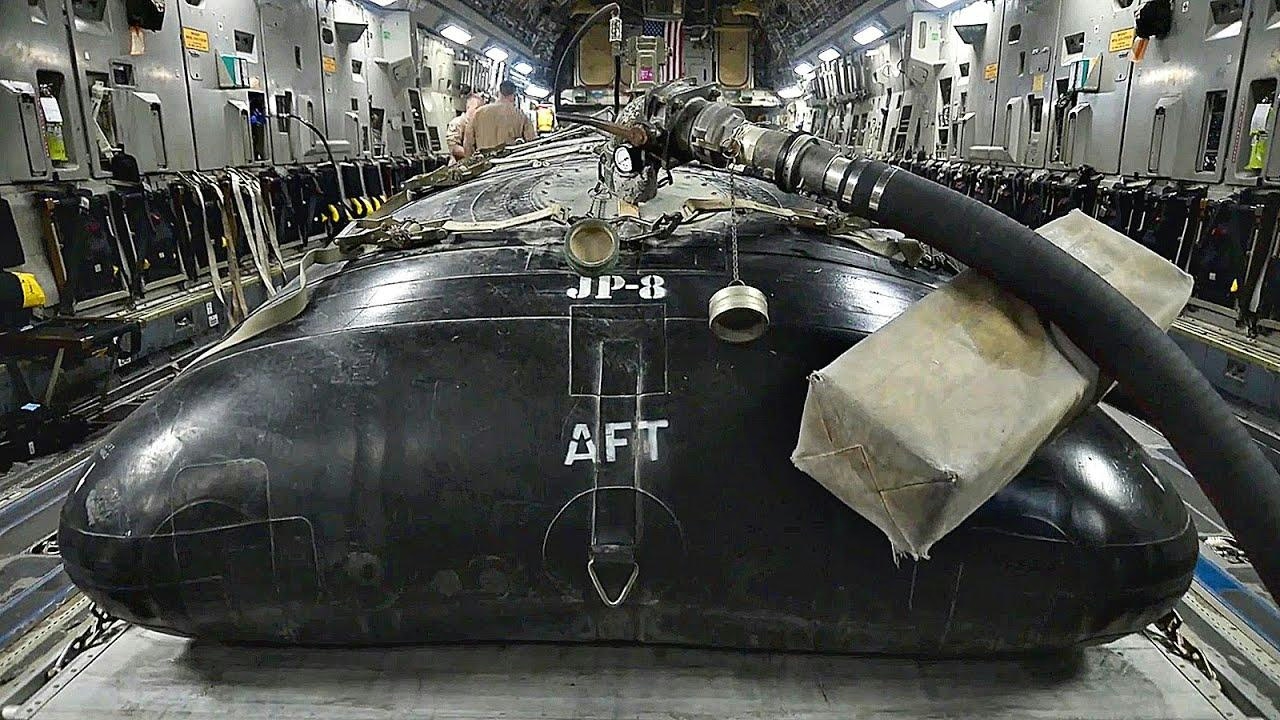
Could Nuclear Engines Replace JP-8 Fuel in Fighter Jets?
Historical Context and Early Challenges
During the Cold War, both the United States and the Soviet Union investigated the feasibility of nuclear-powered aircraft. The U.S. “Nuclear Powered Aircraft Project” notably succeeded in flying a modified bomber equipped with an onboard nuclear reactor. However, this reactor was never utilized to propel the aircraft; its function remained purely experimental. Engineers quickly confronted a critical obstacle: despite extensive shielding efforts, radiation leakage into the cockpit posed severe health risks to the crew. Moreover, the potential for radioactive contamination in the event of a crash presented a grave environmental hazard. These safety concerns ultimately rendered nuclear propulsion an insurmountable challenge for aviation during that era.
Renewed Interest and Technological Hurdles
In the present day, as the Air Force plans to acquire more advanced fighter jets over the coming decade, the prospect of alternative propulsion systems—including nuclear engines—has reemerged. Transitioning from conventional JP-8 fuel to nuclear propulsion in fighter aircraft would demand significant technological breakthroughs. The integration of nuclear reactors into existing airframes involves formidable engineering challenges, such as miniaturizing reactors to fit within compact designs and ensuring comprehensive shielding and safety protocols to protect pilots and ground personnel.
Industry Implications and Competitive Dynamics
The defense industry’s response to the potential adoption of nuclear propulsion is likely to be mixed. While nuclear engines could offer long-term advantages, including extended operational range and reduced dependence on traditional fuel logistics, the initial costs and technical risks remain substantial. Defense contractors and military planners must carefully balance these factors, weighing financial investments against operational benefits and environmental considerations.
Competitors within the aerospace sector may respond by accelerating the development of alternative propulsion technologies or by enhancing the efficiency and performance of conventional engines to maintain their competitive advantage. The ongoing demand for superior military capabilities, underscored by recent Air Force procurement initiatives, will likely influence the pace and direction of research into nuclear-powered flight.
Persistent Barriers to Adoption
Despite renewed interest, the fundamental challenges that hindered early nuclear aircraft projects—radiation safety, crash-related risks, and the complexity of integration—continue to pose significant barriers. Until these issues are resolved through major technological advances, nuclear engines are unlikely to supplant JP-8 fuel in fighter jets in the foreseeable future.

Etihad Airways Suspends Airbus A380 Flights on Key Route

Aditya Birla Group Seeks Approval for Aircraft Leasing in GIFT City

Qatar Airways Highlights Innovation and Connectivity at Arabian Travel Market 2026

Hong Kong's Five-Year Plan Includes Andrew Fan's Aircraft Parts Processing Hub Proposal

ACIA Aero Leasing Delivers ATR72-600 to Air Nostrum

RTX Appoints Jill Albertelli as Head of Pratt & Whitney

TAT Technologies Joins Beyond Aero Hydrogen Aircraft Program

AURAK Study Highlights Barriers to Air Taxi Adoption in Emerging Economies

Xiamen Air Selects Altitude for 787 Maintenance at Heathrow

Etihad and Swissport Extend Global Partnership
