Immagine

AeroGenie — Il tuo copilota intelligente.

Chiedi qualsiasi cosa. Analizza tutto. Agisci immediatamente.

Tendenze

Categories

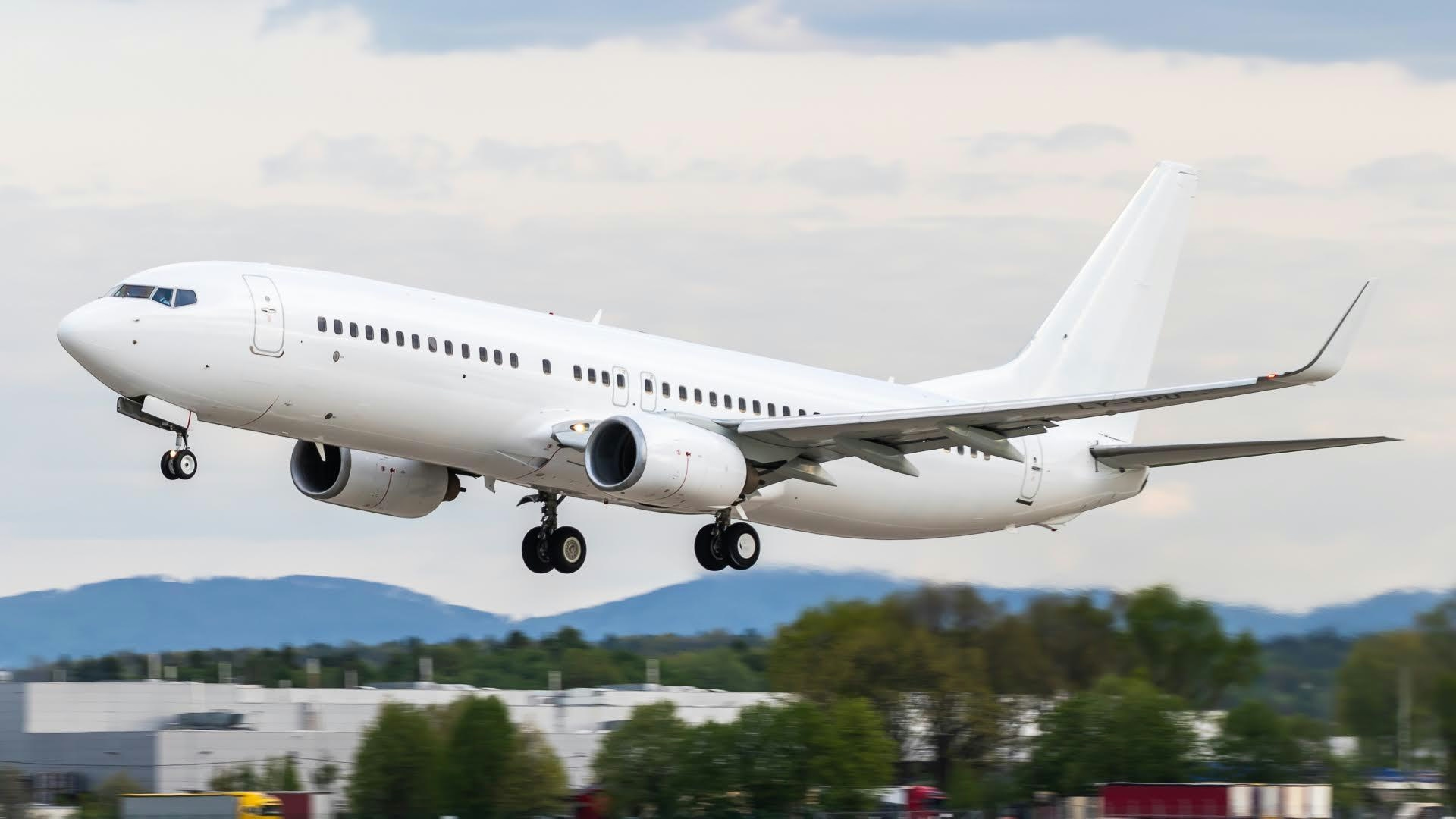
DAE Leases Two Boeing 737-8 Jets to Tajikistan’s Somon Air
January 26, 2026By ePlane AI
DAE Leases Two Boeing 737-8 Jets to Tajikistan’s Somon Air
0
0
Dubai Aerospace Enterprise
Boeing 737-8
Somon Air

DAE Leases Two Boeing 737-8 Jets to Tajikistan’s Somon Air

Dubai Aerospace Enterprise (DAE) has finalized lease agreements to provide two Boeing 737-8 aircraft to Somon Air, the national carrier of Tajikistan. This transaction marks Somon Air as a new client for the global lessor and is intended to support the airline’s fleet modernization and network expansion efforts. The addition of these aircraft will enable Somon Air to introduce new routes and improve operational efficiency.

Strategic Partnership and Industry Context

Firoz Tarapore, CEO of DAE, expressed enthusiasm about the partnership, emphasizing the company’s commitment to supporting Somon Air’s growth. He highlighted the significance of this agreement as a foundation for a deeper future relationship. DAE, recognized as one of the world’s largest aircraft lessors, currently owns, manages, or has commitments for approximately 750 aircraft, including 237 Boeing jets. The company continues to expand its fleet in response to sustained demand from airlines seeking modern aircraft without the financial burden of direct ownership.

Abdulkosim Valiev, CEO of Somon Air, welcomed the lease agreements, noting that the new Boeing 737-8 jets will bolster the airline’s network expansion and operational capabilities. The deal arrives amid a highly competitive aircraft leasing market, where major players such as AerCap and GECAS remain active. DAE’s decision to lease modern Boeing aircraft to Somon Air may intensify competition, potentially prompting rival lessors to reevaluate their pricing and fleet strategies to maintain market share.

Market Dynamics and Future Implications

The broader leasing market is influenced by Boeing’s strong performance in aircraft deliveries and new orders, including recent significant contracts with Delta Air Lines and EVA Air. This momentum in Boeing’s order book is likely to affect the leasing landscape as companies like DAE adapt to evolving airline preferences and heightened competition. The agreement with Somon Air underscores the ongoing demand for fuel-efficient, modern aircraft and reflects shifting strategies among lessors and airlines as they navigate a rapidly changing aviation environment.

More news
Airbus Helicopters Reports Increase in Orders and Deliveries

Airbus Helicopters Reports Increase in Orders and Deliveries

Airbus Helicopters Reports Rise in Orders and Deliveries Amid Strong Defence Demand Airbus Helicopters experienced a significant increase in orders last year, driven largely by heightened defence spending across Europe and a strong performance in the military sector. According to company data released on Monday, the division secured 544 gross orders in 2025, translating to a net total of 536 after cancellations. This marks a nearly 20% rise compared to 455 gross and 450 net orders recorded in 2024. Deliveries also rose by 8.5%, reaching 392 units, up from 361 the previous year. Growth Fueled by Military Contracts The surge in orders was notably influenced by a substantial contract awarded by Spain in December for 100 military helicopters. This deal contributed to Airbus Helicopters increasing its share of the military helicopter market to 28% in 2025, while its share of the civil market declined from 57% to 51%. Outgoing CEO Bruno Even, who will step down in April after seven years leading the division, emphasized that the company’s focus on defence and security had “never been sharper,” reflecting a strategic pivot towards military applications. Broader Airbus Group Performance and Market Context The positive momentum at Airbus Helicopters aligns with the broader Airbus group’s performance, which also reported growth in orders and deliveries for 2025. The group exceeded its revised annual delivery target by handing over 793 aircraft, surpassing the goal of 790. Despite this achievement, Boeing maintained a commanding lead in gross commercial orders, securing 6,130 compared to Airbus’s 1,000. However, Airbus outperformed Boeing in actual deliveries, with 793 aircraft delivered against Boeing’s 600. The market has taken note of Airbus’s strong delivery figures, particularly in light of ongoing challenges related to component sourcing and production. Meanwhile, Boeing has concentrated on preserving its order advantage and has resumed deliveries to Chinese airlines, marking a notable development for the U.S. manufacturer. Airbus Helicopters is expected to provide further financial details as part of the group’s earnings report scheduled for February 19. Airbus CEO Guillaume Faury recently commended the helicopters division for its “remarkably consistent” performance, highlighting its resilience amid a competitive and evolving aerospace landscape.
Huawei and China Eastern Airlines Advance AI Integration in Aviation

Huawei and China Eastern Airlines Advance AI Integration in Aviation

Huawei and China Eastern Airlines Advance AI Integration in Aviation Huawei and China Eastern Airlines are spearheading efforts to integrate artificial intelligence (AI) into the aviation sector, with the goal of enhancing safety, operational efficiency, and the overall passenger experience. At the recent HUAWEI CONNECT 2025 event, the two companies, in collaboration with Xiamen Airlines, introduced scenario-specific AI models and smart aviation solutions, marking a significant milestone in the ongoing digital transformation of the industry. Innovations in AI-Driven Aviation The global aviation session, themed “AI Drives Joyful Air Journey,” brought together industry leaders and experts to explore the transformative potential of AI and digital technologies in aviation. Shen Surong, Chief Operating Officer of Huawei’s Smart Transportation Business Unit, underscored that AI represents more than a technological upgrade; it is a strategic initiative aimed at redefining passenger experiences and reshaping the aviation landscape. Huawei is deploying advanced AI applications across a broad spectrum of service scenarios, including airport operations, passenger services, airline management, and security control. Li Zongling, Director of the Air Logistics Working Committee under the China Air Transport Association, highlighted a significant trend in China’s aviation market: the rapid increase in air travel demand originating from lower-tier cities. Since 2019, Tier 3 and Tier 4 cities have emerged as key contributors to new passenger traffic, surpassing growth rates in major metropolitan areas. Li emphasized that each technological breakthrough, such as AI integration, offers an opportunity to transform the industry. He expressed a strong commitment to collaborating with Huawei and its partners to implement precise and controllable AI capabilities within core civil aviation scenarios, aiming to enhance safety while improving efficiency and passenger satisfaction. Gao Zhidong, Chairperson of Shanghai China Eastern Airlines Digital Technology, detailed the airline’s AI 2.0 initiative, which utilizes private cloud infrastructure and large AI models as its digital foundation. This initiative encompasses 227 high-value scenarios and promotes service intelligence through the collaboration of large and small AI models. Gao highlighted key advancements including digital apron construction, intelligent vehicle dispatch, flight support node detection, and scheduling optimization. These developments contribute to a coordinated, data-driven flight support system designed to improve operational coherence and responsiveness. Global Implications and Competitive Dynamics The rapid progress made by Huawei and China Eastern Airlines in AI integration has attracted global attention, eliciting both interest and concern among competitors and investors. As China narrows the AI gap with Western technology leaders, the strategic implications are profound. Market reactions have been mixed, with some investors expressing apprehension about the ability of technology stocks to justify substantial AI-related expenditures. Additionally, concerns about AI-driven inflation have emerged as a notable risk factor. In response to these developments, competitors worldwide are intensifying efforts to develop more affordable and widely deployable AI systems. There is a growing focus on embedding AI into physical products targeted for export to emerging markets. This escalating competition highlights the global race to harness AI’s transformative potential not only in aviation but across multiple industries. As Huawei and China Eastern Airlines continue to advance intelligent transformation within aviation, the industry confronts both promising opportunities and significant challenges, marking a pivotal moment in the evolution of air travel.
Chicago O’Hare Surpasses Atlanta as Busiest Airport by Flights

Chicago O’Hare Surpasses Atlanta as Busiest Airport by Flights

Chicago O’Hare Surpasses Atlanta as Busiest U.S. Airport by Flights Preliminary data from the Federal Aviation Administration (FAA) for 2025 reveals that Chicago O’Hare International Airport has overtaken Hartsfield-Jackson Atlanta International Airport as the busiest U.S. airport in terms of total aircraft operations. O’Hare recorded 857,392 takeoffs and landings throughout the year, marking a more than 10.5% increase compared to 2024. This figure surpasses Atlanta’s 807,625 flights by over 50,000 operations, signaling a significant shift in the national aviation landscape. Surge in Air Taxi Operations Drives Growth at O’Hare The primary factor behind O’Hare’s rise is a substantial increase in “air taxi” flights, which include short-distance trips frequently utilizing electric vertical takeoff and landing (eVTOL) technology. Chicago has seen rapid expansion in this sector, with O’Hare reporting 79,234 air taxi operations in 2025, compared to just 25,475 at Atlanta. This growth is closely linked to the introduction of new eVTOL routes, such as Archer Aviation’s service connecting O’Hare to Chicago’s West Loop. This route enables passengers to travel between the airport and downtown Chicago in approximately 10 minutes, exemplifying the airport’s embrace of innovative air mobility solutions. Despite losing the lead in total aircraft movements, Hartsfield-Jackson Atlanta International Airport remains the busiest in terms of passenger traffic. In 2025, Atlanta recorded 792,785 commercial passenger and cargo airline flights, slightly outpacing O’Hare’s 774,921. Additionally, Atlanta maintained higher numbers in military and general aviation operations, underscoring its continued prominence in other aviation sectors. Intensified Competition Among Airlines at O’Hare The surge in flight activity at O’Hare has heightened competition among airlines operating at the airport. In response to O’Hare’s growing importance, American Airlines announced plans to increase its flight offerings by 100 additional flights to over 75 destinations in 2026. This move highlights the ongoing rivalry between American Airlines and United Airlines as they vie for dominance at one of the nation’s most critical aviation hubs. The FAA is expected to release official consolidated data, including final passenger counts for each airport, later this year. For now, Chicago O’Hare’s ascent reflects both the rapid adoption of emerging air mobility technologies and the shifting dynamics among major U.S. airports.
Skyportz identifies Delhi as key location for air taxis

Skyportz identifies Delhi as key location for air taxis

Skyportz Identifies Delhi as a Strategic Hub for Air Taxi Deployment Skyportz, a leading developer of modular vertipad infrastructure, has identified Delhi as a pivotal location for the expansion of air taxi services in India over the next two decades. The company highlights the capital’s extensive commuting distances, heavy dependence on road transport, and increasing affluence as critical factors that position Delhi as an ideal market for urban air mobility. These conditions, combined with the potential for low operating costs, make the city a prime candidate for the adoption of air taxi networks. Projected Growth and Market Potential According to Skyportz’s forecasts, Delhi could witness approximately 40 million passenger air taxi trips annually by 2045, contributing to an estimated 200 to 250 million trips nationwide. This surge in demand is expected to generate passenger revenues ranging from USD 2 billion to 2.5 billion across India, with Delhi alone accounting for around USD 400 million. The company envisions the establishment of between 10,000 and 15,000 vertipads throughout the country, including 2,200 within Delhi itself. Clem Newton-Brown, CEO of Skyportz, emphasized the scale of the opportunity, stating, “Delhi’s numbers make one thing clear: this is not a small boutique market. Our modelling points to thousands of vertipads, tens of millions of passengers, and sustained long-term infrastructure demand. That scale requires modular, affordable systems designed for networks such as the Aeroberm. With Delhi as a lead market, India has an opportunity to help shape how city-scale advanced air mobility (AAM) infrastructure is deployed. We look forward to working with the DGCA and local air taxi developers.” Challenges and Competitive Landscape Despite the promising outlook, Skyportz faces significant challenges in realizing its vision for Delhi. Regulatory complexities, the need for extensive infrastructure development, and competition from established players such as Vertical Aerospace and Archer Aviation present formidable obstacles. As the urban air mobility sector gains momentum, these dynamics are likely to attract increased interest from investors and potential customers, while competitors may accelerate their own vertiport network expansions and enhance air taxi services to secure market share. Addressing concerns related to noise pollution and safety remains a critical priority. These issues have already sparked debate in other major cities like New York and Los Angeles. Skyportz’s Aeroberm system—a modular vertipad designed specifically for high-density urban environments—aims to facilitate rapid installation while effectively managing downwash safety, noise levels, and operational performance. Robert Bassey, former FAA national lead for vertiport design, underscored the importance of regulatory compliance, noting, “Having worked inside the FAA, I understand what regulators need to see before new infrastructure can scale—clear performance evidence, defined operating assumptions, and a credible inspection and lifecycle framework. Our focus at Skyportz is on building a modular vertipad product that can be evaluated consistently across markets and accepted by regulators worldwide. India is a critical advanced air mobility market, and I look forward to constructive engagement with DGCA and industry as safe, scalable frameworks continue to take shape.” Implications for Urban Air Mobility in India As Delhi emerges as a focal point for air taxi innovation, the city’s approach to regulatory, infrastructural, and community concerns will play a decisive role in shaping the future of urban air mobility across India. The successful integration of air taxi services in the capital could set a precedent for other metropolitan areas, influencing the broader trajectory of advanced air mobility in the region.
Southwest Airlines Completes Cabin Reconfiguration of Boeing 737-700s

Southwest Airlines Completes Cabin Reconfiguration of Boeing 737-700s

Southwest Airlines Completes Cabin Reconfiguration of Boeing 737-700s Southwest Airlines has finalized the reconfiguration of the cabins across its entire fleet of 311 Boeing 737-700 aircraft, marking a significant departure from the carrier’s traditional seating and passenger experience model. The modification involved the removal of one row of seats per aircraft, reducing capacity by six seats and creating space for extra-legroom seating. This change sets the stage for the introduction of assigned seating, scheduled to commence on January 27. Transitioning from Open Seating to Assigned Seats Chief Financial Officer Tom Doxey confirmed the completion of the reconfiguration in a recent statement, highlighting that the airline’s technical operations team began the modifications immediately after the holiday season and completed the work on all active aircraft a week ahead of schedule. Prior to this overhaul, the 737-700s featured a single-class layout accommodating 143 passengers. This initiative forms part of a broader strategic restructuring at Southwest, which is moving away from its decades-old open seating policy. The airline is introducing several new features, including assigned seating, red-eye flights, and premium seating options. These changes respond to pressure from activist investor Elliott Management, which has advocated for modernization and enhanced revenue streams throughout 2024 and 2025. Challenges and Industry Context The decision to reduce seat count in favor of extra-legroom options introduces new operational challenges. Southwest must now carefully balance passenger demand with efficiency, as the lower overall capacity could affect both revenue and scheduling. Furthermore, the introduction of a new pricing structure for extra-legroom seats may encounter resistance from customers accustomed to Southwest’s historically egalitarian fare model. This strategic shift occurs amid a competitive landscape where rivals such as Delta Air Lines and United Airlines are expanding their fleets with newer aircraft, potentially altering market dynamics. Industry trends indicate a growing emphasis on add-on services aimed at attracting higher-paying travelers, exemplified by WestJet’s recent focus on premium seating at the expense of economy class passengers. Southwest’s approach aligns with this broader movement, seeking to increase premium revenue while retaining its core customer base. Meanwhile, Boeing is accelerating production of its 737 Max and 787 Dreamliner models, developments that could further influence airline fleet renewal and expansion decisions in the near future. It is important to note that Southwest’s larger aircraft—the 201 Boeing 737-800s and 300 Boeing 737-8s—did not require seat removal to accommodate extra-legroom seating due to their more spacious cabins. The reconfiguration efforts have been concentrated exclusively on the 737-700 fleet. As Southwest prepares to implement its new seating options, the airline faces the dual challenge of adapting to evolving passenger expectations while preserving its operational strengths in an increasingly competitive aviation market.
Airbus Says US-China Trade Tensions Impact Aircraft Production

Airbus Says US-China Trade Tensions Impact Aircraft Production

Airbus Highlights Impact of US-China Trade Tensions on Aircraft Production Airbus has issued a stark warning regarding the escalating trade tensions between the United States and China, emphasizing the tangible and immediate damage these disputes are causing to its global operations and financial performance. Chief Executive Officer Guillaume Faury described the current geopolitical environment as an unprecedented crisis for the aerospace sector, stressing that the consequences are no longer hypothetical but are actively disrupting production. Disruptions in Supply Chain and Production The European aerospace giant operates a complex production network with key facilities in Toulouse, France, and Tianjin, China. This network has been significantly affected by U.S. protectionist measures and ongoing trade disputes. Faury informed employees that export restrictions, licensing controls, and protectionist policies have already interfered with the movement of essential components such as engines and avionics. These disruptions have caused logistical delays and financial strain across multiple Airbus programs. Airbus’s final assembly lines in China are particularly vulnerable to interruptions in the cross-border flow of parts. Even a single delayed or blocked subcomponent can halt deliveries, increase costs, and necessitate costly rescheduling across various assembly sites. The company’s extensive supply chain, which depends on suppliers from both the U.S. and China, has been further strained by export freezes and regulatory challenges, undermining the steady supply of parts for jets assembled in China. Faury acknowledged that these challenges have compelled Airbus to adjust its operations, including reducing delivery targets due to issues such as flawed fuselage panels. Despite these setbacks, the company has managed to uphold its financial objectives, partly through progress in cost-cutting initiatives. However, persistent delays in engine deliveries and quality-related problems—including software glitches and defective fuselage components—have complicated production schedules and required continuous operational adjustments. Strategic Response and Financial Implications The CEO emphasized the necessity for internal resilience, operational discipline, and supply-chain robustness to navigate the current environment. He called for solidarity and adaptability among Airbus teams, noting that geopolitical decisions are increasingly influencing factory-level outcomes. To mitigate future risks, Airbus is pursuing supplier diversification and greater flexibility in production planning, while also prioritizing self-reliance and organizational restructuring. Trade frictions have directly impacted Airbus’s cash flow by delaying aircraft handovers, which in turn postpones payments. In 2025, Airbus delivered 793 aircraft, an increase from 766 the previous year, but many deliveries were backloaded due to engine supply constraints. These delayed deliveries have elevated inventory levels and working capital requirements, exerting pressure on free cash flow. Management has cautioned that further disruptions related to export controls could exacerbate financial challenges by necessitating additional production re-planning. As Airbus prepares for its next narrowbody development cycle, the company remains cautious, balancing the need for investment with the imperative to maintain delivery reliability. While leadership remains confident in Airbus’s capacity to adapt, Faury underscored that sustained self-reliance, disciplined execution, and ongoing restructuring will be essential to safeguarding profit margins and financing future aircraft programs.
Newbow Aerospace Opens Facility and Signs Airline Contracts

Newbow Aerospace Opens Facility and Signs Airline Contracts

Newbow Aerospace Expands UK Operations and Secures Major Airline Contracts Newbow Aerospace has commenced 2026 by inaugurating a new production facility in the United Kingdom and securing several significant contracts for airline ground support equipment (GSE). This expansion follows a record year marked by substantial growth and new business acquisitions. The company has effectively doubled its manufacturing capacity with the opening of a 4,000-square-foot fabrication plant in the West Midlands, located adjacent to its headquarters and existing dual-unit production site. This strategic investment is designed to enhance the production of GSE trailers and service carts, enabling Newbow to meet rising demand from both domestic and international clients. To support this increased output, Newbow has expanded its workforce by recruiting additional welders and fabricators, thereby reinforcing its skilled manufacturing team. The company’s order book for 2026 has been strengthened by a major contract with Iberia, a new customer, which includes the initial production of 16 wheel and brake trailers. These units are scheduled for delivery in the coming months to airports across Spain, where they will support Iberia’s long-haul Airbus A350-900 fleet. Strengthening Domestic and International Partnerships Within the United Kingdom, British Airways’ Line Maintenance operation at London Gatwick has selected Newbow to supply several trailers tailored for its Airbus A320 and Boeing 777 aircraft. Furthermore, Newbow has entered into a new general trading agreement with Jet2, commencing with the provision of tyre inflation tooling and pressure gauges, alongside associated servicing and calibration services. On the international front, Newbow is witnessing growing interest from maintenance, repair, and overhaul (MRO) providers and airlines in Saudi Arabia. This follows the establishment of its first Middle East sales and service partnership in 2025 with GGAS Aviation Services, a company specializing in maintenance products and aviation consultancy. This partnership marks a significant step in Newbow’s efforts to expand its footprint in the Middle Eastern aerospace market. Navigating Industry Challenges Amid Expansion Newbow’s expansion occurs amid increasing complexity within the aerospace sector. The company faces potential challenges related to heightened U.S. airspace management issues, driven by the rising frequency of private space launches. These developments may lead to increased regulatory scrutiny and operational disruptions for aerospace manufacturers. In response, competitors may seek to enhance their own capabilities or form strategic alliances to address shared concerns regarding airspace management. Additionally, broader industry dynamics such as geopolitical volatility and intensifying competition within the airline sector—as exemplified by Korean Air—could impact Newbow’s market positioning. As the company scales up production and secures new contracts, it must maintain agility in adapting to evolving regulatory, operational, and competitive pressures that continue to shape the global aerospace landscape.
Saudi Arabia Advances Aviation with Riyadh Air’s Digital Transformation and In-Flight Connectivity

Saudi Arabia Advances Aviation with Riyadh Air’s Digital Transformation and In-Flight Connectivity

Saudi Arabia Advances Aviation with Riyadh Air’s Digital Transformation and In-Flight Connectivity Saudi Arabia is making significant strides in aviation innovation through Riyadh Air’s strategic collaboration with Neo Space Group (NSG), aimed at transforming the in-flight experience with cutting-edge digital connectivity. This partnership will equip Riyadh Air’s Airbus A321 fleet with NSG’s Skywaves® technology, enabling passengers to access high-speed internet at cruising altitudes of 35,000 feet. The enhanced connectivity will allow travelers to stream content, communicate, work, and remain productive throughout their flights, marking a notable advancement in both passenger satisfaction and operational efficiency. Enhancing Passenger Experience and Operational Efficiency The integration of Skywaves® technology is central to Riyadh Air’s vision of becoming the world’s first digitally native airline. The system delivers connectivity speeds of up to 300 Mbps, supported by NSG’s HBC+ hardware and the Thinkom Ka2517 antenna, which is already installed on more than 1,700 aircraft worldwide. This robust infrastructure ensures that passengers enjoy an online experience comparable to that on the ground, whether for business or entertainment purposes. Beyond improving the passenger experience, the advanced connectivity system is expected to enhance operational performance. Real-time data sharing and improved communication among crew members will facilitate more efficient flight operations and decision-making processes. The Skywaves® system utilizes SES’s Open Orbits™ network, which combines the speed advantages of Medium Earth Orbit (MEO) satellites with the extensive coverage of Geostationary Orbit (GEO) satellites. This hybrid satellite approach guarantees reliable broadband connectivity even over remote areas such as deserts and oceans. Challenges and Market Implications Despite the promising outlook, Riyadh Air’s digital transformation faces several challenges. The airline must invest heavily in advanced technology infrastructure and ensure seamless integration with existing systems. Additionally, scaling operations to meet anticipated demand introduces further complexity. As the in-flight connectivity market evolves rapidly—particularly within the business jet sector—Riyadh Air will need to maintain continuous innovation to sustain its competitive advantage. The airline’s advancements are likely to prompt increased competition from established carriers and technology providers, who may accelerate their own digital initiatives and forge new partnerships to enhance in-flight services. This competitive landscape highlights the strategic importance of Riyadh Air’s commitment to technological excellence. Alignment with Saudi Arabia’s Vision 2030 The partnership between Riyadh Air and Neo Space Group aligns closely with Saudi Arabia’s Vision 2030, which aims to establish the Kingdom as a global hub for technology and world-class aviation services. By setting new standards in digital transformation and in-flight connectivity, Riyadh Air is not only elevating the passenger experience but also reinforcing Saudi Arabia’s leadership role in the future of aviation.
Fly Alliance Expands Maintenance Services to India

Fly Alliance Expands Maintenance Services to India

Fly Alliance Expands Maintenance Services to India Fly Alliance Maintenance, a division of Fly Alliance, has announced a significant expansion of its global maintenance operations with the official approval as a Foreign Approved Maintenance Organization (FAMO) by India’s Directorate General of Civil Aviation (DGCA). This authorization marks a strategic entry into the rapidly growing Indian business aviation market, enabling Fly Alliance to provide direct maintenance support for Indian-registered aircraft. Enhanced Maintenance Capabilities and Authorizations With the DGCA FAMO approval, Fly Alliance Maintenance is now authorized to service a broad range of aircraft models, including various Hawker and Cessna Citation variants, as well as multiple Bombardier Global series jets. This expanded capability allows the company to deliver comprehensive maintenance solutions tailored to the needs of business aviation operators in India. In addition to maintenance services, Fly Alliance has secured authorization as a Starlink reseller and installer. This development enables the company to offer advanced inflight connectivity solutions alongside its maintenance portfolio, enhancing the operational experience for aircraft owners and operators. Kevin Wargo, CEO of Fly Alliance, emphasized the company’s commitment to providing high-touch, responsive support, now accessible directly within the Indian market. Market Context and Strategic Implications Fly Alliance’s expansion into India coincides with a period of robust growth in the country’s Maintenance, Repair, and Overhaul (MRO) sector, driven by increasing demand for aftermarket support. This presents considerable opportunities for international providers seeking to capitalize on the expanding aviation landscape. However, Fly Alliance will need to navigate a complex regulatory environment, address cultural and operational challenges, and ensure the availability of skilled personnel to maintain its service standards. The company’s entry is also expected to heighten competition among local MRO providers, potentially prompting them to enhance their service offerings or pursue strategic partnerships to safeguard their market positions. Despite these challenges, Fly Alliance’s presence is well-positioned to meet the rising demand for high-quality maintenance services in India’s evolving aviation industry. With the establishment of new offices in New Delhi, Fly Alliance now operates from eight locations worldwide, reinforcing its global footprint and dedication to supporting aircraft owners and operators in key international markets.
SkyWorks and LuminArx Launch $1 Billion Aviation Lending Platform

SkyWorks and LuminArx Launch $1 Billion Aviation Lending Platform

SkyWorks and LuminArx Unveil $1 Billion Aviation Lending Platform SkyWorks Holdings and LuminArx Capital Management have announced the launch of SkyLight Aero Finance Holdings DAC (SkyLight), a new financing platform designed to provide up to $1 billion in secured debt to the global commercial aviation sector. The platform will focus on underwriting loans and finance leases secured by commercial aircraft and engines, drawing on SkyWorks’ extensive expertise in aviation asset management alongside LuminArx’s proficiency in flexible capital solutions. Jeff Craine, Chief Financial Officer of SkyWorks, described the initiative as a natural extension of the company’s longstanding support for airline and lessor clients. He emphasized that SkyLight aims to deploy capital prudently while delivering attractive, risk-adjusted returns. “Our goal is to build a durable lending platform that supports the evolving needs of airlines, lessors, and investors worldwide,” Craine stated, highlighting the sustained demand for flexible, asset-based financing in the sector. Navigating a Competitive and Evolving Market SkyLight enters a commercial aviation financing market marked by increasing competition and dynamic shifts. Established players such as Castlelake have already secured significant capital, with Castlelake’s aviation lending platform managing $1.8 billion. The introduction of SkyLight is expected to intensify competition, potentially leading to lower interest rates for airlines seeking financing. This environment may also encourage existing lenders to pursue strategic partnerships or acquisitions to bolster their market positions. The launch coincides with a period of financial turbulence within the aviation industry, characterized by recent failed merger attempts and a surge in financing activity. These developments reflect the sector’s evolving landscape and underscore the growing demand for innovative, asset-based lending solutions. By combining SkyWorks’ technical and asset management capabilities with LuminArx’s capital markets experience, SkyLight aims to establish a scalable and disciplined lending business. The platform’s emergence aligns with broader trends in aviation finance, where adaptability and access to capital are increasingly vital for airlines and lessors navigating a rapidly changing environment. As SkyLight begins operations, its ability to differentiate itself and respond to the shifting needs of the global aviation market will be critical to its success.
line










