imabge

AeroGenie: il tuo copilota intelligente.

Chiedi qualsiasi cosa. Analizza tutto. Agisci all'istante.

Tendenze

Categories

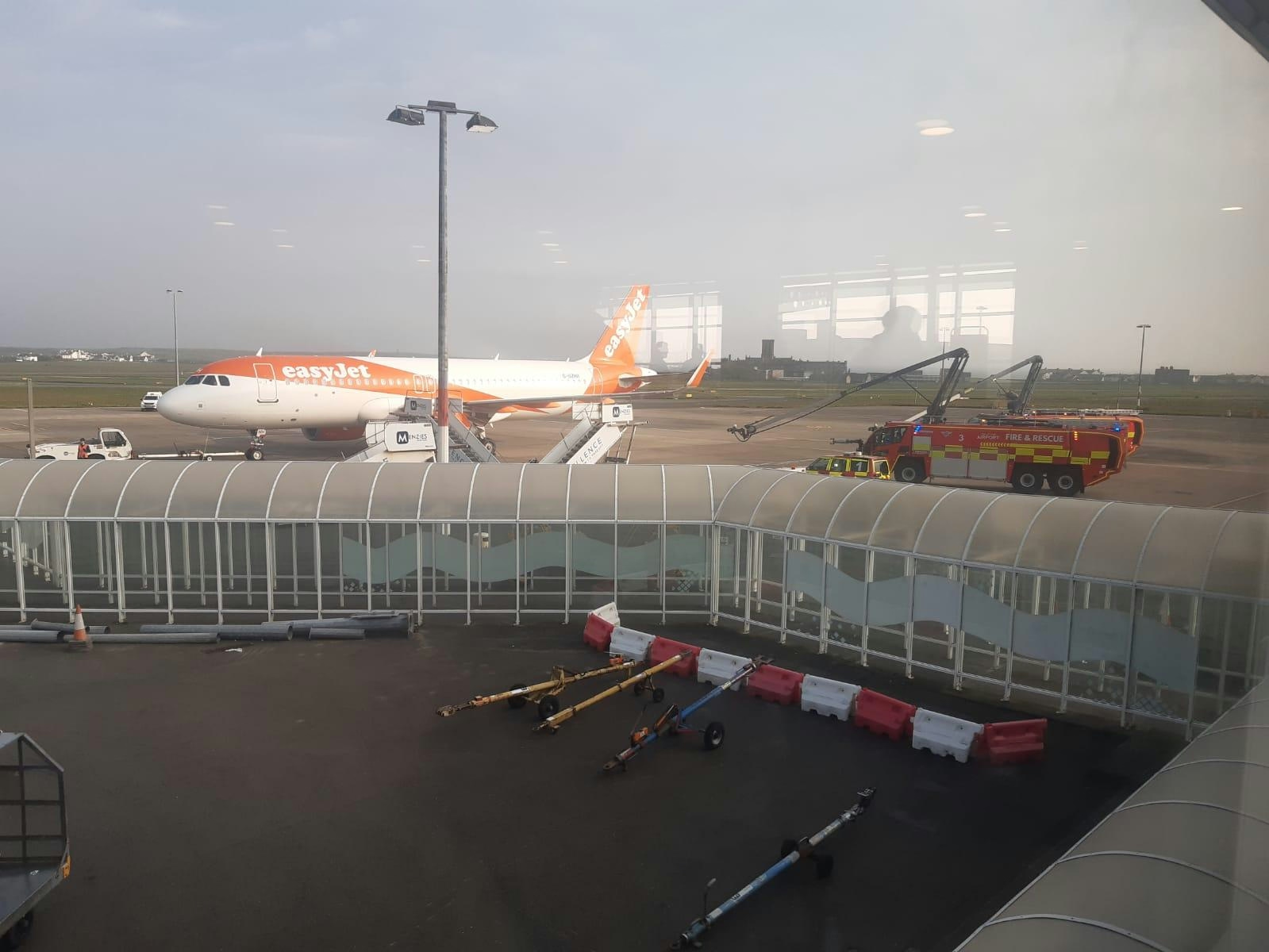
EasyJet Plane Grounded After Mid-Air Engine Fire
January 5, 2026By ePlane AI
EasyJet Plane Grounded After Mid-Air Engine Fire
0
0
EasyJet
Airbus A320
Engine Failure

EasyJet Flight Grounded Following Mid-Air Engine Fire

An easyJet Airbus A320-200 was forced to make an emergency landing in Italy after one of its engines caught fire during descent. The incident occurred on December 27, as Flight U2-3557 was approaching Lamezia Terme from Milan Malpensa Airport. According to reports from the Aviation Herald, flames erupted from the aircraft’s right engine during the landing phase, prompting the flight crew to shut down the engine and request priority clearance to land.

Emergency Landing and Aftermath

Despite the severity of the engine failure, the pilots maintained full control of the aircraft and executed a safe landing at Lamezia Terme Airport at 9:52 a.m., only two minutes behind schedule. All passengers and crew disembarked without injury. Video footage circulating on social media showed debris scattered from the damaged engine, which was later classified as an “uncontained” failure. This classification indicates that internal engine components breached the outer protective cowling, raising significant safety concerns.

The 10-year-old aircraft remained grounded on the tarmac for six days while undergoing comprehensive inspections, repairs, and an engine replacement before returning to service. An easyJet spokesperson confirmed the incident, highlighting that the captain conducted a routine landing in accordance with established safety procedures. Emergency services were on standby as a precautionary measure. The spokesperson reiterated that “the safety of our customers and crew is easyJet’s highest priority” and affirmed the airline’s strict adherence to all manufacturer guidelines.

Regulatory and Industry Implications

The incident has drawn increased scrutiny from aviation regulators and may result in operational disruptions for easyJet, including potential compensation claims from affected passengers. Industry analysts suggest that such high-profile events could heighten consumer anxiety regarding air travel safety and may prompt competitors to emphasize or enhance their own safety protocols.

Market reactions are already emerging, with aviation insurers anticipating higher premiums for easyJet and other carriers following recent incidents. Data indicates that insurance rates across the sector are expected to rise starting in 2026, which could have implications for the airline’s financial outlook.

This event follows another recent disruption for easyJet, when a flight from Manchester to Reykjavik was diverted to Edinburgh due to adverse weather conditions. As airlines confront mounting regulatory and market pressures, the industry’s focus on safety and risk management is expected to intensify in the coming years.

More news
SkyWest Expands Maintenance Operations in Salina

SkyWest Expands Maintenance Operations in Salina

SkyWest Expands Maintenance Operations in Salina SkyWest Airlines has announced the establishment of a new aircraft maintenance facility at Salina Regional Airport (SLN) in Kansas, signaling a major investment in the region’s aviation infrastructure and local economy. Scheduled to become operational by early spring 2026, the facility will service a segment of SkyWest’s fleet of over 500 regional jets, including those operating United Express flights to and from Salina. Economic and Operational Impact The expansion is poised to generate numerous well-compensated technical jobs at the airport, complementing the airline’s existing customer service workforce in Salina. Recruitment efforts for aircraft maintenance technicians are already underway, demonstrating SkyWest’s commitment to workforce development and establishing a long-term operational presence in central Kansas. By situating maintenance operations in Salina, SkyWest aims to improve the reliability and safety of its passenger services. The airline operates multiple daily United Express flights connecting Salina with major hubs such as Denver, Chicago, and Houston. These routes are critical for regional connectivity, providing Kansas travelers with access to United Airlines’ extensive domestic and international network. Strategic Alignment and Challenges The decision to base maintenance activities in Salina aligns with Kansas Governor Laura Kelly’s broader initiative to expand aviation maintenance, repair, and overhaul (MRO) operations across the state. Kansas continues to position itself as an attractive destination for aviation investment by leveraging its skilled workforce, supportive public institutions, and rich aviation heritage. Nevertheless, SkyWest’s expansion faces potential challenges. The growing demand for qualified technicians both locally and nationally may strain workforce availability. Additionally, regulatory compliance and competition from other maintenance providers could complicate operational efficiency and cost management. These factors are expected to attract heightened scrutiny from investors and stakeholders. In response, competitors may seek to enhance their own maintenance capabilities or pursue strategic partnerships to maintain market share. SkyWest’s move reflects a broader industry trend, with regional airlines increasingly investing in local maintenance facilities to support expanding fleets and ensure service dependability. Collaborative Efforts and Regional Significance The new facility is the product of coordinated efforts among local and state stakeholders, including the Kansas Department of Commerce, the City of Salina, Saline County, the Salina Airport Authority, and the Salina Community Economic Development Organization. This collaboration highlights the critical role of public–private partnerships in attracting high-value aviation projects and fostering regional economic growth. The establishment of SkyWest’s maintenance base represents a strategic achievement for the airline, Salina, and the state of Kansas. It reinforces Salina’s status as a regional aviation hub, provides high-quality technical employment opportunities, and supports the continued delivery of reliable air services that connect Kansas communities to the broader national and global economy.
Nigeria’s Air Peace Wet-Leases Additional Boeing 737-800

Nigeria’s Air Peace Wet-Leases Additional Boeing 737-800

Nigeria’s Air Peace Expands Fleet with Additional Boeing 737-800 Wet-Lease Air Peace, Nigeria’s largest airline, has announced the addition of a Boeing 737-800 aircraft to its fleet through a new ACMI (Aircraft, Crew, Maintenance, and Insurance) wet-lease agreement with KlasJet, a Lithuanian subsidiary of Avia Solutions Group. This strategic move follows the recent collapse of SmartLynx Airlines, a former Avia Solutions Group carrier that ceased operations in November 2025. SmartLynx had been wet-leasing four Airbus A320-200s to Air Peace, and its sudden shutdown caused a $15 million financial impact alongside significant operational disruptions for the Nigerian carrier. Fleet Expansion and Operational Adjustments Data from ADS-B tracking reveals that Air Peace has already been operating one wet-leased Boeing 737-800 from KlasJet, registered as LY-BBN (msn 34903), since early December 2025. This aircraft, approximately 18.4 years old, is configured to seat 189 passengers in a single-class layout. The new agreement will introduce a second 737-800, reportedly LY-SPU (msn 30628), which has been in storage at St. Athan since November. While KlasJet initially indicated that LY-SPU would be delivered in a dual-class configuration, recent information suggests it remains set up for 186 passengers in a single cabin. KlasJet’s current fleet includes six Boeing 737-800s, with three wet-leased to El Al Israel Airlines, one to Air Peace, and two aircraft held in storage. Industry Context and Strategic Implications This fleet expansion occurs amid ongoing challenges within the global aviation industry, particularly surrounding Boeing’s production and delivery schedules. The manufacturer has faced scrutiny over its 737 and 787 programs, with recent FAA decisions on emissions waivers and difficulties in stabilizing output contributing to delivery delays. Boeing’s production struggles have allowed Airbus to gain a competitive edge in delivery numbers, influencing aircraft availability and leasing costs worldwide. Major carriers such as Delta and United have adjusted their strategies in response to these economic pressures, underscoring the importance of flexible fleet management. For Air Peace, the wet-leasing model offers critical adaptability in this uncertain environment. Oluwatoyin Olajide, Chief Operations Officer at Air Peace, emphasized the airline’s commitment to growth, stating, “We have ambitious plans for the future and are convinced that the aircraft leasing model provides us with the flexibility required to grow strategically.” According to ch-aviation fleet data, Air Peace’s current fleet comprises a diverse mix of aircraft, including six Boeing 737-300s, four 737-500s, one 737-700, six wet-leased 737-800s (five from AirExplore and one from KlasJet), two Boeing 777-200ERs, two 777-300s, one Dornier 328-300, eight Embraer E145s, two E190s, one E195, and five E195-E2s. KlasJet has yet to provide further details regarding the final configuration of LY-SPU. As Air Peace continues to expand its operations, its reliance on wet-leased aircraft highlights both the opportunities and challenges presented by the current global aviation landscape, shaped by manufacturer performance, regulatory developments, and evolving competitive dynamics.
Industry Leaders to Discuss AI’s Impact at SATEC 2026

Industry Leaders to Discuss AI’s Impact at SATEC 2026

Industry Leaders to Discuss AI’s Impact at SATEC 2026 The transformative and potentially disruptive influence of artificial intelligence on the aviation and aerospace sectors will be the focal point of the upcoming Singapore Aerospace Technology and Engineering Conference (SATEC) 2026. The twelfth edition of this biennial event is scheduled for February 4 at the Suntec Convention Centre, coinciding with the Singapore Airshow. Embracing Disruption in Aerospace Jointly organised by the Singapore Institute of Aerospace Engineers (SIAE) and the Republic of Singapore Air Force’s Air Engineering & Logistics Department (RSAF, AELD), this year’s conference adopts the theme “Embracing Disruption: AI in Aerospace Transformation and Innovation.” The event will highlight the development and implementation of emerging technologies across the aviation sector, bringing together industry leaders and experts from global aerospace firms, government agencies, and related fields. Plenary sessions will address the opportunities and challenges posed by AI, with particular attention to the competitive pressures from AI-native startups. These new entrants, rapidly advancing in sectors such as gaming, analytics, and healthcare administration, threaten to erode market share from established aerospace players. This dynamic is prompting incumbents to accelerate their adoption of AI-driven architectures to maintain competitiveness. Navigating Challenges and Opportunities The conference will also examine broader market reactions, including skepticism about the speculative nature of some industrial AI applications amid ongoing geopolitical fragmentation and rising concerns over AI-driven cyber threats. Defence technology leaders are expected to discuss strategies for integrating AI into critical infrastructure, while representatives from pharmaceutical and biotech sectors will explore how AI can enhance clinical trial processes and improve operational efficiency. ME7 Gabriel Tham, head of the Air Engineering and Logistics Department at the Republic of Singapore Air Force, emphasised the conference’s role as a catalyst for innovation and collaboration. He stated, “We hope that SATEC 2026 serves as the catalyst that strengthens innovation and collaboration across defence and commercial sectors. The conversations, partnerships and insights forged here will accelerate the aerospace industry’s collective progress as we thrive in the age of AI.” Kenneth Yeo, president of the Singapore Institute of Aerospace Engineers, underscored the event’s commitment to advancing aviation technology education and engineering competencies. “We look forward to the invaluable papers that will emerge, therefore stimulating discussions that will pave the way for a more interconnected and progressive aerospace landscape. Let us come together to embrace disruption and shape the future of aerospace engineering through innovation and collaboration,” he said. With a balanced focus on both the promise and pitfalls of AI, SATEC 2026 aims to equip industry stakeholders with the insights and networks necessary to navigate a rapidly evolving technological landscape.
Ho Chi Minh City Launches Drone Delivery Pilot Program

Ho Chi Minh City Launches Drone Delivery Pilot Program

Ho Chi Minh City Launches Drone Delivery Pilot Program Ho Chi Minh City’s Department of Science and Technology has embarked on a pioneering pilot program to explore the use of drones for urban delivery services, signaling a major advancement in the modernization of the city’s logistics infrastructure. This initiative operates within a regulatory sandbox framework and is a collaborative effort involving the Saigon Hi-Tech Park Management Board alongside technology companies Saolatek, Real-time Robotics Vietnam, and Di Dong Viet. Early Testing and Regulatory Framework The initial phase of the program commenced on January 5 with controlled test flights designed to evaluate key operational factors such as remote supervision, flight stability, safety protocols, and the transportation of small parcels. The project has obtained a flight permit from the Ministry of National Defense, which remains valid until the end of 2026, providing a regulatory foundation for ongoing experimentation and refinement. The ultimate goal is to expand drone delivery capabilities to cover longer distances within Ho Chi Minh City and its neighboring regions. Challenges and Competitive Landscape Despite the promising progress, the pilot program confronts several significant challenges. Regulatory complexities continue to pose obstacles as authorities strive to strike a balance between fostering innovation and ensuring public safety and privacy. Additionally, the acceptance of drone operations by the local population will be critical, as public perception may influence future regulatory and policy decisions. The competitive environment also plays a crucial role in shaping the program’s trajectory. Established drone delivery companies such as Wing and AMC Robotics are already active in the market and may respond to Ho Chi Minh City’s initiative by enhancing their own services or expanding their regional footprint. This competition is likely to accelerate technological advancements and the development of more efficient logistics solutions. Market Response and Future Prospects Market reactions to the pilot have been largely favorable, with growing interest in the transformative potential of drones for last-mile delivery services. The increasing use of drones in agriculture, driven by the demand for precision and data-driven farming techniques, may further bolster the adoption of drone delivery technologies across multiple sectors. As the pilot program advances, Ho Chi Minh City is positioned to become a key testing ground for integrating drone technology into urban logistics. Its experience could serve as a model for other cities in Vietnam and the broader region seeking to embrace innovative delivery solutions.
APOC Aviation Acquires CF34-10E Engine for Teardown

APOC Aviation Acquires CF34-10E Engine for Teardown

APOC Aviation Expands Engine Portfolio with CF34-10E Acquisition APOC Aviation, a specialist in trading and leasing narrowbody aircraft parts, engines, and landing gear, has acquired a CF34-10E engine for teardown. The engine, previously operated by Kenya Airways, will be dismantled in Europe, with all used serviceable material (USM) made available for sale or exchange. The recovered components will be stored at APOC’s warehouse near Schiphol Airport, reinforcing the company’s inventory of high-demand engine parts. Bruce Ansell, Technical Manager of APOC’s Engines Division, described the acquisition as a strategic move to expand the company’s engine material base. Having recently completed teardown of two V2500-A5 engines, APOC is now extending its market reach into the CF34-10E segment, a popular engine variant. Ansell emphasized the company’s ongoing efforts to secure additional CFM teardown engines to satisfy growing demand from airlines and traders. Market Context and Industry Implications The GE CF34-10E engine powers Embraer E190 and E195 regional jets, as well as the larger Embraer Lineage 1000 business jet, delivering approximately 20,000 pounds of thrust. Known for its reliability and fuel efficiency, the CF34-10E is a cornerstone of regional aviation, providing dependable performance on short-haul routes. APOC’s entry into the CF34-10E teardown market occurs amid intensifying competition within the commercial engine maintenance, repair, and overhaul (MRO) sector. Established firms such as ITP Aero have recently expanded their capabilities, notably by joining GE Aerospace’s European repair service network for the CF34-10 engine. This collaboration underscores a strengthening market presence for ITP Aero and highlights GE Aerospace’s continued innovation in maintenance technologies, including advanced processes like the 360 Foam Wash. As the commercial engine MRO market grows, APOC’s move may prompt increased competitive responses from rival companies seeking to enhance their maintenance offerings. Airlines and traders are increasingly focused on securing reliable sources for high-demand engine components, which could influence market dynamics and service standards. By dismantling the CF34-10E engine, APOC Aviation aims to broaden its product portfolio and better serve evolving customer requirements, positioning itself strategically within a competitive and rapidly developing engine MRO landscape.
Growth in Aerospace Adhesives and Sealants Driven by Innovation and Aviation Expansion

Growth in Aerospace Adhesives and Sealants Driven by Innovation and Aviation Expansion

Growth in Aerospace Adhesives and Sealants Driven by Innovation and Aviation Expansion The global aerospace adhesives and sealants market is witnessing steady growth, fueled by increasing aircraft production, expanding maintenance and repair operations, and the rising adoption of lightweight composite materials. These advanced bonding and sealing solutions play a critical role in enhancing aircraft safety, structural integrity, and fuel efficiency, while complying with stringent regulatory and performance standards. Innovation and Sustainability at the Forefront Innovation remains a key driver in the market, with a strong emphasis on eco-friendly formulations, improved curing technologies, and automation. Leading industry players such as 3M and Henkel are introducing next-generation epoxy-based structural adhesives and silicone-free polyurethane sealants designed to meet both environmental regulations and the rigorous performance demands of modern aircraft. The integration of nanotechnologies and advanced resins is creating versatile and durable bonding platforms capable of withstanding extreme operating conditions. Additionally, advancements in curing technologies—including ultraviolet (UV), electron beam (e-beam), and rapid-set materials—are enhancing manufacturing efficiency and product performance across commercial, defense, and general aviation sectors. Market Drivers and Industry Trends The market outlook through 2031 is shaped by several significant trends. There is an increased use of advanced adhesives and sealants in airframe structural bonding and composite assemblies, driven by the need for lightweight bonding solutions that improve fuel efficiency and overall aircraft performance. The expansion of premium maintenance, repair, and overhaul (MRO) operations is also contributing to demand for reliable, long-lasting material systems. Furthermore, there is a growing focus on environmentally responsible, low-volatile organic compound (VOC) formulations to align with global sustainability goals. The adoption of automated application systems in aerospace manufacturing plants is another notable trend, enhancing precision and productivity. Challenges and Competitive Dynamics Despite robust demand, the sector faces challenges such as supply chain bottlenecks, particularly in critical components like castings and forgings. These constraints are encouraging consolidation within the commercial aerospace parts sector as companies seek to secure supply chains and streamline operations. Market sentiment remains positive, with the self-healing polyurethane topcoats segment projected to experience significant growth, reflecting a broader industry shift toward engineered durability and lifecycle cost control. Competitors are responding strategically to evolving market conditions; for example, Honeywell is preparing for a spin-off, while new entrants like Gogo are launching advanced satellite broadband services, signaling increased competition and diversification within the aerospace ecosystem. Outlook: Sustained Growth Through 2031 As global aviation trends move toward lighter, more fuel-efficient aircraft and heightened MRO activity, demand for high-performance adhesives and sealants is expected to remain strong throughout the decade. These materials are increasingly recognized not merely as auxiliary products but as fundamental enablers of performance, safety, and efficiency in both commercial and defense aviation. With aircraft manufacturers, maintenance organizations, and aerospace suppliers adapting to rising air travel demand and advanced materials integration, the aerospace adhesives and sealants market is poised for sustained development, underscoring its strategic importance within the evolving aviation landscape.
UAE Plans to Launch First Flying Taxi Service

UAE Plans to Launch First Flying Taxi Service

UAE Plans to Launch First Flying Taxi Service Partnership to Pioneer Urban Air Mobility in Dubai Joby Aviation, a U.S.-based company supported by Toyota Motor and other investors, has entered into a six-year exclusive agreement with Dubai’s Roads & Transport Authority (RTA) to introduce the emirate’s inaugural flying taxi service. This collaboration places Dubai at the forefront of the burgeoning advanced air mobility sector, as cities around the world compete to deploy electric vertical takeoff and landing (eVTOL) aircraft designed for urban transportation. At the Dubai Air Show in November, Joby Aviation showcased its six-propeller electric aircraft with a demonstration flight lasting 15 minutes from Al Maktoum International Airport. Engineered specifically for urban environments, the aircraft achieves a top speed of 200 miles per hour and a range of 100 miles, all while operating with zero emissions. Notably, its acoustic footprint is substantially quieter than that of conventional helicopters, registering just 45.2 A-weighted decibels (dBA) at 1,640 feet—quieter than a typical conversation—based on tests conducted in partnership with NASA. Service Details and Environmental Considerations The initial flying taxi route will connect Al Maktoum International Airport to Palm Jumeirah, covering a distance of 37 kilometers in approximately ten minutes. The fare for this journey is set at $95. The aircraft’s quiet operation and environmentally friendly design are intended to address longstanding concerns about noise pollution and emissions that have limited the viability of traditional helicopter services in densely populated urban areas. Challenges and Competitive Landscape Despite the ambitious nature of the UAE’s plan, several challenges remain. The advanced air mobility industry is still nascent, with the first eVTOL air taxis anticipated to enter commercial service in 2025. Progress may be impeded by regulatory complexities and the need to secure public acceptance. The global market is becoming increasingly competitive, with key players such as EHang in China and Archer, Joby, and Beta Technologies in the United States making significant strides. Additionally, countries including Saudi Arabia and the United Kingdom are exploring similar initiatives, intensifying the competitive environment. Establishing a comprehensive regulatory framework and ensuring market readiness will be critical for Dubai to maintain a leadership position in this emerging sector. Joby Aviation’s partnership with Delta Airlines to introduce flying taxis in New York exemplifies the global momentum behind eVTOL technology, while also highlighting the challenges involved in scaling these services beyond initial pilot programs. As Dubai moves forward with its flying taxi service, the emirate faces the complex task of navigating technological, regulatory, and market dynamics to realize its vision of urban air mobility. The coming years will be pivotal in determining whether Dubai can sustain its role as a pioneer in the future of transportation.
Alex Wilcox, Co-Founder and CEO of JSX, Redefines Regional Air Travel Through Customer-First Innovation

Alex Wilcox, Co-Founder and CEO of JSX, Redefines Regional Air Travel Through Customer-First Innovation

Alex Wilcox, Co-Founder and CEO of JSX, Redefines Regional Air Travel Through Customer-First Innovation Alex Wilcox, co-founder and CEO of JSX, is reshaping the landscape of regional air travel by prioritizing the customer experience in every aspect of aviation innovation. With a career spanning over 30 years, Wilcox has established himself as a visionary leader who challenges conventional airline models and integrates human-centered design throughout the travel journey. A Career Rooted in Innovation and Passenger Comfort Wilcox first gained prominence as a founding executive at JetBlue Airways, where he played a pivotal role in introducing groundbreaking features such as LiveTV and all-leather seating. These amenities set new benchmarks for passenger comfort within the low-fare airline sector. Throughout his career, Wilcox has maintained a consistent focus on simplifying air travel, striving to make it more efficient and enjoyable for passengers. In 2016, Wilcox identified a critical inefficiency in short-haul air travel, which inspired the creation of JetSuiteX—now rebranded as JSX. This semi-private air carrier was designed to address common frustrations such as lengthy security lines, congested terminals, and inflexible schedules. By operating from private terminals at major airports, JSX offers a streamlined and comfortable travel experience that has resonated strongly with customers. Under Wilcox’s leadership, JSX has transported hundreds of thousands of passengers and boasts an industry-leading Net Promoter Score consistently above 85. “Customers don’t want more complexity—they want less friction,” Wilcox has stated. “JSX was built around the idea that air travel should be intuitive, respectful of people’s time, and genuinely enjoyable.” Navigating Challenges Amid Expansion Despite its success, Wilcox and JSX face considerable challenges as the company expands. Regulatory obstacles and competition from established carriers such as Delta and United present significant hurdles. JSX’s competitive pricing, with fares around $149, appeals to cost-conscious travelers but may trigger aggressive responses from larger airlines, including potential price wars or strategic adjustments to defend market share. Industry analysts remain divided, with some applauding JSX’s innovative approach while others question its long-term sustainability. JetBlue CEO Joanna Geraghty has underscored the structural disadvantages smaller airlines encounter, suggesting that JSX will need to carefully navigate similar pressures as it grows. Before founding JSX, Wilcox served as President and COO of Kingfisher Airlines and began his career in customer service at Virgin Atlantic Airways. A graduate of the University of Vermont, he is also a Henry Crown Fellow of the Aspen Institute and a member of the Young Presidents’ Organization (YPO). His leadership philosophy emphasizes long-term value creation, operational discipline, and accountability to both customers and employees. As JSX expands into key markets such as Dallas, Wilcox’s customer-first approach offers a compelling model for the future of regional air travel—one that balances efficiency, comfort, and innovation while confronting the realities of a highly competitive industry. About JSX and Alex Wilcox JSX is a U.S.-based air carrier that delivers a premium, simplified regional travel experience. By operating from private terminals, JSX enables faster boarding, reduces wait times, and provides a more comfortable journey, consistently ranking among the highest in customer satisfaction within the aviation sector. Alex Wilcox is an American airline executive and entrepreneur with over three decades of experience. He is widely recognized for his dedication to enhancing the air travel experience through innovation and customer-centric leadership.
Garuda Indonesia MRO Unit Completes $332 Million Land Injection

Garuda Indonesia MRO Unit Completes $332 Million Land Injection

Garuda Indonesia MRO Unit Finalizes $332 Million Land Injection Amid Industry Shifts GMF AeroAsia, the maintenance, repair, and overhaul (MRO) subsidiary of Garuda Indonesia Group, has completed a significant capital injection involving land assets in collaboration with airport operator PT Angkasa Pura Indonesia, commercially known as InJourney Airports. On December 29, 2025, the two parties formalized the transfer of 972,123 square meters of land at Jakarta Soekarno-Hatta International Airport to GMF AeroAsia. Valued at IDR5.66 trillion (approximately USD 332.4 million), this transaction represents a substantial asset realignment for the MRO company. Strategic Asset Transfer and Financial Implications The land transfer follows shareholder approval of a rights issue in October 2025 and officially establishes InJourney Airports as a shareholder in GMF AeroAsia. According to the company, this asset injection is expected to restore GMF AeroAsia’s positive equity position and eliminate future rental obligations previously payable to InJourney Airports. This move is intended to strengthen the company’s financial foundation and provide greater operational stability. Industry Context and Competitive Challenges The timing of this investment coincides with intensifying competition within the regional MRO sector. Competitors such as ExecuJet and Bombardier are actively expanding their maintenance capabilities, particularly in advanced avionics and satellite connectivity services. This evolving competitive landscape may pose challenges for GMF AeroAsia as it seeks to leverage its expanded infrastructure to capture market share. Market responses to the land injection have been varied. Some investors regard the transaction as a strategic initiative to enhance GMF AeroAsia’s service offerings and long-term competitiveness. Conversely, others express concern over the financial pressures associated with such a large-scale investment. The move may also prompt rival firms to pursue similar infrastructure enhancements, potentially escalating price competition across the MRO industry. As GMF AeroAsia integrates the newly acquired assets and refines its business strategy, the company faces both opportunities for growth and the necessity to adapt to a rapidly changing market environment. The ultimate success of this capital injection will depend on GMF AeroAsia’s ability to effectively utilize its expanded facilities while navigating shifting industry dynamics and competitive pressures.
India’s Aviation Growth Strains Hangar Capacity

India’s Aviation Growth Strains Hangar Capacity

India’s Aviation Growth Strains Hangar Capacity Expanding Fleets Outpace Maintenance Infrastructure India’s aviation sector is experiencing unprecedented growth, with airlines rapidly expanding their fleets and airports accelerating terminal development. However, a critical component of the aviation ecosystem—hangars and maintenance facilities—is failing to keep pace. As air traffic intensifies, the infrastructure necessary to maintain aircraft safety and operational readiness is emerging as a significant bottleneck. A recent memorandum of understanding between Tata Projects Ltd (TPL) and Singapore-based Aircraft Support Industries (ASI) Global to design and construct aircraft maintenance facilities signals a strategic shift in addressing this challenge. Beginning in 2026, the focus will extend beyond fleet expansion and new routes to encompass the essential maintenance infrastructure required to sustain growth. India’s fleet expansion is outstripping the development of its maintenance backbone, resulting in a growing deficit of hangar space across both civil and defence aviation sectors. This shortfall exposes aircraft to environmental damage, delays critical maintenance, and compels airlines to outsource heavy maintenance overseas. Such dependence on foreign maintenance, repair, and overhaul (MRO) providers is costly and strategically unsustainable. With the induction of wide-body aircraft accelerating and defence fleets undergoing modernization, the hangar shortage is evolving from a logistical inconvenience into a strategic vulnerability. The Emerging Maintenance Challenge Historically, India’s limited commercial fleet size and constrained budgets allowed the sector to operate with minimal hangar infrastructure. Routine line maintenance was often conducted outdoors, while major overhauls were outsourced internationally. This approach is no longer viable given the sector’s rapid expansion. The market for maintenance-grade hangars is entering a critical growth phase, driven by increasing commercial and business aircraft numbers, expanding airport capacity, and the introduction of new defence platforms. Concurrently, tightening global safety standards and a heightened focus on asset protection and operational reliability are intensifying the demand for adequate hangar facilities. Rahul Sharma, executive vice president at Tata Projects’ Urban Spaces Strategic Business Unit, estimates that India will require at least three to four large MRO facilities within the next 15 years, representing an investment of approximately $6 billion. Without sufficient hangar capacity, aircraft remain vulnerable to environmental exposure, maintenance schedules are disrupted, and operators continue to rely on foreign service providers. Hangars are fundamental to any robust aviation ecosystem, safeguarding high-value assets, expediting maintenance processes, reducing costs, and ensuring fleet availability. Despite these pressing needs, even flagship greenfield airports such as Navi Mumbai and Noida International have commenced operations without dedicated aircraft hangars, prioritizing terminals and runways over maintenance infrastructure. This trend underscores a broader imbalance: passenger capacity is expanding faster than the infrastructure required to maintain the aircraft serving those passengers. As wide-body operations increase and heavy maintenance continues to be outsourced, carriers like Air India and IndiGo will require climate-controlled hangars to protect their assets and develop in-house maintenance capabilities. Operational Pressures and Strategic Implications The strain on hangar capacity is exacerbated by additional operational challenges. Major carriers, including IndiGo, have faced disruptions due to airspace restrictions linked to geopolitical tensions and military escalations, resulting in widespread flight cancellations and diminished traveler confidence. In response, competitors are exploring strategic adjustments to mitigate operational risks and capitalize on emerging market opportunities. Meanwhile, leadership changes at Malaysia Aviation Group reflect a continued commitment to growth despite these headwinds. As India’s aviation ambitions continue to ascend, the imperative for robust maintenance infrastructure becomes increasingly urgent. Without significant investment in hangar capacity and MRO facilities, the country risks undermining the very growth it aims to achieve in the global aviation arena.
Ask AeroGenie










