
Trasforma le intuizioni dell’IA in azioni concrete

Tendenze
Categories
Embraer to Deliver First C-390 Aircraft to South Korea This Year
Embraer to Deliver First C-390 Aircraft to South Korea This Year
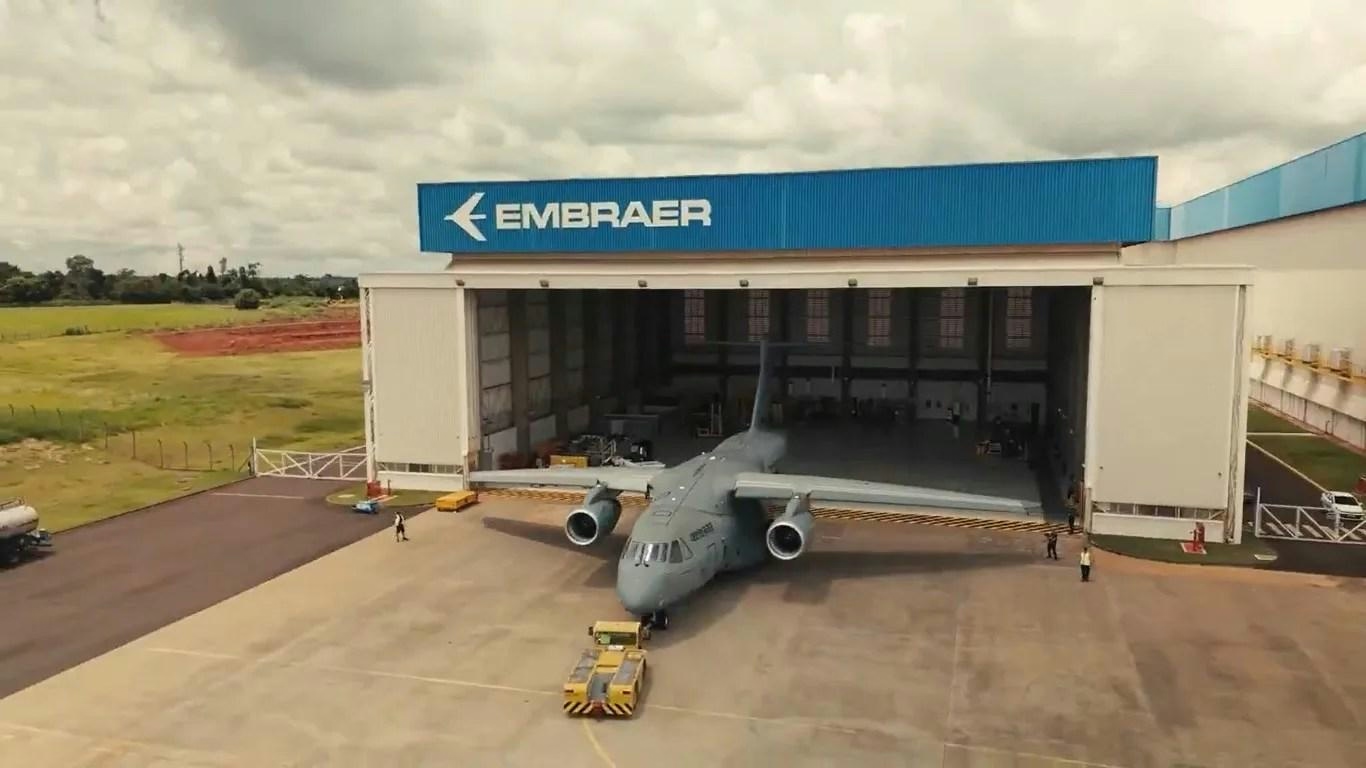
Embraer is poised to deliver its first C-390 multi-mission tactical transport aircraft to South Korea before the close of 2024, marking a pivotal step in the Brazilian aerospace manufacturer’s global expansion. The company announced on 10 June that the initial aircraft, the first of three ordered under South Korea’s Large Transport Aircraft program in 2023, has completed integration of Republic of Korea Air Force-specific systems and has been flown to Portugal for further customization.
Expanding International Footprint
Marcio Monteiro, chief marketing officer for Embraer Defense & Security, highlighted the company’s growing international customer base, stating, “We are going to deliver to three new customers: Czech Republic, which is a NATO member; Uzbekistan; and South Korea.” Both the Czech Republic and Uzbekistan have placed orders for two C-390s each, with Uzbekistan’s contract confirmed earlier this year and the Czech Republic’s lead aircraft having completed its maiden flight in May. The Czech defense ministry anticipates delivery by July.
To meet increasing demand, Embraer is scaling up production at its Gavio Peixoto assembly facility, aiming to raise annual output from six to ten aircraft by 2030. The plant, capable of accommodating five aircraft simultaneously at various assembly stages, is currently producing transports for Brazil, Austria, Portugal, and the Netherlands, with additional units in earlier phases of production.
Technical and Logistical Challenges
Delivering the first C-390 to South Korea involves several complexities. Embraer must ensure the aircraft complies with all regulatory and operational standards mandated by the South Korean military while managing the logistical challenges inherent in international delivery. Furthermore, certain customer-specific modifications—such as encrypted communication systems including the Link 16 tactical data link and advanced countermeasure suites—cannot be completed in Brazil due to export restrictions. Consequently, Embraer relies on corporate partners in Portugal and other allied countries to fulfill these requirements, particularly for customers aligned with NATO or the United States.
Monteiro explained, “Some of the things these customers require, we cannot do in Brazil because we are not a NATO member, so we have to rely on other countries and the support of other companies.” The company has not disclosed which specific systems fall under these restrictions.
Currently, the production cycle for a C-390 from the start of assembly to delivery spans approximately 24 months, though this timeline may be extended by additional customer-specific modifications. Under optimal conditions, Embraer estimates that the Gavio Peixoto facility could eventually achieve a maximum output of 18 aircraft annually, contingent on the availability of critical subsystems such as engines, avionics, and structural components.
Market Implications
Industry analysts observe that Embraer’s successful delivery to South Korea could stimulate further interest from other potential customers in the Asia-Pacific region. At the same time, competing aircraft manufacturers are likely to intensify their efforts to secure military transport contracts in South Korea and other markets where Embraer is expanding its footprint.

Etihad Airways Suspends Airbus A380 Flights on Key Route

Aditya Birla Group Seeks Approval for Aircraft Leasing in GIFT City

Qatar Airways Highlights Innovation and Connectivity at Arabian Travel Market 2026

Hong Kong's Five-Year Plan Includes Andrew Fan's Aircraft Parts Processing Hub Proposal

ACIA Aero Leasing Delivers ATR72-600 to Air Nostrum

RTX Appoints Jill Albertelli as Head of Pratt & Whitney

TAT Technologies Joins Beyond Aero Hydrogen Aircraft Program

AURAK Study Highlights Barriers to Air Taxi Adoption in Emerging Economies

Xiamen Air Selects Altitude for 787 Maintenance at Heathrow

Etihad and Swissport Extend Global Partnership
