
Trasforma le intuizioni dell’IA in azioni concrete

Tendenze
Categories
Emirates Invests $2 Billion to Counter New Premium Airline Rival
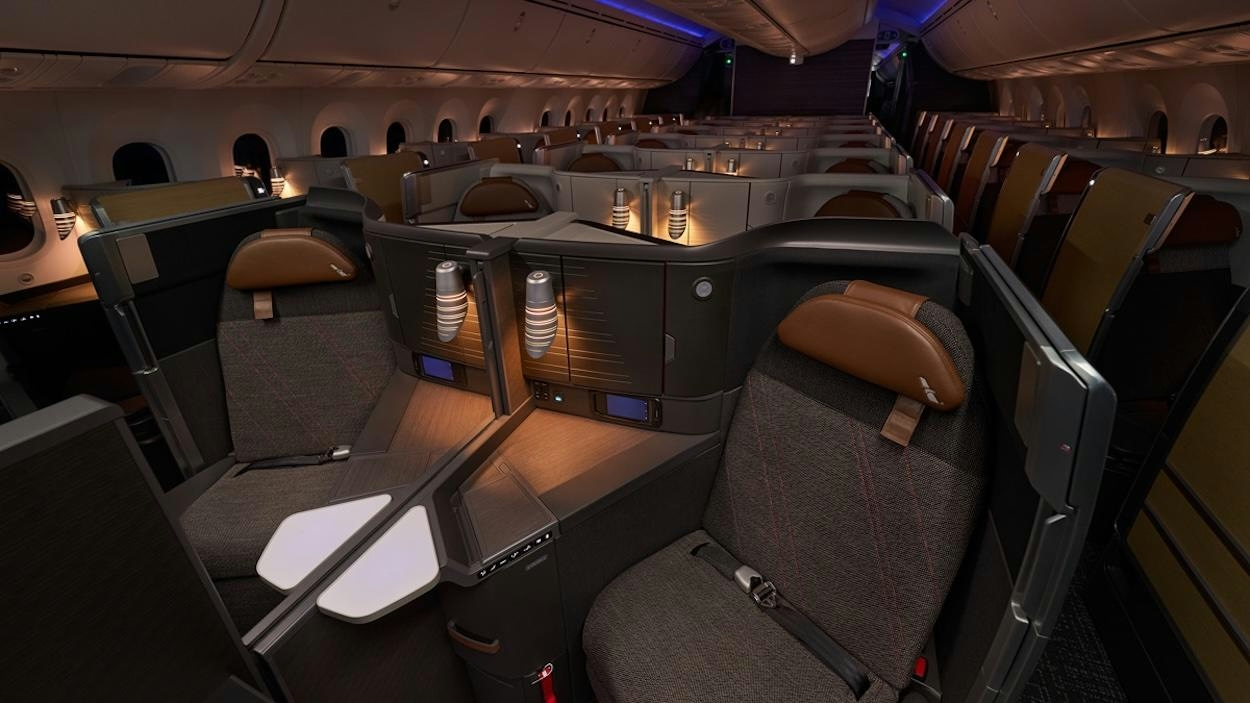
Emirates Commits $2 Billion to Counter Emerging Premium Airline Rivalry
Rising Competition in Middle Eastern Aviation
The Middle Eastern aviation sector is entering a period of heightened competition as Saudi Arabia’s Riyadh Air officially commences ticket sales and scheduled commercial flights, directly challenging the region’s established mega-carriers. Supported by the Saudi Public Investment Fund, Riyadh Air aims to expand aggressively, targeting over 100 destinations by 2030. This ambitious strategy poses a significant threat to Dubai-based Emirates, which has long been regarded as the standard-bearer for ultra-premium global air travel.
In response, Emirates has unveiled a $2 billion investment plan focused not on price competition but on a comprehensive overhaul of its widebody fleet and enhancement of its onboard luxury experience. The airline seeks to fortify its market position by leveraging its operational scale and brand loyalty, creating a “luxury moat” to counter the state-backed rival’s rapid expansion. This strategic move follows Emirates’ record annual profit of AED 22.8 billion ($6.2 billion) for the fiscal year ending March 31, 2026, providing the financial resources necessary for immediate reinvestment.
Strategic Fleet Modernization and Market Challenges
Riyadh Air’s entry into the market is bolstered by the extensive resources of the Saudi National Aviation Strategy, enabling it to circumvent traditional financial constraints that often hinder new carriers. Its swift launch of key routes, including London Heathrow and Manchester, represents a direct challenge to Dubai’s dominance as the primary hub for east-west passenger traffic, with Riyadh’s King Khalid International Airport positioned as a new regional nexus.
Emirates’ counterstrategy centers on the rapid modernization of its 219 widebody aircraft, including flagship Airbus A380s and Boeing 777s. The refurbishment involves replacing every seat, carpet, and bulkhead to ensure a uniform, world-class experience across all major long-haul routes. A significant component of this upgrade is the introduction of premium economy cabins, designed to attract high-yield leisure travelers and bridge the gap between business and economy classes.
Despite this ambitious plan, Emirates faces considerable challenges. Rising operational costs, geopolitical uncertainties, and increasing demands for sustainable aviation practices could complicate efforts to maintain a competitive advantage. The broader aviation industry is also undergoing significant transformation, with intensified competition and potential consolidation. European carriers such as Air France-KLM are preparing for mergers and acquisitions, as evidenced by their recent €1 billion credit facility, while the $7.3 billion acquisition of easyJet by Castlelake highlights the sector’s dynamic nature.
Regional Rivalries and the Future of Premium Air Travel
Other Gulf carriers are also adjusting their strategies amid this evolving landscape. Etihad Airways, for example, is capitalizing on its strong service reputation and extensive network to recover and reposition itself in the post-conflict environment. As these strategic developments unfold, Emirates’ capacity to swiftly upgrade its fleet and enhance the passenger experience will be critical in navigating both market pressures and the ambitions of emerging and established competitors.
The contest for supremacy in the Middle Eastern premium aviation market has transcended traditional corporate rivalry, becoming a complex interplay of geopolitical influence, financial power, and shifting consumer expectations. Emirates’ substantial investment underscores that the competition for regional and global leadership in air travel is intensifying and far from over.

Hong Kong's Five-Year Plan Includes Andrew Fan's Aircraft Parts Processing Hub Proposal

ACIA Aero Leasing Delivers ATR72-600 to Air Nostrum

RTX Appoints Jill Albertelli as Head of Pratt & Whitney

TAT Technologies Joins Beyond Aero Hydrogen Aircraft Program

AURAK Study Highlights Barriers to Air Taxi Adoption in Emerging Economies

Xiamen Air Selects Altitude for 787 Maintenance at Heathrow

Etihad and Swissport Extend Global Partnership

Sepehran Airlines B737 Returns to Mashhad After Tyre and Engine Issues

Etihad Deploys Widebody Fleet to Meet Strong Demand

Korean Air Finalizes $36.2 Billion Deal with Boeing
