Immagine

Trasforma le intuizioni dell’IA in azioni concrete

Unisciti oggi alla lista d’attesa di AeroGenie!

Tendenze

Categories

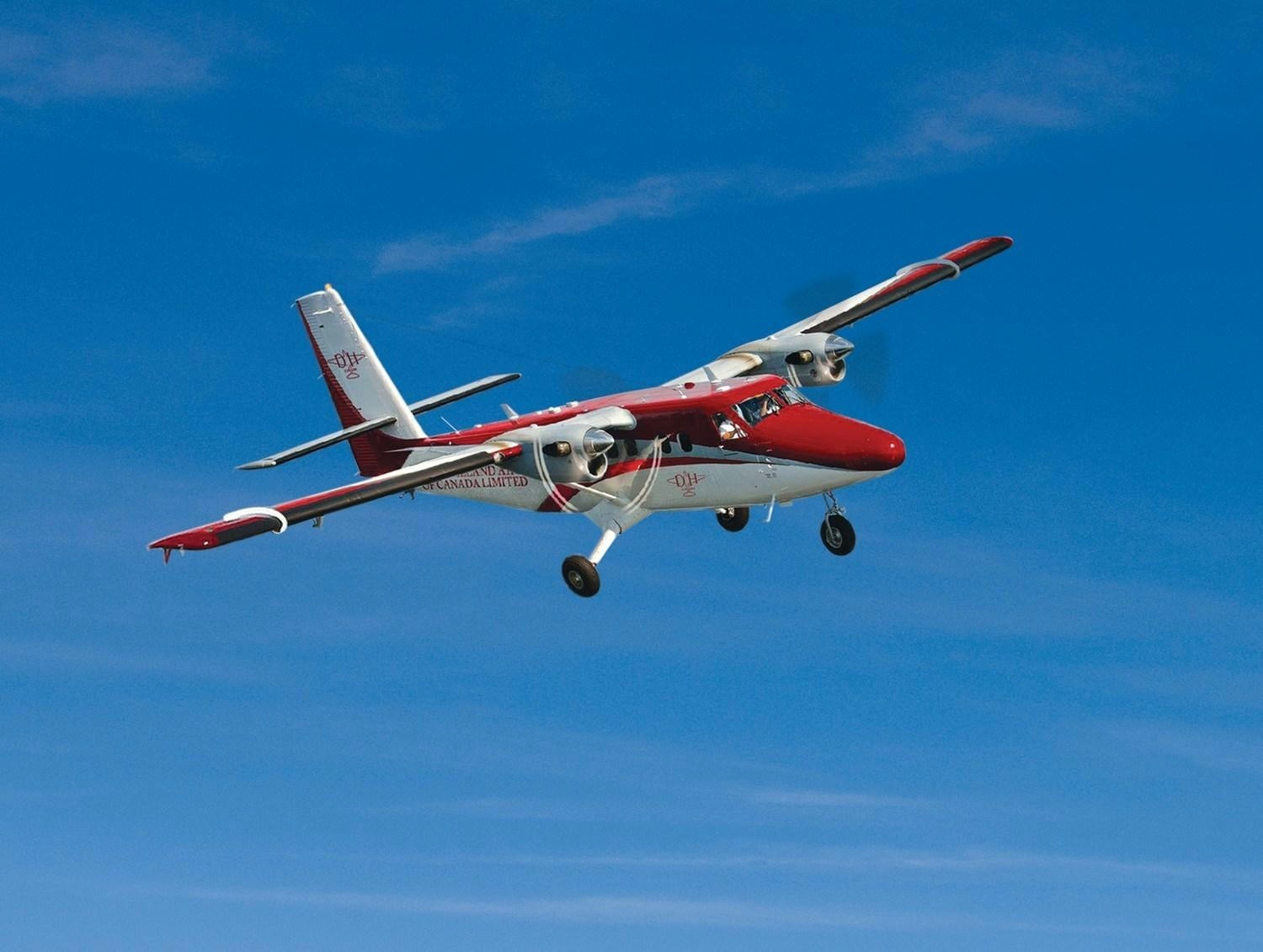
Ethiopian Airlines Receives DHC Twin Otter Classic 300-G
June 20, 2026By ePlane AI
Ethiopian Airlines Receives DHC Twin Otter Classic 300-G
0
0
Ethiopian Airlines
DHC Twin Otter 300-G
Fleet Expansion

Ethiopian Airlines Receives First DHC Twin Otter Classic 300-G Amid Fleet Expansion

De Havilland Aircraft of Canada has delivered the inaugural Twin Otter Classic 300-G to Ethiopian Airlines, marking a pivotal advancement in the carrier’s regional growth strategy. Registered as C-FHYC, the aircraft is currently en route from Canada to Ethiopia and will soon be integrated into the airline’s expanding fleet. Ethiopian Airlines, Africa’s largest airline, placed an order for two of these versatile turboprops at the 2025 Paris Air Show, with the second expected to be delivered later this year.

Enhancing Regional Connectivity and Operational Capability

The introduction of the Twin Otter Classic 300-G is poised to significantly improve Ethiopian Airlines’ capacity to serve remote and challenging destinations, including lake regions and isolated communities throughout Ethiopia and East Africa. This latest generation of the Twin Otter boasts short take-off and landing (STOL) capabilities, a Garmin G1000 integrated flight deck, enhanced cockpit ergonomics, and lightweight cabin seating. Its lighter airframe combined with increased payload capacity makes it particularly well-suited for transporting passengers, cargo, and supporting special missions in rugged environments.

Mesfin Tasew, Group CEO of Ethiopian Airlines, described the delivery as an “important milestone” for the airline’s regional expansion. He emphasized that the aircraft will enable the airline to better serve remote areas while fostering tourism, economic development, and essential air services across the region.

Ryan deBrusk, Vice President of Sales and Marketing at De Havilland Canada, expressed appreciation for Ethiopian Airlines’ confidence in the aircraft. He highlighted the company’s commitment to supporting the airline’s continued growth and its mission to connect communities throughout East Africa.

Strategic Fleet Development Amid Market Challenges

The integration of the Twin Otter occurs during a period of significant fleet development for Ethiopian Airlines. The carrier is currently evaluating orders for 25 new narrow-body jets from Airbus, Embraer, and Boeing. This expansion has attracted considerable market attention, particularly in the context of rising fuel prices and fluctuating demand influenced by geopolitical tensions. Industry analysts are closely monitoring how Ethiopian Airlines will manage the operational and financial complexities associated with incorporating new aircraft types, including the Twin Otter, into its already diverse fleet.

As Ethiopian Airlines continues to assert its dominance in African aviation, competitors may be prompted to reassess their own fleet strategies to maintain market share. The airline operates the continent’s youngest fleet, comprising over 170 aircraft, including a mix of narrowbodies, widebodies, and regional jets. Its regional operations are supported by approximately 30 De Havilland Dash 8-400s, serving 22 domestic destinations with plans to expand to 26. Globally, Ethiopian Airlines connects to more than 145 destinations, reinforcing its position as a key player in both African and international markets.

More news
UAE, Qatar, Saudi Arabia, and Oman Prepare for 2026 Launch of Flying Taxis

UAE, Qatar, Saudi Arabia, and Oman Prepare for 2026 Launch of Flying Taxis

Gulf States Accelerate Plans for Flying Taxi Launch by 2026 The skylines of the Arabian Peninsula are on the cusp of a significant transformation as the United Arab Emirates, Saudi Arabia, Qatar, and Oman advance ambitious plans to introduce flying taxis by 2026. Drawing on verified government blueprints and civil aviation reports, these Gulf nations are rapidly moving from concept to commercial deployment of Advanced Air Mobility (AAM) systems. Their goal is to attract affluent travelers, corporate executives, and luxury tourists through innovative, sustainable transportation solutions. The UAE’s Pioneering Role in Urban Air Mobility The United Arab Emirates is leading the regional charge in adopting flying taxi technology. Dubai has secured an exclusive six-year operating agreement with California-based Joby Aviation, marking a pivotal step with the completion of a cutting-edge vertiport at Dubai International Airport (DXB). Production-conforming test flights are already underway under the supervision of civil aviation authorities, signaling readiness for commercial operations. By late 2026, Dubai aims to launch passenger services that will dramatically reduce travel times. For instance, the typical 45-minute drive from DXB to Downtown Dubai is expected to be cut to just seven minutes by air, while the journey from Dubai Marina to Palm Jumeirah will be shortened to four minutes. Concurrently, Abu Dhabi is progressing with its own initiative, establishing regulatory frameworks for Archer Aviation’s “Midnight” eVTOL aircraft. Scheduled for a third-quarter 2026 launch, this service will connect Zayed International Airport with key destinations such as Yas Island and the Corniche, underscoring the UAE’s commitment to a zero-emission, ultra-premium transit ecosystem. Saudi Arabia’s Integration of Flying Taxis into Vision 2030 Saudi Arabia is incorporating eVTOL networks into its broader Vision 2030 economic diversification strategy. The General Authority of Civil Aviation (GACA) is spearheading efforts to deploy flying taxis across prominent sites including NEOM, AlUla, and the holy cities. Notably, NEOM, in collaboration with Germany’s Volocopter, has completed special-authorization test flights, demonstrating the viability of integrating autonomous air traffic management within the region’s futuristic infrastructure. Regional Developments and Emerging Challenges Qatar and Oman are also advancing their own AAM projects, seeking to establish themselves as leaders in next-generation urban mobility. However, the path to a 2026 launch faces considerable challenges. Regulatory complexities, safety concerns, and the integration of new technologies into existing airspace systems remain significant obstacles. Market responses have been mixed, with some investors expressing caution amid ongoing legal disputes and certification delays involving key industry players such as Joby Aviation, Archer Aviation, and Beta Technologies. Further complicating the landscape are legal challenges to the Trump administration’s eVTOL Integration Pilot Program, which has been instrumental in supporting the sector but now faces potential delays in broader adoption. Additionally, the Gulf region’s emphasis on securing oil transit routes and maintaining stable tourism flows amid geopolitical tensions adds layers of complexity to the preparations. Despite these hurdles, the Gulf states remain resolute in their ambition to redefine urban mobility. The successful launch of flying taxis in 2026 could establish a new global benchmark for luxury, efficiency, and sustainability in urban transportation.
TUI fly Adds Boeing 787 Flights to Curaçao to Ease Winter Travel Disruptions

TUI fly Adds Boeing 787 Flights to Curaçao to Ease Winter Travel Disruptions

TUI fly Expands Boeing 787 Services to Curaçao Amid Winter Travel Challenges In response to widespread travel disruptions across Europe, TUI fly is significantly enhancing its Caribbean operations this winter by introducing Boeing 787 Dreamliner flights to Curaçao. Announced on June 20, 2026, this strategic move addresses the persistent flight cancellations and congestion at major European hubs, offering travelers a more reliable route to sun destinations during the peak winter season. Addressing Demand with Increased Capacity TUI fly’s decision is driven by surging demand and record load factors, with some recent flights reaching full capacity. The airline will operate direct Boeing 787 services to Curaçao twice weekly, on Mondays and Thursdays, throughout the winter schedule. This expansion adds over 27,000 seats to the market, providing much-needed relief for passengers seeking alternatives to the increasingly congested European airspace. The Boeing 787, configured to accommodate approximately 305 passengers, represents a significant operational upgrade for TUI fly. By deploying these widebody aircraft, the airline enhances both efficiency and cost-effectiveness while reinforcing its presence in the Dutch Caribbean. Curaçao, in particular, has emerged as TUI fly’s premier Caribbean destination, outpacing steady traffic to Aruba and Bonaire and solidifying its role as the centerpiece of the airline’s regional network. Industry Context and Strategic Implications This capacity increase aligns with broader industry trends as airlines adjust to post-pandemic travel patterns and ongoing structural challenges. European carriers are increasingly utilizing larger aircraft to manage high passenger volumes amid chronic capacity constraints and cascading delays. However, TUI fly’s expansion occurs against a backdrop of rising operating costs and geopolitical uncertainties, which have spurred consolidation among major European airlines. Competitors such as Lufthansa are intensifying competition by introducing premium cabin products like the Allegris on new routes, heightening the stakes in an already competitive market. In parallel, TUI is investing in longer leisure routes with its expanding Boeing 737 MAX fleet, seeking to balance operational flexibility with evolving market demands. Environmental considerations also weigh heavily on the industry’s future. Airlines, including TUI, face mounting pressure to accelerate sustainability initiatives and transition to more efficient fuels amid increasing regulatory scrutiny and public concern. Impact on Travelers and the Broader Network For travelers, TUI fly’s expanded service to Curaçao offers a crucial alternative to the congested European airspace. The airline’s phased departure schedule is designed to optimize gate capacity and support the broader transportation infrastructure in the region. Passengers are advised to monitor official airline channels and flight tracking platforms such as FlightAware for real-time updates on schedules and potential disruptions. As the winter travel season approaches, TUI fly’s deployment of the Boeing 787 to Curaçao represents a pivotal development. It underscores the adaptive strategies airlines must employ to navigate a volatile and highly competitive aviation environment while meeting the evolving needs of their customers.
Volaris Sees Long-Term Impact From GTF Engine Issues

Volaris Sees Long-Term Impact From GTF Engine Issues

Volaris Faces Prolonged Impact from GTF Engine Issues Amid Industry Challenges Volaris is bracing for an extended period of operational disruption as inspections of Pratt & Whitney geared turbofan (GTF) engines are expected to continue for at least two more years. This ongoing issue has resulted in 25 aircraft remaining grounded, complicating capacity planning not only for Volaris but across the airline industry. The persistent engine problems underscore the strategic rationale behind Volaris’s proposed holding company with Viva, as both carriers contend with engine-related disruptions, volatile fuel prices, and intensified regulatory scrutiny surrounding their planned merger. Operational Challenges and Passenger Traffic Stability Enrique Beltranena, president and CEO of Volaris, confirmed that the airline is still managing the repercussions of the global Pratt & Whitney engine recall, which has compelled airlines worldwide to withdraw aircraft from service for inspections and maintenance. Speaking at Felipe Ángeles International Airport, Beltranena stated, “The review of the Pratt & Whitney engines affecting the Volaris fleet will continue for at least two more years.” He added that while 25 aircraft remain grounded, this number is expected to decrease toward the end of 2026 as engines are cleared to return to service. Despite the reduced fleet capacity, Volaris has managed to maintain stable passenger traffic. Beltranena highlighted the airline’s efforts to mitigate the impact through strategic pricing, product diversification, and the introduction of new routes connecting key markets. Load factors remain strong, with domestic routes averaging between 82% and 83% and international services between 88% and 89%, enabling Volaris to sustain passenger volumes amid capacity constraints. More than 40% of Volaris’s routes operate without direct competition, a position the CEO attributes to close collaboration with federal and state tourism authorities as well as regional governments. “We have maintained our promise to keep flying and remain present despite difficult circumstances and a very challenging year. Our traffic volume has remained stable, and we believe it can be sustained and improve somewhat toward the World Cup,” Beltranena added. Industry Outlook and Broader Challenges These developments come as Mexico’s airline sector prepares for a surge in travel demand ahead of the 2026 FIFA World Cup. Forecasts from Monex project passenger traffic growth in Mexico averaging 5.9% in 2026, with Volaris expected to grow by 6.9%, Viva by 6.1%, and Aeroméxico by 4.4%. Analysts anticipate that low-cost carriers will capture a significant share of domestic demand through route optimization and selective capacity deployment, while Aeroméxico is positioned to benefit from international travelers and corporate delegations attending the tournament. However, recent booking trends suggest uneven demand, with declines in reservations in Mexico City and Guadalajara compared to 2025 levels. The engine inspection challenges are compounded by broader industry pressures, including rising fuel costs driven by geopolitical tensions in the Middle East. In April, Volaris withdrew its full-year 2026 financial guidance, citing limited visibility on fuel prices, currency fluctuations, and demand trends. Industry leaders have expressed concerns about the longevity of engine supply constraints. United Airlines CEO Scott Kirby warned that these issues could persist for at least five more years, potentially increasing operational costs and delaying fleet expansion. Competitors are responding with capacity reductions; LATAM CEO Roberto Alvo has indicated the possibility of further cuts if fuel prices remain high. Swiss International Air Lines recently retired two A220-100 aircraft to support its larger A220-300 fleet, illustrating the widespread impact of engine problems across the sector. Despite these challenges, Volaris remains focused on maintaining stable operations and positioning itself for future growth as the airline industry adapts to ongoing disruptions.
New Animated Series Encourages Central Coast Children to Explore Aviation

New Animated Series Encourages Central Coast Children to Explore Aviation

New Animated Series Encourages Central Coast Children to Explore Aviation A new animated series titled *Mighty Tails* seeks to ignite a passion for aviation among young children on the Central Coast, inspiring them to envision a future in flight. Targeted at students from kindergarten through fifth grade, the series follows the adventures of Lula and Astro, introducing complex aviation concepts in an accessible and engaging manner before children might otherwise consider the field attainable. A Curriculum Rooted in Innovation and Equity *Mighty Tails* serves as the cornerstone of a comprehensive curriculum developed by Sarasina Tuchen and her nonprofit organization, Eden 8. With a professional background in transportation, Tuchen views advanced air mobility—such as air taxis—as the next significant evolution in sustainable and equitable transportation. She emphasizes that the transportation system has not seen a fundamental transformation since the 1950s, and these emerging aviation technologies promise a future where children from underserved communities, including Title One schools, could one day pilot aircraft themselves. Recognizing the critical need for a skilled workforce to support this burgeoning industry, Tuchen and her team designed the curriculum to go beyond traditional science and technology education. Their approach empowers children to actively participate in shaping their futures rather than passively receiving information. “It’s important that kids aren’t just handed information—they’re actively part of shaping the world they want,” Tuchen explains. Bringing Aviation to Life Through Storytelling To bring *Mighty Tails* to life, Tuchen collaborated with writer Jacob Meszaros, known for his work on *The Simpsons*. Meszaros highlights that while the series introduces new aviation concepts, its core strength lies in relatable characters and joyful storytelling. The character Astro, a rescue dog inspired by Tuchen’s own pet from East Salinas, and Lula guide children through vibrant adventures filled with educational content about the aviation industry. The series has already been launched in Texas and at a magnet school in Los Angeles, where UCLA students assist teachers in integrating the curriculum into classrooms. These volunteers deliver weekly science lessons and hands-on activities, helping students connect their learning to real-world applications. One UCLA volunteer remarked on the program’s impact, noting that students often share their newfound knowledge with family members, thereby extending the educational reach beyond the classroom. Navigating Challenges and Future Prospects Despite its promising educational approach, *Mighty Tails* faces stiff competition in a crowded children’s media market dominated by established franchises such as *Toy Story* and *Among Us*. While market reception remains uncertain, recent initiatives by the Federal Aviation Administration—including renewed investments in aviation workforce development and the reopening of grant applications—reflect a growing national commitment to aviation education. This momentum may enhance the series’ visibility and encourage the development of additional STEM-focused content. With several advanced air mobility companies establishing operations on the Central Coast, Tuchen and her team are determined to prepare local children for the opportunities ahead. “We’re at an inflection point—the Jetsons age is here,” Tuchen asserts. “The future is now.” Although *Mighty Tails* has yet to be introduced in Central Coast classrooms, its creators remain hopeful that it will soon inspire a new generation of aviators in the region.
Boeing Produced Only 16 Widebodies Last Quarter as Airbus Gains Ground with Delta

Boeing Produced Only 16 Widebodies Last Quarter as Airbus Gains Ground with Delta

Boeing’s Widebody Production Declines Amid Airbus Expansion with Delta Boeing’s production challenges have intensified, as reflected in its latest quarterly output figures. In the first quarter of 2024, the U.S. aerospace manufacturer produced only 83 aircraft, marking its lowest quarterly total since 2021. Of these, a mere 16 were widebody jets, consisting of three Boeing 767s and thirteen Boeing 787 Dreamliners. This significant reduction in widebody production contrasts sharply with Airbus’s growing market presence, particularly through substantial orders from major carriers such as Delta Air Lines. Production Setbacks and Safety Concerns Boeing’s recent production slump follows a turbulent period marked by safety and regulatory issues. In January 2024, the company faced a high-profile incident involving an Alaska Airlines 737 MAX 9, registered as N704AL, which experienced a door plug blowout. This event triggered a series of rigorous Federal Aviation Administration (FAA) safety audits. The resulting scrutiny has had a profound impact: Boeing’s aircraft deliveries fell by 47% compared to the previous quarter, and its stock price declined by 32% over the course of the year. The decline in widebody output is particularly troubling given the sustained demand for these aircraft. The Boeing 767 remains in demand for freighter conversions and the KC-46 Pegasus tanker program. Meanwhile, deliveries of the 787 Dreamliner have been delayed due to fuselage certification challenges and supplier bottlenecks. These issues have compelled airlines such as United, All Nippon Airways, and Air India to extend the operational life of older Boeing 777-200ER and 767-300ER models beyond initial plans. The Alaska Airlines incident further undermined confidence in Boeing’s operations. The National Transportation Safety Board’s final report, released in July 2025, attributed the root cause to inadequate training, guidance, and oversight of maintenance procedures within Boeing. The FAA was also criticized for failing to address systemic problems at Boeing’s Renton facility. Legal repercussions continue to unfold, with Alaska Airlines pilot Captain Brandon Fisher filing a $10 million lawsuit against Boeing, alleging wrongful blame for the incident. Airbus Gains Momentum as Boeing Struggles to Recover While Boeing contends with these internal challenges, Airbus is capitalizing on the opportunity to expand its market share. Delta Air Lines has placed significant orders for the Airbus A330neo and A350 models, strengthening Airbus’s position in the competitive U.S. market. In response, American Airlines is actively evaluating new widebody orders from both Boeing and Airbus to maintain competitiveness with Delta and United Airlines. On the international front, Qantas is negotiating potential orders for approximately 20 widebody jets, and EgyptAir aims to grow its fleet to 125 aircraft by 2030. In an effort to counter Airbus’s aggressive production strategy, Boeing is exploring ways to increase its 737 jet output to around 70 units per month. However, ongoing quality control problems and production delays continue to hamper these efforts, raising concerns about Boeing’s ability to meet rising demand. As Airbus consolidates its gains and airlines worldwide reassess their fleet strategies, Boeing faces mounting pressure to resolve its operational difficulties and restore confidence among customers and investors.
The Role of AI in the Future of Aviation Operations

The Role of AI in the Future of Aviation Operations

The Role of AI in the Future of Aviation Operations Aviation industry leaders are increasingly embracing artificial intelligence (AI) and automation to improve the efficiency and safety of airline and airspace operations. At the recent AIAA AVIATION Forum in San Diego, representatives from United Airlines, Reliable Robotics, Collins Aerospace, NASA, and the standards community convened to discuss how advanced analytics and autonomous technologies are already influencing real-world decision-making. They also examined the challenges involved in scaling these innovations without disrupting the intricate systems that manage the daily movement of hundreds of thousands of passengers. United Airlines: Integrating AI with Human Oversight United Airlines stands at the forefront of this technological transformation. Roberta Zimmerman, United’s Director of Air Traffic Strategy, Data Analytics, and Strategic Vision, detailed how AI has become an integral part of the airline’s daily operations. Managing over 5,300 departures each day and having transported a record 630,500 passengers in a single day, United employs AI to streamline processes for both customers and crew while ensuring that critical safety decisions remain under human control. One practical application involves AI-driven communication tools that convey delays in clear, accessible language and provide passengers with real-time alternatives for missed connections, including estimated walking times between gates. Additionally, AI assists in translating complex labor contracts into scheduling logic, enabling more effective crew planning amid increasingly complicated agreements. Zimmerman highlighted that the primary challenge is not the sophistication of AI algorithms but rather their integration into existing operational systems. Even seemingly minor updates, such as changing an airport code, can have far-reaching consequences due to the interconnected nature of the national airspace system. She emphasized, “We are a system of systems, and something very small, the integration of that is a huge impact to make sure that there’s no loss of service.” Industry-Wide Challenges and Considerations Beyond technical integration, aviation leaders underscored broader operational and organizational challenges. Establishing clear ownership, developing robust systems, and fostering trust among customers and employees are critical for the successful adoption of AI. Market responses have revealed skepticism, particularly concerning the transparency and fairness of AI-driven dynamic pricing models. Without disclosure of the data and logic underpinning pricing decisions, customer trust risks erosion. Competitors are closely monitoring how AI is deployed to enhance efficiency and customer service, while simultaneously confronting issues of governance and accountability. High-profile failures—such as Air Canada’s chatbot delivering incorrect information and Zillow’s automated home-buying tool mispricing properties—highlight the dangers of inadequate oversight and the necessity for clear accountability frameworks in AI systems. The Path Forward As AI becomes more deeply embedded in aviation operations, the industry faces a delicate balancing act: harnessing automation to improve efficiency while preserving human oversight and maintaining public trust. Aviation leaders agree that AI offers substantial benefits, but these can only be realized if operational, organizational, and ethical challenges are addressed directly. The future of aviation will depend not solely on technological innovation but on thoughtful integration and transparent governance.
Nakajima G10N Fugaku: Japan’s Long-Range Bomber Designed to Reach America

Nakajima G10N Fugaku: Japan’s Long-Range Bomber Designed to Reach America

Nakajima G10N Fugaku: Japan’s Long-Range Bomber Designed to Reach America An Ambitious Vision Amidst Wartime Adversity In 1942, as the tide of the Pacific War increasingly turned against Japan, military strategists conceived an aircraft of extraordinary ambition: the Nakajima G10N Fugaku. Named after Japan’s iconic Mount Fuji, this ultra-long-range heavy bomber was designed to undertake a mission of unprecedented scale. The plan envisioned the Fugaku taking off from the Kuril Islands, crossing the vast expanse of the Pacific Ocean to bomb American industrial centers, and then continuing westward to land in Nazi-occupied France. This single, globe-spanning operation reflected the extreme lengths to which Japan’s military planners were willing to go in pursuit of strategic advantage. Although the Fugaku never progressed beyond the design phase, its conceptualization remains a striking example of wartime innovation and ambition. Design and Technical Specifications The Fugaku was the centerpiece of “Project Z,” an Imperial Japanese Army initiative aimed at developing a true intercontinental bomber. The aircraft’s proposed dimensions were staggering for the era, featuring a wingspan of approximately 207 feet (63 meters) and a length of around 131 feet (40 meters). Powered by six engines equipped with contra-rotating propellers, the bomber was projected to achieve a top speed of 485 miles per hour, operate at altitudes up to 49,000 feet, and carry a bomb load of up to 44,000 pounds. Its estimated range of 12,000 miles would have enabled it to traverse the Pacific and Atlantic Oceans in a single mission, a feat unmatched by contemporary aircraft. Despite these impressive specifications, the Fugaku’s development was hindered by significant technical and industrial challenges. The complexity of the required engines and the strain on Japan’s wartime manufacturing capacity proved insurmountable. By 1943, when the project formally commenced, Japan’s resources were already heavily committed to ongoing military operations. Although plans for production facilities were drawn up, the program was ultimately cancelled in 1944 before any prototype could be constructed. Strategic Context and Competitive Challenges Had the Fugaku advanced to operational status, it would have entered a competitive field dominated by formidable long-range bombers such as the American B-52 Stratofortress and the Russian Tu-22M3. Matching or exceeding the capabilities of these aircraft would have presented considerable technological and strategic obstacles. Contemporary analysts, and indeed modern observers, have expressed skepticism regarding Japan’s capacity to produce a bomber on par with its American and Soviet counterparts, particularly given the industrial limitations and recent setbacks experienced by those nations’ bomber programs. It is likely that rival powers would have responded to the Fugaku’s emergence by emphasizing the technological sophistication and strategic advantages of their own fleets, thereby minimizing the perceived threat posed by Japan’s ambitious design. Enduring Legacy Although the Nakajima G10N Fugaku never materialized beyond blueprints and scale models, it endures as a symbol of wartime desperation and visionary engineering. The project encapsulates the extraordinary lengths to which nations will go in pursuit of strategic dominance, serving as a poignant reminder of the intersection between innovation and the harsh realities of war.
Airbus A350-900ULR Extends Range to 9,700 Nautical Miles by Removing Parts, Not Adding Fuel Tanks

Airbus A350-900ULR Extends Range to 9,700 Nautical Miles by Removing Parts, Not Adding Fuel Tanks

Airbus A350-900ULR Extends Range to 9,700 Nautical Miles Through Structural Innovation The Airbus A350-900ULR has redefined the parameters of ultra-long-haul commercial aviation by extending its range to an impressive 9,700 nautical miles. Unlike previous approaches that relied on adding auxiliary fuel tanks, Airbus achieved this milestone by reengineering the aircraft’s internal structure. This innovation addresses the longstanding challenge of balancing fuel capacity with passenger and cargo payload, offering airlines a more efficient solution for non-stop flights over vast distances. Evolution of Ultra-Long-Haul Aviation The quest for ultra-long-haul connectivity gained prominence in the early 2000s when Singapore Airlines inaugurated the world’s longest non-stop route between Singapore and Newark using the Airbus A340-500. Although the four-engine A340-500 could carry sufficient fuel for such distances, its high fuel consumption rendered the route economically unsustainable amid rising oil prices, ultimately leading to its suspension. This experience underscored the necessity for a more fuel-efficient, twin-engine aircraft capable of sustaining ultra-long-haul operations. The Airbus A350-900ULR emerged as a response to this need. Equipped with advanced Rolls-Royce Trent XWB engines, the aircraft was engineered for superior aerodynamic efficiency and reduced fuel burn. Its twin-engine design significantly lowers operating costs and enables airlines to maintain some of the world’s longest commercial routes, reviving opportunities that had previously been curtailed. Structural Optimization Instead of Added Weight Contrary to the common assumption that ultra-long-range aircraft require additional fuel tanks, Airbus adopted a different strategy with the A350-900ULR. Rather than increasing the aircraft’s weight through bolt-on tanks, engineers optimized the existing internal architecture. By repurposing vent spaces and modifying the wing and center wing box, Airbus unlocked an additional 24,000 liters (6,340 US gallons) of fuel capacity. This was accomplished by deactivating certain cargo compartments and reducing dense passenger cabin configurations, effectively trading volume for extended range without compromising structural integrity. Market Implications and Industry Dynamics The innovative design of the A350-900ULR presents regulatory and operational challenges. The modified structure requires thorough certification processes, and airlines must adapt to the logistical complexities of operating aircraft on ultra-long-haul routes. Meanwhile, competition in this segment is intensifying, with Boeing’s 777X and other contenders advancing their own ultra-long-range aircraft programs. Despite these challenges, the market response to the A350-900ULR has been largely favorable. Airlines are increasingly attracted to its potential for lowering operational costs and fuel consumption on extended routes. The aircraft’s enhanced efficiency and range are influencing network planning strategies, enabling direct flights between distant global hubs that were previously impractical. As the ultra-long-haul market continues to evolve, the Airbus A350-900ULR exemplifies how innovative structural engineering, rather than simply increasing fuel capacity, can push the boundaries of commercial aviation.
FAA Employs AI to Enhance Runway Safety

FAA Employs AI to Enhance Runway Safety

FAA Employs AI to Enhance Runway Safety The Federal Aviation Administration (FAA) is leveraging artificial intelligence to strengthen runway safety by implementing a new platform designed to analyze extensive aviation data. This initiative aims to identify emerging risks and unusual safety patterns that were previously difficult to detect due to fragmented data management. Centralizing Aviation Data for Improved Risk Detection Historically, the FAA’s various divisions operated in silos, each analyzing their own datasets independently, which limited the agency’s ability to recognize broader safety trends. An FAA official familiar with the project, speaking anonymously, explained that while the data has always existed, its compartmentalization hindered comprehensive analysis. The agency has now partnered with Palantir to deploy a central integration platform that consolidates incident reports, safety data, and precursor events into a unified system. Artificial intelligence then processes hundreds of thousands of records, identifying trends, outliers, and potential threats that might otherwise go unnoticed. Although Palantir declined to comment on the project, the FAA confirmed that the AI tool has already influenced policy decisions. In April, the agency prohibited parallel landings at San Francisco International Airport after the platform flagged potential safety concerns. Such proactive interventions are vital, given that runway incursions remain among the most serious hazards in aviation, with the potential for catastrophic consequences. Despite a relatively low number of incursions this year, a fatal collision in March between a fire truck and an Air Canada jet at New York’s LaGuardia Airport highlighted the persistent need for enhanced safety measures. Limitations and Ongoing Development of AI Tools FAA officials acknowledge that the AI system is not a comprehensive solution. The LaGuardia incident, involving multiple complex factors, was not predicted by the current model. According to the FAA official, the platform—known as Foundry—is designed to detect recurring patterns and emerging risks over time rather than forecast isolated, complex events. While the system might have flagged a pattern of increased vehicle incursions had one developed, the unique circumstances surrounding the LaGuardia crash exceeded its present predictive capabilities. The AI model is updated weekly with new data from a wide array of sources, including weather conditions, turbulence reports, live aircraft tracking, collision alerts, news articles, surface radar, National Transportation Safety Board (NTSB) reports, laser-pointing incidents, and drone sightings. FAA analysts can query the system using virtually any variable, enabling examination of both historical and real-time information. FAA Administrator Bryan Bedford recently announced plans to expand the agency’s use of the Palantir platform, signaling a commitment to further integrating AI into safety monitoring. Balancing AI Innovation with Human Oversight Former National Transportation Safety Board chair Robert Sumwalt emphasized the importance of maintaining human oversight amid growing enthusiasm for AI. While acknowledging the technology’s genuine potential to enhance aviation safety, he cautioned against over-reliance on automated systems. “At least for the intermediate term, human involvement with such data analysis will be essential,” Sumwalt stated. The transition to AI-driven safety monitoring presents challenges, including the complexity of integrating diverse data sources and potential resistance from advocates of traditional safety protocols. Although the aviation industry and financial markets may welcome the promise of improved efficiency and safety, skepticism persists regarding AI’s reliability in high-stakes environments. Competitors are likely to respond by developing their own AI solutions or collaborating with the FAA to bolster their safety measures, indicating a broader shift toward technology-driven risk management within the aviation sector.
New Report Examines AI Travel System’s Impact on Tourism and Airlines

New Report Examines AI Travel System’s Impact on Tourism and Airlines

New Report Examines AI Travel System’s Impact on Tourism and Airlines The global travel industry is undergoing a profound technological transformation as artificial intelligence (AI) advances beyond basic planning tools to become an all-encompassing travel companion. At a recent international travel technology conference held in Spain, industry leaders presented a vision in which AI-powered agents could supplant traditional search-based booking systems. This evolution is poised to fundamentally reshape the interactions between airlines, hotels, online travel agencies, destination marketers, and travelers themselves. AI as the New Operating System for Travel Executives emphasized that AI should be regarded not simply as an additional digital tool but as a new operating system for the travel sector. These intelligent assistants are expected to comprehend traveler preferences, instantly compare options, monitor disruptions, and offer personalized alternatives throughout the entire journey. This paradigm shift promises to deliver faster, smarter, and more tailored customer experiences, with travelers increasingly engaging directly with AI agents rather than manually navigating airline, hotel, or vacation websites. The capabilities of AI in travel extend to personalized trip planning and booking, real-time assistance, continuous journey management, automated recommendations, and intelligent handling of disruptions. Together, these features aim to enhance decision-making speed and improve the overall traveler experience. Challenges for Existing Infrastructure Despite the promising outlook, the travel industry’s legacy infrastructure faces significant challenges in adapting to AI-driven demands. Current reservation platforms, pricing engines, and distribution systems were originally designed for human users conducting limited searches. In contrast, AI-powered travel planning may generate millions of automated queries before a single booking is finalized, necessitating robust and scalable systems capable of managing unprecedented digital volumes without compromising speed or reliability. Where current systems rely on human search queries, traditional booking workflows, static pricing responses, and limited data exchange, future AI requirements call for handling massive AI-generated search volumes, continuous automated interactions, dynamic real-time decision-making, and a trusted live data ecosystem. Upgrading infrastructure to meet these demands represents a considerable undertaking. Additional concerns revolve around data accuracy, transparency, and the effective management of global travel programs. The future success of AI commerce in travel will depend heavily on governance, security, and data quality. Companies that establish strong controls in these areas are likely to secure a competitive advantage. Market Reactions and the Competitive Landscape Market responses to AI integration in travel have been mixed. While consumer adoption is accelerating—with research indicating that over one-third of European travelers and 56% of U.S. travelers now use AI for trip planning—corporate travel buyers remain cautious, reporting limited impact from AI technologies to date. In response, industry competitors are developing proprietary AI models and incorporating agentic AI for specialized tasks, seeking to differentiate their offerings in an increasingly crowded marketplace. Traveler Confidence and the Human Element Despite growing trust in AI, many travelers continue to value human advice when making final decisions. As AI becomes more deeply embedded in the travel experience, maintaining transparency and fostering trust will be essential to achieving widespread adoption. The travel sector now confronts one of its most significant technological shifts since the rise of online booking. The ability of companies to adapt their systems, address data and governance challenges, and deliver seamless, reliable AI-powered experiences will determine their success in this rapidly evolving landscape.
line









