
Trasforma le intuizioni dell’IA in azioni concrete

Tendenze
Categories
FAA and EASA Commit to Enhanced Cooperation on Aviation Safety
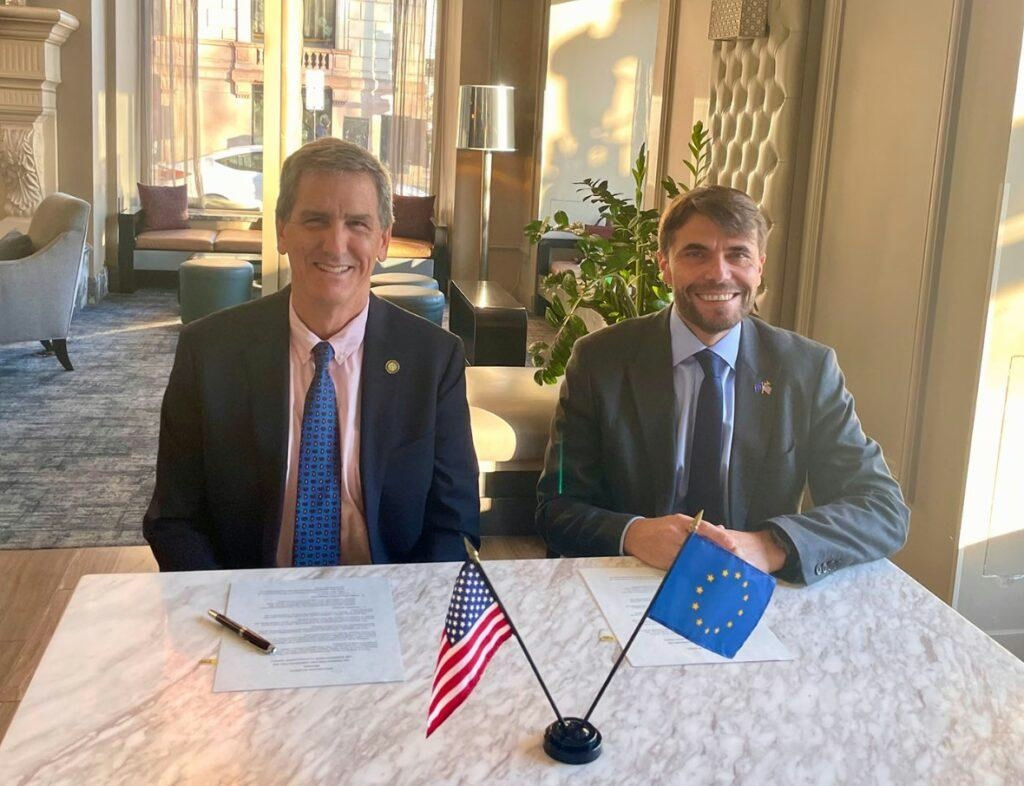
FAA and EASA Commit to Enhanced Cooperation on Aviation Safety
Strengthening Transatlantic Partnership Amid Technological Advances
In response to rapid technological advancements reshaping the aviation sector, the Federal Aviation Administration (FAA) and the European Union Aviation Safety Agency (EASA) have reaffirmed their commitment to deepen collaboration on aviation safety. This pledge was made during the 2026 FAA and EASA International Safety Conference, held from June 16 to 18 in Chantilly, Virginia, under the theme “Safety Together: Innovation, Integration and Trust.”
Both agencies underscored the necessity of a unified approach to safety oversight as the industry integrates increasingly sophisticated automated cockpit systems and explores new certification pathways for advanced aircraft. FAA Administrator Bryan Bedford characterized the current period as “one of the most innovative moments in aviation,” emphasizing that international cooperation is essential to ensure the safe and efficient evolution of aviation systems. Echoing this view, EASA Executive Director Florian Guillermet highlighted that collaboration, expertise sharing, and alignment of regulatory approaches are critical to supporting innovation while maintaining public confidence in aviation safety.
Despite this shared vision, challenges remain. The agencies face complexities arising from differing regulatory frameworks, varying levels of industry preparedness, and potential delays in implementing new safety protocols. The evolving regulatory environment, exemplified by the FAA’s recent transition to an OEM-centric Minimum Equipment List (MMEL) process and ongoing recommendations from the National Transportation Safety Board (NTSB), illustrates the difficulties inherent in harmonizing standards across international borders.
Priorities and Industry Impact
At the conference, the FAA and EASA identified several key areas for joint action. These include enhancing information sharing on safety oversight and best practices, advancing safety management systems through data-driven decision-making, and streamlining approval processes for emerging aviation technologies. The agencies also committed to accelerating the integration of automated cockpit systems, modernizing pilot training and simulator capabilities, and improving coordination on emerging risks such as cyber threats, GPS interference, conflict zones, and extreme weather events. To sustain momentum, regular leadership meetings will be held to assess progress and establish new priorities.
This renewed focus on cooperation arrives amid heightened scrutiny from industry stakeholders and passengers, for whom safety remains paramount. The evolving regulatory landscape and technological progress are prompting industry competitors to intensify their own safety initiatives and adopt more stringent measures to maintain a competitive advantage. These developments continue to drive operational improvements across the global aviation sector.
Future Outlook
The 2026 conference convened approximately 400 senior professionals representing regulators, manufacturers, airlines, and industry associations worldwide. The event, which alternates annually between the FAA and EASA, is scheduled to take place next in Cologne, Germany, from June 22 to 24, 2027. Both agencies remain committed to navigating the complex and evolving challenges of global aviation safety through sustained collaboration.

Etihad Airways Suspends Airbus A380 Flights on Key Route

Aditya Birla Group Seeks Approval for Aircraft Leasing in GIFT City

Qatar Airways Highlights Innovation and Connectivity at Arabian Travel Market 2026

Hong Kong's Five-Year Plan Includes Andrew Fan's Aircraft Parts Processing Hub Proposal

ACIA Aero Leasing Delivers ATR72-600 to Air Nostrum

RTX Appoints Jill Albertelli as Head of Pratt & Whitney

TAT Technologies Joins Beyond Aero Hydrogen Aircraft Program

AURAK Study Highlights Barriers to Air Taxi Adoption in Emerging Economies

Xiamen Air Selects Altitude for 787 Maintenance at Heathrow

Etihad and Swissport Extend Global Partnership
