
Trasforma le intuizioni dell’IA in azioni concrete

Tendenze
Categories
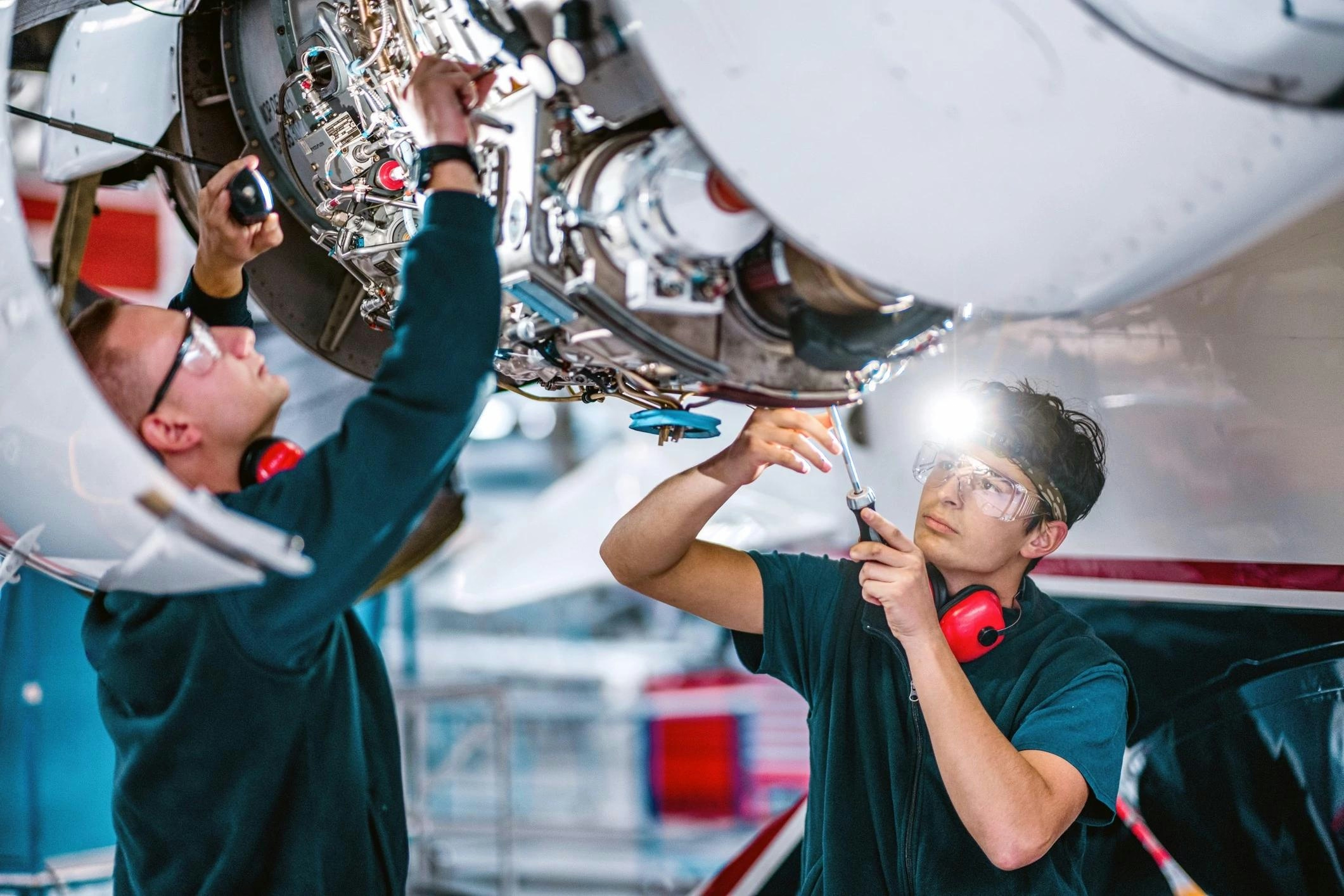
Faster Diagnostics Essential for Aircraft Heavy Maintenance
Faster Diagnostics Essential for Aircraft Heavy Maintenance
For airlines, every additional day an aircraft remains grounded during heavy maintenance significantly disrupts operations, schedules, and revenue streams. As maintenance workloads become increasingly complex and turnaround time (TAT) pressures intensify across the aviation sector, maintenance, repair, and overhaul (MRO) providers face escalating demands to complete inspections and repairs more rapidly—without compromising safety or quality standards.
The Cost and Complexity of Aircraft Grounding
Aviation consultancy IBA estimates that aircraft grounding costs can reach as high as $150,000 per day, depending on the aircraft type and the scale of operational disruption. While planned C and D checks are already among the most costly maintenance events in an aircraft’s lifecycle, unforeseen issues such as unexpected findings, delayed inspections, material shortages, or additional repair requirements can quickly extend downtime and inflate expenses.
Juozas Lapeika, chief base maintenance officer at FL Technics, underscores that reducing maintenance downtime depends largely on how swiftly MRO providers can diagnose problems, make informed technical decisions, and complete repairs without unnecessary interruptions. He explains, “Today, airlines are not only looking for maintenance quality—they are looking for predictability and speed. Every unnecessary delay during heavy maintenance creates operational pressure for the customer. That is why investment in inspection and diagnostic capabilities has become a critical part of maintaining predictable turnaround times.”
Innovations in Inspection and Diagnostic Techniques
Fuel system inspections and repairs represent one of the most time-sensitive aspects of base maintenance. Fuel leaks discovered late in the process—often during final maintenance testing after refueling—can cause significant delays. Addressing such leaks requires draining, ventilating, and drying the tanks before repeating repairs and tests, potentially extending turnaround times by several days.
To mitigate this risk, some MRO providers are implementing helium-based fuel leak detection methods earlier in the maintenance cycle, prior to refueling and final testing. This approach allows technicians to identify potential leak points sooner, thereby avoiding repeated maintenance cycles. Lapeika notes, “The biggest advantage is avoiding repeated maintenance cycles. In the past, leaks discovered only after refueling could extend maintenance timelines by several additional days. Earlier detection helps avoid that disruption and, in certain maintenance scenarios, can reduce turnaround time by four to five days.”
Structural inspections also play a critical role early in the maintenance process. Radiographic testing is often necessary to detect hidden defects or internal damage. When such capabilities are not available in-house, additional time is lost coordinating equipment, transportation, or external support. Lapeika highlights that “non-routine findings are one of the biggest variables affecting heavy maintenance timelines. The faster you can inspect, assess, and make repair decisions, the better control you maintain over turnaround time.”
Challenges and Technological Advances
Despite the clear benefits of faster diagnostics, challenges remain. The 2026 Global Fleet & MRO Market Forecast by Oliver Wyman Vector points to ongoing supply chain disruptions, unexpected maintenance demands, and slower aircraft retirements caused by manufacturer production delays. These factors complicate efforts to reduce turnaround times. In response, airlines are scrutinizing repair station costs more closely, while MRO competitors are investing heavily in advanced diagnostic technologies to enhance predictability and minimize operational disruptions.
Artificial intelligence is also transforming the maintenance landscape. AI-powered predictive maintenance is shifting the industry from reactive to proactive strategies, providing a competitive advantage by enabling earlier detection of issues and more efficient allocation of resources.
As airlines and MRO providers confront these evolving challenges, investment in faster, more accurate diagnostic capabilities remains vital to sustaining operational efficiency and controlling costs during heavy maintenance.

Etihad Airways Suspends Airbus A380 Flights on Key Route

Aditya Birla Group Seeks Approval for Aircraft Leasing in GIFT City

Qatar Airways Highlights Innovation and Connectivity at Arabian Travel Market 2026

Hong Kong's Five-Year Plan Includes Andrew Fan's Aircraft Parts Processing Hub Proposal

ACIA Aero Leasing Delivers ATR72-600 to Air Nostrum

RTX Appoints Jill Albertelli as Head of Pratt & Whitney

TAT Technologies Joins Beyond Aero Hydrogen Aircraft Program

AURAK Study Highlights Barriers to Air Taxi Adoption in Emerging Economies

Xiamen Air Selects Altitude for 787 Maintenance at Heathrow

Etihad and Swissport Extend Global Partnership
