Immagine

Trasforma le intuizioni dell’IA in azioni concrete

Unisciti oggi alla lista d’attesa di AeroGenie!

Tendenze

Categories

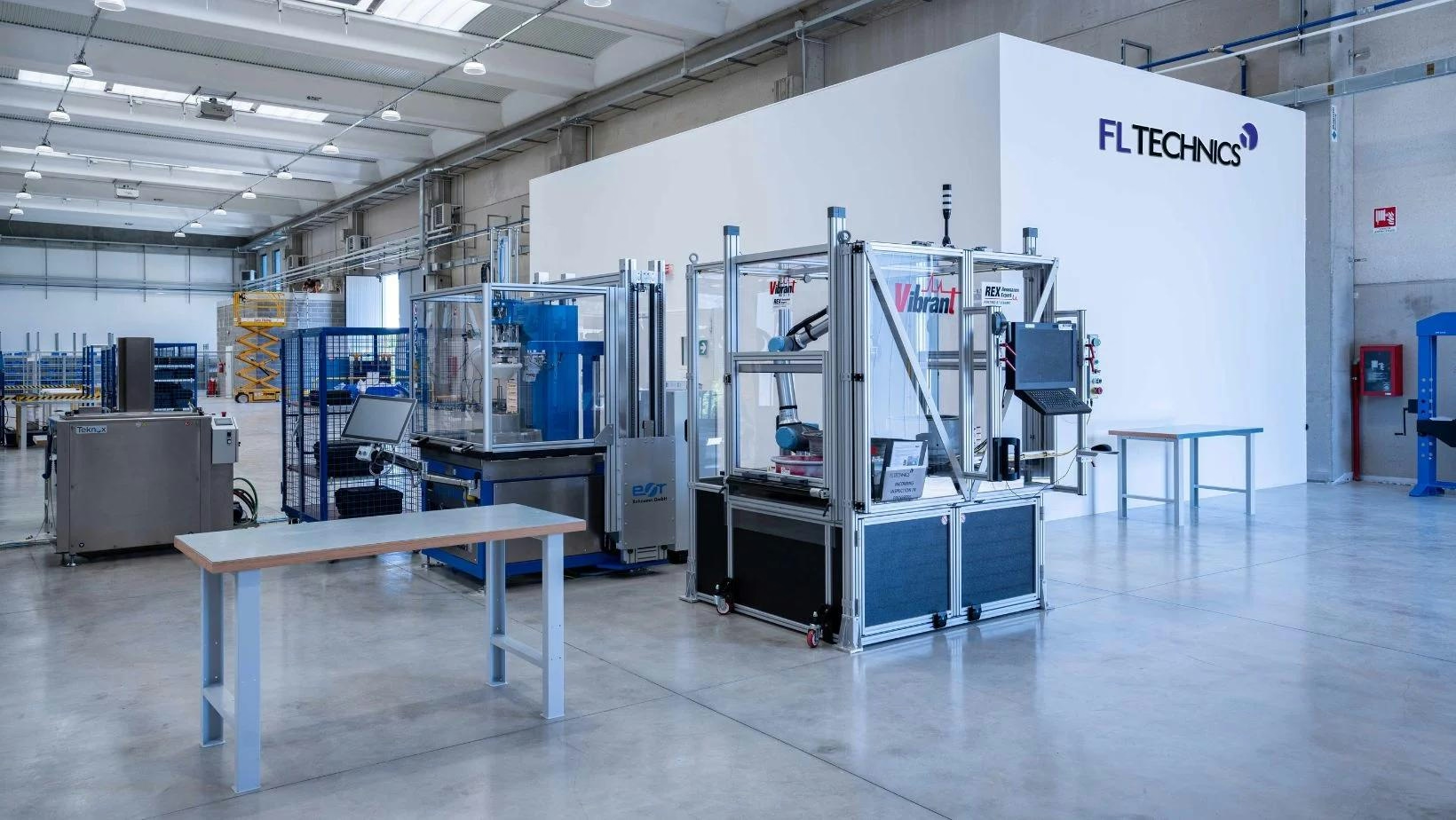
FL Technics Wheels and Brakes Appoints New CEO
March 17, 2026By ePlane AI
FL Technics Wheels and Brakes Appoints New CEO
0
0
FL Technics Wheels And Brakes
MRO Services
Executive Appointment

FL Technics Wheels and Brakes Appoints New CEO

FL Technics Wheels and Brakes, the world’s second-largest independent provider of wheels and brakes maintenance, repair, and overhaul (MRO) services, has announced the appointment of Vytautas Jankauskas as its new Chief Executive Officer. Jankauskas brings extensive international leadership experience, having most recently served as CEO of BAA Training Vietnam, where he led significant organizational growth and operational improvements.

His appointment arrives at a critical juncture as FL Technics Wheels and Brakes aims to reinforce its commitment to operational excellence and expand its presence across Europe. Jankauskas expressed optimism about his new role, emphasizing his dedication to supporting the company’s growth, enhancing its European MRO footprint, and ensuring the delivery of high-quality, reliable maintenance solutions to clients.

The company operates a rapidly expanding network of workshops throughout Europe, providing comprehensive services for aircraft wheels and brakes. With airlines increasingly outsourcing maintenance, FL Technics Wheels and Brakes is positioning itself to become Europe’s largest wheels and brakes MRO network, establishing itself as a trusted partner in the aviation maintenance sector.

However, Jankauskas faces a challenging environment marked by evolving market dynamics and intensifying competition. The MRO sector is becoming increasingly crowded, with established players and emerging Chinese electric brands heightening competitive pressures. Additionally, the company must navigate strategic challenges such as maintaining its market position amid shifting industry trends, including the absence of a hybrid model for Subaru and the need to renew Fiat’s import agreements. These factors are likely to influence market responses, with investors closely monitoring strategic developments and competitors potentially accelerating their own initiatives in reaction to the leadership change.

By appointing Jankauskas, FL Technics Wheels and Brakes aims to strengthen its management team and position itself to address these challenges, meet growing demand, and sustain its leadership role in aviation maintenance.

Vantage Aviation Names New CFO

In related industry developments, Vantage Aviation has appointed Torsten Schneider as its new Chief Financial Officer. Schneider brings over twenty years of financial leadership experience, including previous CFO roles at APP Jet Center and an international airport services provider. Vantage Aviation CEO Ryan Maxfield highlighted Schneider’s expertise in building effective finance organizations and driving company growth, noting that he brings the experience and leadership necessary to maintain Vantage’s momentum.

Schneider holds an MBA and a Bachelor of Science in International Business and has held leadership positions in Switzerland and Canada before relocating to New York. Reflecting on his appointment, Schneider remarked on the company’s impressive growth over the past year and expressed enthusiasm about contributing to long-term value creation as Vantage Aviation continues to invest in its people, service, and facilities. The company recently expanded its network by adding five new locations in 2025, underscoring its ongoing growth trajectory.

More news
Gulf Wings Receives Bombardier Global 8000 for BUA Group

Gulf Wings Receives Bombardier Global 8000 for BUA Group

Gulf Wings Receives Bombardier Global 8000 for BUA Group Africa’s First Bombardier Global 8000 Delivered to Nigerian Conglomerate Bombardier has officially delivered Africa’s first Global 8000 business jet to the BUA Group, a prominent Nigerian conglomerate with diversified interests in cement, food, oil and gas, energy, infrastructure, ports, and real estate. The ultra-long-range aircraft, managed by Dubai-based Gulf Wings, is poised to enhance BUA Group’s expanding international operations by enabling non-stop flights from Lagos to key global business centers including Los Angeles, Perth, and Tokyo. The delivery took place at Bombardier’s manufacturing facility in Montreal and represents a significant milestone for both Bombardier and BUA Group. The aircraft will soon commence operations under Gulf Wings’ management from its base in the United Arab Emirates, further expanding the fleet Gulf Wings operates on behalf of BUA. Abdul Samad Rabiu, Founder and Chairman of BUA Group and Africa’s second-richest individual, underscored the strategic importance of the new jet. He stated, “The Global 8000 offers the range, speed, comfort, and reliability required to support our international business activities. For a group with international operations and commitments, the ability to reach more destinations non-stop while maintaining comfort and productivity on board is an important advantage.” Advanced Capabilities and Strategic Partnerships Éric Martel, President and CEO of Bombardier, emphasized the significance of this delivery, describing it as a proud moment that reflects the strong relationship between the two organizations. He expressed gratitude for BUA Group’s continued trust in Bombardier and highlighted the company’s commitment to supporting the group’s international travel needs with its flagship Global 8000 aircraft. The Bombardier Global 8000 currently holds the distinction of being the world’s longest-range business jet, certified for 8,000 nautical miles, and is the fastest business jet in operation, capable of reaching speeds up to Mach 0.95. Its four-zone cabin includes a private suite, living area, dining space, and dedicated office, setting a new standard for ultra-long-range travel by combining the reach of commercial aircraft with the privacy and luxury demanded by global business leaders. Hani Haddadin, Regional Vice President at Bombardier Aviation, noted that the Global 8000 marks the third new Bombardier aircraft delivered to BUA Group, underscoring the conglomerate’s sustained confidence in Bombardier’s products, personnel, and global support network. For Gulf Wings, this acquisition further solidifies its position as a key aviation partner for BUA Group. The conglomerate’s diverse operations across West Africa have driven increasing demand for sophisticated business aviation solutions. Khaldoun Ghalayini, Managing Director of Gulf Wings, remarked, “Receiving this aircraft from Mr. Rabiu, a client we have had the privilege of serving for four years, is not just a business milestone for us. It is a reflection of everything we have built Gulf Wings to represent.” Market Implications and Industry Challenges While the addition of the Global 8000 represents a significant advancement, it also introduces challenges related to the high costs of ownership and maintenance associated with such advanced jets. Industry analysts suggest that this high-profile delivery could stimulate greater interest in Bombardier’s offerings across Africa, potentially leading to additional regional orders. Competitors may respond by upgrading their own fleets or focusing on more cost-effective alternatives to maintain market share. The prestige associated with the Global 8000, particularly in the hands of a prominent figure like Abdul Samad Rabiu, may also influence other high-net-worth individuals in Africa to consider similar acquisitions, potentially reshaping the landscape of business aviation on the continent.
KLM to Launch Airbus A350s with Business Class Closed Off

KLM to Launch Airbus A350s with Business Class Closed Off

KLM to Launch Airbus A350s with Business Class Closed Off KLM Royal Dutch Airlines is set to introduce its next-generation Airbus A350 widebody jets as part of a comprehensive €7 billion fleet renewal initiative. However, the launch of these aircraft faces an unexpected challenge: the World Business Class (WBC) cabins on the first two A350s will remain closed due to delays in regulatory certification. Certification Delays and Interim Measures The new A350s, named after Rembrandt’s renowned painting *The Night Watch*, are scheduled to debut on routes to Toronto Pearson International Airport (YYZ). Despite the anticipation surrounding the rollout, KLM has confirmed that the 34 WBC seats will not be available at the start of service. This situation arises from a revised interpretation of regulatory requirements by aviation authorities, which has stalled the certification process. The seat manufacturer is actively working to complete recertification, but no definitive timeline has been provided for when the business class section will be accessible to passengers. In the meantime, KLM will offer premium comfort seats at the front of the cabin. These seats provide enhanced legroom, upgraded amenities, and improved dining options, serving as a temporary solution to uphold a high standard of service for long-haul travelers despite the absence of the full business class experience. Industry-Wide Challenges and Competitive Pressures KLM is not alone in facing such certification setbacks. Other major airlines, including Delta Air Lines, have encountered similar regulatory delays with new aircraft types. For instance, Delta’s A321neo “premium heavy” jets have experienced hurdles in obtaining approval for their lie-flat business suites, reflecting differing interpretations of safety and structural standards among global aviation regulators. These certification issues compound broader operational challenges for KLM. Delays in A350 freighter deliveries are disrupting operations at Amsterdam Schiphol Airport, adding to the airline’s logistical difficulties. Airbus itself is contending with production bottlenecks, including uncertainty surrounding the early launch of a larger A220 variant. This delay could affect Air France-KLM’s long-term fleet strategy, as the stretched A220 may not arrive in time to meet the group’s evolving requirements. Meanwhile, competitive pressures are intensifying. Turkish Airlines, a significant rival, has announced plans to introduce a premium economy cabin by early 2028, signaling a shift in market dynamics and increasing the stakes for KLM’s premium product offerings. Commitment to Fleet Renewal and Future Outlook Despite these obstacles, KLM remains steadfast in its fleet renewal strategy. The initial A350s will operate on popular North American routes before being deployed across the airline’s broader international network. In addition to passenger jets, KLM will also take delivery of A350F cargo variants, alongside the latest Airbus A321neo and Embraer 195-E2 aircraft for its Cityhopper regional services. In an official statement, KLM explained: “Due to a revised interpretation of regulatory requirements by the aviation authorities, certification of the World Business Class seats has not yet been completed. As a result, these seats will unfortunately not be available when the first two aircraft enter service.” As KLM navigates these regulatory and operational challenges, the airline and the wider aviation industry will be closely monitoring the timeline for bringing these new cabins online, as well as how shifting market dynamics will influence the future of premium air travel.
Beyond Compliance: Indonesia’s Readiness for Aviation 5.0 Through ICAO Electronic Filing of Differences

Beyond Compliance: Indonesia’s Readiness for Aviation 5.0 Through ICAO Electronic Filing of Differences

Beyond Compliance: Indonesia’s Readiness for Aviation 5.0 Through ICAO Electronic Filing of Differences For more than seventy years, the international civil aviation system has been governed by the regulatory framework established under the Convention on International Civil Aviation, implemented through the International Civil Aviation Organization’s (ICAO) Standards and Recommended Practices (SARPs). These standards have been fundamental in ensuring global aviation safety, security, efficiency, and environmental sustainability. Historically, a nation’s aviation maturity has been assessed through metrics such as accident rates, oversight effectiveness, and regulatory compliance—indicators that primarily reflected the sector’s focus on foundational safety and harmonization. The Evolving Aviation Landscape and Indonesia’s Strategic Position The aviation sector is undergoing a profound transformation driven by emerging technologies and global challenges. The integration of artificial intelligence, autonomous systems, digital air traffic management, advanced analytics, cybersecurity concerns, and climate change imperatives is reshaping the governance and operational paradigms of aviation worldwide. This evolution raises a critical question: is adherence to existing regulations sufficient to prepare for the future of aviation? This question holds particular significance for Indonesia, a sprawling archipelagic nation comprising over 17,000 islands and one of the fastest-growing aviation markets globally. For Indonesia, aviation transcends mere transportation; it is a strategic instrument for economic integration and national cohesion. As the country endeavors to evolve from a Safe Aviation System to a Smart, Sustainable, and ultimately Intelligent Aviation System—commonly referred to as Aviation 5.0—it confronts both significant opportunities and complex challenges. ICAO’s Electronic Filing of Differences as a Measure of Readiness ICAO’s Electronic Filing of Differences (EFOD) mechanism offers a critical perspective on Indonesia’s preparedness for this transition. Unlike the Universal Safety Oversight Audit Programme (USOAP), which primarily evaluates oversight effectiveness, EFOD provides detailed insights into regulatory harmonization, reported differences, and the alignment of domestic regulations with evolving international standards. EFOD serves not merely as an administrative tool but as an indicator of a nation’s capacity to adapt to regulatory changes and emerging challenges. Indonesia’s EFOD profile demonstrates strong compliance within traditional aviation domains, underscoring a solid regulatory foundation. However, it also reveals notable gaps in areas associated with next-generation aviation systems. This disparity suggests that while Indonesia has established a robust baseline, further advancements are necessary to fully integrate digitalization, sustainability initiatives, and intelligent aviation systems. Challenges and Strategic Imperatives The path toward Aviation 5.0 is fraught with challenges. Indonesia must prioritize investment in resilient digital infrastructure to support electronic processes and ensure seamless compliance with international standards. Resistance from traditional aviation stakeholders accustomed to legacy systems may slow progress initially. Market reactions from airlines and regulatory bodies could be cautious, but as the efficiency gains and reduction in administrative burdens become apparent, broader acceptance is expected to follow. Concurrently, regional competitors are likely to pursue similar digital initiatives, coupled with sustainability efforts such as the adoption of sustainable aviation fuels (SAF), to align with global decarbonization objectives and maintain competitive advantage. By leveraging EFOD data, policymakers and researchers can identify not only current compliance levels but also anticipate future capability gaps. For Indonesia, utilizing EFOD as a strategic governance instrument will be crucial in navigating the complexities of Aviation 5.0 and sustaining its position within the global aviation ecosystem.
KKR Commits $1.4 Billion to Aircraft Leasing, Targets Airlines and Manufacturers

KKR Commits $1.4 Billion to Aircraft Leasing, Targets Airlines and Manufacturers

KKR Commits $1.4 Billion to Aircraft Leasing Amid Industry Supply Constraints **New York** – Private equity firm KKR has announced a $1.4 billion commitment to aircraft leasing in partnership with Altavair, responding to persistent supply shortages at leading manufacturers Airbus and Boeing. This strategic move highlights the increasing role of leasing companies and private equity investors in the aviation industry, where airlines are progressively favoring leasing arrangements over outright ownership of aircraft. Since 2015, KKR has invested over $12 billion in the aviation sector. Together with Altavair, the firm has acquired 188 aircraft and engine assets since 2018. Altavair focuses on purchasing both new and used commercial aircraft, which it leases to passenger and cargo airlines worldwide. Currently, approximately half of the global aircraft fleet is leased or rented, reflecting a significant shift in airline financing amid rising operational costs and a recovering travel market. Deployment Strategy and Market Focus Most of the newly committed capital remains unallocated and is expected to be deployed over the next four years. KKR intends to acquire aircraft directly from airlines seeking liquidity, as well as from manufacturers and secondary market transactions. These deals frequently involve sale-and-leaseback arrangements, enabling airlines to raise capital while maintaining operational continuity. KKR’s strategy emphasizes long-term leases with established airlines and cargo operators, deliberately avoiding distressed or bankrupt carriers. For instance, the firm is not pursuing opportunities with airlines such as Spirit Airlines, which ceased operations in May after failing to secure government support. Instead, KKR targets stable, multi-year contracts—typically spanning five to ten years—that offer predictable cash flows and insulation from short-term volatility related to fuel prices and geopolitical tensions. Competitive Landscape and Market Risks KKR’s expanded commitment to aircraft leasing comes amid intensifying competition from other private equity firms eager to capitalize on the sector’s profitability. Some analysts caution that increased activity could lead to market saturation and potential oversupply, raising concerns about the sustainability of long-term returns. Investor sentiment has also been affected by recent volatility in the private credit market, with shares of firms such as KKR and Blackstone experiencing premarket declines, which may influence confidence in large-scale investments like this. Despite these challenges, KKR’s track record in aviation leasing remains robust. Notably, the firm supported a 2020 fleet transaction with Etihad Airways, acquiring Boeing 777 and Airbus A330 aircraft and leasing them back as part of the airline’s fleet transition strategy. To date, KKR and Altavair have leased assets to 67 airline and cargo customers worldwide. As airlines continue to contend with supply chain disruptions and evolving financial pressures, KKR’s latest investment underscores both confidence in the sector’s resilience and an acknowledgment of the competitive dynamics shaping the future of aircraft leasing.
Korean Air Presents AI-Driven Aviation Technologies at Startup Expo

Korean Air Presents AI-Driven Aviation Technologies at Startup Expo

Korean Air Showcases AI-Driven Aviation Innovations at NextRise 2026 Korean Air (003490.KS) is set to participate in NextRise 2026, a prominent startup and technology exposition taking place over two days at COEX in Seoul’s Gangnam district. The airline announced on Wednesday that it will use the platform to present a range of advanced aviation technologies centered on artificial intelligence and automation. Intelligent Air Traffic Control and Advanced Air Mobility At the expo, Korean Air will highlight its intelligent air traffic control system known as "ACROSS." This technology aims to pave the way for an air traffic management framework capable of supporting Advanced Air Mobility (AAM), a rapidly evolving sector focused on integrating new types of aerial vehicles into existing airspace. The company emphasized that ACROSS represents a strategic direction for future air traffic systems, enhancing efficiency and safety in increasingly complex operational environments. AI-Enabled Combat Systems and Unmanned Aircraft In addition to air traffic innovations, Korean Air will unveil a future combat system that leverages artificial intelligence to autonomously make decisions and coordinate battlefield command. The company plans to showcase two unmanned aerial vehicles currently under internal development: a low-observable unmanned wingman aircraft and a subsonic unmanned target drone. Notably, Korean Air will also present, for the first time, test flight footage of an AI-powered drone developed in collaboration with the U.S. defense firm Anduril, underscoring its commitment to advancing military aviation technologies. Smart Maintenance, Repair, and Overhaul (MRO) Technology Korean Air will further demonstrate its "Smart MRO" technology, which integrates robotics and AI to revolutionize aircraft maintenance procedures. This system employs drones and a ground rover to capture detailed images of an aircraft’s exterior, both upper and lower surfaces. The collected data is then analyzed by AI to identify even the smallest defects, promptly alerting maintenance personnel. The company highlighted that this innovation can reduce inspection times dramatically—from the conventional 10 hours down to just one hour. Korean Air is actively pursuing commercialization of this maintenance technology in partnership with global aerospace manufacturer Boeing, signaling a significant step toward more efficient and automated aircraft servicing.
Iberia Launches ChatGPT App for AI-Driven Trip Planning

Iberia Launches ChatGPT App for AI-Driven Trip Planning

Iberia Launches ChatGPT App for AI-Driven Trip Planning Iberia, the Spanish flag carrier, has introduced a pioneering digital travel tool that integrates flight search and booking assistance within a conversational artificial intelligence framework. Announced in June 2026, the airline’s ChatGPT-based application is designed to assist passengers in planning journeys, exploring destinations, and accessing booking support through natural language interaction. This initiative signals a notable shift from conventional search platforms toward AI-driven conversational systems, aiming to streamline travel planning by replacing manual searches with intuitive chat-based engagement. AI-Powered Travel Planning and Functionality The Iberia ChatGPT app enables users to search for flights and travel options using conversational prompts instead of traditional booking forms. Travelers can request destination suggestions, specify travel dates, or set budget constraints, receiving structured flight recommendations in response. The system supports both the inspiration and booking phases of travel planning, allowing users to compare routes, explore flexible destinations, and filter options by duration, cost, or seasonality. Operating within the ChatGPT environment, the tool activates when users initiate a conversation with Iberia’s integrated assistant. This approach reflects a broader industry trend of embedding travel services directly into AI platforms to reduce friction in digital booking journeys. Users can input natural language requests such as “flights to Madrid in December under a specific budget” or “cheap weekend trips from London,” and the system responds with tailored options by interpreting context, filtering results, and presenting simplified travel choices. Once suitable flights are identified, users are redirected to Iberia’s official booking platform to complete transactions. This ensures that pricing, availability, and ticket issuance remain within Iberia’s secure digital infrastructure. The conversational interface is designed to make early-stage travel planning more accessible, particularly for travelers uncertain about exact destinations or dates. Opportunities and Challenges in AI Integration The launch of the ChatGPT app forms part of Iberia’s broader digital transformation strategy, which focuses on enhancing customer experience through automation and artificial intelligence. Airlines globally are investing in AI to improve operational efficiency, reduce customer service workloads, and personalize travel experiences. Nevertheless, as emphasized by industry leaders at the Skift Data + AI Summit, initiatives like Iberia’s face significant operational and organizational challenges. Key hurdles include establishing clear ownership, ensuring robust technical foundations, and building trust among both customers and employees. Recent incidents in the sector, such as Air Canada’s chatbot errors and governance issues at Samsung, highlight the critical importance of strategic oversight and human involvement in AI deployment. The future of AI in travel commerce will largely depend on who controls trust, making governance, security, and data quality paramount—especially within the luxury travel segment. Iberia’s ChatGPT integration represents a forward step in digital innovation, but its sustained success will rely on maintaining customer confidence and ensuring reliable, transparent AI operations.
Advancing Sustainability in Aviation

Advancing Sustainability in Aviation

Advancing Sustainability in Aviation Swissport’s Commitment to Electrification Swissport, a global leader in airport ground handling and air cargo services operating at over 300 airports across 49 countries, is accelerating its efforts to electrify its ground support equipment (GSE) fleet. The company aims to transition 55 percent of its motorised GSE to electric power by 2032, a key component of its broader strategy to reduce emissions and improve operational efficiency worldwide. This initiative reflects Swissport’s response to increasing environmental and regulatory pressures facing the aviation sector. The aviation industry’s path toward sustainability is fraught with challenges, including the high costs and technological complexities associated with sustainable aviation fuels (SAF) and hydrogen propulsion systems. Regulatory frameworks, such as the European Union’s stringent SAF production mandates, further complicate progress. While some companies, like Bombardier, have achieved notable sustainability milestones, many continue to grapple with reducing overall carbon emissions despite improvements in operational efficiency. Industry responses vary, with some stakeholders embracing alternative fuels as a tipping point, while others call for regulatory reforms to better facilitate green initiatives. Financing as a Catalyst for Change Swissport’s electrification program exemplifies a pragmatic approach to decarbonization, recognizing that successful implementation requires more than capital investment in assets. It demands innovative and scalable financing solutions capable of supporting equipment deployment across diverse geographic and operational contexts. DLL, a global asset finance partner, has played a pivotal role in this transition. Initially supporting Swissport’s electric GSE rollout in Australia, DLL worked closely with Swissport’s procurement, finance, and operations teams to tailor financing arrangements that align with local market conditions and long-term sustainability objectives. Lara Yocarini, DLL’s Chief Executive Officer and Chair of the Executive Board, emphasizes the company’s strategic focus on energy transition, particularly in e-mobility and fleet electrification. As Swissport expanded its electrification efforts globally, DLL responded by implementing a global master limit financing structure. This framework offers Swissport streamlined access to funding across key markets including Australia, Europe, and the United States, facilitating consistent execution while reducing administrative complexity and enhancing capital planning. Geoff Anderson, DLL’s Business Development Manager, highlights the growth of the partnership from Australia to a global scale, underscoring DLL’s role as a key enabler in Swissport’s fleet electrification. Operational and Financial Implications For Swissport, the shift to electric GSE is not solely an environmental commitment but also an investment in operational resilience and performance. Jason Wills, National Operations Manager, Fleet at Swissport Australia, notes that DLL’s financing support has been instrumental in advancing the company’s 2032 electrification target. Andrew Batch, Chief Financial Officer of Swissport Australia, adds that DLL’s approach combines global expertise with localized execution, underpinning Swissport’s long-term operational and innovation goals. DLL’s capacity to structure large-scale, multi-country financing programs has been central to the partnership’s success, providing Swissport with efficient funding channels and cross-jurisdictional expertise. As the aviation industry continues to confront the multifaceted challenges of sustainability—from alternative fuels to electrification—collaborations such as that between Swissport and DLL offer a compelling model for harmonizing environmental responsibility with operational and financial imperatives.
Southwest Airlines Teams Up with AWS to Advance AI and Technology Modernization

Southwest Airlines Teams Up with AWS to Advance AI and Technology Modernization

Southwest Airlines Partners with AWS to Advance AI and Technology Modernization Southwest Airlines has entered into a strategic partnership with Amazon Web Services (AWS) to accelerate the adoption of artificial intelligence (AI) and modernize its technology infrastructure. This collaboration is designed to enhance operational efficiency and elevate customer experiences, positioning Southwest as a leader in digital transformation within the aviation industry. Embracing AI Amid Industry Challenges As airlines globally increasingly leverage AI to streamline operations, personalize customer interactions, and optimize resource management, Southwest’s initiative reflects a broader industry shift. While AI holds significant transformative potential, recent data also warns of a possible “software winter”—a period marked by slowed innovation or market correction—amid rapid technological advancements. Southwest’s partnership with AWS aims to navigate these complexities by integrating advanced AI tools and cloud-based solutions into its existing systems. The airline faces considerable challenges in this endeavor, including the integration of new technologies with legacy infrastructure, ensuring stringent data security, and managing workforce transitions as employees adapt to new processes. Addressing these issues will be critical to the success of the modernization effort. Market Impact and Industry Implications The announcement has been met with positive market reactions, with investors expressing increased interest in AI-driven airline operations. Industry analysts anticipate that Southwest’s competitors may respond by accelerating their own AI initiatives or pursuing similar partnerships to maintain competitive parity. This collaboration also exemplifies a wider trend in the technology sector, where major cloud providers, known as “hyperscalers” like AWS, are increasingly automating traditional IT services. Recent partnerships, such as the one between Snowflake and AWS to expedite enterprise AI adoption, highlight a shift that could disrupt established business models, particularly those of Indian IT firms that have historically dominated these service areas. By leveraging AWS’s expertise, Southwest aims not only to bolster operational resilience but also to establish new benchmarks for customer service within the airline industry. The outcome of this partnership may serve as an important indicator of how airlines and other large enterprises will manage the opportunities and risks associated with AI-driven transformation.
AI Struggles to Interpret Airline Fare Data

AI Struggles to Interpret Airline Fare Data

AI Struggles to Interpret Airline Fare Data Artificial intelligence is significantly increasing traffic to U.S. travel websites, with visitors arriving through AI-driven sources demonstrating longer engagement, lower bounce rates, and deeper interaction, according to new research from Adobe released on Wednesday. The study, which examined over eight million direct online transactions, revealed that AI-generated traffic to travel sites surged by 194% year over year in May. These visitors spent 70% more time per session, bounced 41% less frequently, and showed 21% higher engagement compared to users from non-AI sources. Challenges in Fare Data Interpretation Despite these promising engagement metrics, Adobe’s findings also expose a critical technical challenge: AI systems frequently struggle to accurately interpret the complex and nuanced data associated with airline fares, a vital component for successful booking processes. This difficulty was emphasized by travel technology leaders at the recent Skift Data + AI Summit, who identified both operational and organizational barriers that limit AI’s effectiveness in fare management. They stressed the importance of clear data ownership, robust technological infrastructure, and fostering trust among customers and employees as essential measures to overcome these challenges. Industry Response and Market Skepticism Market reactions reveal a cautious skepticism regarding AI’s capacity to fulfill its promises of enhanced efficiency and improved fare management. In response, some industry players are intensifying investments in data infrastructure to address these limitations. For instance, Air Canada has taken proactive steps to reinforce its systems following notable incidents, including a chatbot error that led to a tribunal ordering compensation to a customer. Such episodes highlight the risks inherent when AI misinterprets fare rules or booking conditions, underscoring the need for vigilance. As AI continues to transform how travelers discover and engage with travel brands, the industry confronts a dual challenge: harnessing AI to boost user engagement while ensuring these systems can reliably decode the intricate data that underpins airline pricing. Experts suggest that progress will depend not only on technological innovation but also on organizational clarity and a renewed commitment to building trust across the travel ecosystem.
The Future of Private Aviation Focuses on Access Over Ownership

The Future of Private Aviation Focuses on Access Over Ownership

The Future of Private Aviation Focuses on Access Over Ownership Shifting Dynamics in Private Aviation Demand Private aviation is undergoing a period of recalibration following the unprecedented surge in demand during the pandemic. While demand has moderated from its peak, it remains significantly higher than levels seen a decade ago. However, the supply of new aircraft has not kept pace with this sustained demand. Delivery timelines for new jets now extend several years into the future, and the availability of used aircraft remains constrained. Operators continue to face challenges related to maintenance and scheduling, which further complicate fleet utilization. For corporations and high-net-worth individuals, the evolving market dynamics are reshaping the traditional ownership model. Increasingly, the preference is shifting toward on-demand charter access rather than the capital-intensive and operationally complex commitments of full or fractional ownership. Industry analysts estimate the global private jet charter market to be valued at over $13 billion, growing at a robust high-single-digit annual rate. Customers are prioritizing flexibility, privacy, and time efficiency, driving this transformation in private aviation consumption. Premier Air Charter’s Strategic Positioning and Growth Premier Air Charter Holdings Inc., based in Carlsbad, California, is strategically positioning itself to capitalize on these emerging trends. The company has invested heavily over recent years in expanding its fleet, scaling charter operations, and enhancing the infrastructure necessary to support a comprehensive aviation services platform. These efforts are beginning to yield tangible financial results. For fiscal year 2025, Premier reported revenues of approximately $31.9 million, marking a 54% increase from the previous year. Charter revenue specifically rose by about $11.8 million, driven by increased flight activity and improved fleet utilization. Despite this growth, profitability remains a work in progress, a common scenario for operators still investing to achieve scale. A notable milestone for Premier occurred in May when the Federal Aviation Administration granted approval for the company to operate charter flights carrying 10 or more passengers. This expanded certification allows Premier to reconfigure its Bombardier Challenger 601 and Challenger 604 aircraft from nine to twelve seats. The company also anticipates adding two Gulfstream aircraft to its fleet under this new authorization. Management projects that this expanded certification could generate up to $10 million in additional annual revenue by enabling larger-group travel and higher-value charter missions. Industry Trends and Operational Integration The demand for premium charter services remains robust across the private aviation sector. Wheels Up Experience Inc., one of North America’s largest branded private aviation platforms, reported a 10% increase in gross bookings for the first quarter of 2026, driven by stronger charter demand. The company also achieved record flight-completion reliability and secured $165 million in new financing led by its strategic partner, Delta Air Lines. These developments underscore the resilience of private aviation demand in a post-pandemic environment that is returning to a more normalized state. Premier’s strategy extends beyond simply increasing charter flight hours. The company has identified in-house maintenance as a critical long-term competitive advantage and plans to expand these services to third-party operators in 2026. Within private aviation, maintenance expertise is a key differentiator, as aircraft availability, dispatch reliability, and operational efficiency directly impact customer retention and profitability. By internalizing more of the maintenance process, Premier aims to maximize aircraft revenue service time and develop an additional, higher-margin revenue stream alongside its core charter business. This vertically integrated approach is gaining traction across the sector, as exemplified by other major operators such as flyExclusive Inc., which have similarly emphasized maintenance capabilities as a strategic asset.
line