Immagine

AeroGenie — Il tuo copilota intelligente.

Chiedi qualsiasi cosa. Analizza tutto. Agisci immediatamente.

Tendenze

Categories

Flydubai CEO Cites Range and Size in Airbus Jet Order
November 19, 2025By ePlane AI
Flydubai CEO Cites Range and Size in Airbus Jet Order
0
0
Flydubai
Airbus A321neo
Aircraft Orders

Flydubai CEO Highlights Strategic Airbus Jet Order

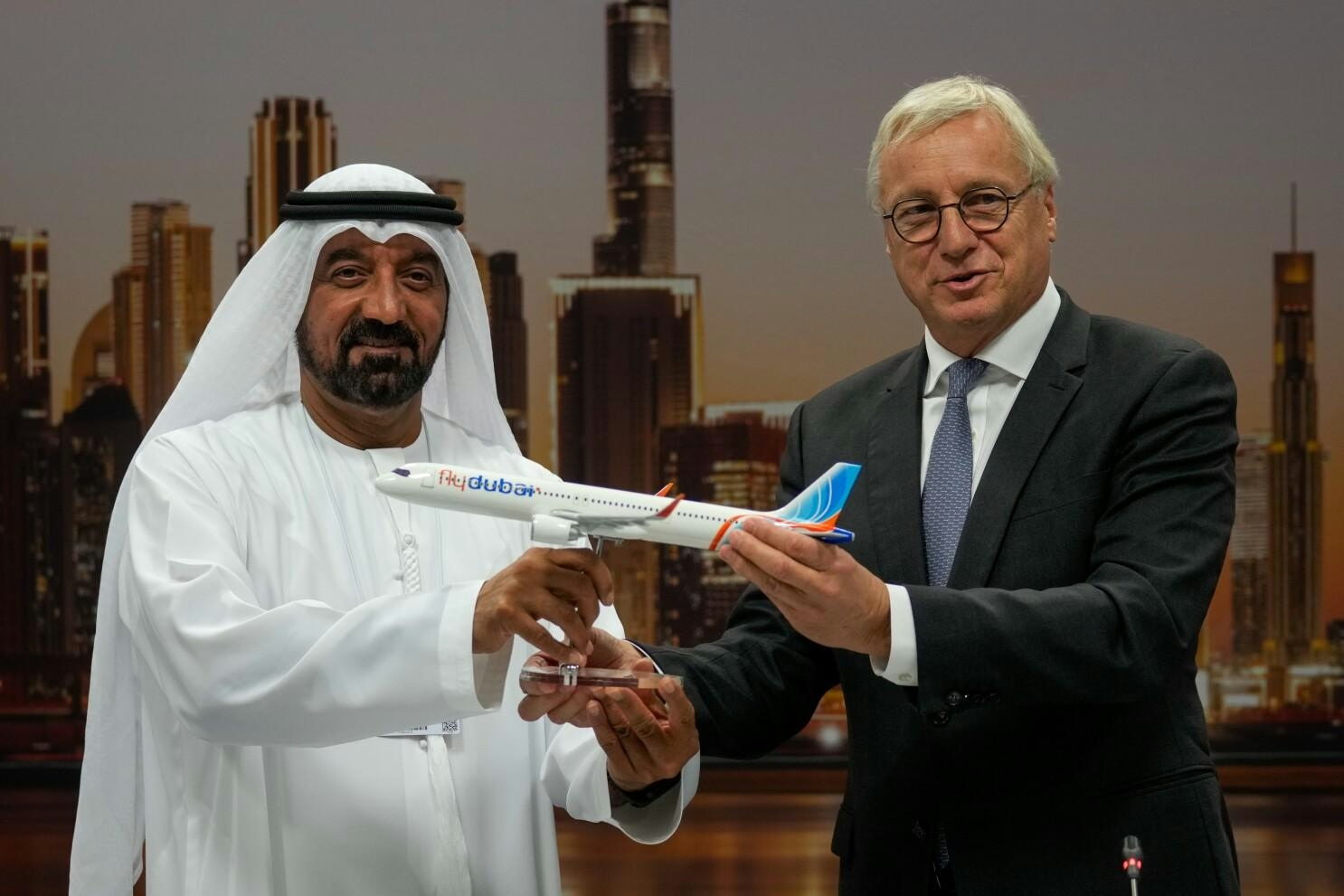
DUBAI — Flydubai’s recent provisional order for 150 Airbus A321neo jets, valued at $24 billion with an option for 100 additional aircraft, marks a pivotal development for the rapidly expanding carrier. Announced during the Dubai Airshow, the deal underscores a strategic shift as Airbus emerges as a key supplier, ending Boeing’s exclusive hold on flydubai’s fleet since the airline’s inception in 2008. CEO Ghaith Al Gaith attributed the decision primarily to the A321neo’s range and size, which align with the airline’s growing network requirements.

Comprehensive Evaluation and Future Prospects

Al Gaith emphasized that the selection process was thorough and merit-based, involving careful consideration of both Airbus and Boeing offerings. “The door was never closed, because whenever we go through a process of evaluation, we put everything on the table,” he stated. The CEO highlighted that the Airbus jets met the operational demands of flydubai’s expanding routes, yet he maintained a strong relationship with Boeing, describing the U.S. manufacturer as “almost like my home.” While he expressed confidence in Boeing’s recovery from recent challenges, Al Gaith refrained from confirming whether additional Boeing orders would be announced during the remainder of the airshow.

Market Implications and Industry Response

The landmark Airbus order arrives amid a complex and evolving aerospace market. Industry analysts have offered mixed reactions, viewing flydubai’s move as a strategic effort to diversify its fleet and enhance operational flexibility. However, the order faces potential obstacles, including supply chain disruptions, price volatility, and regulatory challenges that continue to affect the global aerospace sector. Boeing is expected to respond with intensified marketing efforts and competitive offers to maintain its market share. This shift also carries broader implications for engine suppliers and related industries, as airlines reassess their fleet strategies in response to changing market dynamics.

Despite these uncertainties, Al Gaith reaffirmed flydubai’s pragmatic approach and long-term growth focus. “The door has always been open to Airbus,” he remarked, while reiterating his confidence in Boeing’s improving position. As flydubai embarks on its next phase of expansion, the airline’s latest order reflects a commitment to operational efficiency and adaptability in a rapidly changing industry landscape.

More news
Sahar Group Adopts Ramco Aviation Software to Support Growth

Sahar Group Adopts Ramco Aviation Software to Support Growth

Sahar Group Adopts Ramco Aviation Software to Support Growth Ramco Systems Limited, a prominent enterprise software provider based in India, has announced that Sahar Group will implement its aviation software platform to facilitate the company’s ongoing expansion. Ramco is known for its comprehensive Enterprise Resource Planning (ERP) solutions across various sectors, including aviation maintenance, repair and overhaul (MRO), logistics, human resources, and payroll. The company’s software leverages advanced technologies such as artificial intelligence, machine learning, robotic process automation (RPA), and blockchain to drive digital transformation for clients spanning industries from defense and airlines to energy, utilities, and third-party logistics. Modernizing Operations with Advanced Technology The adoption of Ramco’s aviation software represents a significant milestone for Sahar Group as it aims to modernize its operations and improve efficiency. Ramco’s cloud-based VirtualWorks platform supports the development of scalable, multi-tenant web solutions, while its DecisionWorks suite offers robust information and decision support systems tailored to the complex demands of the aviation sector. This integration is expected to enhance Sahar Group’s operational capabilities and support its growth trajectory. Challenges and Industry Dynamics Despite the potential benefits, the transition to Ramco’s cloud-based subscription model and the integration of AI-driven tools pose certain challenges for Sahar Group. Industry precedents highlight the risks associated with such shifts; for instance, Dassault Systèmes recently experienced a decline in market value following its own move toward cloud and AI solutions. These transitions often attract heightened scrutiny from investors and stakeholders concerned about the software provider’s ability to sustain near-term revenue growth and ensure seamless technology integration. The competitive landscape within aerospace and technology is also undergoing rapid transformation. As firms increasingly adopt AI-driven business models, the sector has seen a surge in large-scale mergers and acquisitions, particularly in the United States. This consolidation trend is intensifying competition among aerospace and AI solution providers, compelling companies like Ramco to continuously innovate and differentiate their offerings to maintain market relevance. For Sahar Group, the partnership with Ramco presents both an opportunity to leverage cutting-edge digital tools and a challenge in managing the complexities of technological transformation. As the aviation industry embraces cloud and AI technologies, the success of such initiatives will depend on effective implementation, adaptability, and the ability to deliver tangible business outcomes.
Acron Aviation Opens Global Headquarters in St. Petersburg, Florida

Acron Aviation Opens Global Headquarters in St. Petersburg, Florida

Acron Aviation Establishes New Global Headquarters in St. Petersburg Acron Aviation has officially opened its new global headquarters in downtown St. Petersburg, Florida, marking a pivotal moment in the company’s trajectory of growth and resilience. The inauguration ceremony, held on March 2 at City Center, brought together employees, industry partners, and members of the local community to celebrate the launch of the advanced facility. A State-of-the-Art Facility Replacing Previous Site The new headquarters spans 242,115 square feet and is prominently located on the waterfront at City Center. This facility replaces Acron Aviation’s original St. Petersburg site, which was shuttered in October 2024 following extensive damage caused by Hurricane Milton. Despite the disruption, the company sustained its global operations and customer support from a temporary location before transitioning to the permanent headquarters. Alan Crawford, Chief Executive Officer of Acron Aviation, described the opening as a significant milestone. He emphasized the company’s commitment to St. Petersburg, stating, “This world-class head office is a clear representation of our ongoing commitment to investing in St. Petersburg. We remain focused on supporting both the local community and the region’s economic growth as we deepen our roots here and continue to develop the safety-critical intelligence that will define the future of flight.” The headquarters functions as the operational center for Acron Aviation’s 1,500 employees worldwide, with 80 staff members from executive leadership and customer support teams based on-site. The facility includes an Engineering Centre of Excellence, an Innovation Lounge, four research and development laboratories, expanded conference facilities, a customer training center, and modern collaboration spaces. These features are designed to foster innovation, engineering excellence, and enhanced customer engagement across the company’s aviation technology portfolio. Navigating Industry Challenges Amid Expansion The opening of the new headquarters coincides with a period of heightened complexity within the aviation industry. The International Air Transport Association has highlighted ongoing supply chain disruptions that continue to affect global airlines, presenting challenges that Acron Aviation must address as it scales operations in its new facility. Furthermore, the relocation is expected to attract increased scrutiny from competitors and stakeholders, who may question the strategic benefits of the St. Petersburg location and respond with intensified local competition or operational adjustments. Broader geopolitical tensions also persist as a factor influencing the aviation sector, potentially affecting Acron Aviation’s market positioning and operational stability. Industry leaders have noted that such external pressures can create indirect challenges for companies expanding their global presence. Despite these headwinds, the establishment of the new headquarters underscores Acron Aviation’s long-term dedication to St. Petersburg and its resolve to enhance global operational capabilities. The company intends to leverage the facility to drive innovation and growth while contributing to the economic vitality of the region.
Will Uber and Joby Aviation Stocks Rise After Recent Announcements?

Will Uber and Joby Aviation Stocks Rise After Recent Announcements?

Uber and Joby Aviation Forge Partnership to Launch Air Taxi Service in Dubai Uber Technologies (NYSE: UBER) has announced a strategic partnership with Joby Aviation (NYSE: JOBY) to introduce an Uber Air taxi service in Dubai later this year, marking Uber’s entry into the emerging air taxi market. This collaboration has generated considerable interest among investors, prompting speculation about potential stock gains for both companies. However, a detailed analysis suggests a more measured outlook given the complexities involved. Uber will not own the electric vertical takeoff and landing (eVTOL) aircraft but will act as the booking platform, leveraging its extensive experience in mobility, delivery, and freight services. In 2025, these core segments collectively generated $52 billion in revenue, reflecting an 18% increase year over year. Uber also reported a net income of $10 billion, slightly higher than the previous year, though this figure excludes earnings from outside investments. Despite the high-profile nature of the partnership, the immediate financial impact on Uber’s revenue is expected to be limited, as the air taxi initiative remains in its nascent stages. Regulatory and Market Challenges Temper Optimism The air taxi sector is subject to stringent regulatory oversight, and obtaining the necessary approvals for commercial operations poses a significant hurdle. These regulatory challenges could delay the widespread adoption of air taxi services. Furthermore, competition within the sector is intensifying, with multiple companies pursuing similar partnerships or developing proprietary services to capture market share. Following the announcement, Uber’s stock experienced a modest increase of approximately 2%, yet it remains below critical support levels, reflecting investor caution. Over the past year, Uber’s shares have shown limited movement, and its price-to-earnings (P/E) ratio has declined to 16, potentially enhancing its appeal as it explores new revenue avenues such as air taxis. Joby Aviation, responsible for manufacturing and operating the eVTOL aircraft, is at an earlier stage of commercial development. The company began generating revenue in 2025, reporting $53 million, a substantial increase from $136,000 in 2024. Nevertheless, Joby posted a net loss of $930 million last year, underscoring the significant challenges ahead on the path to profitability. With $1.4 billion in liquidity, Joby may need to secure additional funding through equity or debt issuance to sustain its operations. Joby’s stock has been notably volatile, rising 58% over the past year. However, the absence of earnings means the company lacks a P/E ratio, and its revenue base remains small relative to its losses. Like Uber, Joby faces considerable regulatory and competitive pressures as the air taxi market continues to evolve. While the Uber-Joby partnership represents a significant milestone toward the commercialization of air taxi services, both companies confront substantial regulatory, financial, and competitive obstacles. Investors should approach the prospects of immediate stock gains with caution, as the sector’s path to profitability and broad adoption remains uncertain.
Ramco Systems Secures Aviation Software Contract with Sahar Group for MRO Digital Transformation

Ramco Systems Secures Aviation Software Contract with Sahar Group for MRO Digital Transformation

Ramco Systems Secures Aviation Software Contract with Sahar Group for MRO Digital Transformation Ramco Systems has secured a significant contract with Sahar Group to implement advanced aviation software solutions aimed at transforming the Maintenance, Repair, and Overhaul (MRO) operations. Announced on March 4, 2026, this strategic partnership is designed to enhance operational efficiency and streamline processes for Sahar Group, a prominent aerospace services provider specializing in the UH-60 Black Hawk platform. Advancing Digital Transformation in MRO Operations Sahar Group is pursuing an ambitious expansion of its commercial activities, targeting new aviation segments such as Parts Manufacturer Approval, Supplemental Type Certificates, and helicopter sales and leasing. To manage the increasing operational complexity, the company is investing in a unified digital platform. Ramco’s next-generation Aviation Software will serve as the backbone of this transformation, integrating key functions including maintenance planning, component maintenance, supply chain management, MRO and parts sales, quality assurance, compliance, and financial operations. This integrated approach is expected to improve visibility and control across Sahar Group’s diverse business units, facilitating streamlined workflows, enhanced data accuracy, and accelerated decision-making processes. Leadership Insights on the Partnership Arnold Escobar, CEO of Sahar Group, emphasized the strategic importance of the collaboration, stating, “As part of our plan to scale and diversify our operations, we needed a platform that could support long-term growth without compromising operational discipline. Ramco Aviation Software stood out due to its established presence in the helicopter, defense, and component MRO spaces.” From Ramco Systems, Manoj Kumar Singh, Chief Customer Officer – Aviation, Aerospace & Defense, remarked, “Our selection by Sahar Group serves as further validation of Ramco's ability to support the complex needs of helicopter and defense MRO service providers. By combining deep aviation domain expertise with AI, we are helping organizations shift toward more predictive, data-driven maintenance services.” Market Position and Industry Challenges This contract reinforces Ramco Systems’ strong foothold in the specialized aviation software market, where its solutions are utilized by over 24,000 users managing more than 4,000 aircraft worldwide. Ramco’s clientele spans leading airlines, third-party MRO providers, major helicopter operators, defense organizations, and emerging urban air mobility companies. The partnership also strengthens Ramco’s presence within Miami’s established aviation MRO industrial base, showcasing the company’s capability to deliver customized solutions tailored to complex industry demands. Nonetheless, the digital transformation journey presents significant challenges. Integrating new technologies with legacy systems, ensuring compliance with rigorous aviation regulations, and facilitating workforce adaptation to digital tools remain critical hurdles. The rapid expansion of the MRO sector in the Middle East, coupled with a growing demand for skilled maintenance technicians, is intensifying competition and driving the need for innovation. Investor sentiment toward digital initiatives in MRO has been positive, with increased interest in companies pursuing such transformations. Competitors, including ST Engineering—which recently secured a $372 million MRO contract in Qatar—are likely to accelerate their digital offerings to maintain market competitiveness. As the aviation MRO sector continues to evolve, the Ramco-Sahar partnership exemplifies the industry’s shift toward integrated, data-driven solutions designed to meet the demands of a rapidly changing environment.
WLFC Finalizes Leaseback of Six Dash 8-400 Aircraft with Porter Airlines

WLFC Finalizes Leaseback of Six Dash 8-400 Aircraft with Porter Airlines

WLFC Finalizes Leaseback of Six Dash 8-400 Aircraft with Porter Airlines Willis Lease Finance Corporation (WLFC) has completed a significant transaction involving the purchase and leaseback of six De Havilland Dash 8-400 aircraft with Porter Airlines. This deal underscores the ongoing commitment of both companies to the regional turboprop market. The aircraft, operated from Porter’s Toronto base, will remain central to the airline’s regional network, continuing to provide essential connectivity across its routes. Strategic Importance of the Transaction Austin Willis, Chief Executive Officer of WLFC, highlighted the strategic value of the agreement, emphasizing the company’s confidence in the turboprop sector. He noted that the investment complements WLFC’s extensive turboprop engine portfolio and expressed optimism about expanding the partnership with Porter through future aircraft and engine opportunities. From Porter Airlines’ perspective, Executive Vice President and Chief Financial Officer Robert Palmer stressed the critical role the Dash 8-400 fleet has played in the airline’s operations for nearly two decades. He described the leaseback arrangement as a means to strengthen Porter’s growth trajectory by partnering with an experienced lessor. Context Within the Aviation Industry This leaseback transaction occurs amid broader challenges facing the aviation industry, particularly concerning aircraft reliability and supply constraints. AerCap CEO Aengus Kelly recently observed that airlines are increasingly turning to additional aircraft acquisitions to offset the impact of heightened downtime, highlighting the growing importance of flexible leasing solutions. Concurrently, other carriers are pursuing fleet renewal strategies to enhance operational efficiency. For instance, Croatia Airlines’ transition to Airbus A220 aircraft has introduced both opportunities and financial complexities, while Air Astana’s large order for Airbus A320neo family jets reflects sustained demand for modern, fuel-efficient fleets. WLFC’s Role in Supporting Regional Aviation The deal with Porter Airlines exemplifies WLFC’s capacity to provide strategic, value-driven leasing and financing solutions tailored to the evolving needs of airline partners worldwide. Turboprop aircraft continue to serve as a vital element of regional air connectivity, offering efficient and reliable service to communities across North America and beyond. By facilitating this leaseback, WLFC reinforces its commitment to supporting airlines through flexible arrangements that address current market dynamics. As the regional aviation sector navigates ongoing industry trends and operational pressures, partnerships such as that between WLFC and Porter Airlines are poised to play a crucial role in sustaining reliable service and fostering future growth.
Global Aviation Financier Expands Operations in Africa

Global Aviation Financier Expands Operations in Africa

Global Aviation Financier Expands Operations in Africa A leading European aircraft leasing and asset management group is significantly increasing its footprint across Africa in response to growing demand for aircraft financing and fleet support. AFG Aviation Ireland Limited, the Irish subsidiary of Aircraft Finance Germany, has announced plans to deepen its engagement with airlines, regulators, and government stakeholders following a surge in inquiries linked to recent transactions within the region. Strategic Expansion and Market Engagement AFG recently completed the placement of two CRJ1000 regional jets with Cally Air in Cross River State, Nigeria. This transaction has generated wider interest among operators seeking leasing, trading, and advisory services. In light of this momentum, senior executives Christian Hatje, managing director of business aviation and acting senior vice-president commercial, alongside Shiekuma Gemade, executive vice-president and chief operating officer, are set to undertake a multi-country tour across Africa. Their mission is to advance negotiations and develop financing structures that are tailored to the diverse regulatory frameworks and financial conditions faced by African airlines. The company views Africa as one of the most dynamic growth corridors in global aviation, propelled by expanding regional connectivity and an increasing emphasis on fleet modernization. Recent data highlights robust growth in both the continent’s tourism and aviation sectors, creating a conducive environment for aviation financiers despite the inherent risks involved. Comprehensive Services and Market Positioning AFG’s portfolio encompasses commercial aircraft acquisitions and placements, operating and finance leases, private jet transactions, fleet development strategy, and advisory mandates. The group positions itself as a long-term partner, combining expertise in aircraft trading with sophisticated structured finance capabilities. Christian Hatje emphasized that Africa represents one of the most compelling growth frontiers in global aviation, noting that direct engagement with local partners enables the company to craft more customized transaction structures. Shiekuma Gemade added that maintaining an in-market presence allows AFG to align its financial solutions closely with the operational realities of African airlines. Challenges and Market Dynamics Despite the promising outlook, AFG’s expansion faces significant challenges. The company must navigate complex regulatory environments, manage political and economic risks, and contend with established local financiers who may adjust their strategies in response to the new entrant. Market reactions are already apparent, with a noticeable increase in interest in business aviation financing as demand for private jets rises across the continent. In the broader Middle East and Africa region, approximately 18 percent of airline fleets are now operated under lease arrangements, reflecting a growing preference for flexible financing options over outright ownership. Globally, the commercial aircraft leasing market was valued at approximately $169.5 billion in 2023, with continued growth anticipated as airlines seek greater capital efficiency. Beyond traditional commercial operations, AFG’s activities include specialized transactions such as the sale of a Boeing 767 freighter to a humanitarian organization, underscoring its broader role in aircraft sales, leasing, and trading. As Africa’s aviation sector continues to expand, AFG aims to establish itself as a key partner for airlines and investors navigating the opportunities and challenges of this rapidly evolving market.
China Southern Sells 10 Boeing 787-8 Jets to Thai Airways in Historic Online Auction

China Southern Sells 10 Boeing 787-8 Jets to Thai Airways in Historic Online Auction

China Southern Sells 10 Boeing 787-8 Jets to Thai Airways in Landmark Online Auction In an unprecedented transaction within the aviation industry, China Southern Airlines has sold its entire fleet of ten Boeing 787-8 aircraft to Thai Airways through an online auction. Valued at approximately $532 million, this deal represents a significant development in the fleet strategies of both carriers and signals evolving trends in the global aviation market. Strategic Fleet Realignment and Auction Details The Boeing 787-8 jets, delivered to China Southern between 2013 and 2014, had been stationed at Ürümqi Diwopu International Airport. Originally designed for long-haul operations, these aircraft no longer align with China Southern’s strategic focus. The airline is shifting towards larger widebody jets to better serve high-demand routes and to streamline its extensive fleet of nearly 700 aircraft. The 787-8s, constituting one of the smallest subfleets within China Southern, lacked the enhanced maximum takeoff weight found in newer Dreamliner variants, limiting their operational flexibility. This prompted the airline to pursue a more efficient and modernized fleet composition. The auction, conducted in late February 2026, mandated a single buyer to acquire all ten aircraft in an all-or-nothing format. Bohai Leasing, via its subsidiary Avolon, secured the Master Sale and Purchase Agreement, which included two GE Aerospace GEnx-1B engines. The unconventional online auction attracted considerable attention across the industry, raising questions about China Southern’s financial health and strategic direction, as well as the broader implications for aircraft sales in a rapidly changing market environment. Thai Airways’ Expansion and Industry Implications Thai Airways, the successful bidder, intends to lease the acquired 787-8s to expand its widebody fleet and accelerate its recovery following the pandemic. The additional aircraft will enable the carrier to replace retired planes and support its ambitions for network growth. Nonetheless, the unique nature of the transaction and the age of the jets have prompted speculation regarding the long-term suitability of these aircraft within Thai Airways’ operational framework. This high-profile sale occurs amid a dynamic period for the global aviation sector. Competitors are closely monitoring China Southern’s fleet optimization strategy, with some expected to reevaluate their own approaches in response. Meanwhile, the market for Boeing 787s remains active. For instance, Vietnam’s Sun PhuQuoc Airways recently signed a major agreement for 40 Dreamliners, underscoring sustained demand for the model despite recent challenges, such as Air India’s grounding of a 787 due to safety concerns. The transaction between China Southern and Thai Airways underscores the increasing role of online platforms in facilitating major aircraft sales. It also reflects broader industry trends toward fleet modernization, strategic leasing, and operational efficiency. As airlines worldwide continue to adapt to shifting market conditions, landmark deals of this nature are poised to influence the future trajectory of commercial aviation.
Cheongju Aeropolis Begins Construction on Aviation Maintenance Facility

Cheongju Aeropolis Begins Construction on Aviation Maintenance Facility

Cheongju Aeropolis Commences Construction of National Fire Agency Aviation Maintenance Facility Construction of the National Fire Agency’s 119 Aviation Maintenance Facility is scheduled to begin this March in Cheongju Aeropolis District 2, marking a pivotal development in the establishment of an aviation maintenance, repair, and overhaul (MRO) industry cluster in the region. The Chungbuk Free Economic Zone Authority announced the commencement on April 4, highlighting the strategic importance of the project. Development and Strategic Significance The National Fire Agency secured the land in District 2 in December 2023 and has since obtained all necessary permits to proceed with construction. The new facility will include a helicopter maintenance building, administrative offices, and a helipad, serving as a central hub for the upkeep of firefighting helicopters operated nationwide. Upon completion, this facility is expected to position Cheongju Aeropolis as a key public-sector aviation maintenance center. Cheongju Aeropolis has already completed the development of Districts 1 and 2, creating a foundation for aviation maintenance and related enterprises to establish operations. Development of District 3 is currently underway. The site’s proximity to Cheongju International Airport, combined with carefully planned industrial complex infrastructure and incentives offered by the free economic zone, enhances its appeal to aviation maintenance and advanced manufacturing firms. Competitive Landscape and Industry Challenges Despite these advantages, the new facility will enter a highly competitive market. Established companies such as West Star Aviation have recently expanded their presence in the Mid-Atlantic MRO sector through strategic acquisitions, raising industry standards for new entrants. Observers note that Cheongju Aeropolis will face scrutiny regarding its ability to offer competitive pricing and advanced maintenance capabilities, especially as predictive maintenance technologies become increasingly prevalent. These technologies, while promising, continue to raise privacy and security concerns within the industry. Competitors are simultaneously enhancing their own capacities. WingsOverAsia has recently initiated construction of a new jet maintenance hangar, and Sheltair unveiled an MRO hangar at Tampa International Airport. Both developments aim to attract major maintenance providers and generate employment opportunities, underscoring the need for Cheongju Aeropolis to differentiate itself. Continuous innovation and expansion of services will be essential to attract companies and research institutions specializing in aviation maintenance, parts manufacturing, and advanced industrial processes. Future Prospects and Authority Commitment A representative from the Chungbuk Free Economic Zone Authority emphasized the significance of the project, stating, “The groundbreaking of the 119 Aviation Maintenance Facility signifies that Aeropolis has begun full-scale operations as an aviation maintenance industry cluster. We will work hard to attract various institutions and companies to grow together based on stable public infrastructure.” Looking ahead, the Chungbuk Free Economic Zone Authority plans to intensify promotional activities and investment attraction efforts to establish Cheongju Aeropolis as a leading hub in the evolving and competitive aviation maintenance industry.
Transforming environmental document management with AI at Miami International Airport

Transforming environmental document management with AI at Miami International Airport

Transforming Environmental Document Management with AI at Miami International Airport The Miami-Dade Aviation Department (MDAD) at Miami International Airport is advancing its environmental document management through the full-scale deployment of an innovative artificial intelligence (AI) solution. Developed in collaboration with Microsoft, this initiative seeks to streamline the handling of an extensive and continuously expanding collection of PDF-based documents that are vital for airport operations, regulatory compliance, and informed decision-making. Addressing the Document Management Challenge The environmental team at MDAD has long grappled with the complexities of efficiently searching and retrieving information from thousands of both historical and newly generated documents. Traditional approaches have proven to be labor-intensive and prone to delays, increasing the risk of overlooking critical information. To overcome these challenges, MDAD is implementing its first generative AI system, built on the Microsoft Azure platform. This AI solution ingests environmental PDFs stored securely in the cloud, extracting content that includes intricate tables and other complex data. The system enriches this content with metadata such as dates, locations, and facility names, which is then indexed for enhanced accessibility. Users can interact with the system through a conversational chat interface, posing questions in natural language and receiving AI-generated responses that are directly linked to the original documents, facilitating easy verification. From Document Ingestion to Actionable Insight The AI-powered platform continuously updates its database by recursively processing both legacy and newly created documents. Microsoft’s advanced document processing technology converts PDFs into searchable text while preserving essential layouts and data structures. The addition of metadata tagging further improves searchability, enabling staff to quickly locate pertinent information. Interaction with the system is designed to be intuitive, with users receiving answers grounded in the indexed documents, each accompanied by citations to the source files. This method not only accelerates information retrieval but also fosters confidence in the accuracy and reliability of the AI-generated responses. Governance and Industry Implications As MDAD embraces AI-driven transformation, the project underscores broader challenges related to AI governance and responsible deployment within the industry. Recent research indicates that while 72% of S&P 500 companies now disclose AI governance practices—a significant increase from 12% in 2023—many organizations still lack accessible and widely acknowledged AI policies. Notably, 76% of companies with an AI strategy have yet to make these policies publicly available, raising concerns about transparency and risk management. For Miami International Airport, establishing robust governance frameworks is critical to managing environmental, social, and governance (ESG) risks associated with AI adoption. The airport’s approach prioritizes secure access controls, human oversight, and clearly defined boundaries for AI agents. These measures are essential for sustaining AI at scale and meeting the increasing scrutiny of investors and regulators. Setting a New Standard in Aviation By integrating advanced AI capabilities with strong governance principles, MDAD’s initiative is positioned to transform environmental compliance and document management. The scalable, cloud-based architecture reduces manual workload and operational risks, while positioning Miami International Airport as a leader in deliberate and responsible AI deployment within the aviation sector. As other airports and competitors develop their own AI strategies, the emphasis will increasingly be on deploying appropriate AI agents, maintaining transparency, and ensuring that human oversight remains central to AI-driven operations.
West Star Aviation Expands Mid-Atlantic Presence with DCJet Services Acquisition

West Star Aviation Expands Mid-Atlantic Presence with DCJet Services Acquisition

West Star Aviation Expands Mid-Atlantic Presence with DCJet Services Acquisition West Star Aviation has completed its acquisition of DCJet Services, a strategic move that significantly strengthens its position in the business aviation maintenance sector. Announced on March 3, 2026, the transaction, supported by Greenbriar, establishes West Star as the world’s largest independent Aircraft on Ground (AOG) network. This expansion enhances the company’s footprint across critical high-traffic corridors in the United States and the Caribbean. Expanding Capabilities and Geographic Reach The acquisition integrates 106 specialized DCJet technicians into West Star’s workforce, increasing its AOG-ready technician count from 200 to over 250. DCJet’s operational bases at Washington Dulles (KIAD), Chicago Midway (KMDW), Orlando (KMCO), Seattle Boeing Field (KBFI), and San Juan’s Luis Muñoz Marín International Airport (TJSJ) fill previous geographic gaps in West Star’s field support network. This expanded presence enables West Star to provide more comprehensive and rapid maintenance services to business aviation operators across these key regions. West Star CEO Stephen Maiden emphasized the cultural and operational synergy between the two companies, noting DCJet’s reputation for swift, professional service and deep technical expertise. He stated, “Together, we are strengthening our ability to support business aviation operators nationwide with faster response, greater coordination, and even more technical depth in the field.” The acquisition aligns with a broader industry trend toward rapid-response maintenance, driven by an aging global fleet and increasingly stringent maintenance schedules. Leadership and Integration Strategy DCJet, a veteran-owned company founded by Joe Ortiz, brings a legacy of agility and customer-focused service to the partnership. Ortiz will join West Star’s senior leadership team, overseeing a significant portion of its fleet business unit. He remarked, “By joining West Star Aviation, we gain additional scale and resources while staying focused on what has always defined DCJet: taking care of the customer, working as a team, and delivering solutions where and when they are needed most.” West Star has committed to a measured integration process designed to maintain service continuity for existing clients. A company spokesperson explained that the acquisition does not create operational overlap but rather extends support into regions previously underserved by West Star. The integration aims to enhance day-to-day operations for both staff and customers by increasing coverage, resource availability, and responsiveness across the expanded AOG network. Market Implications and Future Outlook While the acquisition broadens West Star’s capabilities and geographic reach, it also presents challenges related to operational integration and maintaining service quality amid growing demand. The expanded footprint is likely to intensify competition in the Mid-Atlantic region, prompting rival maintenance, repair, and overhaul (MRO) providers to enhance their offerings or expand their own networks. This acquisition follows the recent appointment of Brian Howell as Chief Commercial Officer, signaling West Star’s strategic intent to leverage its enlarged network to capture a greater share of the fractional and managed aircraft fleet market. As West Star navigates the integration process and increased market scrutiny, its ability to uphold high service standards will remain a focal point for customers and competitors alike.
line










