
Trasforma le intuizioni dell’IA in azioni concrete

Tendenze
Categories
Forecast Predicts Growth in Riblet Aircraft Coatings Market Through 2035 Amid Fuel Efficiency Regulations
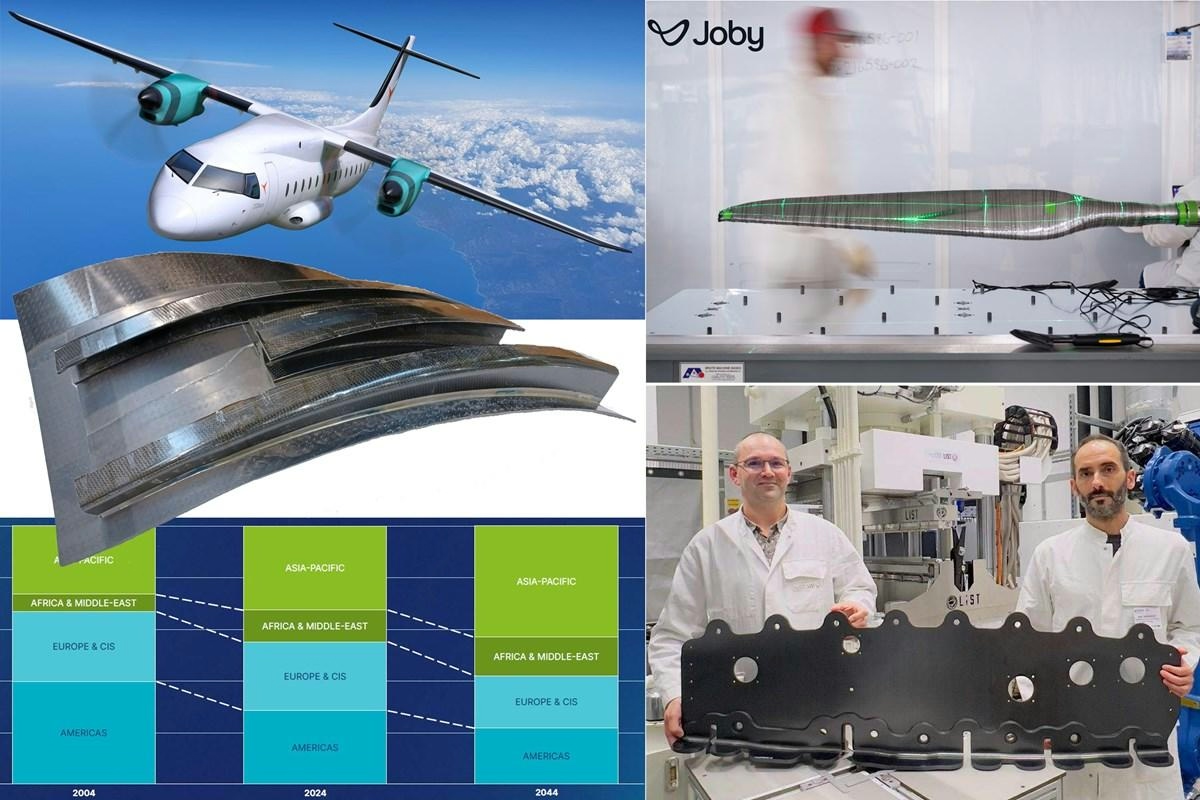
Growth Forecast for Riblet Aircraft Coatings Market Through 2035 Amid Fuel Efficiency Regulations
The global market for Ultra Low Drag Riblet Aircraft Coatings is anticipated to experience substantial growth through 2035, driven primarily by increasingly stringent fuel efficiency and emissions regulations. According to the latest IndexBox report, airlines, military operators, and maintenance, repair, and overhaul (MRO) providers are actively seeking aerodynamic solutions that reduce fuel consumption and carbon emissions. Riblet coatings, which feature microscopic structures inspired by shark skin, have demonstrated the ability to reduce skin friction drag by 5 to 8 percent during cruise. This reduction translates directly into significant fuel savings and lower CO₂ emissions per flight.
Market Dynamics and Demand Trends
The industry is moving beyond initial trial phases toward wider fleet adoption, supported by advancements in application technologies and more defined certification processes. Demand is bifurcating into two primary segments: cost-conscious buyers who prioritize rapid return on investment, and premium customers who emphasize durability, anti-icing properties, and overall lifecycle performance. Distribution channels are also evolving, shifting from direct original equipment manufacturer (OEM) sales to hybrid models that incorporate MRO networks and digital procurement platforms.
Despite the optimistic growth outlook, the sector faces notable challenges. High research and development expenditures, rigorous regulatory standards, and competition from established aerospace coatings manufacturers present significant obstacles. These factors have spurred increased investment in sustainable technologies and strategic partnerships aimed at enhancing product portfolios. Industry players are responding with innovations designed to improve both fuel efficiency and cost-effectiveness, alongside acquisitions and collaborations to broaden market presence and technical expertise.
Regional Outlook and Market Segmentation
Geographically, the market remains concentrated in regions with dense aviation activity and stringent environmental policies, particularly Europe and North America. Meanwhile, the Asia-Pacific region is emerging as a key growth corridor, propelled by rapid fleet expansion and heightened sensitivity to fuel costs.
From 2026 to 2035, the riblet coatings market is projected to grow at a compound annual growth rate (CAGR) of approximately 8.2 percent, with the market index expected to reach 210 relative to the 2025 baseline. This forecast assumes steady global GDP growth, sustained jet fuel prices above historical averages, and the progressive enforcement of the International Civil Aviation Organization’s Carbon Offsetting and Reduction Scheme for International Aviation (ICAO CORSIA) alongside regional emissions mandates.
Commercial aviation is expected to remain the largest demand segment, accounting for over 40 percent of market volume. This growth is driven by fleet renewal and retrofit programs across both narrow-body and wide-body aircraft. Military aviation maintains a stable share, supported by stealth and performance requirements for next-generation platforms. The unmanned aerial vehicle (UAV) segment is anticipated to experience the fastest growth, as endurance optimization becomes critical for long-range surveillance and cargo drones. Additionally, helicopter and rotor blade applications are gaining traction, with operators seeking both fuel savings and enhanced erosion resistance.
Supply-Side Challenges and Future Prospects
On the supply side, rising costs for specialty polymers and nano-additives continue to pose challenges. However, economies of scale and process improvements are gradually reducing per-unit application expenses. Key risks to the market outlook include potential delays in certification for new coating formulations, fluctuations in aerospace OEM production rates, and competition from alternative drag-reduction technologies such as active flow control.
Nonetheless, the overarching structural trend toward lower emissions and improved fuel efficiency is expected to sustain robust demand. This environment will likely support ongoing investment and innovation throughout the riblet coatings value chain in the years ahead.

Etihad Airways Suspends Airbus A380 Flights on Key Route

Aditya Birla Group Seeks Approval for Aircraft Leasing in GIFT City

Qatar Airways Highlights Innovation and Connectivity at Arabian Travel Market 2026

Hong Kong's Five-Year Plan Includes Andrew Fan's Aircraft Parts Processing Hub Proposal

ACIA Aero Leasing Delivers ATR72-600 to Air Nostrum

RTX Appoints Jill Albertelli as Head of Pratt & Whitney

TAT Technologies Joins Beyond Aero Hydrogen Aircraft Program

AURAK Study Highlights Barriers to Air Taxi Adoption in Emerging Economies

Xiamen Air Selects Altitude for 787 Maintenance at Heathrow

Etihad and Swissport Extend Global Partnership
