
Trasforma le intuizioni dell’IA in azioni concrete

Tendenze
Categories
FTAI Aviation Introduces Platform to Convert CFM56 Engines into Power Turbines
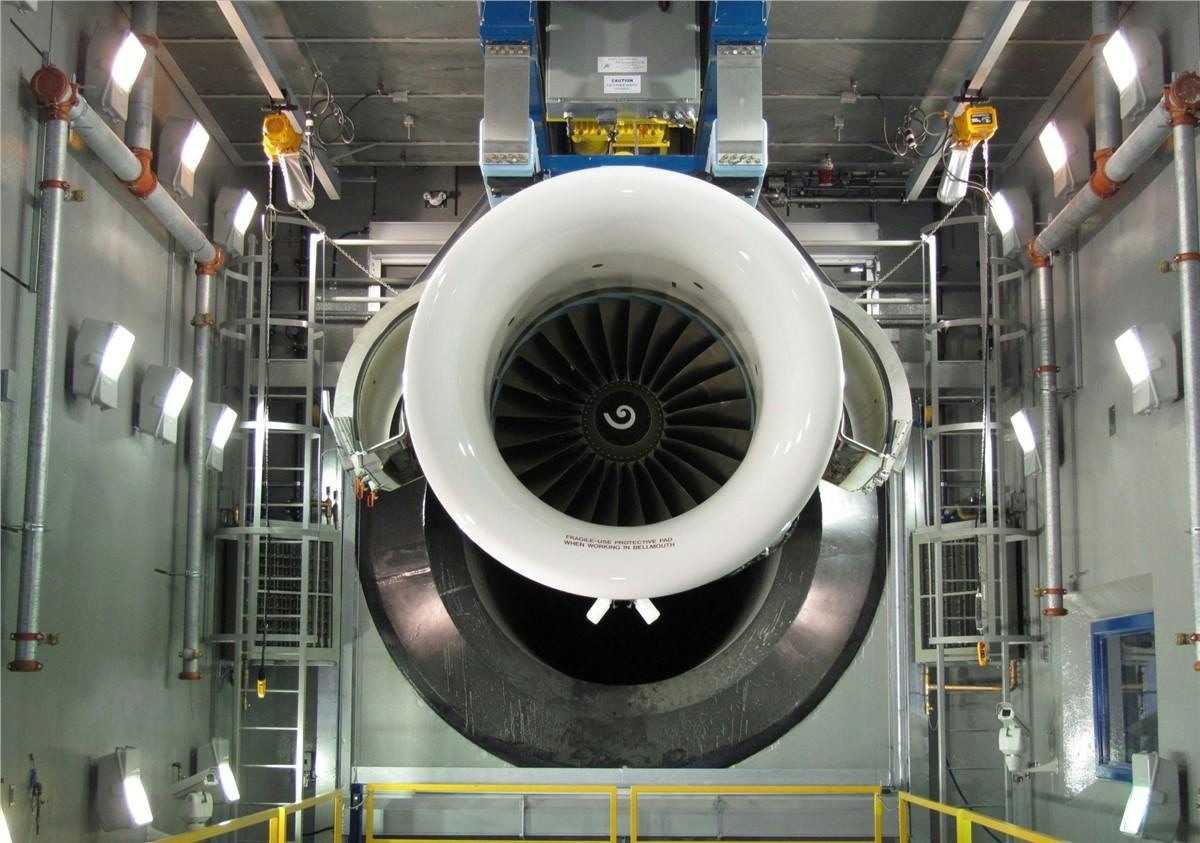
FTAI Aviation Unveils Platform to Convert CFM56 Engines into Power Turbines
FTAI Aviation Ltd., a prominent player in the ownership and maintenance of commercial jet engines, has announced the launch of a new platform aimed at converting CFM56 engines into power turbines. This initiative represents a strategic advancement for the company, which primarily focuses on CFM56 and V2500 engines through its two core business segments: Aviation Leasing and Aerospace Products.
Business Segments and Strategic Focus
The Aviation Leasing division oversees a portfolio comprising 391 aviation assets, including both aircraft and engines, which are leased or sold to clients globally. Concurrently, the Aerospace Products segment is engaged in the development, manufacturing, repair, and sale of aftermarket components for CFM56-7B, CFM56-5B, and V2500 engines. This is accomplished through a blend of joint ventures and proprietary maintenance facilities. FTAI’s proprietary solutions, such as its Module Factory and partnerships for producing engine parts manufacturer approval (PMA) components, are designed to offer cost efficiencies and operational flexibility to airlines, lessors, and maintenance, repair, and operations (MRO) providers.
The newly introduced platform seeks to repurpose the widely used CFM56 engine by converting it into power turbines suitable for alternative industrial applications. This innovation has the potential to unlock new revenue streams while extending the operational lifespan of existing engine assets.
Challenges and Market Dynamics
FTAI Aviation faces significant challenges in the rollout of this platform, foremost among them securing regulatory approval. Compliance with stringent aviation and industrial standards is essential to ensure market acceptance and operational safety. The company also enters a competitive arena where established firms, such as ITP Aero, are expanding their own MRO capabilities and engine modification services. Demonstrating the reliability and efficiency of the converted engines will be critical for FTAI to build customer confidence and distinguish its offering in the marketplace.
Industry reactions to the announcement have been mixed. Some stakeholders have expressed reservations regarding the technical feasibility and economic practicality of converting commercial jet engines for alternative uses. In response, competitors may intensify their innovation efforts and enhance their engine repair and modification services to safeguard their market positions.
Strategic Implications
Despite these hurdles, FTAI Aviation’s investment in engine conversion technology aligns with its broader strategy to diversify its aviation asset portfolio and capitalize on emerging opportunities within the aerospace sector. By integrating asset management, aftermarket product development, and technical innovation, the company is positioning itself to meet evolving industry demands while navigating regulatory complexities and competitive pressures.
Comments

Etihad Airways Suspends Airbus A380 Flights on Key Route

Aditya Birla Group Seeks Approval for Aircraft Leasing in GIFT City

Qatar Airways Highlights Innovation and Connectivity at Arabian Travel Market 2026

Hong Kong's Five-Year Plan Includes Andrew Fan's Aircraft Parts Processing Hub Proposal

ACIA Aero Leasing Delivers ATR72-600 to Air Nostrum

RTX Appoints Jill Albertelli as Head of Pratt & Whitney

TAT Technologies Joins Beyond Aero Hydrogen Aircraft Program

AURAK Study Highlights Barriers to Air Taxi Adoption in Emerging Economies

Xiamen Air Selects Altitude for 787 Maintenance at Heathrow

Etihad and Swissport Extend Global Partnership
