Immagine

AeroGenie — Il tuo copilota intelligente.

Chiedi qualsiasi cosa. Analizza tutto. Agisci immediatamente.

Tendenze

Categories

Fuel Efficiency Comparison: Airbus A380 and Boeing 747 Per Passenger
August 17, 2025By ePlane AI
Fuel Efficiency Comparison: Airbus A380 and Boeing 747 Per Passenger
0
0
Airbus A380
Boeing 747
Fuel Efficiency

Fuel Efficiency Comparison: Airbus A380 and Boeing 747 Per Passenger

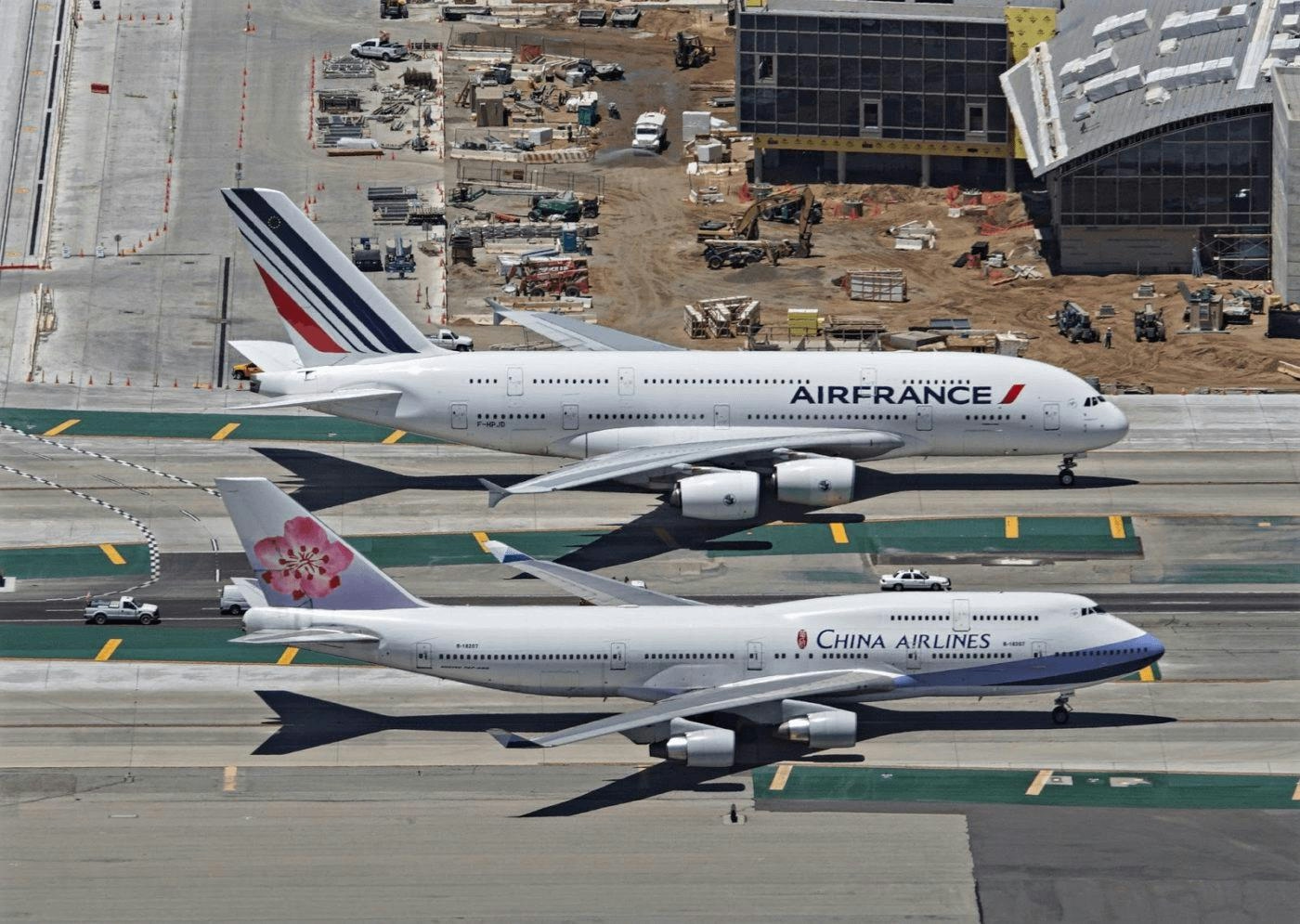
The Airbus A380 and Boeing 747 represent the largest commercial aircraft produced by their respective manufacturers, each featuring distinctive twin-deck designs and the capacity to carry hundreds of passengers on long-haul flights. Although their considerable size results in higher overall fuel consumption compared to smaller jets, their ability to transport large numbers of passengers can yield notable efficiencies when measured on a per-seat basis.

Fuel Efficiency Metrics and Aircraft Performance

Fuel efficiency per passenger is commonly assessed by the volume of jet fuel consumed, measured in liters, to transport one passenger over a distance of 100 kilometers. Industry data indicates that among these large aircraft, the Boeing 747-8 variant demonstrates superior fuel efficiency. The Airbus A380 and Boeing 747-400 exhibit similar fuel consumption rates per passenger, while the 747-8 benefits from advanced engine technology and aerodynamic refinements that reduce fuel use.

Specifically, the Airbus A380, configured to carry approximately 554 passengers over a range of 11,000 kilometers, consumes about 3.16 liters of fuel per 100 kilometers per passenger. The Boeing 747-400, with a capacity of 487 passengers and a range of 10,147 kilometers, matches this figure. In contrast, the Boeing 747-8, accommodating 467 passengers over 11,000 kilometers, achieves a lower consumption rate of 2.82 liters per 100 kilometers per passenger. This improvement is attributed to the 747-8’s extended fuselage, wider wingspan, and incorporation of modern engines, which collectively enhance aerodynamic efficiency and reduce fuel burn.

Market Dynamics and Industry Challenges

Assessing fuel efficiency between the Airbus A380 and Boeing 747 involves complexities beyond raw performance data. Regulatory frameworks continue to evolve, imposing stricter environmental standards that influence aircraft design and operation. Concurrently, rapid technological advancements and shifting market preferences have altered demand for very large aircraft. The traditional hub-and-spoke model, which favored super-jumbo jets, is increasingly supplanted by point-to-point travel, diminishing the appeal of such large-capacity aircraft.

The Boeing 747-8, despite its technological improvements, experienced limited commercial success, with only 155 orders placed globally, including 81 by Lufthansa. A significant portion of these aircraft has been allocated to freight operations rather than passenger service. Both Airbus and Boeing have responded to these market challenges by emphasizing continuous innovation, developing widebody aircraft that meet stringent efficiency requirements while addressing airline demands for operational flexibility and cost-effectiveness.

Aircraft Specifications and Industry Context

The Airbus A380 remains the largest commercial airliner in service, measuring 239 feet in length with a wingspan of 261.8 feet. Production of the A380 spanned from 2003 to 2021, resulting in 254 units built. In comparison, the Boeing 747 family is marginally smaller, with most variants measuring approximately 231 feet 10 inches in length and a wingspan of 195 feet 8 inches. Unlike the A380’s full-length double deck, the 747 features a partial upper deck.

Conclusion

While the Boeing 747-8 surpasses the Airbus A380 in fuel efficiency on a per-passenger basis, both aircraft exemplify the intricate balance between size, technological innovation, and evolving market conditions in contemporary aviation. As airlines and manufacturers navigate changing regulatory landscapes and passenger preferences, the pursuit of enhanced fuel efficiency and operational performance remains a central focus in the development of future widebody aircraft.

More news
Vertical Aerospace Conducts Piloted Electric Air Taxi Transition Flight

Vertical Aerospace Conducts Piloted Electric Air Taxi Transition Flight

Vertical Aerospace Completes First Piloted Electric Air Taxi Transition Flight Vertical Aerospace has reached a significant milestone in the development of its electric air taxi by successfully conducting its first piloted “transition” flight on April 2 at Cotswold Airport in southwest England. Test pilot Paul Stone skillfully managed the full-scale demonstrator as it took off vertically, transitioned seamlessly into forward, wingborne flight, and landed conventionally on a runway. This flight demonstrated the aircraft’s critical capability to shift from vertical to forward flight, a key step toward achieving commercial viability. The company announced the accomplishment on April 6, describing it as “the most significant technical milestone in Vertical’s 10-year history” and marking the completion of the first half of a “two-way” transition sequence. The flight was conducted under the supervision of the UK Civil Aviation Authority (CAA), representing a first for a piloted, full-scale electric vertical takeoff and landing (eVTOL) aircraft of this class in the United Kingdom. Industry Context and Competitive Landscape Vertical Aerospace’s progress comes amid intensifying competition within the eVTOL sector. While competitors such as Joby Aviation and Beta Technologies have also completed piloted transition flights, other developers including Archer Aviation, Eve Air Mobility, and Wisk Aero have yet to publicly demonstrate similar achievements with full-scale, piloted prototypes. The race to secure regulatory certifications and attract sufficient funding remains fierce, as companies compete for a foothold in the emerging electric air taxi market. The successful transition flight positions Vertical Aerospace on course to obtain certification for its production aircraft, known as Valo, by 2028. The company intends to pursue initial certifications from both the UK’s CAA and Europe’s European Union Aviation Safety Agency (EASA). Despite this progress, Vertical faces considerable challenges, including navigating complex regulatory frameworks, achieving market acceptance, and responding to competitive pressures. Notably, Eve Air Mobility has advanced its own flight testing program, while Archer Aviation recently filed a counterclaim against Joby Aviation, highlighting the high-stakes environment in which these companies operate. Vertical’s immediate objective is to complete a “two-way transition” flight, which involves taking off vertically, transitioning to forward flight, and then returning to hover for landing. The company emphasized that this flight demonstrated the aircraft’s ability to perform one of aviation’s most complex maneuvers: transferring lift from propellers to wings under real-world conditions at full scale. Financial Position and Market Outlook Financial stability remains a critical concern for Vertical Aerospace. As of late March, the company reported $58 million in cash and equivalents, sufficient to fund operations through the middle of the year. However, its outlook improved following a $50 million capital raise through a new share issue on March 30, with plans to secure an additional $30 million. Furthermore, Vertical disclosed a new financing agreement in principle that could provide up to $800 million in long-term funding. Market reactions to Vertical’s progress have been mixed, with investors closely monitoring the company’s ability to achieve further technical milestones and secure regulatory approval. Meanwhile, competitors are expected to intensify their efforts to obtain certifications and expand their presence in the rapidly evolving electric air taxi sector.
Boeing Surpasses Airbus in Deliveries Amid Ongoing Recovery Challenges

Boeing Surpasses Airbus in Deliveries Amid Ongoing Recovery Challenges

Boeing Surpasses Airbus in Deliveries Amid Ongoing Recovery Challenges In a notable development within the global aerospace industry, Boeing (NYSE:BA) has overtaken Airbus in aircraft deliveries, signaling a significant shift after years marked by production setbacks and regulatory obstacles. In February 2026, Boeing delivered 51 aircraft, its highest monthly total since 2018, surpassing Airbus and reaching a nine-year peak. This achievement comes despite persistent challenges, including ongoing quality concerns related to premium class seats on the 787 Dreamliner. Production Momentum and Strategic Wins The increase in deliveries reflects renewed momentum in Boeing’s production system, which has faced considerable difficulties in recent years. The company’s operational progress is further highlighted by key successes in its defense and space divisions. Boeing recently secured a PAC-3 missile seeker contract and played a pivotal role in the successful launch of the Artemis Space Launch System (SLS) core stage, underscoring its strategic importance in national security and space exploration efforts. Regulatory developments have also worked in Boeing’s favor. Authorities have approved higher takeoff weights for the 787 series, enhancing payload capacity and range options for airlines. This regulatory approval strengthens Boeing’s competitive position against long-haul rivals such as Airbus, as well as engine and systems partners including General Electric and Rolls Royce. Challenges and Market Implications Despite these positive indicators, Boeing’s outlook remains cautious due to several ongoing challenges. Recurring quality issues, delays in the certification of the 777X, rising fuel costs, and geopolitical tensions continue to exert pressure on both its commercial and defense operations. These factors affect production timelines, customer demand, and the pace at which order backlogs can be converted into deliveries and revenue. The recent shift in delivery figures may influence market sentiment in Boeing’s favor, while Airbus could face increased scrutiny over its own production delays. Industry analysts anticipate that Airbus will respond by intensifying efforts to improve delivery rates and resolve bottlenecks in order to reclaim market share. For investors, Boeing presents a complex profile. Operational gains, new defense contracts, and regulatory approvals may enhance the company’s competitiveness for future orders. However, unresolved quality concerns and certification delays pose risks that could impact program costs and delivery schedules. As airlines and governments continue to prioritize fleet renewal, national security, and space initiatives, Boeing’s performance remains a critical factor in the broader aviation sector. Assessing the interplay of these elements is essential for understanding Boeing’s long-term trajectory as it navigates both recovery opportunities and persistent challenges.
Solomon Airlines Suspends DHC-8-100 Operations for Maintenance

Solomon Airlines Suspends DHC-8-100 Operations for Maintenance

Solomon Airlines Temporarily Grounds DHC-8-100 for Scheduled Maintenance Solomon Airlines has announced a temporary suspension of operations for its sole DHC-8-100 turboprop aircraft, registered H4-SOL, to undergo a scheduled C-check maintenance starting April 11, 2026. In response, the airline will deploy its A320-200 aircraft on domestic routes between Honiara and Munda from April 13, 2026, aiming to alleviate service disruptions. While the airline will maintain its core domestic schedule using two DHC-6-300 aircraft, services to Arona and Lomlom will be suspended during the maintenance period. Operational Context and Challenges The DHC-8-100, a 34.7-year-old aircraft configured with 37 all-economy seats, has been a critical component of Solomon Airlines’ domestic fleet since 2012. According to ch-aviation data, the aircraft experienced mechanical difficulties in September 2025, which limited its operations to Munda while awaiting replacement parts. This latest suspension underscores ongoing operational challenges faced by the airline, particularly the difficulty in sourcing alternative aircraft or establishing partnerships to sustain service continuity. These challenges are compounded by the broader context of global supply chain constraints and maintenance delays affecting the airline industry. Solomon Airlines must also contend with potential financial losses and operational disruptions resulting from the temporary suspension of certain routes. The situation reflects a wider industry trend, as evidenced by recent coordinated efforts from organizations such as IATA and IATP to address maintenance and supply chain issues. The recent grounding of Uganda Airlines’ A330neo fleet for unscheduled maintenance further highlights the pervasive nature of these challenges. Market Implications and Industry Response The suspension of the DHC-8-100 is likely to attract increased scrutiny from regulators and raise concerns among passengers regarding the reliability of Solomon Airlines’ services. Competitors may seek to exploit this opportunity by expanding their offerings or enhancing service options to affected travelers. To date, Solomon Airlines has not announced plans to lease additional aircraft or pursue new partnerships to cover the impacted routes. Industry observers and stakeholders will be closely monitoring the airline’s response to these operational hurdles, as maintenance and supply chain pressures continue to pose significant challenges for carriers worldwide.
American Airlines Flight Delayed by Bee Swarm on Engine

American Airlines Flight Delayed by Bee Swarm on Engine

American Airlines Flight Delayed by Bee Swarm on Engine Unusual Cause of Delay at Charlotte Douglas International Airport A routine departure from Charlotte Douglas International Airport was disrupted last week when an American Airlines flight bound for San Francisco was delayed due to an unexpected and highly unusual obstacle: a swarm of bees clustered around one of the aircraft’s engines. Passengers onboard witnessed airport crews working diligently to remove the insects, a process that extended the departure time by approximately one hour. Video footage captured by a passenger documented the efforts to ensure the plane was safe for flight before takeoff. Airline Response and Industry Implications The incident posed a unique challenge for American Airlines, which had to manage both the operational delay and the communication with concerned passengers. In an industry where transparency and timely information are increasingly demanded by travelers, the airline’s handling of the situation was closely observed. American Airlines has recently enhanced its communication strategies by providing detailed explanations for delays and cancellations through its digital platforms, aiming to maintain customer trust and satisfaction amid disruptions. Such unexpected delays can have broader repercussions beyond the immediate inconvenience. Market observers and travel agencies often scrutinize airlines’ reliability, and competitors may leverage these moments to emphasize their own punctuality records in an effort to attract disaffected customers. The bee swarm incident serves as a reminder of the unpredictable challenges that can affect air travel and highlights the critical role of clear and effective communication between airlines and their passengers. Despite the delay, the flight ultimately departed safely for San Francisco, concluding an unusual episode in the daily operations of a major carrier.
Bangladesh Expresses Interest in Leasing Boeing Aircraft

Bangladesh Expresses Interest in Leasing Boeing Aircraft

Bangladesh Explores Leasing Boeing Aircraft to Meet Growing Aviation Needs The Ministry of Civil Aviation and Tourism of Bangladesh has formally expressed interest in leasing aircraft from Boeing as part of efforts to address the country’s expanding aviation demands. This development was revealed during a high-level meeting between Boeing Vice President Paul Righi and Civil Aviation and Tourism Minister Afroza Khanam, which was also attended by State Minister M Rasheduzzaman Millat. Focus on Narrow-Body Aircraft Leasing The discussions primarily revolved around the potential leasing of narrow-body aircraft, with particular emphasis on the Boeing 737 series, to support Bangladesh’s operational requirements. Minister Khanam highlighted the urgency of accelerating the leasing process, underscoring the government’s commitment to strengthening the national aviation infrastructure. Both parties examined various facets of potential agreements between Boeing and the interim government, signaling a mutual interest in advancing the negotiations. Challenges Amid Geopolitical and Market Pressures However, the path toward finalizing any leasing arrangement is complicated by several external factors. Bangladesh’s fleet modernization efforts coincide with heightened geopolitical tensions, notably the ongoing conflict involving Iran, which has disrupted global markets and affected the aerospace sector. These tensions have contributed to volatility in Boeing’s stock prices, which have already been impacted by production challenges, thereby injecting uncertainty into international aircraft leasing discussions. The competitive landscape further complicates the situation. Airbus, Boeing’s chief competitor, has been actively seeking to leverage Boeing’s recent difficulties to expand its market share in regions including South Asia. This rivalry may influence Bangladesh’s procurement decisions as the government evaluates offers from multiple manufacturers. Broader Implications for Aviation and Defense Beyond commercial aviation, the global surge in the C4ISR (Command, Control, Communications, Computers, Intelligence, Surveillance, and Reconnaissance) aircraft market highlights the increasing importance of advanced situational awareness capabilities. While current negotiations focus on commercial aircraft leasing, this trend may inform Bangladesh’s future military procurement strategies as the country aims to enhance both its civilian and defense aviation capacities. Despite these complexities, both the Bangladeshi government and Boeing remain optimistic about progressing with the leasing initiative. The Ministry’s interest in Boeing aircraft leasing reflects a strategic approach to meeting immediate operational needs while navigating a rapidly evolving and challenging global aviation environment.
South Korea’s Busan Invests $145 Million in UAV Manufacturing Facility

South Korea’s Busan Invests $145 Million in UAV Manufacturing Facility

South Korea’s Busan Invests $145 Million in UAV Manufacturing Facility In a landmark development for South Korea’s aerospace sector, Korean Air and the Busan Metropolitan Government have formalized a $145 million agreement to establish a cutting-edge unmanned aerial vehicle (UAV) manufacturing facility. Announced in March 2026, this initiative represents a strategic effort to position Busan as a leading hub for advanced aviation and autonomous flight technologies within Northeast Asia. A Strategic Investment in Aerospace Innovation The investment, valued at approximately ₩200 billion, will support the construction of a 52,892-square-meter facility located within the Busan Tech Center complex. This new center is designed to focus on the production of UAVs, the development of artificial intelligence-powered flight systems, and the manufacture of aerospace components. Additionally, it will serve as a base for maintenance, repair, and overhaul (MRO) services. Korean Air’s expansion into aerospace manufacturing and defense technologies signals a deliberate shift beyond its traditional airline operations, reflecting broader ambitions in the aerospace industry. The facility is expected to accelerate the integration of AI-driven aviation systems and autonomous flight capabilities, both of which are increasingly critical to the future of commercial air travel and defense applications. By fostering research and development in these domains, the project aims to enhance South Korea’s competitive standing in the rapidly evolving global UAV market. Opportunities and Challenges in a Competitive Sector While the Busan facility promises to generate high-skilled employment opportunities and attract further investment, it will enter a global defense market characterized by intense competition. The UAV sector is currently dominated by established international players, and South Korea faces significant technological challenges that will require sustained investment in research and development to overcome. This initiative is likely to draw interest from global defense contractors and technology firms, potentially leading to new collaborations or acquisitions as international stakeholders seek to leverage South Korean advancements. Competitors in the UAV industry may respond by increasing their own investments and forging new partnerships, underscoring the strategic importance of unmanned systems in contemporary defense strategies. As demand for UAVs and AI-enabled aviation technologies continues to grow, the Busan facility could become a critical node in integrating South Korea into the global aerospace supply chain, serving both civilian and military markets. Busan’s Vision for an Aerospace Cluster The UAV manufacturing project aligns with Busan’s broader ambition to develop a comprehensive aviation and aerospace industrial cluster. It complements other regional initiatives, such as the Gadeokdo New Airport aviation ecosystem plan, which seeks to transform the city into a strategic aviation hub for Northeast Asia. Local authorities view the facility as a catalyst for attracting high-value investments, fostering international partnerships, and advancing technological research that will contribute to South Korea’s long-term economic growth. The facility’s core functions will include the development and manufacturing of UAVs for commercial and military applications, the integration of advanced autonomous flight technologies powered by artificial intelligence, and the production and maintenance of aerospace components to support the wider aviation sector. As South Korea intensifies its focus on aerospace innovation, the Busan UAV manufacturing facility stands as a significant milestone in the country’s pursuit of technological leadership in aviation, while also highlighting the challenges inherent in competing on a global scale.
Shein Partners with DHL to Use Sustainable Aviation Fuel

Shein Partners with DHL to Use Sustainable Aviation Fuel

Shein Partners with DHL to Use Sustainable Aviation Fuel Shein, a digital-first retailer operating in over 150 markets worldwide, has announced a strategic partnership with DHL to incorporate sustainable aviation fuel (SAF) into its air cargo shipments. This collaboration forms part of Shein’s broader efforts to reduce the environmental impact of its global supply chain and respond to increasing consumer demand for sustainable business practices. Responding to Evolving Consumer Expectations Shein’s online-focused business model reflects significant shifts in consumer shopping behavior, with a growing emphasis on convenience, speed, and environmental responsibility. According to DHL’s 2025 E-Commerce Trends Report, half of consumers now make online purchases at least weekly, and 90% use smartphones for shopping. Expectations for free and rapid delivery remain high, with many shoppers willing to switch retailers if these standards are not met. Simultaneously, sustainability has become a critical factor influencing purchasing decisions. The report highlights that one in three consumers abandon transactions due to concerns over environmental impact, with younger generations, particularly Gen Z, demonstrating heightened sensitivity to corporate sustainability practices. For digital-only retailers like Shein, transparent reporting on environmental initiatives is increasingly vital to building consumer trust in the absence of physical retail outlets. Challenges and Industry Implications Shein’s adoption of sustainable aviation fuel through DHL’s GoGreen Plus program represents a significant step toward decarbonizing its logistics operations. However, the initiative faces notable challenges. The global supply of SAF remains constrained, partly due to shortages of essential feedstocks such as used cooking oil. This scarcity has driven up the cost of SAF, potentially increasing operational expenses for both Shein and DHL. Moreover, the partnership places Shein’s overall sustainability commitments under closer scrutiny from stakeholders and consumers, who are increasingly vigilant about the authenticity and measurable impact of corporate environmental efforts. The announcement is likely to influence competitors within the fast-fashion sector, prompting them to accelerate their own sustainability programs to remain competitive and meet evolving consumer expectations. As the industry grapples with the environmental consequences of its operations, the transparency and effectiveness of such initiatives will continue to be a focal point for public and market evaluation. By integrating sustainable aviation fuel into its logistics network, Shein aims to align with shifting market demands and demonstrate a tangible commitment to environmental responsibility. Nevertheless, the company—and the broader fashion industry—must navigate the complexities posed by limited sustainable fuel availability, rising costs, and the imperative for genuine progress in sustainability.
Investor Confidence Declines in Air Taxi Sector for 2026

Investor Confidence Declines in Air Taxi Sector for 2026

Investor Confidence Declines in Air Taxi Sector for 2026 Investor sentiment in the air taxi industry is showing signs of decline as companies confront a range of challenges, including regulatory obstacles, funding difficulties, and increasing competition. Although the long-term prospects for urban air mobility remain promising, many firms within the sector, such as Archer Aviation, continue to operate without generating revenue and have reported significant operating losses over the past year. To maintain their operations, these companies have frequently issued additional shares, diluting existing shareholders and underscoring ongoing financial pressures. Regulatory and Financial Challenges Archer Aviation has made progress with its electric air taxi program, recently securing all necessary Federal Aviation Administration (FAA) compliance approvals for its Midnight aircraft. The company is now collaborating with local regulators across several states to develop operational networks. Despite these advancements, the broader air taxi industry, which garnered substantial enthusiasm in 2025, is experiencing diminished investor optimism. Share prices for companies like Archer Aviation have fallen sharply from their peak valuations, reflecting a wider market shift away from higher-risk assets. Smaller operators face even more formidable hurdles. For instance, Hopscotch Go must obtain approval from the Securities and Exchange Commission (SEC) before it can begin accepting capital investments, highlighting the financial constraints confronting emerging players. The sector is further complicated by regulatory fragmentation and growing demand for charter services, as noted in the latest report from the Air Charter Council (ACC). On a global scale, structural barriers persist; Azul CEO John Rodgerson has emphasized significant challenges in Brazil, illustrating the international nature of these difficulties. Despite these headwinds, some companies continue to secure funding and advance pilot programs. Both Eve Air Mobility and Archer Aviation have attracted new investments and are progressing with development efforts, indicating a market that, while cautious, retains a degree of resilience. Comprehensive Overview of the U.S. Helicopter Industry The report also offers an extensive analysis of the helicopter industry in the United States, examining demand, supply, and trade flows throughout the national value chain. It explores how consumption patterns are shaped by demand across key channels and end-use segments, while also assessing the impact of input availability, production efficiency, and regulatory standards on supply dynamics. Beyond headline figures, the study benchmarks prices, margins, and trade routes, providing insights into value creation and the movement of goods between domestic suppliers and international partners. Domestic demand is driven by both household and industrial usage, with trade flows linking local supply to imports and exports. Pricing dynamics are influenced by factors such as unit values, freight costs, exchange rates, and regulatory changes that affect sourcing decisions. Supply depends heavily on input availability and production efficiency, which together shape the national cost curve. Market concentration varies across segments, resulting in diverse competitive landscapes and entry barriers. Looking ahead to 2035, the report identifies areas where capacity investment and demand growth are most closely aligned within the United States. The analysis integrates market sizing with trade intelligence and price analytics, covering both historical performance and forward-looking projections to 2035. It facilitates comparisons of market cycles, structural shifts, and policy impacts, encompassing market size and growth in value and volume terms, consumption structure by end-use segments, production capacity and cost dynamics, trade flows including exporters and importers, price benchmarks, and competitive context. The methodology underpinning the report draws on a multi-source framework that incorporates official statistics, trade records, company disclosures, and expert validation. Data are standardized and cross-checked to ensure consistency across time series, providing a robust foundation for strategic planning, market entry, portfolio prioritization, and risk management within the evolving air taxi and helicopter sectors.
Families of AI171 Crash Victims Request Release of Black Box Data

Families of AI171 Crash Victims Request Release of Black Box Data

Families of AI171 Crash Victims Demand Transparency Over Black Box Data Nearly a year after the tragic crash of Air India flight AI171, which resulted in the deaths of 260 individuals, families of the victims are intensifying their demands for transparency and accountability. On Saturday, approximately 30 bereaved relatives from across Gujarat convened in Ahmedabad to send a formal letter to Prime Minister Narendra Modi, urging the government to release the Cockpit Voice Recorder (CVR) and Flight Data Recorder (FDR) information. The Boeing 787-8 aircraft, bound for London, crashed into a medical college hostel complex shortly after departing from Sardar Vallabhbhai Patel International Airport on June 12, 2025. The disaster claimed 241 of the 242 people onboard and 19 individuals on the ground. The letter, also addressed to the Aircraft Accident Investigation Bureau (AAIB), the Directorate General of Civil Aviation (DGCA), and Gujarat Chief Minister Bhupendra Patel, requests that if public disclosure of the black box data is not feasible, the information should at least be shared privately with the victims’ families. The letter emphasizes the families’ desire to understand the true cause of the crash and whether any technical malfunction contributed to the tragedy. Grief and Frustration Amid Calls for Accountability For many families, the anguish of loss is compounded by frustration over inadequate institutional support and a perceived lack of transparency. Nilesh Purohit, who lost his 24-year-old son in the crash, expressed that no compensation could alleviate the pain, stating, “We don’t want money, we just want to know what happened.” Kinjal Patel from Vasad, who lost her mother, described difficulties navigating Air India’s recently launched website intended to help recover victims’ belongings, citing unclear images among the 25,000 items listed. Others, such as Romin Vora from Kheda, who lost multiple family members, highlighted the challenges faced by those unfamiliar with digital tools. He criticized the limited communication channels and slow response times, noting that many rural families lack the means to use email effectively. Vora also condemned the public display of personal belongings as insensitive to the victims’ families. The families’ pursuit of answers is being supported by their legal counsel, Mike Andrews, who has previously represented victims in the Boeing 737 Max crashes. Andrews has publicly challenged the official narrative attributing the AI171 crash to pilot error, advocating instead for a thorough investigation into possible technical or electrical failures. Drawing parallels to the 737 Max incidents, he cautions against prematurely blaming pilots without fully examining systemic issues. Recent legal setbacks, including a federal appeals court’s refusal to reopen a criminal case against Boeing related to the Max crashes, underscore the ongoing difficulties in securing justice and transparency. Despite these obstacles, Andrews continues to press Boeing and regulatory authorities for accountability. The AAIB submitted its preliminary report on the AI171 crash in July 2025 and is expected to release its final findings around the first anniversary of the disaster in June 2026. Air India has yet to respond to the families’ latest appeals for information.
Software Issues Delay Full Delivery of Rafale Jets to India Despite Full Payment

Software Issues Delay Full Delivery of Rafale Jets to India Despite Full Payment

Software Issues Delay Full Delivery of Rafale Jets to India Despite Full Payment The complete delivery of Rafale fighter jets to India has been postponed, despite the country having fulfilled its financial obligations in full. Central to this delay are software-related complications and the French government’s reported refusal to grant India access to the source code for critical systems, including the Thales RBE2 AESA radar, the Modular Data Processing Unit (MDPU), and the SPECTRA electronic warfare suite. This impasse has ignited a vigorous debate within India concerning the terms of the Rafale agreement and the broader ramifications of software dependency in contemporary defense acquisitions. The Integral Role of Software in Advanced Fighter Jets In modern fighter aircraft such as the Rafale, software constitutes an estimated 30 to 40 percent of the total cost, a figure expected to increase as technology advances. Without access to the underlying source code, purchasing nations effectively receive only a fraction of the aircraft’s full capabilities, despite having paid the entire price. This situation fosters a significant reliance on the original equipment manufacturer (OEM) for future software updates, integration of new weapon systems, and adaptation to evolving combat requirements. For instance, should India seek to integrate third-party weaponry, such as Russian R-37M missiles, onto the Rafale platform, it would require Dassault Aviation’s cooperation to implement the necessary software modifications. In the absence of such support, operational flexibility is severely constrained, limiting the aircraft’s effectiveness in diverse combat scenarios. Global Context: Software Challenges in Defense Procurement India’s experience with the Rafale jets is emblematic of a wider pattern affecting defense procurement worldwide. Several major programs have encountered similar delays and complications due to software and integration issues. Taiwan’s F-16V fighter deliveries have been postponed owing to software problems, underscoring the complexity of integrating advanced avionics and mission systems. Commercial aviation has also faced challenges, as evidenced by the Boeing 737 Max jets, whose deliveries to India and other countries were hindered by wiring and software faults. The US-led F-35 program has repeatedly struggled with software updates, impacting both operational readiness and delivery schedules. Meanwhile, Switzerland is reportedly contemplating the cancellation of its purchase of the US Patriot air defense system, citing severe delivery delays largely attributed to software and integration difficulties. These cases collectively highlight a growing trend: as military and aerospace platforms become increasingly software-driven, delivery timelines and operational autonomy are increasingly contingent upon access to proprietary code and the OEM’s willingness to cooperate. The Complex Architecture of Fighter Jet Software Software in modern fighter aircraft is structured in hierarchical layers. The low-level layers manage direct hardware interactions, interfacing with sensors, actuators, and data buses. Mid-level layers provide essential operating system services, mathematical libraries, and certified middleware, abstracting hardware details from higher functions. The high-level layers implement mission-specific logic, including sensor fusion, target tracking, and electronic warfare responses, effectively defining the aircraft’s operational “personality.” Original equipment manufacturers rarely, if ever, grant full access to these layers—particularly the uppermost ones—to foreign buyers. This practice ensures continued control over the platform and restricts the purchaser’s ability to independently upgrade or modify the aircraft, thereby maintaining the OEM’s strategic leverage. Conclusion India’s ongoing difficulties with the Rafale delivery underscore the strategic significance of software in modern defense procurement. As the global defense and aerospace sectors confront similar challenges, the debate over operational sovereignty versus technological dependency is poised to intensify, carrying profound implications for future acquisitions.
line










