
Trasforma le intuizioni dell’IA in azioni concrete

Tendenze
Categories
Growth of Independent Low-Cost Carriers in Europe's Narrowbody Aircraft Fleet
Growth of Independent Low-Cost Carriers in Europe’s Narrowbody Aircraft Fleet
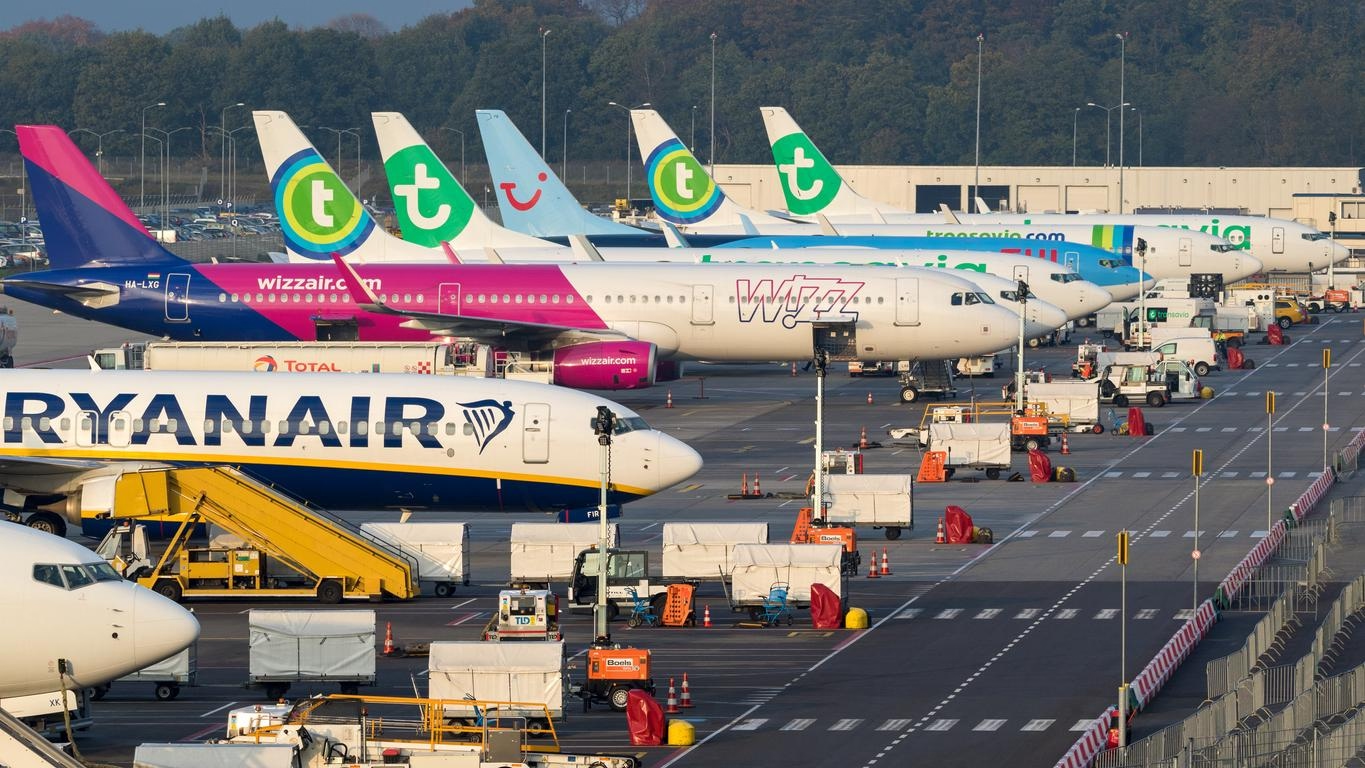
Europe’s six leading independent low-cost carriers (LCCs)—Ryanair, easyJet, Wizz Air, Jet2.com, Pegasus Airlines, and Norwegian—now represent 29% of all narrowbody aircraft based in the region. This marks a notable increase from 25% five years ago and a dramatic rise from just 9% two decades earlier, highlighting the rapid expansion of these carriers within Europe’s aviation sector.
Fleet Composition and Market Position
Together, these six airlines operate a combined narrowbody fleet of approximately 1,550 aircraft. The top three—Ryanair, easyJet, and Wizz Air—account for 1,215 of these jets, surpassing the combined narrowbody fleets of Europe’s three major legacy airline groups: Lufthansa Group, IAG, and Air France-KLM. By comparison, the low-cost subsidiaries affiliated with these legacy groups operate a total of only 435 narrowbody aircraft.
Looking forward, the independent LCCs have placed orders for an additional 1,067 narrowbody aircraft. This contrasts sharply with the 263 outstanding orders held by the three major legacy groups, of which only 103 are allocated to their low-cost brands. This substantial order book indicates that the independent LCCs are poised to further increase their share of Europe’s narrowbody fleet in the coming years.
Challenges and Strategic Responses
Despite their growth, independent LCCs face several challenges. Rising operational costs, ongoing supply chain disruptions, and signs of weakening demand—particularly in North America—present potential obstacles to continued expansion. In response, some carriers are recalibrating their strategies. Ryanair, for instance, is increasingly targeting markets that offer favorable incentives and shifting its focus from launching new routes to enhancing performance on existing ones.
Competitive pressures are also influencing the market landscape. Legacy carriers and other competitors are pursuing their own fleet expansion plans to remain competitive. Gulf Air’s recent narrowbody fleet expansion through a lease agreement with BOC Aviation exemplifies a broader trend among airlines seeking flexible solutions to adapt to evolving demand.
Despite these headwinds and intensifying competition, the independent low-cost carriers’ growing dominance in Europe’s narrowbody segment remains resilient. Their expanding fleets and strategic adjustments position them as enduring key players in the region’s aviation industry amid ongoing market evolution.

Etihad Airways Suspends Airbus A380 Flights on Key Route

Aditya Birla Group Seeks Approval for Aircraft Leasing in GIFT City

Qatar Airways Highlights Innovation and Connectivity at Arabian Travel Market 2026

Hong Kong's Five-Year Plan Includes Andrew Fan's Aircraft Parts Processing Hub Proposal

ACIA Aero Leasing Delivers ATR72-600 to Air Nostrum

RTX Appoints Jill Albertelli as Head of Pratt & Whitney

TAT Technologies Joins Beyond Aero Hydrogen Aircraft Program

AURAK Study Highlights Barriers to Air Taxi Adoption in Emerging Economies

Xiamen Air Selects Altitude for 787 Maintenance at Heathrow

Etihad and Swissport Extend Global Partnership
