
Trasforma le intuizioni dell’IA in azioni concrete

Tendenze
Categories
How AI Is Transforming Global Aviation by Monitoring Every Flight
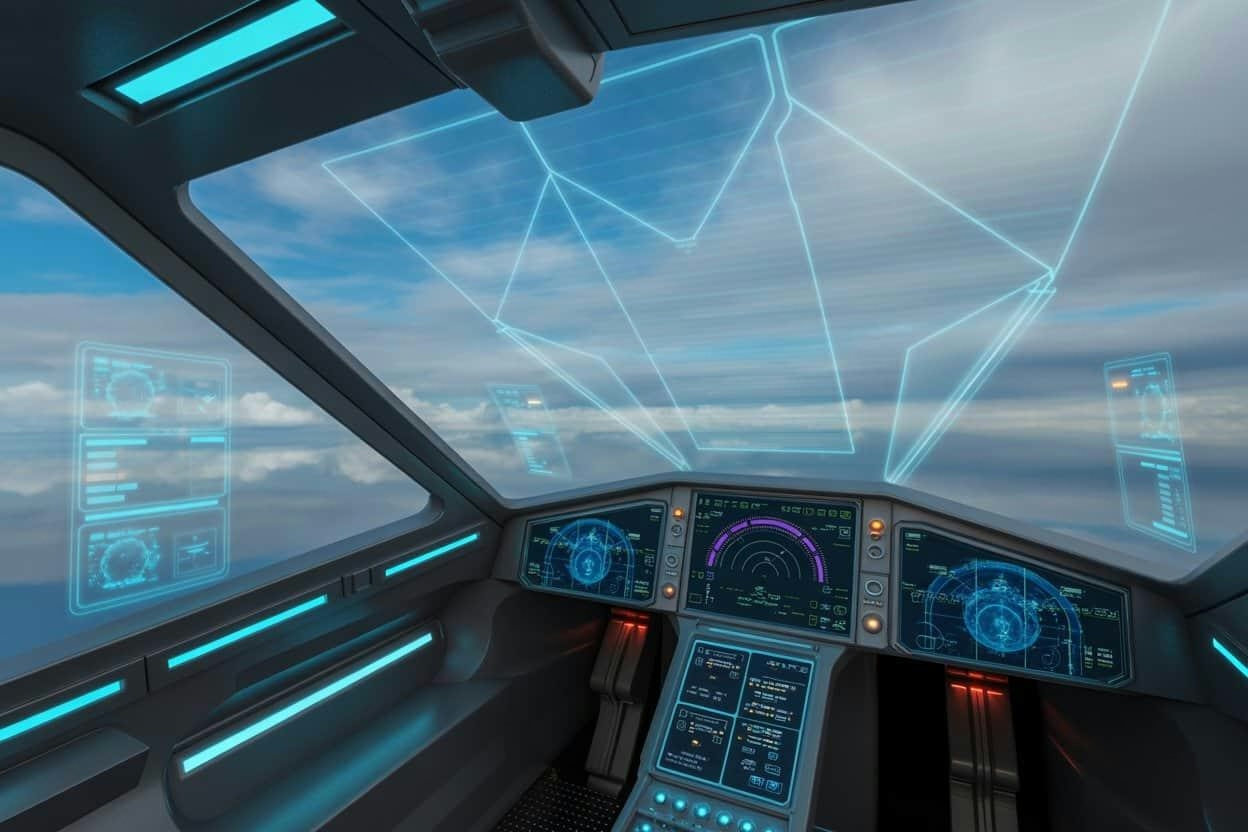
How AI Is Transforming Global Aviation by Monitoring Every Flight
Global aviation is experiencing a significant transformation as artificial intelligence (AI) becomes an integral component of airline operations worldwide. While passengers typically focus on boarding passes and departure gates, a sophisticated network of AI-driven systems now continuously monitors every flight from takeoff to landing. This technological evolution is redefining how airlines manage delays, enhance safety, and respond to disruptions, ushering in a new era of predictive, data-driven air travel.
Advancing Beyond Traditional Flight Monitoring
Historically, airlines have depended on historical data and human expertise to oversee daily operations. In contrast, the current industry landscape leverages AI to analyze vast streams of real-time data generated before, during, and after each flight. Aviation authorities such as the U.S. Federal Aviation Administration (FAA) and the European Union Aviation Safety Agency (EASA) have acknowledged the critical role of advanced digital technologies and AI in enhancing operational awareness and efficiency. These systems empower airlines to make faster, more informed decisions while maintaining stringent safety standards.
Utilizing Extensive Flight Data for Predictive Insights
Modern aircraft produce enormous volumes of operational data, including metrics on speed, altitude, engine performance, weather conditions, fuel consumption, navigation, and airport traffic. AI systems process these data points in near real-time, detecting patterns and anomalies that might elude human observation. This capability enables airlines to transition from basic flight monitoring to predictive analysis, optimizing aircraft performance and anticipating potential issues before they materialize.
Enhancing Delay Prediction and Management
One of the most impactful applications of AI in aviation lies in predicting delays. Rather than merely reacting to disruptions, AI evaluates multiple factors such as weather forecasts, airport congestion, crew availability, and air traffic to forecast potential delays hours in advance. This foresight allows airlines to adjust schedules, reallocate resources, and communicate with passengers proactively—advantages that are increasingly vital as airports contend with growing passenger volumes. Industry experts suggest that predictive delay management could substantially mitigate the economic consequences of disruptions throughout the aviation ecosystem.
Transforming Aircraft Maintenance Through AI
AI is also revolutionizing aircraft maintenance practices. Traditionally, maintenance inspections followed fixed schedules, which sometimes led to unnecessary checks or overlooked emerging problems. AI-powered predictive maintenance systems analyze sensor data to identify subtle signs of wear or malfunction, enabling maintenance teams to address issues before they escalate. Aviation safety authorities report that this approach enhances aircraft availability while reducing maintenance costs.
Addressing Challenges and Industry Responses
Despite its transformative potential, the integration of AI into aviation presents considerable challenges. Establishing robust regulatory frameworks is essential to ensure safety and uphold ethical standards, reflecting concerns raised in global discussions, including the recent encyclical by the Pope on the moral and economic risks associated with unchecked AI development. The broader digital transformation—driven by AI, digital twins, the Internet of Things (IoT), and advanced analytics—requires careful implementation to preserve operational efficiency and cost-effectiveness.
Market reactions to AI adoption have been volatile, with stock prices of companies involved in AI integration sensitive to disruptions in global supply chains. In response, competitors are increasing investments in AI technologies, forming collaborations and partnerships to harness AI for predictive maintenance and the development of autonomous flight systems.
As AI continues to reshape global aviation, the industry confronts both unprecedented opportunities and complex challenges. The future of air travel will depend not only on technological innovation but also on the capacity of regulators, airlines, and stakeholders to navigate this rapidly evolving landscape with responsibility and foresight.
SWISS Reshapes Network Amid Airbus A220 Engine Issues in Geneva
Astral Aviation Begins Delivery of 100 Tons of Humanitarian Aid
IndiGo Approves Up to $450 Million Aircraft and Engine Acquisition via IFSC Unit
Airports Express Concerns Over Electric Aircraft
New Nigerian Leasing Firm Aims to Lower Costs for Domestic Airlines

PySAF Converts Bio-Crude into Jet Fuel
Leonardo Launches New Helicopter Hub in the UK
Joby Aviation to Conduct Demo Flights at Santa Monica Airport This Fall
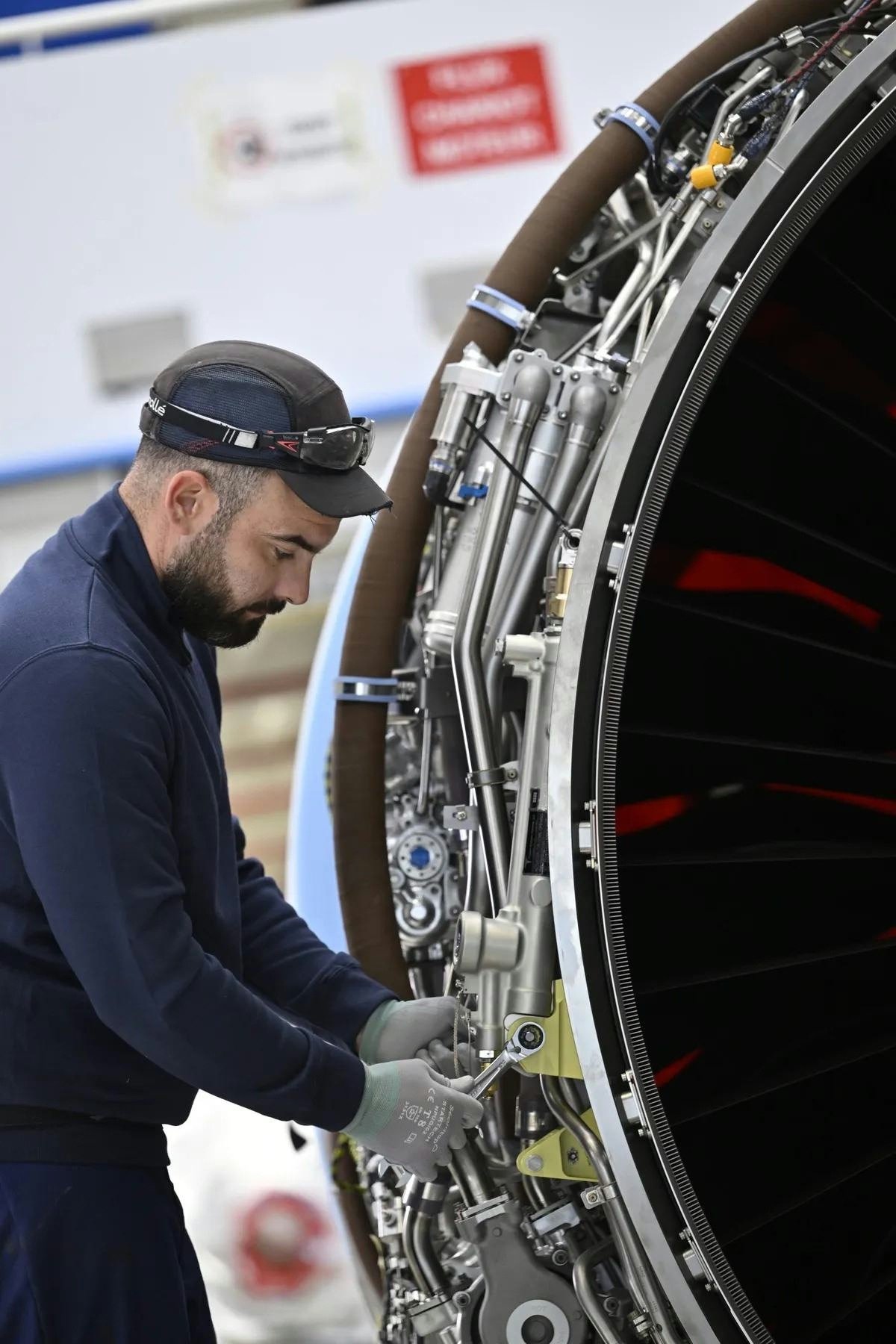
Sopra Steria Plans Expansion into Aerospace Sector
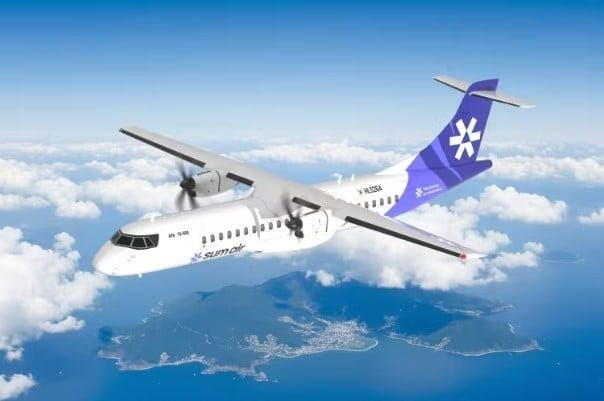
South Korean Airline SUM Air to Adopt AMOS System
