
Trasforma le intuizioni dell’IA in azioni concrete

Tendenze
Categories
How the Airbus A350-1000 Compares to the Boeing 747 in Size
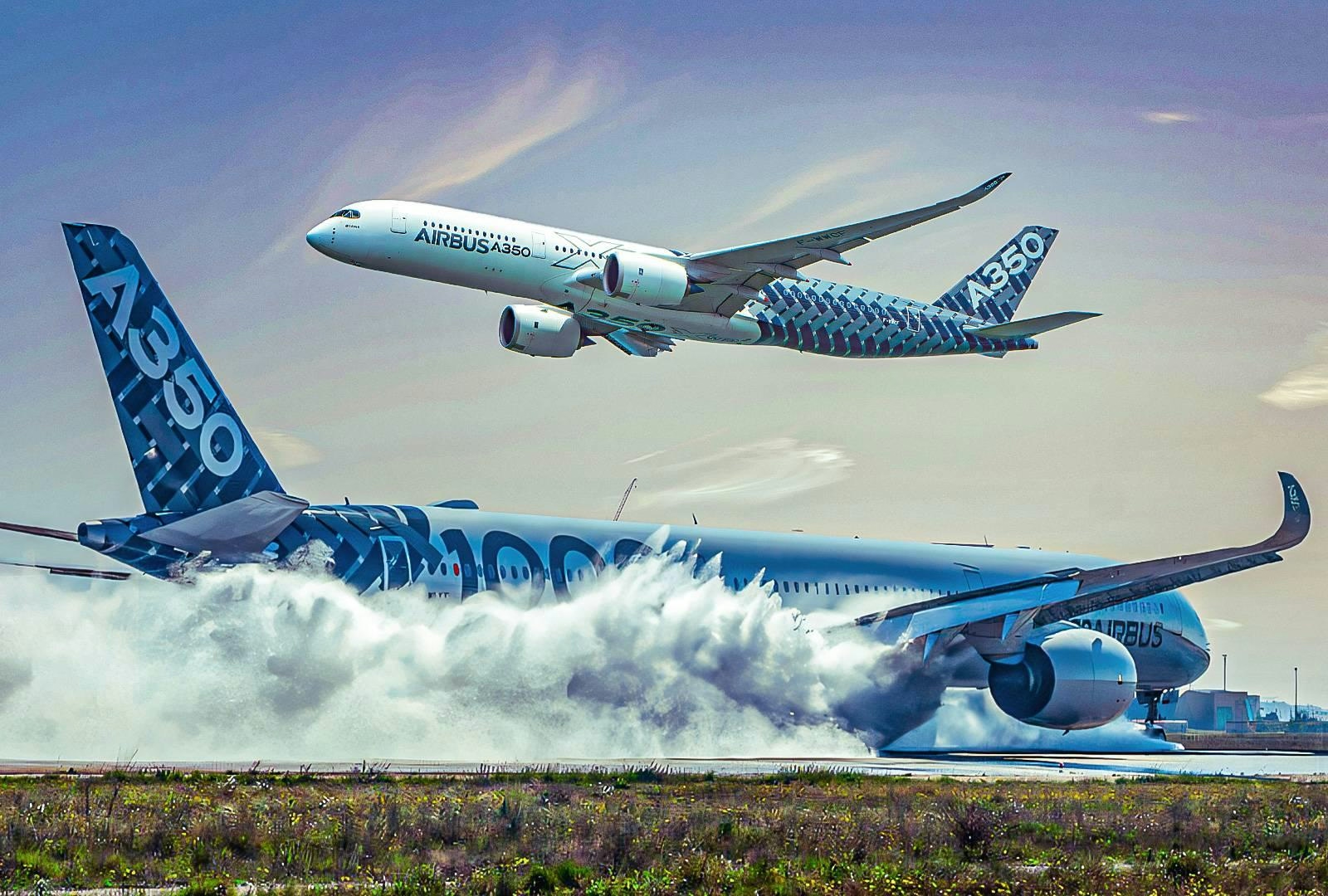
How the Airbus A350-1000 Compares to the Boeing 747 in Size
The Airbus A350-1000 represents the largest aircraft currently produced by Airbus and is the most expansive variant within the A350 XWB family. Although the A350 and its competitor, the Boeing 787, are often characterized as smaller, more economical widebodies, this perception does not fully capture their true scale. Both aircraft are substantial in size, particularly when contrasted with earlier generations of widebody jets.
For many decades, the Boeing 747 served as the flagship of long-haul international air travel. This iconic double-decker aircraft, produced over a 55-year span with more than 1,500 units sold, became a cornerstone for major airlines worldwide. The emergence of more fuel-efficient twin-engine jets such as the A350 and 787 has prompted the gradual phase-out of the 747 from passenger service. However, the assumption that these newer models are "small" is misleading, especially in the case of the A350-1000.
Comparing Variants: Boeing 747 vs. Airbus A350-1000
The Boeing 747 family encompasses several variants, each varying in size and capability. The latest and largest model, the 747-8, features a lengthened fuselage, redesigned wings, new engines, and an extended upper deck. It measures 250 feet 2 inches (76.25 meters) in length and has a wingspan of 224 feet 7 inches (68.5 meters), surpassing the A350-1000 in both overall dimensions and maximum takeoff weight (MTOW) of 447.7 tons.
Earlier 747 models, including the 747-100, -200, -300, and -400, share a fuselage length of 231 feet 10 inches (70.7 meters). The 747-400 introduced winglets, increasing its wingspan beyond the 195 feet 8 inches (59.6 meters) of its predecessors. The 747SP, a shortened variant developed in the 1970s, is notably smaller; its 47-foot (14-meter) reduction in length brings it closer in size to the Boeing 787-8 and significantly smaller than the A350-1000.
In comparison, the Airbus A350-1000 measures 242 feet (73.78 meters) in length with a wingspan of 212 feet 5 inches (64.75 meters). This makes it longer than most 747 variants except the 747-8, although the latter remains superior in overall size and capacity.
Market Dynamics and Operational Considerations
Despite the A350-1000’s physical size advantage over many 747 variants, it faces challenges in matching the 747’s entrenched market presence and operational versatility. The 747’s legacy is underpinned by its proven reliability and the extensive global support infrastructure developed over decades. This enduring reputation continues to influence airline preferences, particularly for long-haul routes.
Nevertheless, market trends are evolving. Airlines such as Air India and Philippine Airlines have recently taken delivery of their first A350-1000 aircraft, signaling a shift toward newer, more efficient widebodies. China Airlines has also expanded its A350-1000 order, reflecting growing interest in the Airbus model. Despite these developments, the 747’s established advantages remain a significant consideration in airline fleet decisions and industry responses.
While the Airbus A350-1000 stands among the largest and most advanced twin-engine jets available, its competition with the Boeing 747 is shaped not only by size but also by legacy, operational experience, and shifting airline strategies.

Etihad Airways Suspends Airbus A380 Flights on Key Route

Aditya Birla Group Seeks Approval for Aircraft Leasing in GIFT City

Qatar Airways Highlights Innovation and Connectivity at Arabian Travel Market 2026

Hong Kong's Five-Year Plan Includes Andrew Fan's Aircraft Parts Processing Hub Proposal

ACIA Aero Leasing Delivers ATR72-600 to Air Nostrum

RTX Appoints Jill Albertelli as Head of Pratt & Whitney

TAT Technologies Joins Beyond Aero Hydrogen Aircraft Program

AURAK Study Highlights Barriers to Air Taxi Adoption in Emerging Economies

Xiamen Air Selects Altitude for 787 Maintenance at Heathrow

Etihad and Swissport Extend Global Partnership
