
Trasforma le intuizioni dell’IA in azioni concrete

Tendenze
Categories
Improving Stock Valuation Accuracy in Aerospace Companies
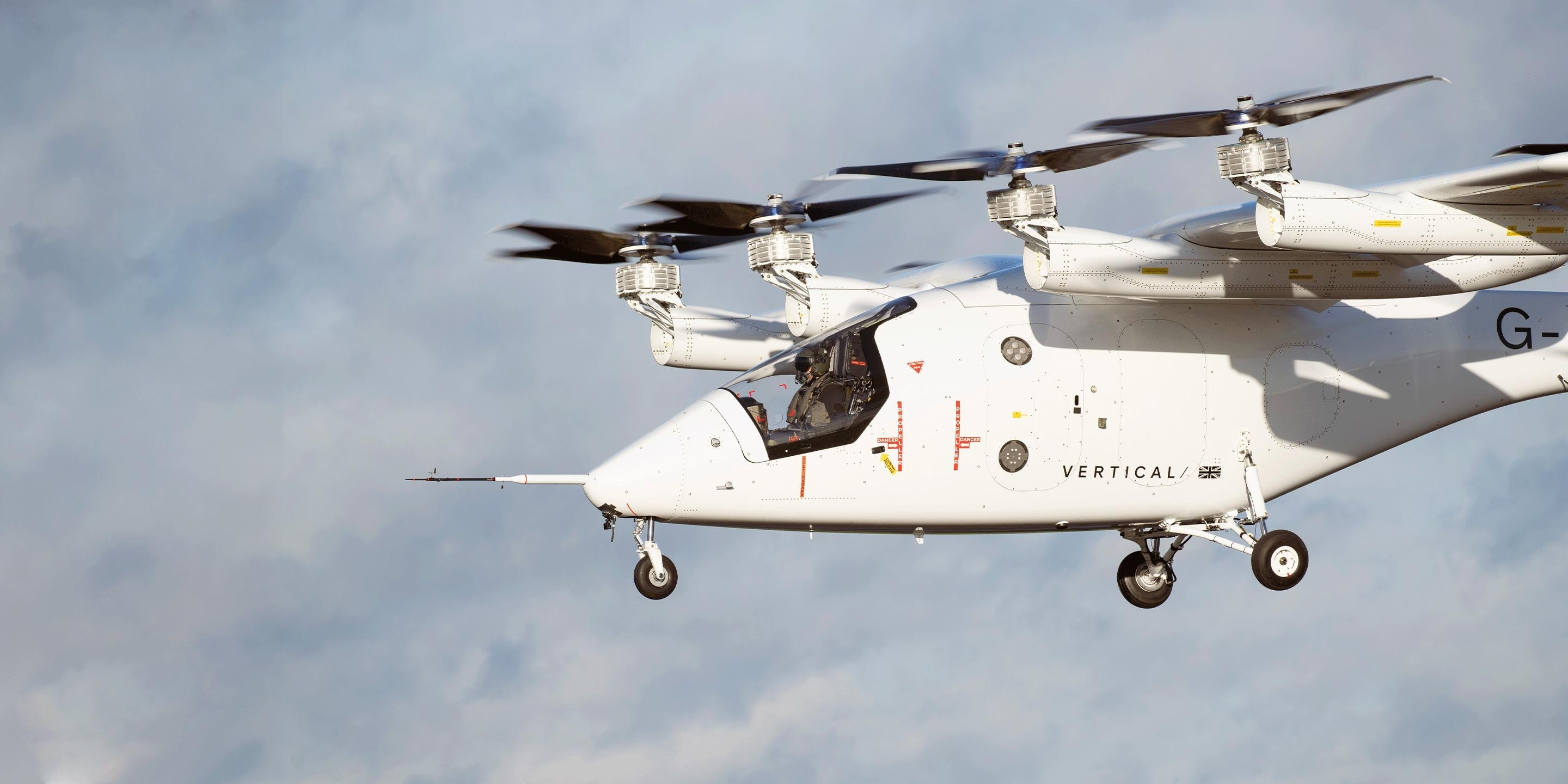
Improving Stock Valuation Accuracy in Aerospace Companies
Navigating Complex Inventory Challenges in Aerospace
In the aerospace industry, precision extends beyond engineering to encompass the meticulous management of inventory. Airlines and aerospace firms operate within a landscape marked by high-value components, stringent international regulations, and complex global supply chains. The misplacement or absence of critical parts can lead to severe financial losses and reputational damage. Even minor delays in procuring essential components risk disrupting flight schedules, inconveniencing passengers, and undermining brand trust.
Maintenance operations in this sector are extensive, with major airlines overseeing thousands of parts distributed across multiple locations. Each component often carries strict expiration dates, requires specialized storage conditions, and must comply with regulatory standards. Ensuring the availability of the right parts, in the right condition and at the right time, presents a formidable logistical challenge that demands sophisticated inventory management solutions.
The Financial and Operational Impact of Downtime
Aircraft on ground (AOG) incidents, where planes are grounded due to missing or defective parts, represent a significant operational and financial risk. Boeing estimates that a single cancelled flight caused by AOG can result in losses exceeding £100,000 ($130,600) in revenue and operational costs. Beyond immediate financial repercussions, frequent AOG events erode customer confidence and can inflict lasting harm on an airline’s reputation.
Effective stock control is essential to avoid the pitfalls of both understocking and overstocking. Insufficient inventory compels airlines to make costly last-minute purchases, while excess stock immobilizes capital and increases the risk of obsolescence. Achieving the optimal balance is complicated by the aerospace sector’s intricate supply chains and the necessity for real-time data. Market responses to production delays or supply backlogs can be rapid, influencing stock valuations and prompting competitors to pursue strategic partnerships or invest in cutting-edge technologies.
Harnessing Technology to Enhance Stock Valuation Accuracy
To meet these challenges, aerospace companies are increasingly adopting advanced technological solutions. Optical character recognition (OCR) systems, such as RGIS Vision, facilitate more accurate and efficient inventory scanning and tracking. These technologies reduce human error, improve inventory visibility, and enable more precise forecasting of stock requirements.
The integration of artificial intelligence (AI) and machine learning (ML) is gaining momentum within the industry. These tools analyze extensive inventory data, anticipate demand fluctuations, and optimize stock levels. Investments in AI and ML not only enhance operational efficiency but also provide a strategic advantage in navigating market dynamics and regulatory pressures.
As aerospace firms confront growing supply chain complexities and heightened regulatory scrutiny, the ability to accurately assess and manage stock value is increasingly vital. By embracing advanced inventory management systems and leveraging data-driven technologies, airlines can reduce costly downtime, boost operational performance, and reinforce their competitive standing—ultimately supporting safer and more punctual flight operations.
American Airlines Plans to Receive New Aircraft Deliveries in 2026

Delta Flight Returns to Atlanta Airport Due to Engine Trouble

Samoa Airways Recovers Damaged DHC-6-300 Aircraft

Man Ingested by Frontier Airlines Engine Marks Denver’s Sixth Airfield Security Breach in Three Years

The Advantages and Disadvantages of Owning Versus Leasing a Private Jet

Former Spirit Employees Express Concerns Over AI Partnership With Google
China Certifies Pilotless Air Taxi for Export; Sri Lanka First Buyer

US Pilot Hourly Pay Ranges from $90 for Regional to $465 for Widebody Flights

NASA Chooses University Teams to Support Aviation Research

Airbus Conducts Freighter First Flight as Delivery Figures Influence Stock
