
Trasforma le intuizioni dell’IA in azioni concrete

Tendenze
Categories
INACA and Ministry Collaborate to Enhance Aviation Ecosystem Ahead of IAS 2026
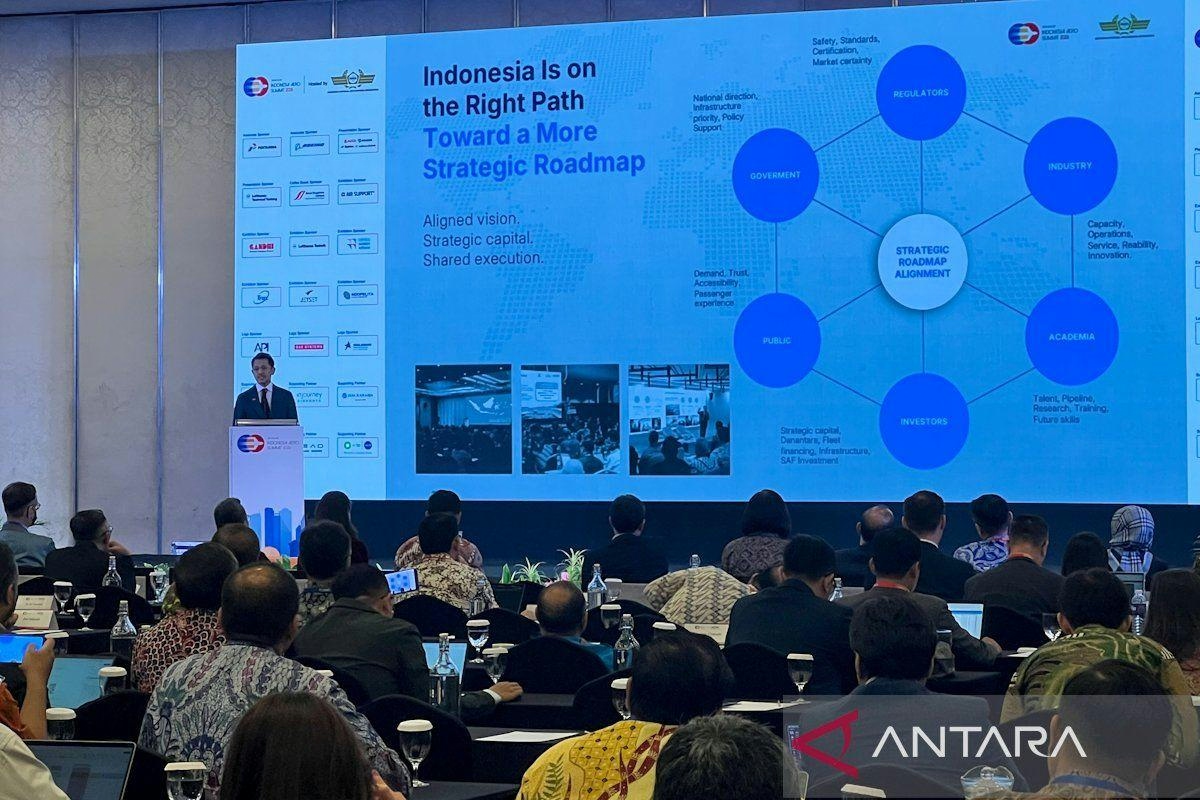
INACA and Ministry Collaborate to Enhance Aviation Ecosystem Ahead of IAS 2026
JAKARTA — The Indonesian National Air Carriers Association (INACA) and the Ministry of Transportation have joined forces to host the Indonesia Aero Summit (IAS) 2026, with the objective of strengthening the nation’s aviation connectivity and competitiveness amid shifting economic and geopolitical conditions. The upcoming summit is positioned as a critical platform to foster collaboration among government entities, industry players, and stakeholders to sustainably develop Indonesia’s aviation ecosystem.
A Platform for Collaboration and Innovation
INACA Chairman Denon Prawiraatmadja underscored the importance of the third IAS as a venue for addressing the challenges posed by the current global economic environment and geopolitical uncertainties. Speaking at the opening of IAS 2026, he emphasized that breakthroughs and innovations are vital to sustaining growth within Indonesia’s aviation sector. Prawiraatmadja highlighted that reinforcing the aviation ecosystem is essential not only for enhancing passenger connectivity but also for ensuring efficient interregional cargo distribution, which supports public mobility and underpins national economic activities.
The summit has attracted participation from leading global aircraft manufacturers, creating opportunities for partnerships, investment, and technological advancement in Indonesia’s aviation industry. A notable development during the event was the signing of a cooperation agreement between state oil and gas company Pertamina and Boeing to trial Sustainable Aviation Fuel (SAF), marking a significant step toward reducing the sector’s carbon footprint.
Challenges and Market Dynamics
While the summit signals progress, INACA acknowledges the challenges ahead. Regulatory complexities, technological integration hurdles, and intensified market competition are anticipated as the association and the Ministry intensify efforts to enhance the aviation ecosystem. Addressing these issues will likely require coordinated policy reforms and industry-wide adaptation to emerging technologies.
Market responses to these initiatives have been positive, with increased investor interest in Indonesia’s aviation and tourism sectors. At the same time, competitors are pursuing strategic partnerships and focusing on regional aircraft manufacturing and infrastructure development, reflecting a dynamic and competitive environment.
INACA remains optimistic that continued collaboration with the Ministry of Transportation and industry stakeholders will position Indonesia’s aviation sector as more competitive, innovative, and resilient on the global stage.

Etihad and Swissport Extend Global Partnership

Sepehran Airlines B737 Returns to Mashhad After Tyre and Engine Issues

Etihad Deploys Widebody Fleet to Meet Strong Demand

Korean Air Finalizes $36.2 Billion Deal with Boeing

Australia’s RFDS Queensland Section Orders Six King Air 260Cs

Korean Air Finalizes Order for 103 Boeing Jets and Engines

Embraer E195-E2 Features Distinctive Engine Placement Among Regional Jets

What Passengers Can Expect on Boeing’s New 777X Jet

How Ethiopian Airlines Became Africa’s Leading Carrier Amid Gulf Competition

Joby Aviation Extends Autonomous Flight Capabilities with Cross-Country Tour
