
Trasforma le intuizioni dell’IA in azioni concrete

Tendenze
Categories
Incheon Airport Opens 600 Billion-Won Aviation AI Innovation Hub with LG CNS
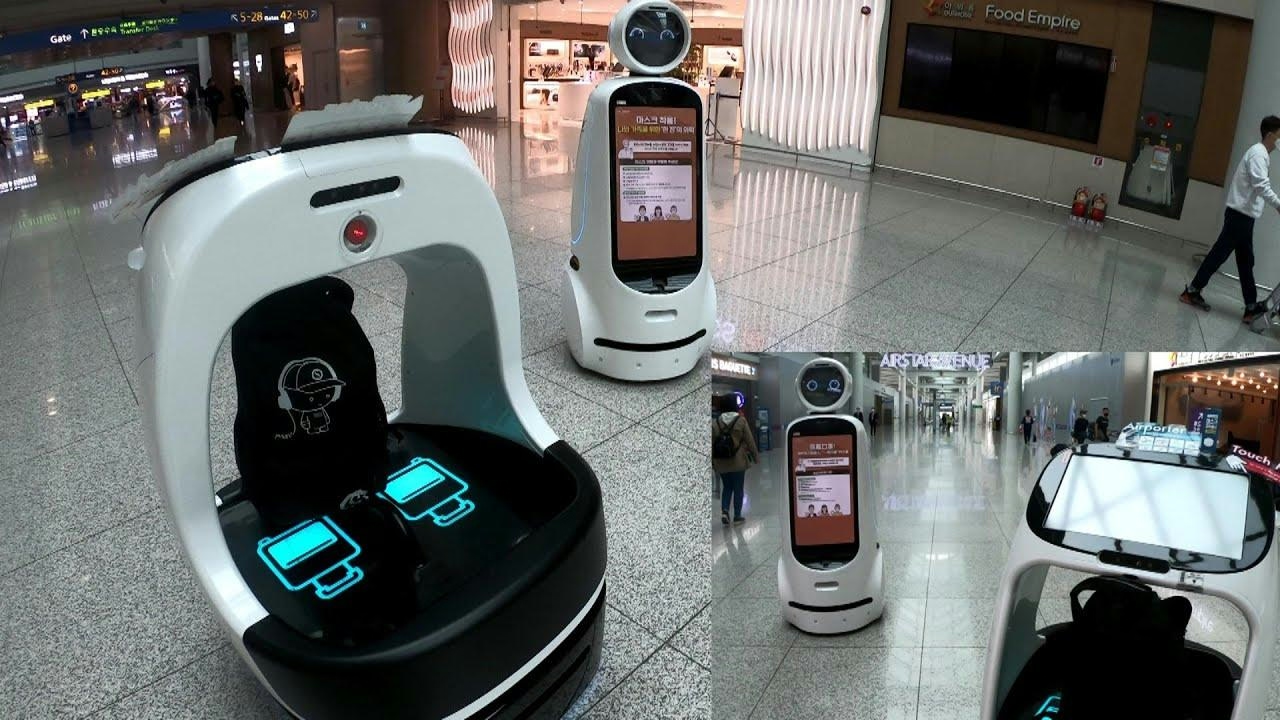
Incheon Airport Opens 600 Billion-Won Aviation AI Innovation Hub with LG CNS
Incheon International Airport has unveiled a landmark initiative with the launch of a 600 billion-won (approximately $440 million) Aviation AI Innovation Hub. The airport selected the CT Development consortium, comprising LG CNS and Korea Investment & Securities, as the preferred bidder for this ambitious project. The hub is designed to establish South Korea as a global leader in aviation technology by fostering a comprehensive ecosystem centered on cutting-edge artificial intelligence.
Advanced Infrastructure and Collaborative Innovation
At the heart of the hub will be a 5MW GPU farm equipped with NVIDIA’s next-generation Blackwell B200 GPUs, enabling large-scale AI model inference critical for advanced aviation applications. Complementing this is a 40MW underground data center built to meet the highest national security standards, ensuring robust and secure operations. More than 50 AI technology firms, including notable players such as NC AI and Upstage, will collaborate to develop next-generation solutions. These innovations will span large language model-based airport services, logistics automation, autonomous robotics, and intelligent airport operations, collectively aiming to transform the aviation sector.
LG CNS will take charge of the data center’s design and operational management, while Korea Investment & Securities will provide the necessary financial support, establishing a stable framework for the project’s execution. This initiative aligns with Incheon Airport’s broader strategy to enhance operational efficiency through AI and to bolster South Korea’s position in the global AI industry.
Economic and Competitive Challenges
The launch of the Aviation AI Innovation Hub occurs amid a challenging economic environment. LG Electronics, a key affiliate of LG CNS, recently reported its first quarterly net loss in a year, attributing the downturn to costly restructuring efforts and a slow recovery in demand. This financial strain underscores the risks inherent in large-scale technology investments, even as the consortium advances with the project.
The competitive landscape for AI infrastructure is intensifying globally. Leading technology giants such as Alphabet, Amazon, Meta, and Microsoft are collectively investing between $650 billion and $700 billion in AI development, signaling a fierce international race to dominate AI-driven industries. This surge in investment is likely to prompt regional competitors to pursue similar initiatives, raising the stakes for Incheon’s AI hub.
Korean Air has also issued warnings about increasing competition and geopolitical volatility within the aviation sector, particularly as the industry looks toward 2026. These factors may impact the hub’s success as market dynamics evolve and new entrants seek leadership in aviation technology.
Global Context and Future Outlook
Internationally, countries like Turkey are making significant investments in digital infrastructure to close technological gaps, reflecting a broader global momentum toward AI-driven transformation in aviation and related fields. Incheon International Airport plans to highlight its AI ambitions at the upcoming AAA Leadership Forum in June, aiming to establish new global standards for aviation AI.
Lee Hak-jae, CEO of Incheon International Airport Corporation, emphasized the strategic importance of the hub, stating, “The Aviation AI Innovation Hub will be a core engine for Korea to become one of the world’s top three AI powers. Through collaboration with stakeholders, we will ensure safety and provide a strong bridge for Korean companies to lead the global aviation AI market.”
As the project progresses, its development will be closely monitored against the backdrop of economic headwinds, escalating competition, and the rapidly evolving global AI landscape.

Etihad Airways Suspends Airbus A380 Flights on Key Route

Aditya Birla Group Seeks Approval for Aircraft Leasing in GIFT City

Qatar Airways Highlights Innovation and Connectivity at Arabian Travel Market 2026

Hong Kong's Five-Year Plan Includes Andrew Fan's Aircraft Parts Processing Hub Proposal

ACIA Aero Leasing Delivers ATR72-600 to Air Nostrum

RTX Appoints Jill Albertelli as Head of Pratt & Whitney

TAT Technologies Joins Beyond Aero Hydrogen Aircraft Program

AURAK Study Highlights Barriers to Air Taxi Adoption in Emerging Economies

Xiamen Air Selects Altitude for 787 Maintenance at Heathrow

Etihad and Swissport Extend Global Partnership
