
Trasforma le intuizioni dell’IA in azioni concrete

Tendenze
Categories
IndiGo Becomes First Airline to Receive 500 Airbus Deliveries Directly
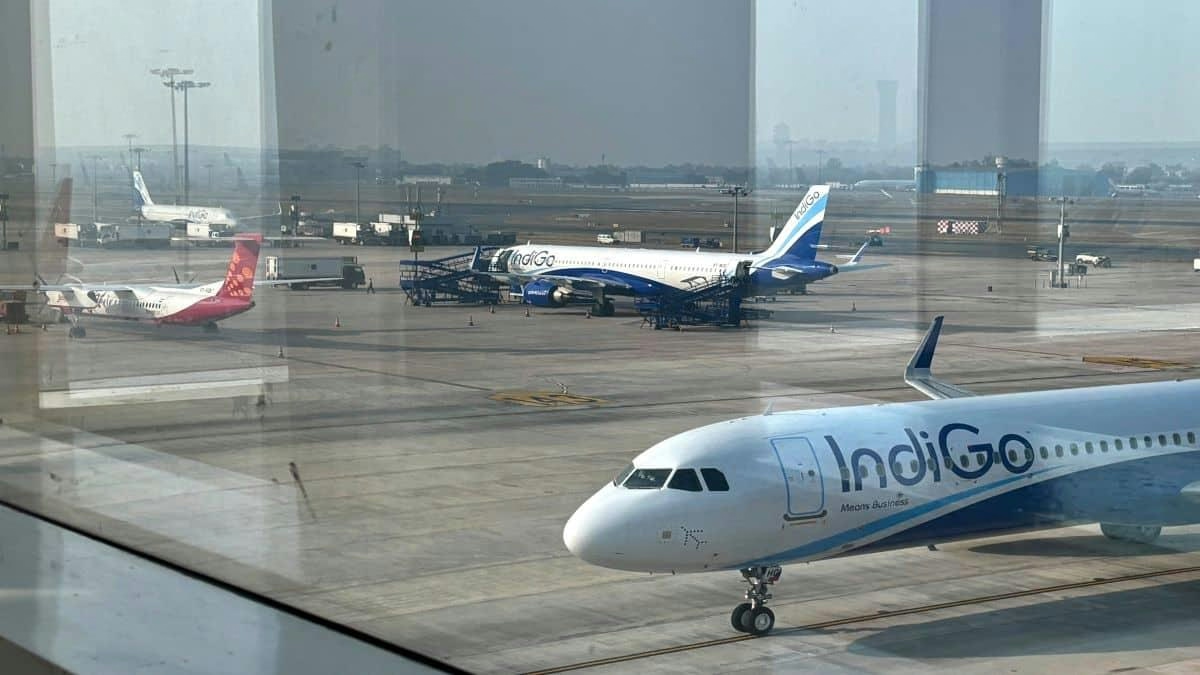
IndiGo Becomes First Airline to Receive 500 Airbus Deliveries Directly
Gurugram-based IndiGo Airlines has quietly achieved a significant milestone in aviation history by becoming the first airline to receive 500 Airbus aircraft directly from the manufacturer. This landmark was reached earlier this month with the delivery of VT-ION, a CFM-powered A320neo, which joined the fleet without fanfare, reflecting IndiGo’s pragmatic and efficient operational philosophy.
Setting a Global Benchmark in Aircraft Deliveries
This accomplishment marks nearly two decades since InterGlobe Aviation made headlines at the 2005 Paris Air Show by ordering 100 Airbus jets, a bold move at a time when India’s entire private airline fleet consisted of just 55 aircraft. IndiGo’s inaugural Airbus, VT-INA, entered service in August 2006, laying the foundation for what has become one of the fastest-growing airlines worldwide.
With the 500th direct Airbus delivery, IndiGo now leads all passenger airlines globally in this category. While leasing companies such as ILFC (now part of AerCap) and NAS Aviation USA have higher delivery totals—600 and 580 respectively—they do not operate the aircraft themselves. Among airlines, Lufthansa follows with 466 Airbus deliveries, and China Eastern with 449. IndiGo also holds the top position in Airbus’s global order book, having committed to 1,400 aircraft in total. As of March 2025, the airline had received 499 deliveries, with two more in April bringing the total to 501. Notably, of the 899 aircraft still on order for delivery over the next decade, 60 are next-generation A350-900 widebodies, signaling IndiGo’s strategic move into long-haul operations.
A Transformative Strategy in Indian Aviation
IndiGo’s rise was underpinned by a bold strategy that initially faced skepticism. When InterGlobe placed its order for 100 Airbus jets in 2005, India’s largest carriers, Air India and Air India Express, operated a combined fleet of just 42 aircraft. There was no precedent for a private airline to scale so rapidly in the Indian market.
A key element of IndiGo’s success has been its exclusive focus on a single aircraft family, the A320neo. This approach has yielded substantial operational efficiencies, including streamlined crew training, standardized maintenance procedures, and simplified fleet management. These factors have distinguished IndiGo from competitors operating mixed fleets, enabling it to maintain cost advantages and operational reliability.
Implications for the Aviation Industry
IndiGo’s milestone not only highlights its rapid growth but also carries broader implications for the global aviation sector. The airline’s heavy reliance on Airbus may intensify competition among aircraft manufacturers, particularly Boeing, which could respond with more aggressive pricing strategies or innovative product offerings to protect its market share. Industry analysts will closely monitor IndiGo’s operational efficiency and cost management as its fleet continues to expand.
This development may also prompt other airlines to reevaluate their fleet strategies, weighing the benefits of standardization against the risks of dependence on a single manufacturer. Competitors might respond with targeted marketing efforts or accelerate the development of new aircraft models to counterbalance IndiGo’s scale and influence.
Contextualizing IndiGo’s Achievement in Global Deliveries
For perspective, Boeing’s largest airline customers include United Airlines with 1,890 aircraft deliveries, American Airlines with 1,376, and Southwest Airlines with 1,074. However, these figures include deliveries from McDonnell Douglas following Boeing’s 1997 acquisition, inflating totals for legacy carriers. IndiGo’s 500 deliveries, all from a single manufacturer and aircraft family, represent a distinctive achievement in contemporary aviation.
As IndiGo pursues its ambitious expansion plans, its record-setting partnership with Airbus is set to influence competitive dynamics and strategic decisions across the global airline industry.

Etihad Airways Suspends Airbus A380 Flights on Key Route

Aditya Birla Group Seeks Approval for Aircraft Leasing in GIFT City

Qatar Airways Highlights Innovation and Connectivity at Arabian Travel Market 2026

Hong Kong's Five-Year Plan Includes Andrew Fan's Aircraft Parts Processing Hub Proposal

ACIA Aero Leasing Delivers ATR72-600 to Air Nostrum

RTX Appoints Jill Albertelli as Head of Pratt & Whitney

TAT Technologies Joins Beyond Aero Hydrogen Aircraft Program

AURAK Study Highlights Barriers to Air Taxi Adoption in Emerging Economies

Xiamen Air Selects Altitude for 787 Maintenance at Heathrow

Etihad and Swissport Extend Global Partnership
