Immagine

AeroGenie — Il tuo copilota intelligente.

Chiedi qualsiasi cosa. Analizza tutto. Agisci immediatamente.

Tendenze

Categories

IndiGo Faces Flight Disruptions Amid Crew Shortages
December 4, 2025By ePlane AI
IndiGo Faces Flight Disruptions Amid Crew Shortages
0
0
IndiGo
Crew Shortages
Flight Disruptions

IndiGo Faces Widespread Flight Disruptions Amid Crew Shortages and Regulatory Scrutiny

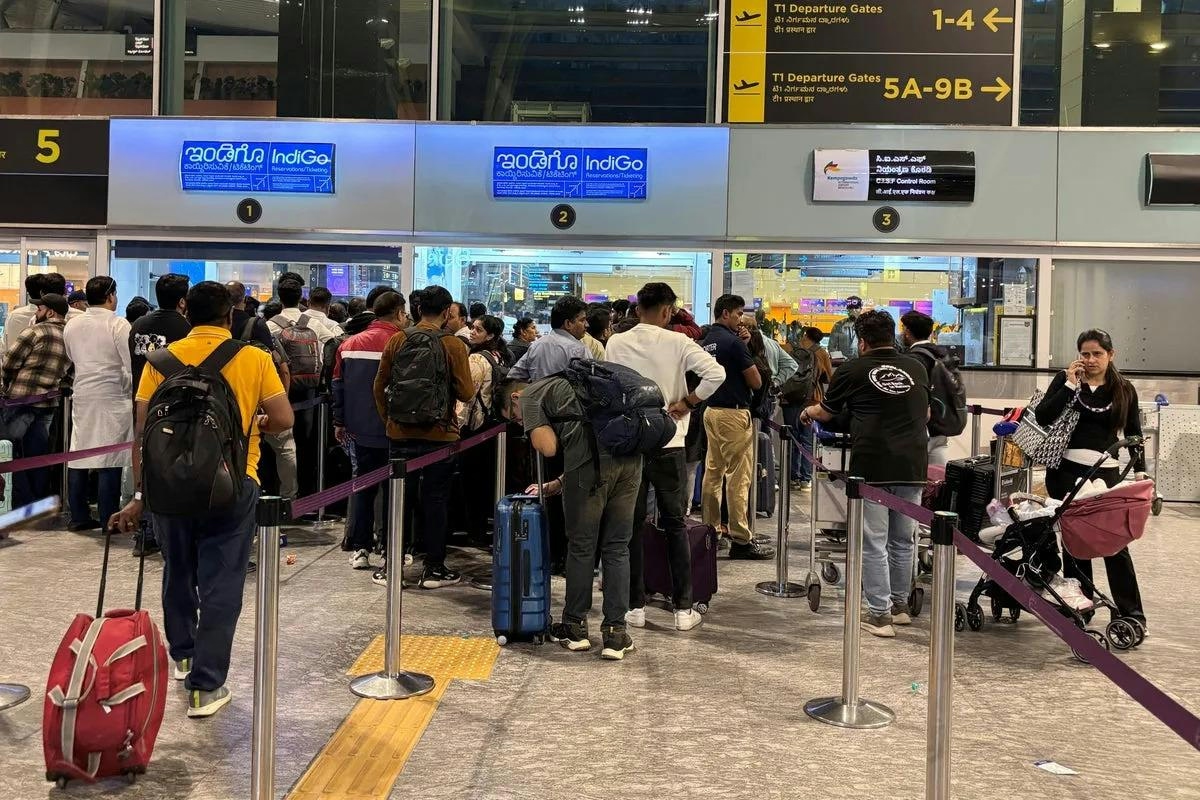
India’s largest airline, IndiGo, has experienced significant flight disruptions this week, with over 300 cancellations occurring within a span of two days. The disturbances, which affected the carrier’s network on Tuesday and Wednesday, have been primarily attributed to a shortage of crew following the enforcement of new rest and duty regulations. This situation has caused widespread chaos at airports across the country, leaving thousands of passengers stranded and prompting a surge of complaints on social media platforms.

Operational Challenges and Airline Response

In response to the escalating operational difficulties, IndiGo announced a series of “calibrated adjustments” to its flight schedule, expected to continue for 48 hours. Although the airline has not disclosed detailed information, industry insiders suggest that these adjustments involve selective rescheduling and additional cancellations aimed at aligning operations with the available crew capacity. The disruptions were further compounded by minor technological glitches, airport congestion, seasonal timetable changes, and adverse weather conditions, all contributing to the overall operational strain.

IndiGo has acknowledged the complexity of the situation, describing it as the result of “a multitude of unforeseen operational challenges” that collectively led to an unprecedented level of disruption. On Wednesday alone, more than 150 flights were cancelled, with numerous others experiencing significant delays. Passengers across India reported extended waiting times at airports, often enduring hours without clear updates or alternative travel arrangements.

Regulatory Oversight and Market Impact

The Directorate General of Civil Aviation (DGCA), India’s aviation regulator, has initiated an investigation into the causes of the widespread cancellations and delays. The DGCA has formally requested a comprehensive explanation from IndiGo regarding the operational failures and the airline’s strategy to restore stability. The regulator is working closely with IndiGo to address the ongoing issues and has emphasized the importance of safeguarding passenger interests and minimizing disruptions.

The turmoil has also affected IndiGo’s financial standing, with the airline’s share price declining amid investor concerns over the scale of the disruptions and their potential impact on future operations. IndiGo has expressed regret over the inconvenience caused to passengers and affirmed its commitment to urgently restoring normal flight schedules while managing the constraints imposed by updated crew rostering rules and broader systemic pressures within the aviation sector.

As the DGCA’s investigation continues, attention remains focused on IndiGo’s ability to stabilize its services promptly and rebuild confidence among travelers and stakeholders alike.

Comments

  • H

    Hire a Hacker for Cheating Spouse

    My husband just underwent a personality shift. He has changed the passwords on his phones and never drops them. I was curious about his activities, i spoke with a friend who referred me to hackerspytech @gmail com, a hacker who had previously assisted her. I asked him to assist me and he performed an incredible job for me by helping me by hacking my husband phone remotely, i gain access to his iPhone remotely, so that i can access all of his messages, facebook and instagram activities and calls at all times.

  • J

    Jennifer Smith

    I still remember the sinking feeling in my chest the day I realized I’d been scammed. Two full Bitcoins worth millions at today’s price are gone in an instant. The so-called NextGen Elite Crypto Exchange Platform I’d been trading on suddenly froze my account, blocked my withdrawals, and disappeared behind an error message. No replies, no support, nothing. I felt stupid. Betrayed. And hopeless. For days I barely slept, rereading my transaction history, trying to convince myself that there was something I had missed, some hidden button, some technical glitch. But deep down, I knew the truth: I had been fooled by a polished, professional-looking crypto scam. A week later, still devastated, I came across the name Dexdert Net Pro mentioned in an online community where victims discussed crypto-related frauds. People claimed they specialized in helping individuals analyze blockchain activity and recover assets from fraudulent platforms. I reached out. Dexdert Net Pro responded professionally and calmly, outlining what they could and could not do. They were clear from the start. They analyzed the fake platform’s transaction paths, wallet addresses, and the network of movements behind the scenes. Within days, Dexdert Net Pro discovered that my 2 BTC had been moved across a chain of wallets linked to multiple known scam operations. They compiled a detailed forensic report and coordinated with a partner service to flag the addresses through major exchanges.2 days later, I received the message I had been desperately hoping for, my 2.0 BTC successfully reclaimed. I stared at the screen, unable to breathe. It felt unreal like someone had reached into the darkness and pulled me back into the light.  The moment I saw my coins returned to my secure wallet, I felt a weight lift off my shoulders. It wasn’t just the money it was the justice, the relief, the restoration of hope. Dexdert Net Pro didn’t just help me recover funds; they gave me closure. In the world of crypto, you need knowledge, vigilance, and when things go wrong the right experts behind you. REACH OUT INFORMATION VIA: WhatsApp: (+1 (859) 609 4156)Telegram: (ttps://t.me/Dexdertprorecovery)Email: (DexdertNetPro@mail.com)

  • E

    evelyn murphy

    I know an organization who have private investigators for hire who can help you get into your spouse’s phones,emails remotely from your phone they can also help you with your * credit score * clearing of criminal record reecovery of stolen cryptocurrency *increasing of school grades and any thing that has to do with hacking etc You can confirm for yourself from their email or whatsapp line ethicalhackers009@gmail.com Whatsapp No: +14106350697 so you can also give your testimony

  • D

    david agena

    I came across this post while reading about online investment scams, and it reminded me of a tough period I went through earlier this year. I had lost a significant amount to a fraudulent crypto trading platform that looked convincing at first. After trying several ways to get help, I reached out to Coinreclaimservice dot io, who guided me through the process of tracing the transactions and working with the appropriate channels to recover the lost funds. The experience was both emotional and educational — I learned a lot about how these scams operate and how to protect myself moving forward. I truly appreciate the professionalism and clarity shown throughout the process. While I hope no one goes through what I did, it’s reassuring to know that recovery options like this exist. I recommend contacting them if you need structured, step-by-step assistance rather than quick promises, on Watsp: +1 (360) 831-8690 and coinreclaimservice AT gmail.com

  • J

    Jennyantony

    How I Reclaimed My Lost Bitcoin with the help of SWIFT RECOVERY SERVICES After falling victim to a cryptocurrency scam group, I lost $354,000 worth of USDT. I thought all hope was lost from the experience of losing my hard-earned money to scammers. I was devastated and believed there was no way to recover my funds. Fortunately, I started searching for help to recover my stolen funds and I came across a lot of testimonials online about Swift Recovery Services, an agent who helps in recovery of lost bitcoin funds, I contacted Swift Recover Services, and with their expertise, they successfully traced and recovered my stolen assets. Their team was professional, kept me updated throughout the process, and demonstrated a deep understanding of blockchain transactions and recovery protocols. They are trusted and very reliable with a 100% successful rate record Recovery bitcoin, I’m grateful for their help and highly recommend their services to anyone seeking assistance with lost crypto. Website: ht tps:/ /swiftrecoveryservices. c om WhatsApp: ‪+1 725-343-2718‬ Email: info @ swiftrecoveryservices . com

  • S

    Sharon Anderson

    I just wanted to let everyone know about my experience. I attempted to invest my money in Bitcoin, but internet crooks depleted and destroyed my finances. I fell prey to a bitcoin investment fraud, which requires you to keep all of the money in your wallet.Given the difficulties in understanding blockchain transactions, it is imperative to seek the advice of a specialist such as hackerspytech @ gmail com in order to recover lost cryptocurrency from scammers. It takes certain knowledge and experience to comprehend the complexities of blockchain technology and the legal ramifications of retrieving stolen cryptocurrency assets. With the help of cutting-edge technological tools and techniques, hackerspytech @ gmail com can effectively trace and recover lost cryptocurrency by delving into the digital traces left by scammers. Victims can profit from hackerspytech @ gmail com extensive knowledge of the intricacies of cryptocurrency scams and his skill at successfully navigating these obstacles by entrusting the recovery process to this professional.

  • E

    Erica Len Navarro

    Encouraged by these review, I read more about this Spytechacker and I went on and contacted him at hackerspytech @ gmail com based off many reviews i got from here and he gave me applications and login details to access my partner’s phone, it was like a dream come true because i never expected his service to be so top notch with every details i needed. After the phone hack i had full access to his instagram, twitter, Fb Messenger and othr social media accounts remotely and without his consent. This allowed me to view text messages, calls, WhatsApp conversations, and hisocation . With the evidence I gathered, I was able to file for divorce in court and make necessary changes in my life. If you need to access your partner phone for spying purpose, I highly recommend this expert.. it’s 100% possible to hack someone WhatsApp using a phone number with the support of a professional ethics expert

  • B

    Bruce Billis

    Some time ago, I received a message saying I had won an international lottery. At first, I laughed it off, but the email looked so convincing — official logos, certificates, even a phone number I could call. Out of curiosity, I contacted them, and they told me I had won a huge cash prize. The only condition was that I had to pay certain ‘processing fees’ and ‘taxes’ before the winnings could be released. It sounded a little odd, but the documents they sent looked real, and the idea of a life-changing prize clouded my judgment. I ended up sending multiple payments, each time believing I was closer to receiving my winnings. Of course, the prize never came. Eventually, the emails stopped, the phone numbers were disconnected, and I realized I had been scammed. I felt humiliated and angry with myself for falling for it. The money I lost was money I had saved for important things, and I thought it was gone forever. In my search for help, I found CHAINTRACE ASSET RECOVERY. At first, I was hesitant — after being tricked, trusting anyone again felt impossible. But from the very first conversation, they treated me with respect and understanding. They explained how lottery scams operate and assured me they had handled similar cases before. I provided them with all the receipts, emails, and transaction details I had. They immediately got to work, tracing the funds. Throughout the process, they kept me updated, which gave me a sense of hope I hadn’t felt since the scam happened. After weeks of effort, I received the most incredible news — CHAINTRACE ASSET RECOVERY Recovery was able to retrieve a large part of my stolen money. Seeing it back in my account felt unreal. It was a mix of relief, gratitude, and a sense of justice. CHAINTRACE ASSET RECOVERY didn’t just help me financially; they restored my faith that good people still exist who genuinely want to help others. If you’ve fallen for a scam like this, don’t let shame keep you from seeking help. These professionals know exactly how to handle these situations and will fight to get your money back. WHATSAPP : +1 (581) 256‑1989 EMAIL: chaintraceasset@post.com WEBSITE: https://chaintraceassetrecovery.com

More news
Capital A Completes Sale of Aviation Business to AirAsia X

Capital A Completes Sale of Aviation Business to AirAsia X

Capital A Completes Sale of Aviation Business to AirAsia X Strategic Consolidation of AirAsia Airlines Capital A Berhad has finalized the sale of its aviation businesses—AirAsia Berhad and AirAsia Aviation Group Limited—to AirAsia X Berhad (AAX), concluding a six-year restructuring process initiated by the Covid-19 pandemic. Announced on 16 January via Bursa Malaysia, the transaction represents a strategic reorganisation rather than an exit from the aviation sector. It reunifies all AirAsia-branded airlines under a single corporate platform within AAX, consolidating the group’s airline operations. The deal was executed through the issuance of 2.3 billion new AAX shares to Capital A and its entitled shareholders via a dividend-in-specie. Simultaneously, AAX assumed RM3.8 billion in liabilities previously held by Capital A to AirAsia Berhad. In a related transaction, AAX issued 606 million placement shares to investors. Both the consideration and placement shares are scheduled for listing on Bursa Malaysia’s Main Market on 19 January 2026. This consolidation brings all of the group’s air operator certificates under one corporate umbrella, a move anticipated to enhance operational efficiencies and streamline network connectivity. While the integration poses significant challenges, including the alignment of systems and operations, market response has been largely positive. Investors have expressed confidence in the enlarged group’s plans for fleet expansion and network growth. The strengthened position of AirAsia X in the regional aviation market is expected to prompt competitors to reassess their strategies to maintain market share. Future Direction and Corporate Focus The unified airline structure, now operating as the AirAsia Group within AAX, aims to deliver greater value to customers through a single operating platform and coordinated commercial strategy. Tony Fernandes, Chief Executive of Capital A, described the transaction as the conclusion of the group’s most challenging chapter and one of the most complex restructuring exercises in the aviation sector following the pandemic-induced shutdown. He acknowledged the contributions of employees, shareholders, partners, and regulators in navigating the approval and implementation process, underscoring the group’s resilience and determination. With the completion of the sale, Capital A is shifting its strategic focus toward its non-airline portfolio. Key businesses such as Asia Digital Engineering (ADE), Teleport, AirAsia MOVE, AirAsia Next, and Santan will become central to Capital A’s growth strategy, supporting long-term sustainability and shareholder value creation. Fernandes emphasized that the new structure is designed to accelerate growth for both the consolidated airline group under AAX and Capital A’s non-airline ventures. Effectively, the transaction reunites the AirAsia airline brands under a single listed airline platform, while Capital A transitions into a broader holding and operating group, continuing to play a pivotal role within the AirAsia brand ecosystem.
Four Gateway Towns to Lake Clark National Park

Four Gateway Towns to Lake Clark National Park

Four Gateway Towns to Lake Clark National Park Lake Clark National Park, one of the least-visited national parks in the United States, owes its relative obscurity not to a lack of natural beauty but to its remote and challenging location in Alaska. Visitors who undertake the journey are rewarded with breathtaking landscapes, including the Neacola and Chigmit mountain ranges, active volcanoes, expansive glaciers, and pristine lakes teeming with salmon. Access to the park is primarily by small charter planes departing from several nearby towns, with boat travel possible only under favorable conditions. Careful planning is essential, as the specific area of the park a visitor wishes to explore influences the choice of aircraft and charter operator. Gateway Towns and Their Roles Each of the four principal gateway towns—Kenai, Homer, Kodiak, and Anchorage—provides charter services and local guides that facilitate direct access to Lake Clark National Park. These communities, while serving as vital links to the park, face distinct challenges and opportunities as they navigate changing economic landscapes and evolving patterns of tourism. Kenai, a peaceful town with a population of approximately 7,770, is renowned for its world-class salmon fishing along the Kenai River. It functions as a practical base for visitors to Lake Clark, offering air-taxi services such as Alaska West Air, which operates charter flights into the park’s remote wilderness. Natron Air, based at nearby Soldotna Airport, also provides scenic flights over glaciers, volcanoes, and wetlands. Given the high demand during summer months, advance booking is strongly advised. After excursions into the park, visitors can enjoy local dining options like Louie’s Steak and Seafood, arrange fishing charters, or unwind at accommodations such as the Quality Inn Kenai. Homer, often referred to as the “Halibut Fishing Capital of Alaska,” is situated on Kachemak Bay and draws anglers and outdoor enthusiasts alike. The Land’s End Resort offers waterfront lodging with panoramic views of the Kenai Mountains. Charter operators including Adventure Airways, Smokey Bay Air, and Stellar Air Service provide flights into Lake Clark National Park and nearby bear-viewing sites. Adventure Airways specializes in bear-viewing excursions, while other operators require advance arrangements for charters. Beyond the park, Homer features attractions such as Bishop’s Beach Park, the Beluga Slough Trail, and the Pratt Museum, enriching the visitor experience. Kodiak, located on Kodiak Island, serves as another critical transportation hub for accessing Lake Clark National Park. The town is distinguished by its rich fishing heritage and abundant wildlife viewing opportunities, with charter flights connecting visitors directly to the park. Anchorage, Alaska’s largest city, acts as a primary gateway for travelers bound for Lake Clark. The Ted Stevens Anchorage International Airport offers a broad range of charter services. Recent developments, including seasonal nonstop flights from Boise to Anchorage, have enhanced the region’s accessibility. This improved connectivity is expected to stimulate tourism, benefiting local economies while also intensifying competition among the gateway towns. Economic Outlook and Future Considerations Looking ahead to 2026, the gateway towns may encounter increased economic volatility influenced by internal divisions within the Federal Reserve and extreme market valuations. Anticipated Federal Reserve rate cuts and heightened market fluctuations could affect local tourism and business operations. In response, these communities and charter operators are likely to adapt their strategies to attract visitors, capitalizing on new airline routes and enhancing local amenities to maintain competitiveness amid economic uncertainties. For travelers, a thorough understanding of the unique access points and local conditions of each gateway town is essential for planning a successful visit to Lake Clark National Park—one of Alaska’s most spectacular yet secluded natural treasures.
PRM Assist Secures €500,000 in Funding

PRM Assist Secures €500,000 in Funding

PRM Assist Secures €500,000 to Accelerate Global Expansion Dublin-based aviation technology company PRM Assist has successfully raised €500,000 in new funding to support its international growth and enhance its software platform designed for airport passenger-assistance operations. The investment round, backed by Enterprise Ireland and technology investor Paul McKeon, will facilitate the company’s entry into new markets and further development of its platform, which optimizes services for passengers with reduced mobility. Founded in 2021, PRM Assist currently employs ten staff members across its Dublin and Dubai offices, with plans to increase its workforce to fifteen by the end of next year in response to growing demand from airports and airlines. The company’s technology replaces traditional manual processes with real-time tools that coordinate live tasking, monitor passenger flows, and generate compliance reports. Presently, PRM Assist’s platform is operational in 15 airports across Europe and the Middle East, and the company is actively collaborating with airlines to improve accessible aviation workflows. Conor Halpin, co-founder and director of business development, emphasized the significance of the new funding, stating, “With the support of both Paul and Enterprise Ireland, we can accelerate our mission to improve the passenger journey for people requiring assistance and set new standards for accessible aviation operations.” The capital injection will be directed towards expanding the engineering and customer-success teams, enhancing real-time operational capabilities, and exploring the integration of artificial intelligence and machine learning technologies into the platform. Strategic Outlook and Market Challenges Investor Paul McKeon underscored PRM Assist’s focus on addressing a critical operational need within the aviation sector, noting that the company’s technology “delivers real value to airports and airlines” by improving both efficiency and the passenger experience. Amanda Ward, head of digital technologies at Enterprise Ireland, described PRM Assist as a prime example of Irish innovation with significant global potential. She added, “Their novel platform provides an effective approach for airlines to manage real-time assistance for passengers with reduced mobility in busy and high-traffic airport settings.” Despite the successful funding round, PRM Assist faces several challenges as it scales its operations. Market acceptance remains a key factor, particularly as airports and airlines carefully evaluate new technologies amid ongoing global economic pressures such as tariffs and inflation. Additionally, the competitive landscape is intensifying, with rival companies expected to increase their own funding efforts and accelerate product development in response to heightened investor interest in aviation and fintech solutions. As airports worldwide continue to invest in real-time assistance tools to comply with regulatory requirements and meet passenger expectations, PRM Assist aims to establish itself as a leader in accessible aviation technology. The company’s future growth will depend on its ability to navigate complex market dynamics, differentiate its offerings, and consistently deliver measurable value to both operators and travelers.
Should Travelers Pay More for Human Support When Plans Go Wrong?

Should Travelers Pay More for Human Support When Plans Go Wrong?

Should Travelers Pay More for Human Support When Plans Go Wrong? As airlines and travel companies increasingly adopt AI-powered chatbots for customer service, a new debate has emerged: should travelers be charged extra to bypass artificial intelligence and connect directly with a human agent? This question gains urgency as automated systems become the default for handling routine travel tasks, while more complex issues often require nuanced human intervention. The Rise of AI in Travel Customer Service AI technology has become a standard tool for managing straightforward inquiries such as flight confirmations and baggage allowances. Many travelers appreciate the speed and accuracy of these systems for simple requests. Mark Beales, a retired mortgage banker from Mill Creek, Washington, expressed a common sentiment: “I don’t mind dealing with AI—as long as I can get around it when I need.” However, when faced with complicated matters like rebooking flights or adjusting itineraries, AI frequently falls short, causing frustration among users. “Sometimes, a bot can’t answer my questions, which is aggravating,” Beales added. This shortfall in service quality has prompted some travel companies to explore a controversial approach: charging customers a premium to speak directly with a human representative. While certain airlines already impose fees of up to $50 for booking tickets over the phone rather than online, industry insiders suggest that a broader “human premium” could soon become commonplace. The Emerging “Human Premium” Debate David Hunt, chief operating officer of Versys Media, highlighted the demand for live customer support, especially when dealing with complex travel issues. Having recently collaborated with a major airline, Hunt observed a clear willingness among passengers to pay for direct human interaction during the booking process. Supporting this view, a recent survey found that three-quarters of Americans would be willing to pay more for a premium customer service experience that allows them to bypass AI and speak with a person. The concept of preferred customer service is not new in the travel sector. Elite credit card holders and first-class passengers have long benefited from dedicated support lines and expedited service. Additionally, some travelers already pay travel advisors for personalized assistance rather than relying solely on online booking platforms. However, experts warn that the industry may soon extend this model further. One proposed scenario involves customers being prompted with, “Press 3 to be connected to a human for an additional $25 fee,” when seeking help over the phone—a possibility that, while seemingly far-fetched, is reportedly under consideration by some companies. Challenges and Consumer Responses The increasing dependence on AI for trip planning introduces additional risks. Automated systems can make errors or fail to identify security concerns if not carefully supervised, potentially leaving travelers vulnerable when unexpected problems arise. As travel expenses continue to climb, many consumers are responding by planning trips more deliberately and seeking expert guidance to avoid complications. In turn, some competitors are enhancing their human support services to provide the nuanced assistance that AI cannot deliver, particularly in crisis situations. As the travel industry grapples with balancing operational efficiency and personalized service, the question remains whether travelers will accept paying a premium for the reassurance of human support when their plans go awry.
InterGlobe Aviation Shares Rise 4.3% Following January Portfolio Rebalancing

InterGlobe Aviation Shares Rise 4.3% Following January Portfolio Rebalancing

InterGlobe Aviation Shares Rise 4.3% Following January Portfolio Rebalancing InterGlobe Aviation, the parent company of IndiGo, experienced a notable 4.3% increase in its share price, reaching a high of INR 4,946. This rise occurred despite a broader market decline of 100 points, underscoring the stock’s relative strength. The surge follows the January 2026 portfolio rebalancing by InvestingPro’s ProPicks AI, which added InterGlobe Aviation to its Bharat Market Outperformers strategy at a price of INR 5,111. AI-Driven Investment Strategy and Market Impact ProPicks AI employs advanced Artificial Intelligence and Machine Learning techniques to analyze historical data alongside more than 50 financial metrics, identifying stocks with significant rally potential. The inclusion of InterGlobe Aviation in the portfolio highlights the tool’s capacity to detect promising investment opportunities even amid market volatility. This timely addition appears to have contributed to renewed investor interest in the company’s shares. Operational Challenges and Market Response InterGlobe Aviation’s recent stock performance follows a difficult period marked by a major operational disruption in December 2025. IndiGo faced widespread flight cancellations and delays, resulting in compensation payouts exceeding 5 billion rupees to affected customers. This incident raised concerns regarding the airline’s operational resilience and attracted increased scrutiny from investors. The positive market reaction in January suggests a partial restoration of confidence, although the episode may continue to influence investor sentiment and prompt strategic responses from competitors within the airline industry. Performance of the Bharat Market Outperformers Strategy Despite these challenges, InterGlobe Aviation’s recovery underscores the effectiveness of ProPicks AI’s early identification of potential growth stocks. The Bharat Market Outperformers portfolio, which includes several other high-performing stocks, has delivered impressive returns since its inception. Since launching in 2019, the strategy has achieved a cumulative return of 972.4%, equating to an annualized return of 40.1%. To illustrate, an initial investment of INR 10,000 in this portfolio would have grown to INR 1,07,236, compared to INR 23,551 in the benchmark Nifty 50 index. It is important to note that returns prior to January 2025 are based on backtesting, as the strategy went live in 2025. As InterGlobe Aviation continues to navigate the aftermath of its operational setbacks, its recent stock performance reflects both the company’s resilience and the predictive capabilities of AI-driven investment tools. The evolving competitive landscape, shaped by investor sentiment and strategic moves by rival airlines, will remain a critical factor to watch in the coming months.
Key Market Segments Shaping Airline Route Profitability Software

Key Market Segments Shaping Airline Route Profitability Software

Key Market Segments Shaping Airline Route Profitability Software The airline route profitability software market is garnering considerable attention as carriers worldwide strive to enhance operational efficiency and maximize revenue streams. Fueled by rapid technological advancements and an increasing reliance on data-driven decision-making, this sector is anticipated to experience significant growth in the coming years. Market Size and Growth Outlook Industry projections estimate the airline route profitability software market will reach $25.33 billion by 2030, expanding at a compound annual growth rate (CAGR) of 10.8%. This growth is largely attributed to the widespread adoption of artificial intelligence-powered analytics, which facilitate more accurate assessments of route profitability. The integration of real-time operational and financial data into software platforms further strengthens decision-making capabilities. Cloud-based solutions are gaining prominence due to their scalability and flexibility in network planning, while advanced forecasting tools have become indispensable for navigating unpredictable demand patterns and market volatility. The market expansion is also supported by comprehensive service offerings, including software updates, customization, and continuous performance monitoring. Key trends shaping the industry encompass real-time route profitability measurement, the integration of multi-channel fare data into pricing engines, and the rising demand for modular, adaptable profitability platforms. Additionally, there is notable growth in integrated scenario modeling for new route development and increased adoption of cloud-based route analytics, particularly among regional carriers. Industry Leaders and Recent Developments The competitive landscape is dominated by major players such as The Boeing Company, IBM, Infosys, Wipro, Amadeus IT Group, Sita Aero, Lufthansa Systems, Pros Inc., and Travelport Worldwide Ltd. These companies are heavily investing in innovation to sustain and enhance their market positions. A significant development occurred in July 2024 when Portside, a US-based provider of cloud-based aviation software, acquired Takeflite, a New Zealand firm specializing in airline route profitability solutions. This strategic acquisition aims to broaden Portside’s portfolio, enabling airlines to better manage complex and dynamic operational demands through enhanced software capabilities. Innovations and Emerging Trends Industry participants are increasingly leveraging AI-driven tools to optimize flight schedules, thereby improving route efficiency, maximizing revenue, and refining operational decisions. These sophisticated algorithms analyze data related to scheduling, aircraft utilization, crew assignments, and route planning to enhance profitability while minimizing delays. An illustrative example is the October 2024 partnership between Alaska Airlines and UP.Labs, which resulted in the launch of Odysee. This innovative tool can execute hundreds of simulations within seconds, significantly improving travel planning and enhancing the customer experience. Market Challenges and Strategic Responses Despite promising growth prospects, the market faces several challenges. Heightened competition and geopolitical volatility, underscored by concerns from carriers such as Korean Air, compel airlines to continuously adapt their strategies. Economic downturns pose particular risks to low-cost carriers that depend heavily on price-sensitive travelers, necessitating adjustments in routes, pricing structures, and service offerings. In response, competitors are differentiating themselves through initiatives such as launching new routes, upgrading airport lounges, and modifying frequent flyer programs to sustain profitability. Furthermore, uncertainty in regions like Latin America and the Caribbean complicates route planning and profitability forecasting, demanding agile, data-driven approaches from airline executives. Outlook As airlines operate within a landscape characterized by rapid technological innovation and external uncertainties, the demand for sophisticated route profitability software is expected to accelerate. Providers capable of delivering adaptable, data-rich, and scalable solutions will be best positioned to support airlines in maintaining profitability and operational resilience amid an evolving global market.
Locatory.com Gains Traction Among Aviation MROs and Suppliers

Locatory.com Gains Traction Among Aviation MROs and Suppliers

Locatory.com Gains Traction Among Aviation MROs and Suppliers In the dynamic aviation sector, maintenance, repair, and overhaul (MRO) providers along with their suppliers are increasingly adopting digital platforms to enhance procurement processes, accelerate sales, and broaden their global reach. With nearly two-thirds of aviation professionals exploring artificial intelligence and automation to minimize unexpected downtime through predictive maintenance, digital solutions have become indispensable for operational efficiency. Locatory.com’s Expanding Role in Aviation Procurement Locatory.com has established itself as a significant contributor to this digital transformation by offering tools that align with current industry trends and deliver measurable improvements. The platform now supports over 25,000 aviation professionals, facilitating the sourcing of aircraft parts, consumables, chemicals, equipment, and related services. Users have reported a transition from slow, reactive supply chains to systems characterized by speed, transparency, and actionable performance metrics. A notable example is Cyprus-based MRO provider C.A.S., which utilized Locatory.com to revamp its procurement process. This overhaul resulted in faster response times, enhanced inventory management, and access to a wider supplier network. These improvements have reduced operational delays and unlocked new business opportunities, underscoring the tangible benefits of digital procurement platforms. On the supplier side, companies such as Executive Jet Support have experienced increased international visibility and more streamlined sales processes. Users emphasize that Locatory.com fosters trust and transparency—critical elements for repeat business and sustainable growth within aviation supply chains. Market Trends, Challenges, and Competitive Dynamics The global MRO market is projected to reach approximately US$137 billion by 2032, while aerospace parts manufacturing could surpass US$1.5 trillion. Despite this promising growth, the industry faces significant challenges. Inefficient request-for-quote (RFQ) processing often results in slow and disorganized quoting, leading to missed business opportunities. Buyers frequently have limited visibility into the full spectrum of available suppliers, while operational bottlenecks in production and logistics disrupt schedules and inflate costs. Additionally, prolonged sales cycles caused by manual quote tracking hinder timely decision-making and reduce conversion rates. These inefficiencies contribute to late deliveries, inventory imbalances, and restricted market access, collectively costing the industry billions annually through supply chain disruptions and aircraft downtime. Locatory.com addresses these issues by functioning as a centralized digital marketplace tailored specifically for aviation maintenance and supply. Its key features include instant connectivity to a global network of over 25,000 professionals and rapid RFQ initiation, averaging just 17 minutes. Despite its growing momentum, Locatory.com faces considerable challenges. Competition from established MRO platforms remains intense, and continuous innovation is essential to maintain a competitive edge amid rapid technological advancements. Seamless integration with the diverse systems already employed by aviation MROs and suppliers also presents a significant hurdle. Market responses have been mixed; while early adopters embrace the platform’s efficiencies, more traditional players remain cautious about new entrants. In turn, competitors are expected to enhance their own offerings, intensifying market competition and driving further innovation. As the aviation industry continues its digital evolution, platforms like Locatory.com are positioned to play a pivotal role, contingent upon their ability to adapt to shifting demands and sustain their advantage in an increasingly competitive landscape.
JetBlue Flight Makes Emergency Landing Following Engine Failure

JetBlue Flight Makes Emergency Landing Following Engine Failure

JetBlue Flight Makes Emergency Landing Following Engine Failure JetBlue flight B61058, operating from Oranjestad, Aruba, to New York’s John F. Kennedy International Airport, was compelled to execute an emergency landing at Fort Lauderdale-Hollywood International Airport on Sunday after experiencing an engine failure shortly after takeoff. The Airbus A321neo, carrying 180 passengers and six crew members, landed safely with no reported injuries. Incident Details and Response The aircraft, registered as N2086J, departed Queen Beatrix International Airport at approximately 1:59 PM AST. Within minutes of departure, the flight crew reported a “loud bang,” which was subsequently identified as a failure of the right-side engine. In response, the pilots declared an emergency by activating transponder code 7700 and entered a holding pattern to burn and dump fuel, thereby reducing the aircraft’s weight to facilitate a safe landing. For operational and safety reasons, the flight was diverted to Fort Lauderdale, a key JetBlue maintenance hub. Throughout the emergency, the crew maintained continuous communication with air traffic control. The aircraft touched down at 5:21 PM local time, where emergency services were prepared to assist. Passengers were promptly evacuated and supported, with JetBlue arranging alternative flights and rebookings to mitigate travel disruptions. Investigation and Industry Implications Following the landing, the aircraft was transferred to the airport’s maintenance area for a comprehensive inspection. JetBlue’s maintenance team, working alongside aviation authorities, has initiated a detailed investigation to ascertain the root cause of the engine failure, focusing on potential mechanical or technical faults. The incident is anticipated to attract regulatory scrutiny, potentially triggering formal investigations and sanctions. It may also lead to a reassessment of JetBlue’s safety protocols and could have financial repercussions, including insurance claims and impacts on the airline’s market valuation and passenger trust. Competitors within the industry are likely to emphasize their own safety measures and enhance public communications to reassure travelers about the reliability of air travel. More broadly, this event has renewed discussions regarding the dependability of modern aircraft engines and the critical importance of stringent maintenance practices across the aviation sector. As the investigation unfolds, both JetBlue and the wider airline industry may face increased demands for greater oversight and transparency in safety standards.
58 Pilots Graduate from Ethiopian University

58 Pilots Graduate from Ethiopian University

Ethiopian Aviation University Graduates 58 New Pilots Amidst Growing Global Demand On January 17, 2025, Ethiopian Aviation University, the academic institution owned by Ethiopian Airlines, celebrated the graduation of 457 aviation professionals, including 58 newly qualified pilots. Representing 12 countries, this diverse cohort marks a significant milestone as they prepare to enter an industry undergoing rapid technological and operational transformation. A Diverse and Skilled Cohort The graduating class comprised 58 pilots, 115 aircraft maintenance technicians, and 284 cabin crew members. The students hailed from Ethiopia, Cameroon, Chad, Gabon, Italy, Madagascar, Malawi, Nigeria, Senegal, Tanzania, Uganda, and Yemen, underscoring the university’s international reach and influence. Ethiopian Airlines Group CEO Mesfin Tasew highlighted the institution’s pivotal role in the airline’s success and the broader aviation sector. He remarked, “Ethiopian Aviation University has been the backbone of Ethiopian Airlines’ success for decades, training the skilled professionals behind the airline’s operations. By training aviation professionals from around the world, we proudly share our expertise and contribute to the growth of the global aviation industry.” Tasew further emphasized the graduates’ potential as future leaders in aviation, reflecting the university’s commitment to shaping the sector’s next generation. Preparing for a Technologically Advanced Aviation Industry As the aviation industry increasingly integrates artificial intelligence and digital technologies, the demand for highly trained and adaptable professionals is intensifying. The entry of these new pilots and specialists into the workforce comes at a time when airlines worldwide are competing to secure talent capable of navigating complex technological changes. This competition has prompted many carriers to invest in their own training programs or establish partnerships with educational institutions to ensure a reliable pipeline of qualified personnel. Industry experts note that the success of institutions like Ethiopian Aviation University is critical to developing a workforce prepared for the future challenges of aviation. Continuous investment in education and training is essential to sustaining growth, resilience, and innovation within the sector. Expanding Educational Excellence in Africa Ethiopian Aviation University has broadened its academic offerings in recent years, providing a comprehensive range of short-term, medium-term, undergraduate, and graduate programs. Recognized by the International Civil Aviation Organization (ICAO) as a Regional Training Center of Excellence, it stands as the largest aviation training center on the African continent. The latest graduates are expected to play a vital role in advancing the aviation industry both regionally and globally, as the sector adapts to evolving technologies and market demands.
The Engine Behind Boeing’s Latest Widebody Aircraft

The Engine Behind Boeing’s Latest Widebody Aircraft

The Engine Behind Boeing’s Latest Widebody Aircraft When Boeing unveiled the 787 Dreamliner, it marked a transformative moment in the evolution of long-haul air travel and widebody aircraft design. More than a mere successor to models like the Boeing 767 and Airbus A330, the Dreamliner introduced a fundamental shift through its extensive use of composite materials, advanced aerodynamic features aimed at reducing fuel consumption, and a modern cockpit equipped with standard head-up displays. Central to the aircraft’s promise of enhanced efficiency was the performance of its engines. The 787-10: Efficiency and Innovation in Focus The 787-10, the largest and most capable variant of the Dreamliner family, embodies Boeing’s commitment to efficiency and innovation. Launched in 2013 and taking flight in 2017, this model extends the composite airframe to its maximum length, accommodating approximately 330 passengers in a typical two-class configuration. Although its range is shorter than that of the 787-9, the 787-10 is optimized for high-density, long-haul, and premium regional routes. This makes it an attractive option for airlines aiming to replace aging widebodies such as the Airbus A330-300, Boeing 777-200, and early Airbus A340 models. Major international carriers including Singapore Airlines, United Airlines, Etihad Airways, and ANA have incorporated the 787-10 into their fleets, valuing its balance of capacity, efficiency, and reliability. The aircraft’s economic viability depends heavily on high utilization rates, which in turn place considerable importance on engine durability and extended time-on-wing performance. Consequently, engine selection for the 787-10 is especially critical, often more so than for its smaller Dreamliner counterparts. Engine Options and Market Preferences Boeing offers two exclusive engine choices for the 787 family: the Rolls-Royce Trent 1000 and the GE Aerospace GEnx. Both engines were developed specifically to meet the Dreamliner’s unique performance and environmental requirements. Initially, orders for the 787’s engines were fairly evenly divided between the two manufacturers. However, the 787-10 variant has seen a noticeable shift in airline preference, with market adoption increasingly favoring one engine over the other. Boeing’s dual-supplier strategy was designed to encourage competition and innovation while providing airlines with flexibility. The Rolls-Royce Trent 1000 employs the company’s signature three-shaft architecture, a design honed through multiple widebody programs. In contrast, the GE GEnx incorporates technological advancements tailored to the Dreamliner’s high bypass ratio and stringent environmental targets. Challenges Facing Boeing’s Widebody Portfolio Despite the technological advancements embodied in the 787-10, Boeing faces significant challenges in scaling up production and maintaining its market position. Lingering concerns from past safety incidents—including the 737 Max crashes and the midair door plug event—have affected the company’s reputation and disrupted delivery schedules. Regulatory scrutiny remains intense, with the Federal Aviation Administration (FAA) closely overseeing certification timelines for new models such as the 737 MAX 10. Decisions regarding emissions waivers also carry implications for Boeing’s stock performance. Additionally, Boeing’s 777F freighter model confronts difficulties in meeting evolving fuel-efficiency standards, prompting the company to seek regulatory waivers to sustain air cargo operations. Market dynamics are further complicated by intensifying competition from Airbus in the long-haul widebody segment. Some carriers, including Southwest Airlines, have postponed the introduction of new Boeing models amid ongoing certification challenges, reflecting a cautious stance in an uncertain industry environment. As Boeing navigates these multifaceted challenges, the performance and reliability of the 787-10 and its engines remain pivotal to the company’s efforts to restore confidence and uphold its competitive standing in the global widebody aircraft market.
line
IndiGo Faces Flight Disruptions Amid Crew Shortages










