
Trasforma le intuizioni dell’IA in azioni concrete

Tendenze
Categories
IndiGo Not Ending Long-Haul Operations on Norse Atlantic Wet-Lease Planes
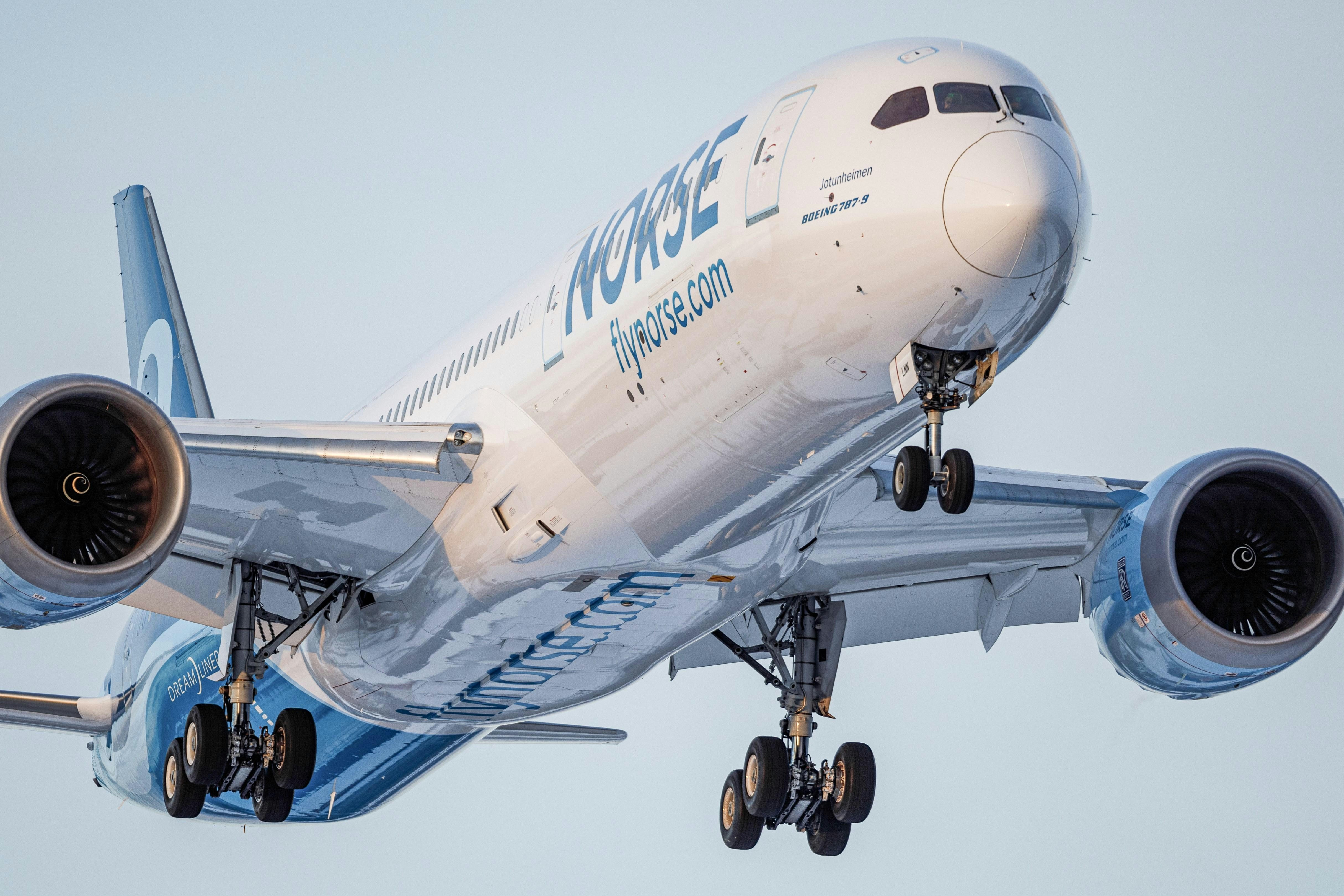
IndiGo Maintains Long-Haul Operations with Norse Atlantic Wet-Lease Agreement
Speculation has grown regarding IndiGo’s potential retreat from its long-haul ambitions, yet India’s largest airline remains committed to its wet-lease partnership with Norse Atlantic Airways. The airline’s foray into widebody operations, a critical step toward its goal of becoming a global carrier by 2030, has progressed swiftly, albeit amid notable challenges.
From Early Aspirations to Strategic Initiatives
IndiGo’s interest in long-haul services dates back several years. In 2018, the airline explored launching no-frills flights to destinations such as London using Airbus A330 aircraft, aiming to compete with established legacy carriers. These plans, however, were delayed following an unsuccessful bid to acquire Air India’s international network in 2017. Subsequently, IndiGo concentrated on its core competency of operating dense, regional narrowbody routes.
The airline’s strategic direction shifted significantly under CEO Pieter Elbers. IndiGo placed a landmark order for 30 Airbus A350-900 aircraft, with deliveries scheduled to begin in 2027. Concurrently, regulatory changes by the Indian government extended the maximum wet-lease term from six to eighteen months, enabling IndiGo to accelerate its long-haul ambitions. In November 2024, Norse Atlantic Airways announced a Letter of Intent to wet lease six Boeing 787-9 aircraft to a “reputable international airline,” later confirmed to be IndiGo. By early 2025, IndiGo committed to launching long-haul flights two years ahead of its original schedule, aiming to secure valuable airport slots and bilateral rights before competitors such as Air India could consolidate their positions.
Formalizing the Partnership and Operational Model
On February 6, 2025, IndiGo and Norse Atlantic officially confirmed their wet-lease agreement. The first Boeing 787-9 aircraft is expected to arrive in March 2025, with an initial lease term of six months, extendable up to eighteen months. Under this arrangement, Norse Atlantic will provide the aircraft, cockpit crew, and maintenance services, while IndiGo will supply cabin crew and oversee ticket sales. This operational model mirrors arrangements already in place with other carriers, including Turkish Airlines.
Navigating Industry Challenges and Competitive Dynamics
Despite IndiGo’s firm commitment, the long-haul wet-lease strategy faces considerable headwinds. The aviation sector is grappling with volatile fuel prices and broader market uncertainties. Norse Atlantic itself is undertaking a capital raise through a rights issue and has withdrawn its 2026 financial outlook, citing elevated jet fuel costs. The airline has also canceled all flights from Los Angeles for the upcoming summer season due to these rising expenses.
Competitors are similarly adjusting their strategies in response to the evolving environment. European wet-lease operators are recalibrating their operations: Ascend Airways has surrendered its UK Air Operator Certificate and returned its fleet, attributing the decision to structural challenges within the UK and European wet-lease markets. Meanwhile, Avion Express is returning 15 Airbus A320 family aircraft to lessors as European airlines reassess their wet-lease requirements.
Outlook for IndiGo’s Long-Haul Ambitions
IndiGo’s decision to advance its long-haul operations through the Norse Atlantic wet-lease partnership highlights both the opportunities and risks inherent in this strategy. While the arrangement enables IndiGo to establish a presence in key international markets ahead of its own A350 deliveries, the sector’s volatility—marked by fluctuating fuel costs and shifting competitor tactics—introduces significant uncertainty. For the time being, IndiGo remains steadfast in its long-haul aspirations, even as the challenges confronting the industry intensify.

Etihad Airways Suspends Airbus A380 Flights on Key Route

Aditya Birla Group Seeks Approval for Aircraft Leasing in GIFT City

Qatar Airways Highlights Innovation and Connectivity at Arabian Travel Market 2026

Hong Kong's Five-Year Plan Includes Andrew Fan's Aircraft Parts Processing Hub Proposal

ACIA Aero Leasing Delivers ATR72-600 to Air Nostrum

RTX Appoints Jill Albertelli as Head of Pratt & Whitney

TAT Technologies Joins Beyond Aero Hydrogen Aircraft Program

AURAK Study Highlights Barriers to Air Taxi Adoption in Emerging Economies

Xiamen Air Selects Altitude for 787 Maintenance at Heathrow

Etihad and Swissport Extend Global Partnership
