
Trasforma le intuizioni dell’IA in azioni concrete

Tendenze
Categories
IndiGo Secures Japanese Financing for Aircraft, a First in Indian Aviation
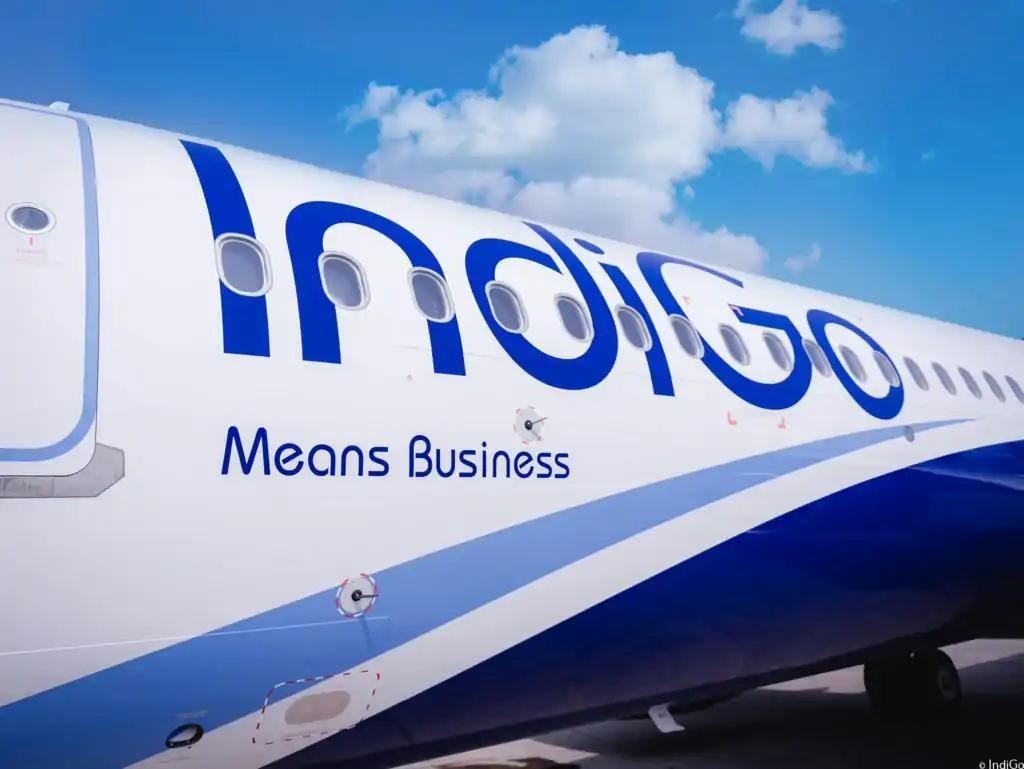
IndiGo Secures Japanese Financing for Aircraft, a First in Indian Aviation
India’s largest airline, IndiGo, has achieved a significant milestone by becoming the first Indian carrier to secure Japanese equity financing for two Airbus A320 family aircraft. This landmark transaction, executed through a Japanese Operating Lease with Call Option (JOLCO), marks a pivotal development in the Indian aviation sector, reflecting growing international investor confidence in the creditworthiness of Indian airlines and the strength of India’s legal and regulatory framework.
A New Financing Paradigm for Indian Aviation
Japanese equity financing is generally more cost-effective than traditional debt instruments. Japanese investors, known for their conservative risk appetite, have historically limited their investments to top-tier, state-owned, or highly rated international airlines such as British Airways, Singapore Airlines, and Cathay Pacific. IndiGo’s successful access to JOLCO financing, previously unavailable to Indian carriers, signals a notable shift in global perceptions of Indian aviation credit risk.
The transaction was facilitated through Gujarat International Finance Tec-City (GIFT City), a special economic zone designed to promote financial services. Aircraft leasing entities registered under the International Financial Services Centre (IFSC) in GIFT City benefit from significant tax incentives. To enable this deal, IndiGo established a dedicated leasing subsidiary, InterGlobe Aviation Financial Services IFSC Private Limited.
Under the JOLCO structure, Japanese investors—including corporations and high-net-worth individuals—co-invest alongside bank debt to finance the aircraft, which are then leased to IndiGo. The airline retains the option to purchase the aircraft at the end of the lease term. Japanese tax laws allow these investors to claim depreciation allowances, reducing their dependence on lease income and enabling lower lease rates for the airline. A participant in the transaction noted that investors are willing to accept lower economic returns on equity because a substantial portion of their benefits derives from tax shields rather than lease income alone.
Regulatory Reforms and Market Confidence
Indian airlines have historically faced skepticism from global lessors due to a series of bankruptcies and weak insolvency laws that complicated aircraft repossession. The recent collapse of Go First, which resulted in prolonged legal disputes, highlighted these challenges. However, India’s adoption in February of legislation aligning with the Cape Town Convention—an international treaty that mandates aircraft repossession within 60 days of bankruptcy—has significantly mitigated jurisdictional risks.
GIFT City has also addressed a critical impediment: the absence of a double taxation treaty between India and Japan, which had previously rendered direct JOLCO structures unfeasible. Ajay Kumar, Managing Partner at KLA Legal, which advises global lessors, remarked that JOLCO transactions through GIFT City offer an excellent opportunity for Japanese investors to participate in India’s expanding civil aviation sector. He emphasized that this development reflects both a reduction in credit risk and growing confidence in GIFT City’s financial structures.
Operational Challenges Amid Financial Innovation
Despite this financing breakthrough, IndiGo continues to confront operational challenges. Airspace closures over Pakistan and Iran have necessitated longer and more expensive flight detours, potentially affecting the airline’s operational efficiency and financial performance. These disruptions may attract heightened scrutiny from investors and market analysts. Meanwhile, competitors are likely to respond by leveraging their own financial resources or pursuing alternative financing arrangements to sustain their market positions.
IndiGo’s successful acquisition of Japanese financing not only opens new avenues for Indian airlines but also highlights the evolving landscape of aircraft financing in India. Regulatory reforms and innovative financial structures are increasingly attracting global capital to the sector, signaling a transformative phase for Indian civil aviation.

Etihad Airways Suspends Airbus A380 Flights on Key Route

Aditya Birla Group Seeks Approval for Aircraft Leasing in GIFT City

Qatar Airways Highlights Innovation and Connectivity at Arabian Travel Market 2026

Hong Kong's Five-Year Plan Includes Andrew Fan's Aircraft Parts Processing Hub Proposal

ACIA Aero Leasing Delivers ATR72-600 to Air Nostrum

RTX Appoints Jill Albertelli as Head of Pratt & Whitney

TAT Technologies Joins Beyond Aero Hydrogen Aircraft Program

AURAK Study Highlights Barriers to Air Taxi Adoption in Emerging Economies

Xiamen Air Selects Altitude for 787 Maintenance at Heathrow

Etihad and Swissport Extend Global Partnership
