
Trasforma le intuizioni dell’IA in azioni concrete

Tendenze
Categories
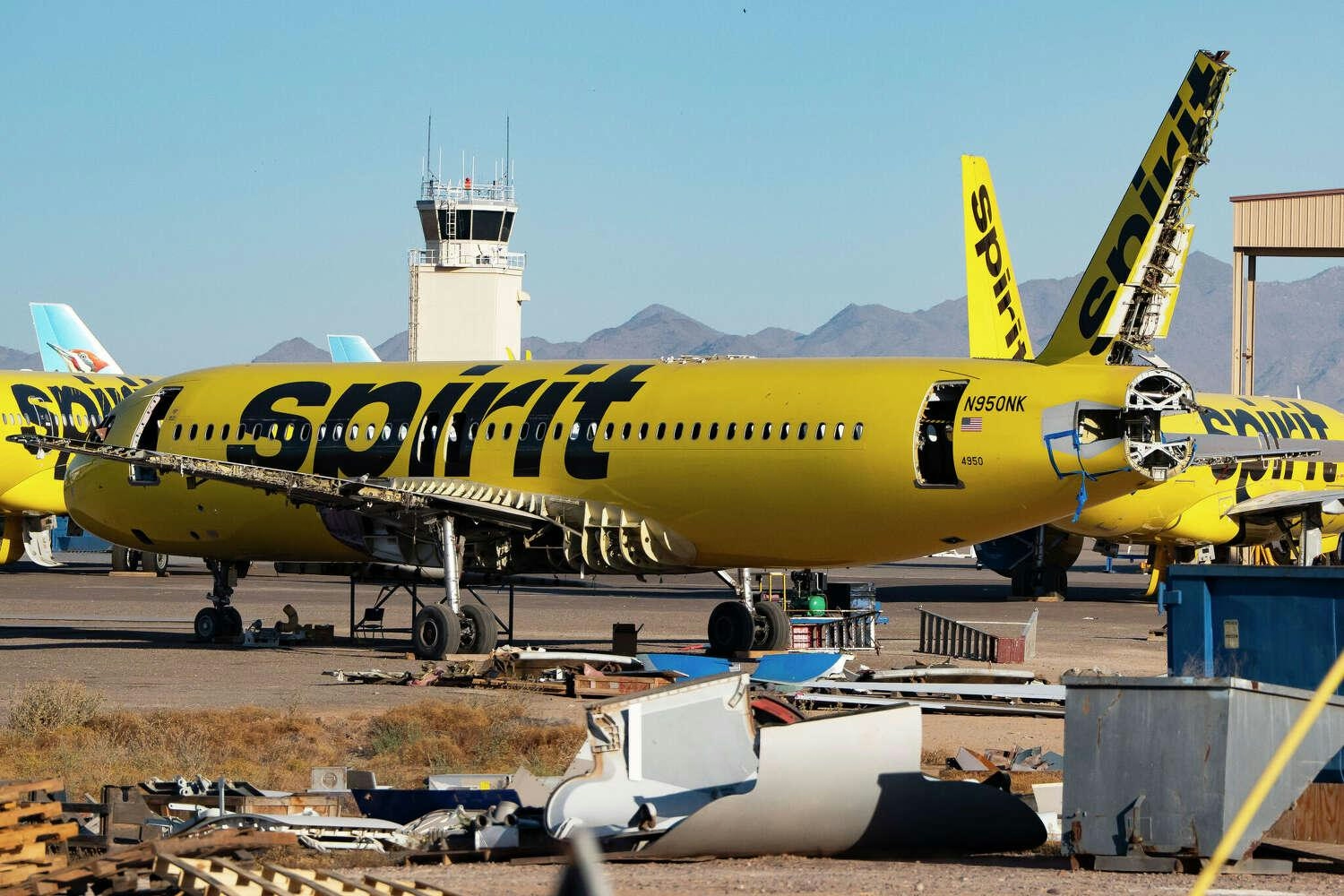
Inside Spirit Airlines’ Aircraft Repossession Operations
Inside Spirit Airlines’ Aircraft Repossession Operations
The recent large-scale aircraft repossession involving Spirit Airlines has shed light on a complex and often overlooked aspect of the aviation industry. Documented in detail by the YouTube channel “Cockpit Casual,” operated by Steve Giordano and Bob Allen of Nomadic Aviation Group, this operation reveals the intricate process of recovering and repositioning grounded jets following an airline’s sudden collapse.
The Role of Nomadic Aviation Group
Nomadic Aviation Group specializes in ferrying aircraft globally, stepping in when planes must be transferred between operators or returned to lessors. Their team of highly qualified pilots holds certifications across a broad spectrum of aircraft types, enabling them to manage diverse and challenging assignments. Giordano and Allen explain that their business experiences heightened activity during periods of industry disruption—such as airline restructurings, mergers, or liquidations like Spirit’s.
Spirit Airlines’ abrupt shutdown left numerous jets stranded at airports nationwide. With the airline unable to compensate its pilots or sustain operations, aircraft owners moved swiftly to reclaim their assets. Nomadic Aviation was entrusted with coordinating a large-scale repossession effort, a process that involves extensive paperwork and logistical planning rather than the dramatic, clandestine operations often imagined.
Challenges in Aircraft Repossession
The repossession process is fraught with obstacles. Airport authorities may resist efforts to access and recover aircraft, complicating the operation. Additionally, the rising cost of jet fuel has diminished the appeal of many of Spirit’s planes to prospective operators, further hindering recovery and remarketing efforts. Each aircraft movement demands careful planning, strict regulatory compliance, and coordination among multiple stakeholders to ensure safety and legality.
The broader industry environment adds further complexity. Spirit’s exit has prompted competitors to aggressively pursue its market share and valuable airport slots, particularly at hubs constrained by capacity. This scramble for assets highlights the volatility within the airline sector, which continues to face financial instability. Industry analysts caution that without consolidation or government intervention, more airlines may encounter similar fates, raising debates about whether air travel should be managed as a public utility rather than a purely competitive market.
Transparency Amid Turbulence
Despite these challenges, Giordano, Allen, and their team maintain a professional and transparent approach, sharing their experiences through “Cockpit Casual.” Their content offers rare insights into both the operational and human dimensions of aircraft repossession, earning recognition from prominent outlets such as The Wall Street Journal.
For those seeking a deeper understanding of the realities behind aviation headlines, “Cockpit Casual” provides an unfiltered perspective on the complexities of moving aircraft in a turbulent industry. Their work underscores that even amid crisis, dedicated professionals continue to ensure the continuity of air travel behind the scenes.

Etihad Airways Suspends Airbus A380 Flights on Key Route

Aditya Birla Group Seeks Approval for Aircraft Leasing in GIFT City

Qatar Airways Highlights Innovation and Connectivity at Arabian Travel Market 2026

Hong Kong's Five-Year Plan Includes Andrew Fan's Aircraft Parts Processing Hub Proposal

ACIA Aero Leasing Delivers ATR72-600 to Air Nostrum

RTX Appoints Jill Albertelli as Head of Pratt & Whitney

TAT Technologies Joins Beyond Aero Hydrogen Aircraft Program

AURAK Study Highlights Barriers to Air Taxi Adoption in Emerging Economies

Xiamen Air Selects Altitude for 787 Maintenance at Heathrow

Etihad and Swissport Extend Global Partnership
