
Trasforma le intuizioni dell’IA in azioni concrete

Tendenze
Categories
Insights from Farnborough on Aerospace Growth and Orlando’s Emerging Role
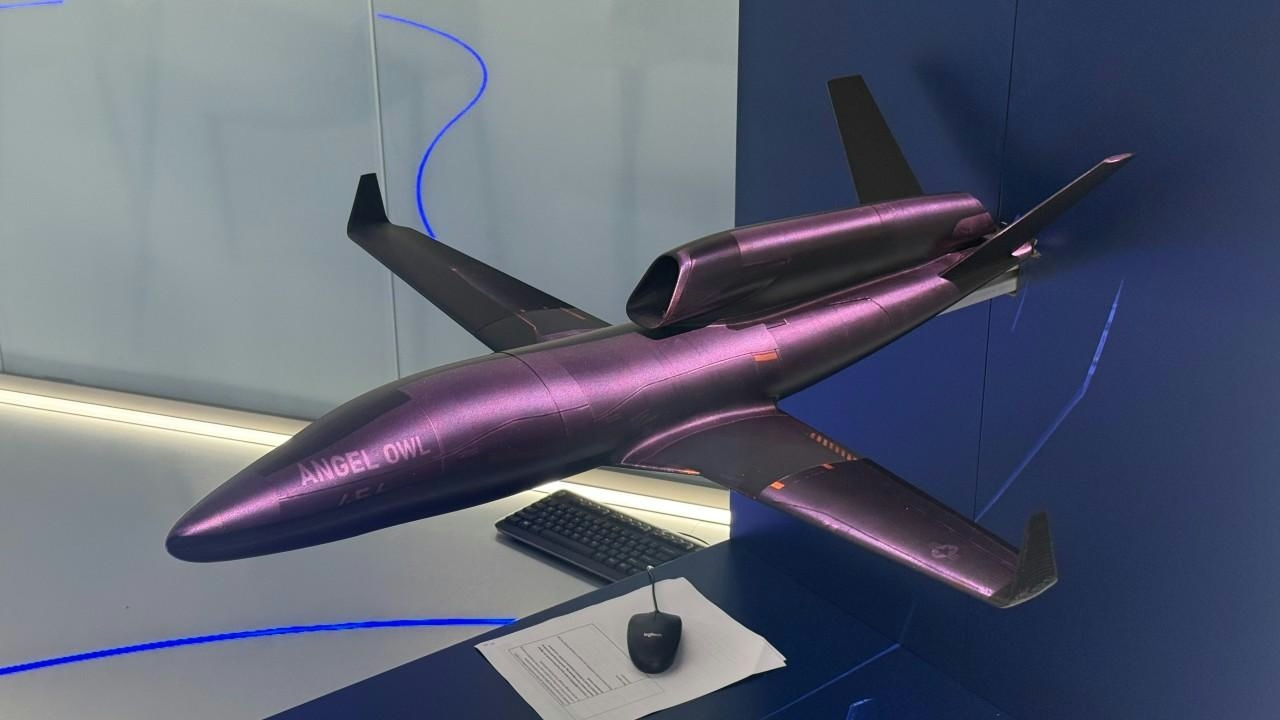
Insights from Farnborough: Aerospace Growth and Orlando’s Emerging Role
The Orlando Economic Partnership recently participated in the Farnborough International Airshow, a biennial event recognized globally as a premier gathering for aerospace industry leaders. Farnborough serves as a critical platform for exploring emerging technologies and addressing the future trajectory of aviation. This year’s event not only highlighted innovation but also underscored significant challenges confronting the sector, including constrained capacity expansion, productivity enhancement, and the security of vital supply chains.
As aerospace companies contend with unprecedented order backlogs, the prevailing sentiment at Farnborough has shifted from demand forecasting to execution. Industry leaders are prioritizing the conversion of these backlogs into completed products, emphasizing investments in workforce development, process optimization, and technological advancement. Competitors are expected to respond by bolstering their operational capabilities and talent pools to meet escalating demand.
Amid these dynamics, Orlando’s role within the aerospace sector is attracting increasing attention. Traditionally known for its tourism industry, Orlando is now emerging as a highly connected aviation and aerospace hub. The region’s strengths—comprising a skilled talent base, advanced technical capabilities, robust infrastructure, and strategic partnerships—were frequently cited by companies at Farnborough as critical enablers of growth.
Talent as a Key Driver
Workforce development remains one of the aerospace industry’s most pressing challenges. Orlando has cultivated the fourth-largest aerospace and defense talent pipeline among major U.S. metropolitan areas, reinforcing its reputation as a center for aerospace innovation and workforce cultivation. The University of Central Florida (UCF) has awarded over 1,000 bachelor’s degrees in aerospace engineering over the past five years and continues to expand its research and workforce initiatives in areas such as autonomy, cybersecurity, propulsion, sensing, advanced manufacturing, and space technologies. UCF’s standing as a leading supplier of engineering talent is vital to addressing Florida’s expanding aerospace needs.
A Robust Aerospace Ecosystem
Orlando’s competitive advantage stems from a concentration of aerospace capabilities developed over several decades. The region hosts Team Orlando, which co-locates Army, Navy, and Air Force simulation commands, and manages approximately $6 billion annually in modeling, simulation, and training contracts. Central Florida Research Park, home to more than 140 companies, further anchors the region’s aerospace activities. Major employers such as Boeing, L3Harris, Northrop Grumman, and Lockheed Martin maintain significant operations in the area. Modeling, simulation, and training have long established Orlando’s aerospace reputation, and these capabilities now form the foundation of a broader and expanding innovation ecosystem.
Innovation and Strategic Location
Many of the technologies showcased at Farnborough already have a presence in Orlando. UCF researchers pioneered the first hypersonic rotating detonation rocket engine and are advancing HiHYPER, a Department of Defense-funded high-hypersonic propulsion testing facility. In the realm of advanced air mobility, the Greater Orlando Aviation Authority has approved plans for a vertistop at Orlando International Airport, facilitating future electric vertical takeoff and landing (eVTOL) demonstrations and a planned on-airport vertiport by 2030. The region also boasts growing expertise in autonomous systems, sensing, optics, photonics, cybersecurity, and advanced aviation infrastructure.
Situated just 35 miles from Florida’s Space Coast, UCF and the Orlando region lie within one of the world’s most active aerospace corridors. As launch activity intensifies, much of the supporting engineering, optics, simulation, and satellite systems work is anchored in this area.
As the aerospace industry enters a new phase characterized by execution and strategic investment, Orlando’s established ecosystem and expanding talent pipeline position the region as a significant contributor to meeting the sector’s evolving demands.

Etihad and Swissport Extend Global Partnership
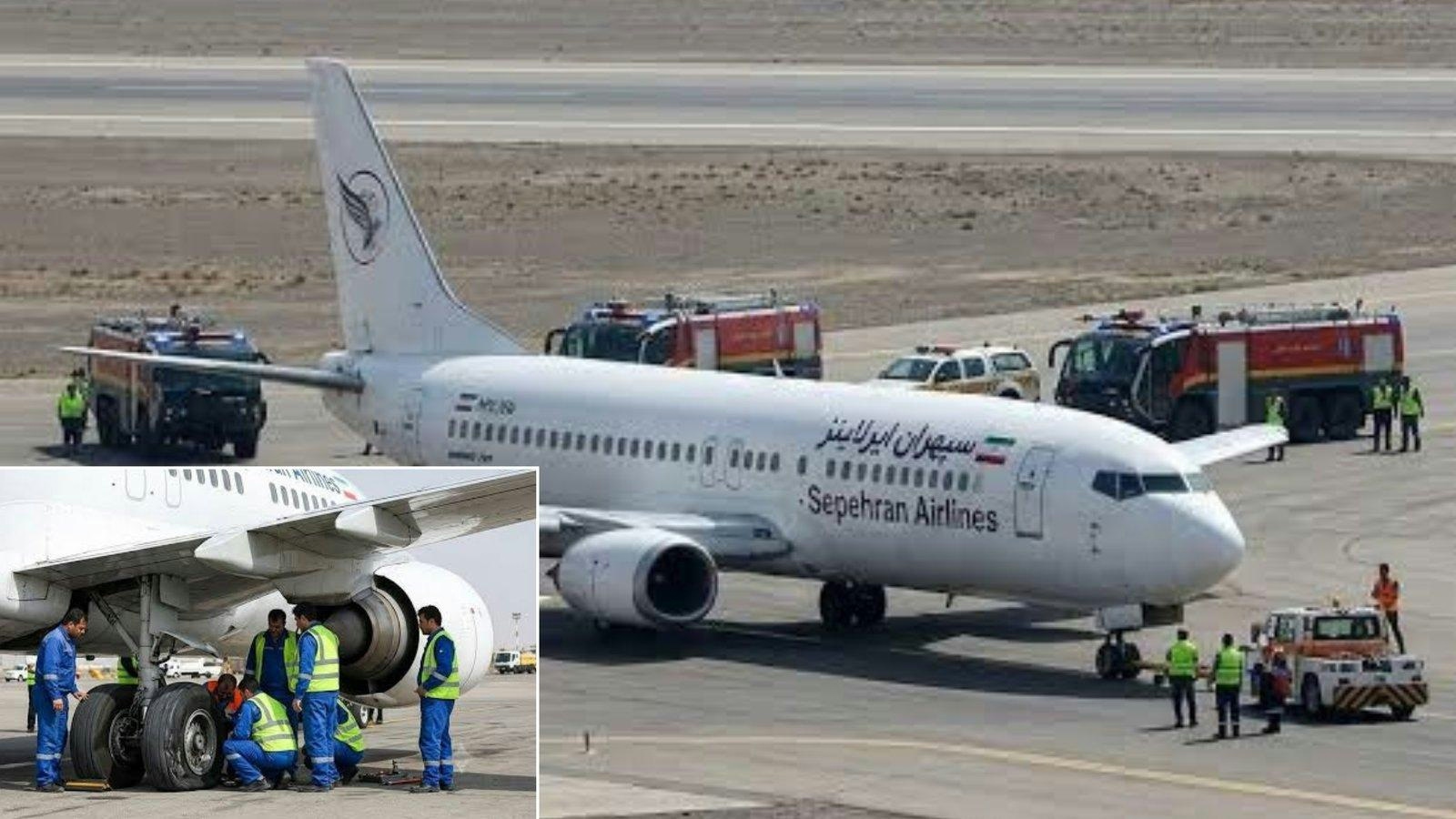
Sepehran Airlines B737 Returns to Mashhad After Tyre and Engine Issues

Etihad Deploys Widebody Fleet to Meet Strong Demand

Korean Air Finalizes $36.2 Billion Deal with Boeing
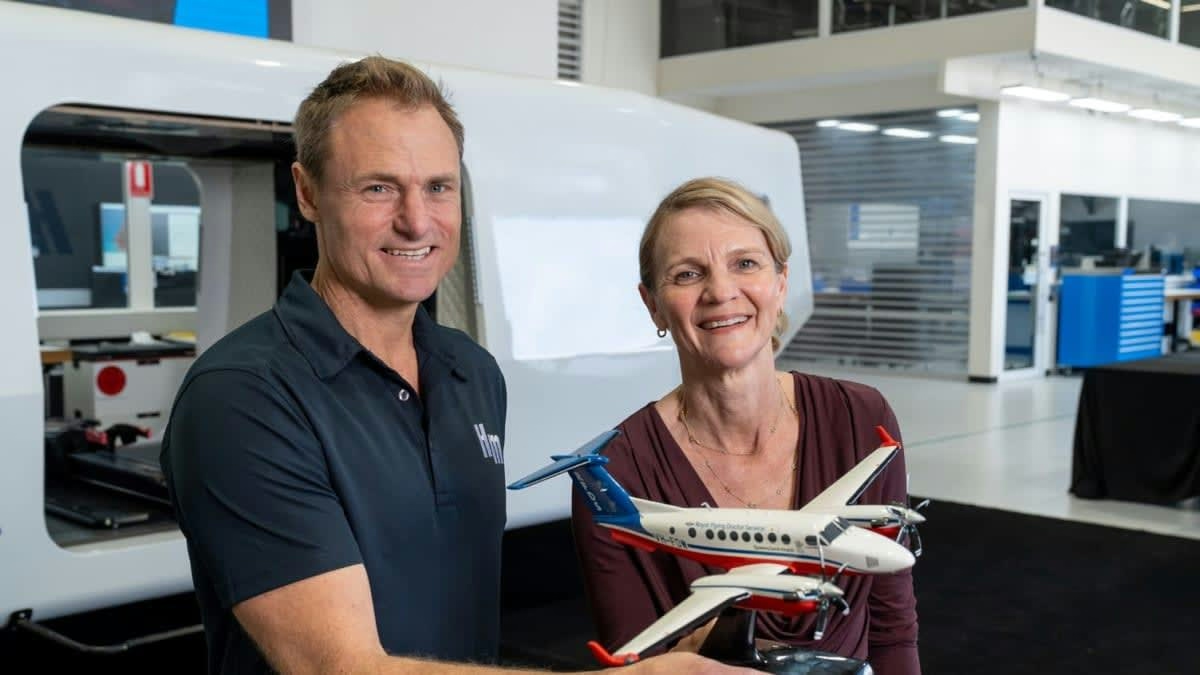
Australia’s RFDS Queensland Section Orders Six King Air 260Cs
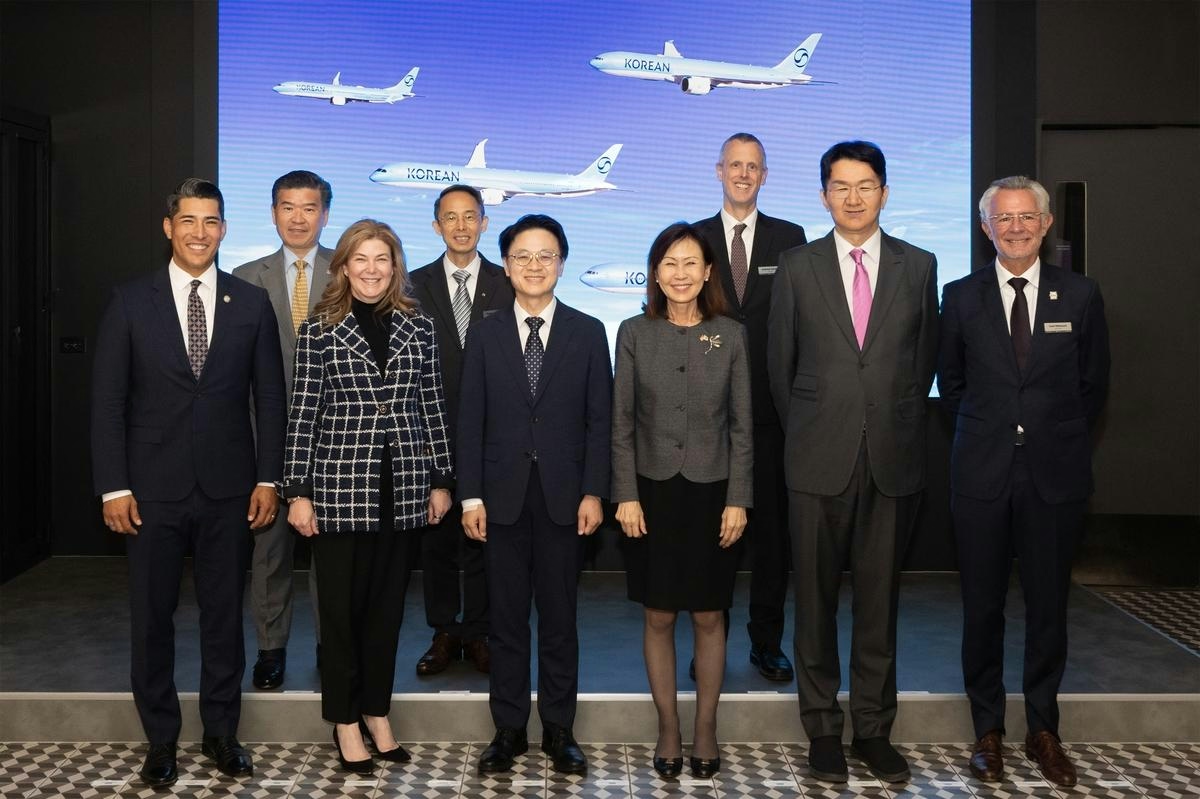
Korean Air Finalizes Order for 103 Boeing Jets and Engines
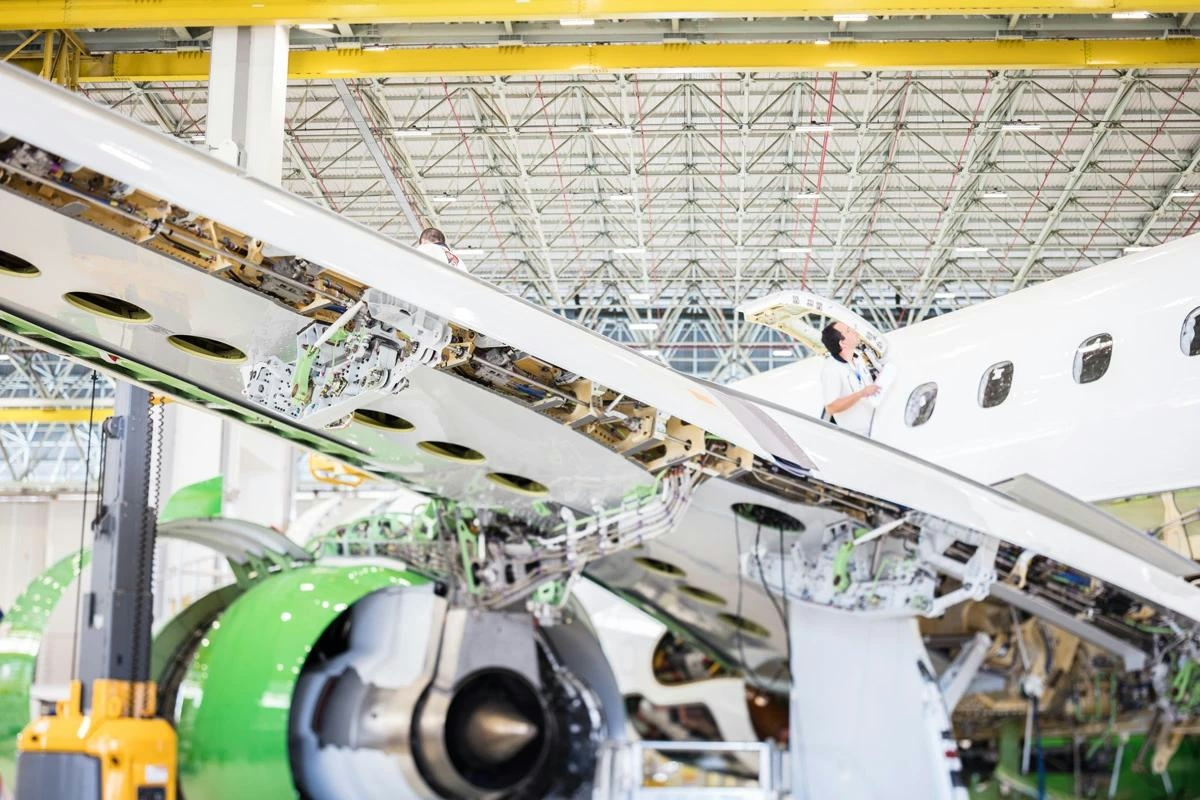
Embraer E195-E2 Features Distinctive Engine Placement Among Regional Jets

What Passengers Can Expect on Boeing’s New 777X Jet

How Ethiopian Airlines Became Africa’s Leading Carrier Amid Gulf Competition

Joby Aviation Extends Autonomous Flight Capabilities with Cross-Country Tour
