
Trasforma le intuizioni dell’IA in azioni concrete

Tendenze
Categories
LEVEL Suspends San Francisco Flights Due to Engine Shortage
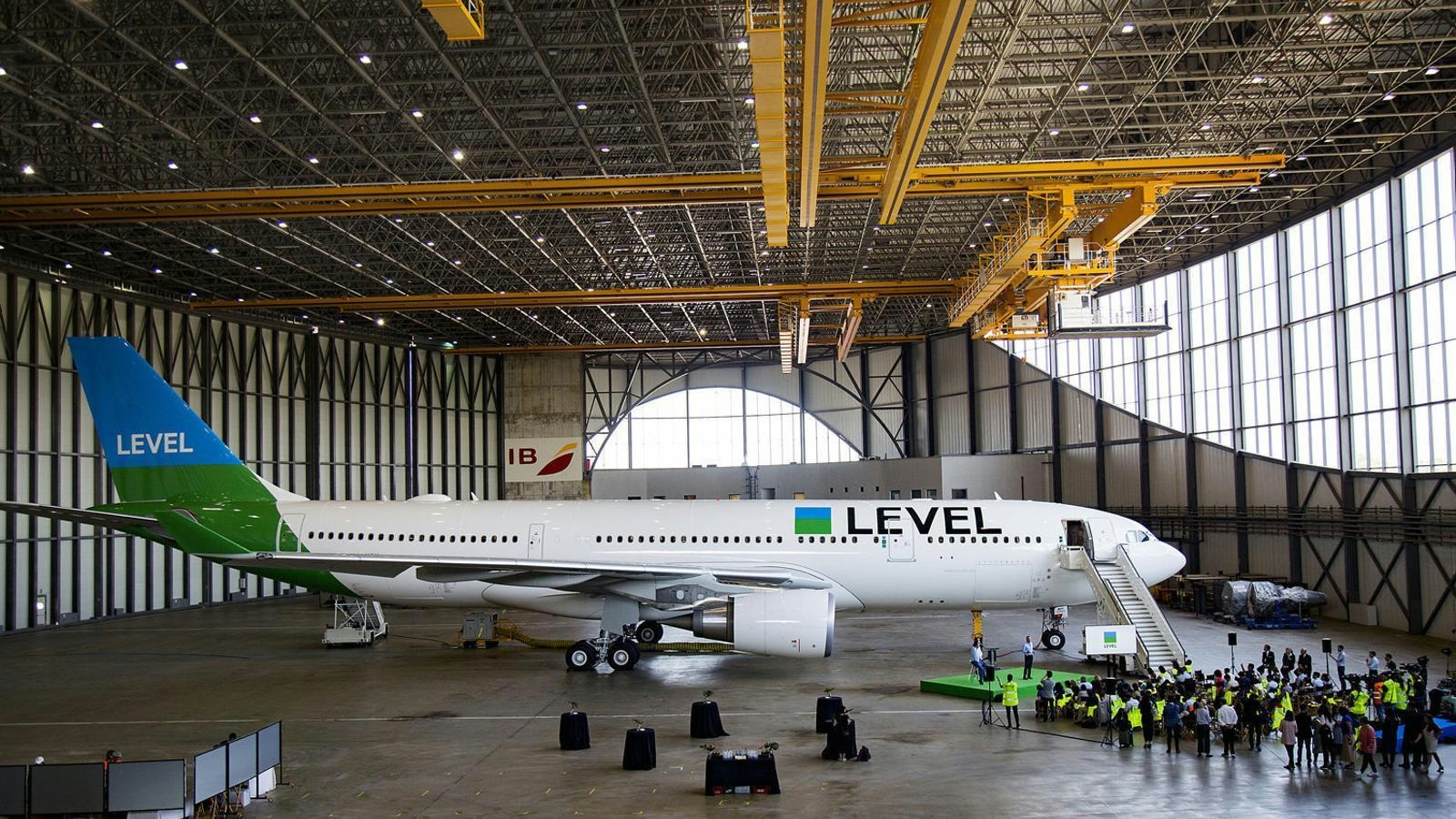
LEVEL Suspends San Francisco Flights Amid Engine Shortage and Industry Challenges
LEVEL, the long-haul, low-cost carrier under the International Airlines Group (IAG), has announced the suspension of its seasonal flights between Barcelona and San Francisco. This decision stems from an ongoing shortage of engines affecting its Airbus A330 fleet, which has imposed significant operational constraints as the airline approaches the peak summer travel season.
Operational Impact and Route Suspension
LEVEL operates seven Airbus A330 aircraft, originally transferred from IAG sister airline Iberia. The suspension of the San Francisco route, initially reported by Spanish media outlet La Vanguardia, is attributed to a global shortage of aircraft engines rather than geopolitical tensions in West Asia. The airline had planned to maintain two to three weekly flights on this route through April, with the final service scheduled for April 26. From May onward, all flights to San Francisco will be halted, according to data from aviation analytics firm Cirium. LEVEL had initially intended to increase the frequency to four weekly flights this season but was compelled to revise these plans due to the supply chain disruptions.
The airline cited the need to "guarantee a more stable operation" as the primary rationale behind the suspension, highlighting the impact of the engine supply shortage. Compounding these challenges, LEVEL’s anticipated fleet expansion with the delivery of an eighth aircraft this year has been delayed, further restricting its capacity to maintain and grow its route network.
Market Implications and Industry Context
The suspension of the San Francisco service is likely to create opportunities for competing carriers to capture the displaced passenger demand, potentially leading to fare adjustments and strategic repositioning on transatlantic routes. LEVEL’s decision to prioritize more established destinations reflects a broader industry trend, where airlines are compelled to adapt to persistent supply chain disruptions and evolving market conditions.
Despite the suspension, data from the US Department of Transportation indicates that LEVEL’s San Francisco flights achieved strong load factors last year, averaging 89%, second only to its New York-JFK service. However, high load factors do not necessarily equate to profitability, and the airline’s move suggests a strategic focus on routes with more consistent financial performance.
Since the end of the COVID-19 pandemic, LEVEL has experienced rapid growth, with year-on-year increases of 25% in 2024 and 11% projected for 2025. Nevertheless, growth is expected to slow to just 2% in 2026 due to the delayed fleet expansion. The airline continues to broaden its network, recently announcing new services to Lima, Peru.
Broader Industry Pressures
LEVEL’s challenges are emblematic of wider pressures facing the aviation sector. Rising fuel costs have prompted carriers such as Scandinavian Airlines and Alaska Air Group to explore alternative fuel sourcing strategies. Additionally, the industry remains sensitive to economic and political developments, as illustrated by Delta Air Lines’ recent suspension of special services for US Congress members amid a government shutdown.
The suspension of LEVEL’s San Francisco flights underscores the complex interplay of supply chain constraints, competitive dynamics, and broader industry challenges that continue to shape the global aviation landscape.

Etihad Airways Suspends Airbus A380 Flights on Key Route

Aditya Birla Group Seeks Approval for Aircraft Leasing in GIFT City

Qatar Airways Highlights Innovation and Connectivity at Arabian Travel Market 2026

Hong Kong's Five-Year Plan Includes Andrew Fan's Aircraft Parts Processing Hub Proposal

ACIA Aero Leasing Delivers ATR72-600 to Air Nostrum

RTX Appoints Jill Albertelli as Head of Pratt & Whitney

TAT Technologies Joins Beyond Aero Hydrogen Aircraft Program

AURAK Study Highlights Barriers to Air Taxi Adoption in Emerging Economies

Xiamen Air Selects Altitude for 787 Maintenance at Heathrow

Etihad and Swissport Extend Global Partnership
