
Trasforma le intuizioni dell’IA in azioni concrete

Tendenze
Categories
Lufthansa Technik Develops Next-Generation Praetor Cabins
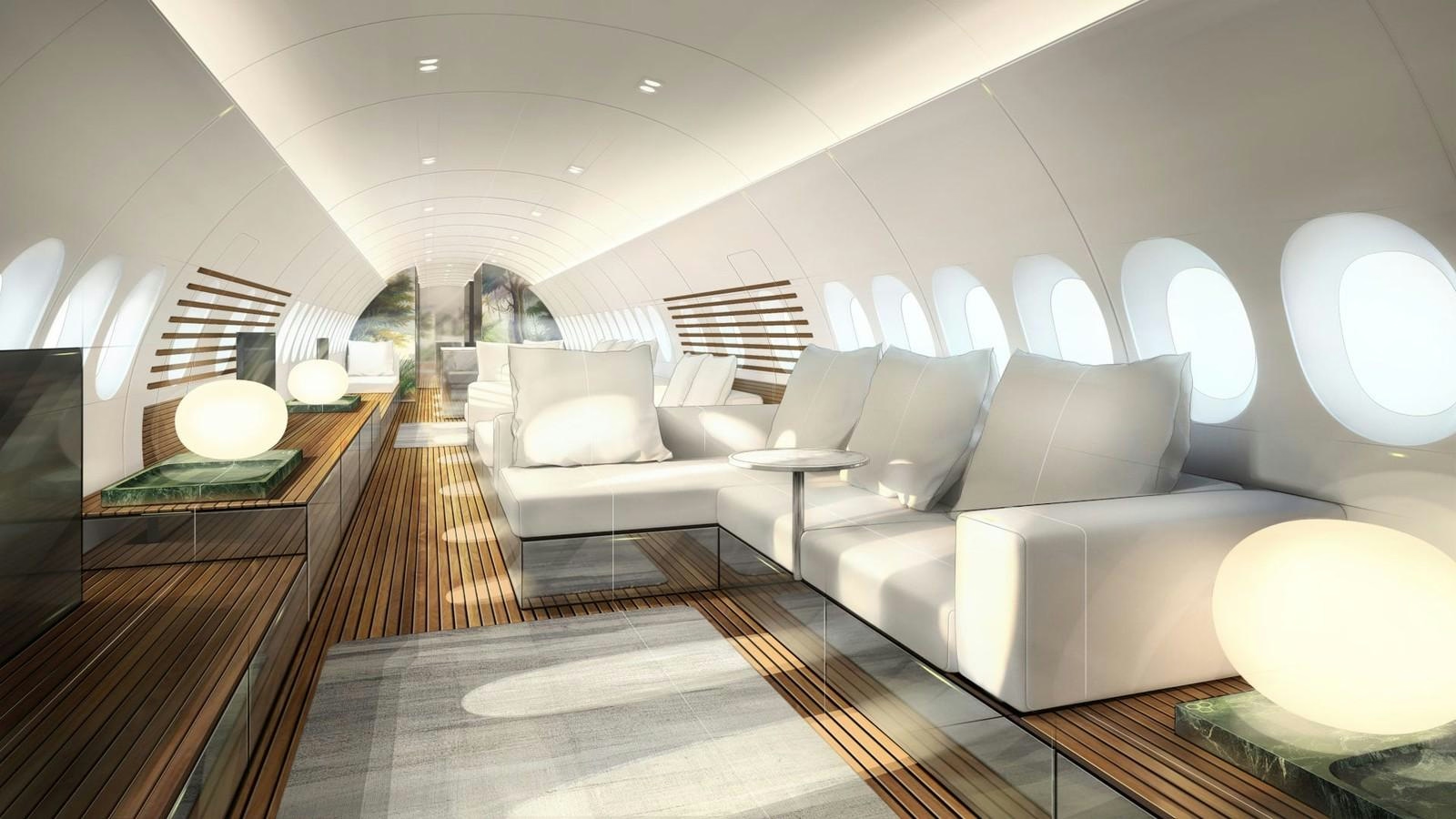
Lufthansa Technik Advances Praetor Cabins with Cutting-Edge Technologies
Lufthansa Technik (LHT) has announced its integral role as the core development and supply partner for Embraer’s next-generation Praetor 500E and Praetor 600E business jet cabins. This collaboration introduces a range of pioneering technologies designed to transform the in-flight experience for passengers.
Innovative Cabin Features and Technologies
At the heart of the new cabin design is a revolutionary 42-inch curved OLED Smart Window™, seamlessly embedded into the sidewall. This digital window utilizes live video feeds from three onboard cameras to provide passengers with expansive external views, forming the basis of Embraer’s exclusive Smart Window™ technology. The display is fully integrated with a newly developed Inflight Entertainment and Cabin Management System (IFE & CMS), which features a custom Embraer graphical user interface. This interface offers intuitive control over cabin lighting, climate settings, connectivity options, and wireless charging capabilities.
The auditory environment within the cabin is enhanced by Lufthansa Technik’s Red Dot Design Award-winning Omni-Fi membrane speaker system. Employing advanced Ring-mode Converter/Transducer technology, these ultra-slim speakers deliver immersive, omnidirectional sound without compromising the cabin’s sleek aesthetic.
To improve operational efficiency, Lufthansa Technik has incorporated a digital ground portal that supports over-the-air updates, remote configuration, and scalable functionality. This system ensures that cabin technologies can be continuously updated and adapted to evolving customer requirements.
Collaboration and Industry Context
This initiative builds upon the longstanding partnership between Embraer and Lufthansa Technik, which began with the Phenom 100EX and Phenom 300E programs. Their collaboration encompasses all stages from early concept and industrial design to system architecture, engineering, and production readiness, resulting in a portfolio of jointly developed innovations.
Despite the promising advancements, the development of these next-generation cabins presents challenges, particularly in ensuring compatibility with existing aircraft systems and managing the costs associated with retrofitting. Nevertheless, the market response has been favorable, with business aviation operators showing increased interest in upgrading their fleets to enhance passenger comfort and connectivity.
Lufthansa Technik’s focus on advanced cabin upgrades aligns with a broader industry trend emphasizing improved in-flight experience and digital connectivity. Competitors such as Collins Aerospace and Pratt & Whitney Canada are similarly investing in innovative cabin interiors and electronics, while companies like Thales and JPA Design are advancing comparable technologies for commercial aircraft, including the Boeing 787 Dreamliner.
As the business aviation sector continues to prioritize passenger experience and operational flexibility, Lufthansa Technik’s latest developments for the Praetor cabins position both the company and Embraer at the forefront of cabin innovation, setting new benchmarks for the industry.

Etihad Airways Suspends Airbus A380 Flights on Key Route

Aditya Birla Group Seeks Approval for Aircraft Leasing in GIFT City

Qatar Airways Highlights Innovation and Connectivity at Arabian Travel Market 2026

Hong Kong's Five-Year Plan Includes Andrew Fan's Aircraft Parts Processing Hub Proposal

ACIA Aero Leasing Delivers ATR72-600 to Air Nostrum

RTX Appoints Jill Albertelli as Head of Pratt & Whitney

TAT Technologies Joins Beyond Aero Hydrogen Aircraft Program

AURAK Study Highlights Barriers to Air Taxi Adoption in Emerging Economies

Xiamen Air Selects Altitude for 787 Maintenance at Heathrow

Etihad and Swissport Extend Global Partnership
