
Trasforma le intuizioni dell’IA in azioni concrete

Tendenze
Categories
'Miracle on the Hudson' Survivor Advocates for Increased American Airlines Staffing
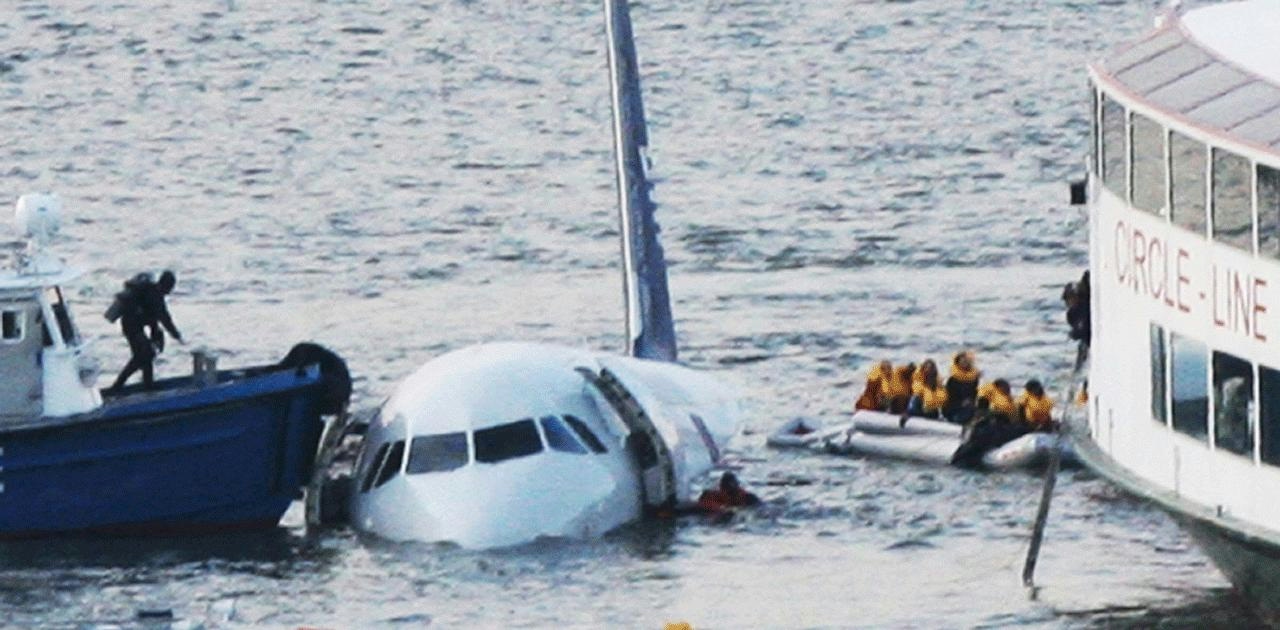
'Miracle on the Hudson' Survivor Advocates for Increased American Airlines Staffing
Seventeen years after the extraordinary emergency landing of US Airways Flight 1549, a survivor has joined efforts to advocate for increased flight attendant staffing on American Airlines’ widebody aircraft. The incident, famously known as the “Miracle on the Hudson,” remains a powerful reminder of the critical role crew members play in ensuring passenger safety during crises.
Remembering the Miracle on the Hudson
On January 15, 2009, Flight 1549 suffered a catastrophic dual engine failure after colliding with a flock of Canada Geese shortly after departing LaGuardia Airport. Captain Chesley “Sully” Sullenberger and First Officer Jeffrey Skiles executed a remarkable water landing on the frigid Hudson River, saving all 150 passengers and five crew members aboard the Airbus A320. The swift and composed actions of the flight attendants—Doreen Welsh, Donna Dent, and Sheila Dail—were instrumental in facilitating a rapid and orderly evacuation, preventing loss of life.
Denise Lockie, who was seated in 2C during the emergency, now lends her voice to the Association of Professional Flight Attendants (APFA) in their campaign against reductions in flight attendant staffing on widebody jets. Reflecting on the chaos following the impact, Lockie described the scene as one of panic and confusion, with passengers screaming, crying, and praying. She highlighted the indispensable role of the flight attendants, noting their calm demeanor and clear instructions amid the trauma and fear that gripped the cabin.
The Staffing Debate and Industry Challenges
Lockie and the APFA emphasize that adequate staffing is a matter of “life and death.” Their campaign responds to a recent Federal Aviation Administration (FAA) decision permitting American Airlines to operate its new Boeing 787-9 Dreamliner with only seven flight attendants—one fewer than the number of emergency exits. The APFA has strongly opposed this move, warning that reducing crew numbers could jeopardize passenger safety during emergencies.
This debate over staffing levels arises amid broader challenges facing American Airlines and the aviation industry at large. The carrier must navigate a complex landscape marked by the need to maintain operational reliability and grow premium revenue, while contending with rising costs, labor disputes, and increased regulatory scrutiny. The FAA’s ruling has raised concerns about compliance and potential legal risks, while also prompting competitors to reconsider their pricing, service, and efficiency strategies in a fiercely competitive market.
Market analysts observe that American Airlines’ ability to sustain profitability amid economic volatility and intense competition will be closely monitored. The industry anticipates growing class divides in 2026, with low-cost carriers particularly vulnerable to economic downturns. In this context, decisions regarding staffing and service levels carry significant implications not only for safety but also for financial performance.
For Denise Lockie and the APFA, the enduring lesson of the Miracle on the Hudson is unequivocal: in moments of crisis, every crew member is vital. As airlines pursue operational efficiencies, survivors and unions alike urge regulators and executives to prioritize the human element at 35,000 feet.

Etihad Airways Suspends Airbus A380 Flights on Key Route

Aditya Birla Group Seeks Approval for Aircraft Leasing in GIFT City

Qatar Airways Highlights Innovation and Connectivity at Arabian Travel Market 2026

Hong Kong's Five-Year Plan Includes Andrew Fan's Aircraft Parts Processing Hub Proposal

ACIA Aero Leasing Delivers ATR72-600 to Air Nostrum

RTX Appoints Jill Albertelli as Head of Pratt & Whitney

TAT Technologies Joins Beyond Aero Hydrogen Aircraft Program

AURAK Study Highlights Barriers to Air Taxi Adoption in Emerging Economies

Xiamen Air Selects Altitude for 787 Maintenance at Heathrow

Etihad and Swissport Extend Global Partnership
