Immagine

Trasforma le intuizioni dell’IA in azioni concrete

Unisciti oggi alla lista d’attesa di AeroGenie!

Tendenze

Categories

MTU Aero Engines Prepares for Annual General Meeting, Emphasizes Capital Strategy
March 27, 2026By ePlane AI
MTU Aero Engines Prepares for Annual General Meeting, Emphasizes Capital Strategy
0
0
MTU Aero Engines
Annual General Meeting
Aviation Sector Recovery

MTU Aero Engines Prepares for Annual General Meeting, Emphasizes Capital Strategy Amid Sector Recovery

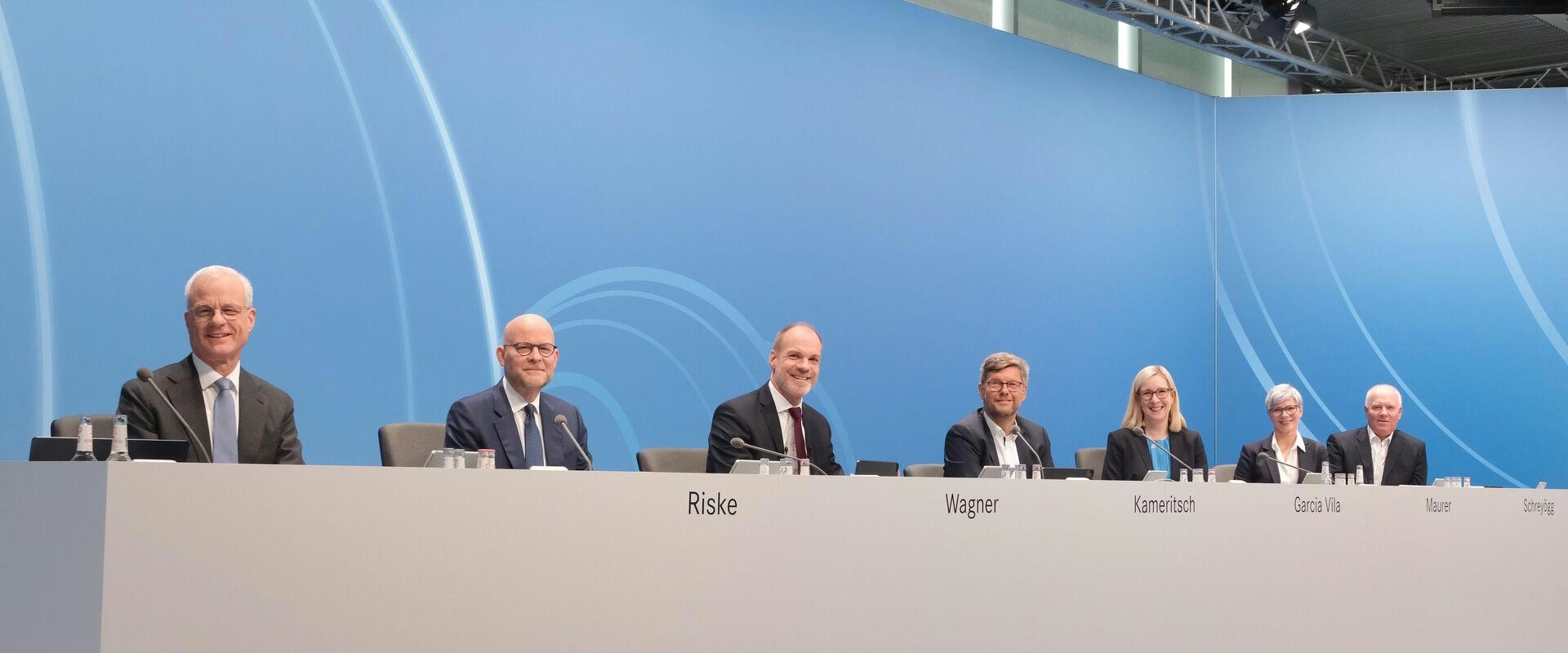
MTU Aero Engines AG (ISIN: DE000A0D9PT0), a prominent independent manufacturer and maintainer of aircraft engines, has released comprehensive invitations and reports in anticipation of its Annual General Meeting (AGM) scheduled for May 7, 2026. The company plans to propose a dividend payout alongside new authorizations for capital increases and convertible bonds, reflecting a strategic focus on maintaining financial flexibility as the aviation industry continues its recovery from the pandemic’s impact.

Strategic Capital Measures and Shareholder Alignment

The agenda for the upcoming AGM highlights MTU’s balanced approach to shareholder returns and long-term growth. The company intends to distribute dividends amounting to EUR 193.6 million, payable on May 12, 2026, while simultaneously allocating EUR 283.7 million to revenue reserves. This dual strategy aims to reward shareholders while preserving capital to support future investments and operational needs.

Central to the capital strategy is the revocation of the previous Authorized Capital 2021 and the establishment of two new authorized capitals: Authorized Capital 2026/I, permitting up to EUR 11 million, and Authorized Capital 2026/II, allowing up to EUR 5 million, both valid until May 2031. These authorizations empower the Executive Board, subject to Supervisory Board approval, to issue new shares for cash or non-cash contributions, with the option to exclude subscription rights when necessary. Furthermore, MTU seeks shareholder approval to issue convertible bonds or bonds with warrants up to EUR 1 billion, convertible into a maximum of 2.6 million shares. This initiative includes the creation of Conditional Capital 2026, replacing previous conditional capital authorizations, thereby enhancing the company’s capacity to raise capital efficiently.

Business Performance and Market Position

In 2025, MTU Aero Engines achieved record revenue levels, driven by strong performance across both its original equipment manufacturer (OEM) and maintenance, repair, and overhaul (MRO) segments. The company’s strategic partnerships with major U.S. aerospace firms such as Pratt & Whitney and General Electric provide North American investors with indirect exposure to the American aviation market.

A key driver of MTU’s recent growth has been the Pratt & Whitney geared turbofan (GTF) engine program, which continues to generate substantial demand for maintenance services. However, technical challenges associated with the GTF program have impacted MTU’s guidance and its engine delivery commitments to Airbus. Despite these difficulties, commercial maintenance revenues remain robust, supported by ongoing GTF shop visits and sustained demand for overhauls of the V2500 engine. Additionally, MTU anticipates maintaining its role in the Future Combat Air System (FCAS) program, reinforcing its strategic position in both commercial and military aviation sectors.

Navigating Challenges and Looking Ahead

MTU’s diversified revenue base, which is approximately evenly split between commercial and military aviation, provides a degree of resilience amid industry uncertainties. The company is currently engaged in negotiations with Airbus concerning GTF engine deliveries. MTU’s CEO has expressed confidence that these issues will be resolved, enabling the company to sustain its growth trajectory.

As a publicly listed company on the Frankfurt Stock Exchange operating under a German Aktiengesellschaft (AG) structure, MTU adheres to stringent governance standards. The forthcoming AGM’s proposals on dividends and capital authorizations are designed to strengthen shareholder alignment and ensure the company retains the financial agility necessary to address ongoing challenges and seize future opportunities.

Investors seeking further information can access all relevant documents and updates through MTU Aero Engines’ official website.

More news
The Industry Supporting Aircraft Operations in the UAE

The Industry Supporting Aircraft Operations in the UAE

The Industry Supporting Aircraft Operations in the UAE The United Arab Emirates’ aviation sector is widely recognized for its bustling airports, world-class airlines, and impressive fleets of wide-body aircraft. However, beneath the visible surface of passenger travel lies a sophisticated and vital network of engineers, component suppliers, maintenance specialists, and technical-service providers who ensure that aircraft remain operational and safe. This often-overlooked segment plays a crucial role in sustaining the region’s aviation ecosystem. Growing Importance of Maintenance, Repair, and Overhaul Historically, aircraft maintenance, repair, and overhaul (MRO) activities have received less public attention compared to new aircraft orders or airport expansions. Yet, recent industry dynamics have elevated the aftermarket sector’s significance. Persistent delays in aircraft deliveries, ongoing supply chain pressures, and a surge in air travel demand have compelled airlines to extend the service life of their existing fleets. With manufacturers facing a backlog exceeding 18,000 undelivered commercial aircraft, the demand for maintenance, replacement parts, and technical support has intensified. This evolving landscape presents a substantial opportunity for the UAE. The country’s airlines, airports, logistics infrastructure, and global connectivity collectively position it as a potential hub for aerospace services. Emirates, for example, is investing heavily in this area, currently constructing a $5.1 billion engineering complex at Dubai South. This facility is designed to accommodate 28 wide-body aircraft and will feature specialized workshops for engines, landing gear, and components. In response to ongoing production bottlenecks, Emirates is also encouraging supply chain manufacturers to establish operations in Dubai, aiming to reduce disruptions and maintain a steady flow of parts. Expanding Specialist Capabilities and Industry Challenges Specialist providers form an integral part of the UAE’s aviation support ecosystem. Aerospace Technical Services Co. Ltd. (ATS), under the leadership of CEO Mahdi Al-Tahaineh, offers comprehensive support to aircraft owners and operators, including component sourcing, technical coordination, repair management, and rapid aircraft-on-ground (AOG) response. Al-Tahaineh emphasizes the critical need for partners who can respond swiftly without compromising aviation’s stringent safety standards. ATS has recently enhanced its regulatory credentials by securing Part 145 certification from the Bermuda Civil Aviation Authority, complementing existing approvals in the EU, Guernsey, Turkmenistan, and Jordan. The company has also signed line-maintenance agreements with Ethiopian Airlines and AJet, further expanding its regional footprint. The UAE is simultaneously deepening its specialist capabilities. Abu Dhabi-based Sanad is expanding its facilities to provide full overhaul and testing services for CFM LEAP engines, thereby reducing dependence on overseas maintenance providers. Etihad Engineering operates one of the Middle East’s largest commercial aircraft maintenance centers, offering a broad range of services including heavy maintenance, modifications, component servicing, and aircraft transitions. Despite these advancements, the sector faces notable challenges. Regional disruptions in early 2026 affected providers such as DAE Engineering, underscoring the need for resilient and adaptable operations. Competitors in the region are also adjusting their strategies; SunExpress has shifted its focus toward sustainable growth following initial market setbacks linked to the Iran conflict, while Jazeera Airlines has recovered from conflict-related losses, reporting a net profit in the first half of the year. Regulatory Environment and Strategic Positioning Regulatory developments are further shaping the UAE’s aviation services landscape. In July 2026, the country’s antitrust regime introduced new market definition guidelines that impact merger control and competition law. These changes influence how industry players structure partnerships and pursue growth strategies, adding a layer of complexity to the sector’s evolution. The UAE’s aviation services industry operates within a highly globalized framework, where components may be manufactured in one country, repaired in another, and installed on aircraft operating from the Gulf. Leveraging its strategic geographic location, robust connectivity, and expanding infrastructure, the UAE is well positioned to emerge as a regional center for aircraft operations and support. This trajectory unfolds amid ongoing market and regulatory shifts that will continue to shape the sector’s future.
PD-8 Engine Moves Beyond Paper Design

PD-8 Engine Moves Beyond Paper Design

PD-8 Engine Moves Beyond Paper Design The PD-8 engine has advanced significantly, transitioning from test programs and technical documentation to real-world application. Russian engine manufacturer ODK-Saturn has delivered the first two production units to its customer, marking the official commencement of serial production for this new power plant. This milestone was confirmed by Ilya Konyukhov, head of ODK-Saturn, who announced that full-scale manufacturing of the PD-8 has now begun to support Russia’s next-generation regional aircraft. Strategic Importance and Industry Implications Konyukhov highlighted the PD-8’s critical role in the SJ-100 program, emphasizing that the engine is now entirely Russian-made and import-substituted, having secured its type certificate. This achievement represents a significant step toward strengthening Russia’s aviation industry and reducing dependence on foreign technology. The PD-8’s development aligns with broader national efforts to enhance technological sovereignty in aerospace manufacturing. Despite this progress, concerns have been raised regarding the accelerated development timeline. Alexander Yavkin, chief designer of the Be-200 amphibious aircraft, warned that the rapid pace could increase the risk of power plant failures. Former Airbus auditor Andrey Patrakov specifically identified the engine’s hot section as the most vulnerable component, underscoring the necessity for rigorous testing and stringent quality assurance measures to ensure reliability and safety. Broader Technological and Market Context The PD-8’s evolution from concept to production reflects wider trends in science and engineering, where technological advancements are transforming traditional development processes. Similar to shifts observed in software development, the integration of advanced technologies—including artificial intelligence—is reshaping labor dynamics by enhancing efficiency and reducing workforce requirements. In his recent outlook, "The Year Ahead 2026," Bill Gates noted that AI capabilities are increasing the productivity of software developers, leading to greater demand elasticity and altering workforce structures. In response to these shifts, competitors in the aviation and technology sectors are formulating more robust policies to manage market volatility and are investing in diverse simulation environments for training and development. The PD-8’s journey highlights the growing importance of process knowledge and skilled practitioners, even as automation and digital tools become increasingly prevalent. As the PD-8 engine enters serial production, its success will depend not only on technical innovation but also on the industry’s capacity to adapt to evolving market conditions and workforce demands. The engine’s progress encapsulates the challenges and opportunities confronting modern engineering, where balancing speed, safety, and expertise remains paramount.
Aviation Expert Finds No Flaws in PD-8 Engine After Testing

Aviation Expert Finds No Flaws in PD-8 Engine After Testing

Aviation Expert Confirms PD-8 Engine Meets Safety and Reliability Standards The Russian-manufactured PD-8 engine, developed within an accelerated timeframe as part of Russia’s import substitution initiative, has successfully passed all mandated safety and reliability evaluations, according to aviation expert Oleg Panteleev. Addressing concerns about potential compromises arising from the rapid development process, particularly regarding critical components such as the engine’s hot section and automatic control systems, Panteleev firmly rejected any suggestion that speed was prioritized over safety. “I do not believe that there was any compromise between development speed and safety during the development of the PD-8,” Panteleev stated in an interview with *Pervy Tekhnichesky*. He underscored that the engine has completed all necessary tests required for commercial certification without issue, dismissing doubts about the accelerated timeline affecting the engine’s integrity. Certification Milestones and Industry Implications In May, United Engine Corporation (ODK) announced the conclusion of the PD-8’s certification program, which involved over 6,500 hours of rigorous testing. These tests included both aircraft integration trials and bench evaluations, conducted under Russia’s most stringent certification standards. Subsequently, on June 5, 2026, Rosaviatsiya granted the PD-8 its type certificate, authorizing the commencement of serial production. While Andrey Patrakov, head of the flight safety service, acknowledged that the engine’s hot section remains the area of highest risk—a common challenge in contemporary jet engine design—the extensive testing regime appears to have effectively mitigated these concerns. The successful certification and absence of identified flaws have already begun to impact the aviation market. Industry analysts suggest that the PD-8’s proven reliability and performance could offer a significant competitive edge for its manufacturer. This development is expected to foster positive investor sentiment and stimulate demand among airlines and aircraft manufacturers seeking reliable alternatives amid evolving global supply chains. Competitors may respond by accelerating their own engine development efforts or upgrading existing models to match or exceed the PD-8’s demonstrated performance and dependability. The latest data indicates that the PD-8’s expedited development has not undermined its reliability, thereby reinforcing its market position. As the PD-8 advances toward serial production, its successful testing and certification represent a significant milestone for Russia’s aviation sector, with the potential to reshape the competitive dynamics of the regional jet engine market.
New Research Seeks to Improve Aircraft Engine Durability

New Research Seeks to Improve Aircraft Engine Durability

New Research Seeks to Improve Aircraft Engine Durability Gas turbine engines, which power the majority of commercial aircraft, operate under extreme conditions, frequently enduring temperatures exceeding 800 degrees Celsius. These harsh environments present significant challenges to both the durability and efficiency of engines, prompting ongoing research into innovative materials and technologies capable of withstanding such stress. Advancements in Protective Coatings At Concordia University’s Department of Chemical and Materials Engineering, postdoctoral researcher Andre Mayer has been exploring methods to enhance the resilience of aircraft engines. His recent study, published in *Communications Materials*, investigates advanced coatings designed to improve engine performance under intense heat. Conducted at Concordia’s Thermal Spray and Surface Engineering Research Centre under the guidance of Pantcho Stoyanov, Mayer’s work benefited from technical support provided by Fadhel Ettouil, who assisted with specialized equipment. Mayer’s research centers on the formation of oxides—commonly perceived as corrosive rust—on engine components. Contrary to conventional views, he highlights that these oxides can form protective layers at high temperatures, preventing metal surfaces from adhering to one another during operation. He references NASA’s Galileo mission as a cautionary example, where the absence of such oxide layers contributed to mechanical components seizing in the vacuum of space. Challenges and Industry Response Despite the promise of these durability improvements, their implementation faces considerable challenges. New technologies must undergo rigorous testing to confirm their effectiveness and compatibility with existing aircraft fleets. The substantial costs associated with development and deployment further complicate adoption, necessitating broad collaboration across the aviation industry to ensure integration across diverse engine models. The sector is actively responding to the demand for more robust engines. Operators are increasingly seeking solutions that reduce maintenance expenses and minimize operational downtime, driving market interest in durability-enhancing innovations. In response, manufacturers are accelerating research and development efforts, forging strategic partnerships, and pursuing acquisitions to maintain competitive advantage. Notable industry milestones, such as CFM International’s certification of Leap 1B engine durability kits and ongoing improvements in high-pressure turbine and fuel nozzle reliability, underscore the commitment to addressing these challenges. As Mayer and his team continue their investigations, their findings hold the potential to influence the development of the next generation of aircraft engines, promising safer, more efficient, and longer-lasting performance in commercial aviation.
GA Telesis’ HALO AirFinance Prices $390 Million Inaugural Aviation Loan ABS

GA Telesis’ HALO AirFinance Prices $390 Million Inaugural Aviation Loan ABS

GA Telesis’ HALO AirFinance Prices $390 Million Inaugural Aviation Loan ABS Successful Launch of HALO AirFinance 2026-1 HALO AirFinance, a joint venture between GA Telesis, LLC and Tokyo Century Corporation, has successfully priced its inaugural aviation loan asset-backed securitization (ABS), HALO AirFinance 2026-1 (HALOAN 2026-1), raising $390.2 million. This transaction, which closed on August 6, 2026, represents a significant milestone for the HALO platform and a key component of the company’s broader growth strategy. The ABS issuance comprises four classes of fixed-rate secured notes, all rated by Kroll Bond Rating Agency (KBRA) and carrying a legal final maturity date of August 2041. The notes include $295.37 million of Class A Notes rated 'AA', $35.67 million of Class B Notes rated 'A', $28.62 million of Class C Notes rated 'BBB', and $30.54 million of Class D Notes rated 'BB-'. The offering was oversubscribed by more than four times, reflecting strong investor demand. Portfolio Composition and Market Context Proceeds from the offering were deployed to acquire a portfolio of 33 loans with an aggregate remaining balance of approximately $427.2 million and a weighted average remaining term of 3.6 years. The underlying collateral is diversified, consisting of 14 narrowbody aircraft, 2 widebody aircraft, 2 freighter aircraft, and 15 engines. These assets are operated by 21 airlines across 14 jurisdictions. The weighted average age of the aircraft, excluding engines, is approximately 15.6 years, consistent with GA Telesis’ expertise in managing mature aviation assets. Despite ongoing challenges in the global economic environment that have affected demand for aviation loans, HALO AirFinance’s debut ABS achieved the tightest spread for an AA-rated senior tranche from a first-time aviation loan ABS issuer. This outcome underscores robust investor confidence and validates the platform’s execution capabilities, placing HALO alongside established players in the sector. Strategic Significance and Industry Positioning Marc Cho, Co-Head and Managing Director of HALO, emphasized the importance of the transaction, noting that it marks a critical step in the company’s growth trajectory and demonstrates strong investor confidence amid volatile market conditions. Takamasa Marito, Co-Head of HALO and Managing Director of Tokyo Century, highlighted the strength of the joint venture’s platform and expressed commitment to delivering innovative financing solutions and returning to the capital markets. While competitor reactions have not been publicly detailed, HALO’s strategic focus on direct lending to airlines and lessors positions the joint venture competitively within the aviation finance landscape. Transaction Participants and Corporate Profiles Citi acted as the sole structuring agent and lead bookrunner for the transaction, with Mizuho and Citizens serving as joint bookrunners. Legal counsel was provided by Vedder Price for the issuer and Milbank for the underwriters. Phoenix American Financial Services, Inc. served as Managing Agent, and UMB Bank, NA was appointed Trustee. HALO AirFinance combines the strengths of GA Telesis and Tokyo Century to offer tailored lending solutions to airlines, lessors, and investors, covering a broad spectrum of aircraft and engine maturities. The platform benefits from GA Telesis’ extensive aerospace ecosystem and Tokyo Century’s global reach. GA Telesis is a global leader in aerospace solutions, specializing in aftermarket services and lifecycle management, with operations spanning 54 locations in 30 countries across six continents.
TP Aerospace Signs Deal with Ascend Airways Malaysia

TP Aerospace Signs Deal with Ascend Airways Malaysia

TP Aerospace Secures Long-Term Support Agreement with Ascend Airways Malaysia TP Aerospace has formalized a long-term partnership with Ascend Airways Malaysia to provide integrated wheels and brakes support for the airline’s fleet. This comprehensive service arrangement includes exchange services, on-site stock availability, and pool support, designed to ensure consistent parts supply for Ascend Airways Malaysia’s current operations and anticipated fleet growth. Enhancing Maintenance Efficiency and Regional Presence Under the terms of the agreement, Ascend Airways Malaysia will benefit from TP Aerospace’s extensive global supply chain and local maintenance capabilities, particularly through its Kuala Lumpur workshop. TP Aerospace anticipates that the collaboration will result in reduced turnaround times and more predictable maintenance costs for the airline. Additionally, the deal is expected to strengthen TP Aerospace’s presence in the competitive Asia-Pacific aerospace market. Challenges and Competitive Dynamics Despite the promising outlook, the partnership presents challenges, notably the need for TP Aerospace to maintain high standards of reliability and quality in its wheels and brakes support amid evolving cargo demands in the region. Industry analysts suggest that market responses will likely focus on how this alliance affects TP Aerospace’s competitive positioning relative to other aerospace suppliers. Competitors may seek to counterbalance this move by pursuing similar partnerships or enhancing their service offerings to safeguard their market share. For Ascend Airways Malaysia, the agreement represents a strategic effort to improve operational efficiency and support its growth objectives. However, the airline operates in a highly competitive environment dominated by established local carriers, making the effective utilization of this partnership critical to its long-term success. Both companies present the agreement as a significant advancement in operational excellence and regional expansion. Nonetheless, the evolving market conditions and competitive pressures will be crucial factors influencing the partnership’s trajectory.
Understanding DO-178C: Aviation Software Safety Standards

Understanding DO-178C: Aviation Software Safety Standards

Understanding DO-178C: Aviation Software Safety Standards DO-178C, formally titled *Software Considerations in Airborne Systems and Equipment Certification*, serves as the foundational standard for ensuring software safety within the aerospace sector. Regulatory bodies such as the Federal Aviation Administration (FAA) in the United States and the European Union Aviation Safety Agency (EASA) in Europe depend on DO-178C to govern and approve software deployed in civil aviation. The standard’s principal objective is to mitigate the risk of software failures that could compromise aircraft safety by enforcing stringent processes throughout the software development lifecycle. Traceability and Assurance Levels A central tenet of DO-178C is its rigorous emphasis on traceability. Each line of code must be explicitly linked to a defined requirement, and every requirement must undergo thorough testing. This methodology guarantees that the software performs solely its intended functions, eliminating unintended behaviors. The standard is founded on the principle that safety and quality must be integrated from the earliest stages of development rather than appended later. Software components are categorized according to Design Assurance Levels (DAL), which range from Level A, indicating potential catastrophic failure, to Level E, representing no impact on safety. For instance, Level A encompasses critical systems such as flight controls and autopilot, Level B includes braking systems, Level C covers flight management systems, Level D pertains to maintenance data recorders, and Level E applies to non-safety-critical systems like in-flight entertainment. The rigor of development and verification processes intensifies in accordance with the criticality of the software’s function. Evolving with Technology DO-178C, introduced in 2011 as a successor to DO-178B, reflects advancements in software engineering by incorporating four key supplements. DO-330 addresses software tool qualification, ensuring that tools such as compilers and code generators meet reliability standards comparable to the software they help produce. DO-331 facilitates model-based development and verification, enabling engineers to specify requirements visually and mathematically, often through platforms like Simulink, which can automatically generate code. DO-332 focuses on object-oriented technology, imposing strict guidelines to manage risks associated with features like inheritance, polymorphism, and dynamic memory allocation, thereby preventing unpredictable behavior in safety-critical contexts. Lastly, DO-333 introduces formal methods to enhance verification rigor. Compliance Challenges and Industry Impact Achieving compliance with DO-178C presents considerable challenges for manufacturers. Designing systems that maintain simplicity and traceability sufficient to satisfy regulatory scrutiny is inherently complex. Additional difficulties arise from managing processor migrations, which can affect structural coverage and timing, qualifying software tools, compiling exhaustive certification evidence, and controlling program costs. These challenges have influenced market dynamics by increasing demand for software solutions inherently aligned with DO-178C’s stringent requirements. Consequently, industry competitors are investing in more efficient compliance methodologies and leveraging advanced technologies to improve software reliability and safety, aiming to secure both regulatory approval and competitive advantage.
Wing Completes Nearly 1,000 Drone Deliveries Within World Cup No-Fly Zones

Wing Completes Nearly 1,000 Drone Deliveries Within World Cup No-Fly Zones

Wing Completes Nearly 1,000 Drone Deliveries Within World Cup No-Fly Zones Navigating Complex Airspace Restrictions During the 2026 FIFA World Cup Wing has successfully completed close to 1,000 drone deliveries within Temporary Flight Restriction (TFR) zones in Dallas and Charlotte during the 2026 FIFA World Cup. These operations, conducted between June 16 and July 15, took place in two U.S. cities that hosted World Cup matches and team base camps. The initiative underscores both the promise and the regulatory challenges of deploying drone delivery services in highly controlled airspace environments. The Federal Aviation Administration (FAA) and the Department of Homeland Security (DHS) played pivotal roles in establishing nearly 250 TFRs encompassing match venues, fan festivals, team hotels, and training facilities throughout the tournament. These restrictions were implemented to ensure heightened security and safety during the event, creating significant operational hurdles for commercial drone operators. Wing’s ability to conduct deliveries within these no-fly zones was made possible through close collaboration with these federal agencies. Regulatory Compliance and Operational Challenges Operating under its FAA Part 135 air carrier certificate, Wing adhered to stringent regulatory requirements that govern commercial drone package delivery. FAA guidelines mandate that operators secure both Part 135 certification and specific airspace authorizations prior to commencing flights. Wing’s successful navigation of these regulatory frameworks during a period of intensified scrutiny highlights the company’s advanced technical and operational capabilities. The World Cup also featured an extensive counter-drone operation led by the U.S. Department of Transportation, with the FAA reporting the seizure of more than 700 unauthorized drones during the tournament. This enforcement environment illustrates the challenges faced by companies like Wing in maintaining compliance while operating in sensitive airspace. Industry Impact and Competitive Landscape Wing’s accomplishment has been met with positive responses from consumers and retailers alike, stimulating greater interest in drone delivery services. The company’s ability to execute deliveries safely and efficiently within restricted airspace demonstrates the potential for drones to operate under strict regulatory conditions. Nonetheless, the event also highlighted ongoing challenges, including the necessity for robust compliance protocols and adaptability to technical constraints imposed by temporary airspace restrictions. The expanding market interest has attracted attention from competitors, with companies such as DoorDash recently obtaining FAA certification and announcing plans to develop their own drone delivery fleets. This signals an intensifying competitive landscape within the commercial drone delivery sector. As regulatory oversight and enforcement continue to evolve, Wing’s World Cup operations provide a valuable case study in balancing innovation with compliance. The experience gained during the tournament may inform future strategies for drone delivery in similarly complex and highly regulated environments.
American Airlines Uses AI to Rebook Passengers Without Consent

American Airlines Uses AI to Rebook Passengers Without Consent

American Airlines Faces Criticism Over AI-Driven Rebooking Without Passenger Consent American Airlines is confronting significant backlash following revelations that its artificial intelligence systems, AURA and Connect Assist, have been rebooking passengers and removing seat assignments without their consent. Introduced in 2023 and slated for nationwide expansion by 2026 to major hubs including Chicago O’Hare (ORD), Miami (MIA), Philadelphia (PHL), and Phoenix (PHX), these AI tools were designed to enhance operational efficiency and assist delayed travelers in making connecting flights more smoothly. However, recent incidents have exposed critical flaws in the system, provoking frustration among passengers and raising broader concerns about the unchecked use of AI in commercial aviation. Passenger Experiences and Operational Rationale The controversy gained public attention after Washington Post correspondent Mark Thiessen and media consultant Beverly Hallberg reported nearly identical experiences within the same week. Both found their itineraries altered and seat assignments deleted by the AI without prior notification or approval. Hallberg recounted on social media how she had to contact American Airlines’ ticket office to reinstate her original booking, while Thiessen expressed his indignation at being removed from a connecting flight he still had time to reach, questioning the airline’s authority to change his itinerary unilaterally. American Airlines implemented these AI systems with the intention of alleviating the workload of airport staff and improving operational responsiveness during disruptions such as adverse weather conditions. The airline maintains that delegating rebooking authority to AI accelerates the process of filling empty seats and facilitates rapid reassignment to standby passengers or upgrades that generate additional revenue. Nonetheless, this approach has resulted in frontline employees being unable to reverse AI-initiated changes, leaving affected travelers with limited options for recourse. Industry Implications and Regulatory Concerns While the airline’s strategy may enhance seat utilization and reduce labor expenses, it has introduced what critics describe as an “asymmetric risk” for passengers. Unilateral itinerary changes by AI can lead to missed connections, loss of preferred seating, and significant travel disruptions. In a market where competition is limited, American Airlines may be able to withstand negative customer feedback as long as the AI systems meet efficiency and revenue targets. The growing backlash has attracted the attention of regulators and industry analysts, who are increasingly concerned about the legal and consumer protection implications of rebooking passengers without explicit consent. Passengers have expressed skepticism regarding the lack of transparency and control over their travel plans, while competitors have criticized American’s aggressive deployment of AI. Some rival carriers are reportedly exploring similar technologies but are considering implementing more passenger-centric safeguards to avoid comparable issues. As American Airlines continues to defend its AI-driven rebooking policies, the unfolding controversy underscores the complex challenge of balancing operational efficiency with customer trust in an era of expanding automation. The airline’s experience may serve as a cautionary example for the broader industry, highlighting the critical need for transparency, oversight, and respect for passenger autonomy in the application of artificial intelligence.
Espolytek Strengthens Position in Global Aviation Market

Espolytek Strengthens Position in Global Aviation Market

Espolytek Strengthens Position in Global Aviation Market Expanding Presence in U.S. Aviation Supply Chain Espolytek, a prominent manufacturer of engineering plastics, is reinforcing its role within the global aviation materials supply chain by extending its range of flame-retardant polycarbonate (PC) products to U.S. aircraft parts manufacturers. Building on more than 14 years of consistent supply to major aviation clients in the United States, the company has recently expanded the application of its materials to include interior components for aircraft windows. This strategic move underscores Espolytek’s commitment to meeting the evolving demands of the aviation sector. Since obtaining certification under the Federal Aviation Administration’s (FAA) rigorous FAR 25.853 flame-retardant standard in 2012, Espolytek has established a reputation for delivering high-quality, reliable materials. The aviation industry imposes stringent requirements on materials, including impact resistance, optical clarity, and fire safety, which present significant barriers to entry. Espolytek’s proven expertise has allowed it to diversify its portfolio, focusing on high value-added specialty materials tailored to the needs of the aviation market. Growth Amid Industry Challenges In the first half of the current year, Espolytek’s exports to the U.S. surged by 78.9% year-on-year, reaching 3.77 billion won. This substantial growth reflects increasing demand for advanced specialty materials and the company’s capacity to comply with strict industry standards. Espolytek intends to sustain and accelerate this export momentum in the latter half of the year by concentrating on high-value products. Nevertheless, Espolytek’s expansion occurs against a backdrop of broader challenges confronting the aviation industry, particularly in human capital. The sector is experiencing shortages in pilot availability, cabin crew retention, and technical maintenance personnel. These workforce constraints have heightened scrutiny on suppliers’ ability to manage operational demands effectively. Industry analysts are closely monitoring Espolytek’s response to these challenges, recognizing that its continued growth will depend not only on product innovation but also on maintaining reliable service and support. Competitors within the aviation materials market are similarly adapting to these pressures, implementing strategies to address workforce limitations and ensure supply chain stability. In this competitive environment, Espolytek’s differentiation will rely on its capacity to deliver innovative solutions alongside superior operational efficiency. An Espolytek representative emphasized the company’s commitment to quality and innovation, stating, “The aviation industry demands the highest standards of quality and reliability. Expanding our application scope is a testament to our long-term supply experience. We are dedicated to enhancing the competitiveness of our specialty materials for high-tech industries that require advanced technology and quality assurance, with the goal of growing our global customer base.” As Espolytek continues to broaden its footprint in the global aviation market, its ability to navigate both technical and human capital challenges will be essential to maintaining its competitive advantage.
line









