
Trasforma le intuizioni dell’IA in azioni concrete

Tendenze
Categories
Neptune Receives First Airbus for Waterbomber Conversion

Neptune Aviation Acquires First Airbus for Waterbomber Conversion
Neptune Aviation, a prominent aerial firefighting operator based in Missoula, Montana, has taken delivery of what is believed to be the first Airbus aircraft intended for conversion into a waterbomber. This acquisition marks a notable development in the evolution of next-generation firefighting aircraft. Known for its fleet of nine BAe 146 jets, Neptune announced in December 2024 the procurement of an Airbus A319 after a comprehensive two-year evaluation of potential platforms.
Conversion and Technical Collaboration
The Airbus A319, manufactured in 2002 and formerly operated by the now-defunct Braathens International Airways of Scandinavia, had been stored in Castellon, Spain prior to its acquisition. Neptune plans an 18-month conversion process at Commercial Jet’s facility in Dothan, Alabama, with the project slated for completion ahead of the 2028 firefighting season. This initiative is expected to attract significant attention within the industry, potentially prompting competitors to accelerate their own tanker conversion programs or consider upgrading existing fleets.
Neptune has partnered with Toulouse-based Aero Concept for the engineering adaptations required to transform the A319 into a waterbomber, while maintaining its air operator’s certificate in the United States. The A319 offers a substantial payload capacity of approximately 17,000 litres (4,500 US gallons), representing a 50 percent increase over the BAe 146. Additionally, the aircraft provides enhanced speed, power, and the benefits of a newer, manufacturer-supported airframe. Nic Lynn, Neptune’s vice-president of operations, highlighted these factors as critical in the selection process, noting that the company also evaluated the Boeing 757.
Addressing Fly-by-Wire Concerns and Pilot Training
A significant consideration in adopting the A319 was its fly-by-wire control system, which has raised questions within the firefighting community regarding its suitability for the demanding, low-altitude, and highly maneuverable flight profiles required in aerial firefighting. Lynn emphasized that both Airbus and the U.S. Federal Aviation Administration have endorsed Neptune’s efforts, and extensive testing has confirmed the aircraft’s stability and handling at low altitudes. He explained, “Yes, this will be the first fly-by-wire aircraft in a firefighting environment, but the airplane will stay in [normal] law, and all our testing shows that it works and the airplane handles very well. Once you turn off the autopilot, it’s just an airplane.”
The availability of pilots rated for the A320 family is another advantage, although Lynn acknowledged the complexities involved in transitioning airline pilots to firefighting roles. He noted that while type-rated pilots possess the necessary aircraft qualifications, they require specialized training in fire tactics and low-level flying, environments that most commercial pilots typically avoid. Training a first officer to captain a firefighting aircraft generally takes around four years.
To support this transition, Neptune is upgrading its training simulator to better replicate the challenging conditions encountered during firefighting missions. Lynn conceded the difficulty in simulating actual fire environments, stating, “It’s really hard to create a fire environment without an actual fire.” The demanding nature of the work, including three-week rotations in high-stress and hazardous conditions, continues to pose challenges in pilot recruitment and retention.
Industry Implications
As Neptune advances with this pioneering conversion, the 18-month timeline and associated costs will be closely monitored by industry stakeholders and potential customers alike. The success of this project may influence the broader adoption of Airbus platforms in aerial firefighting and could reshape the competitive landscape for years to come.

Etihad and Swissport Extend Global Partnership
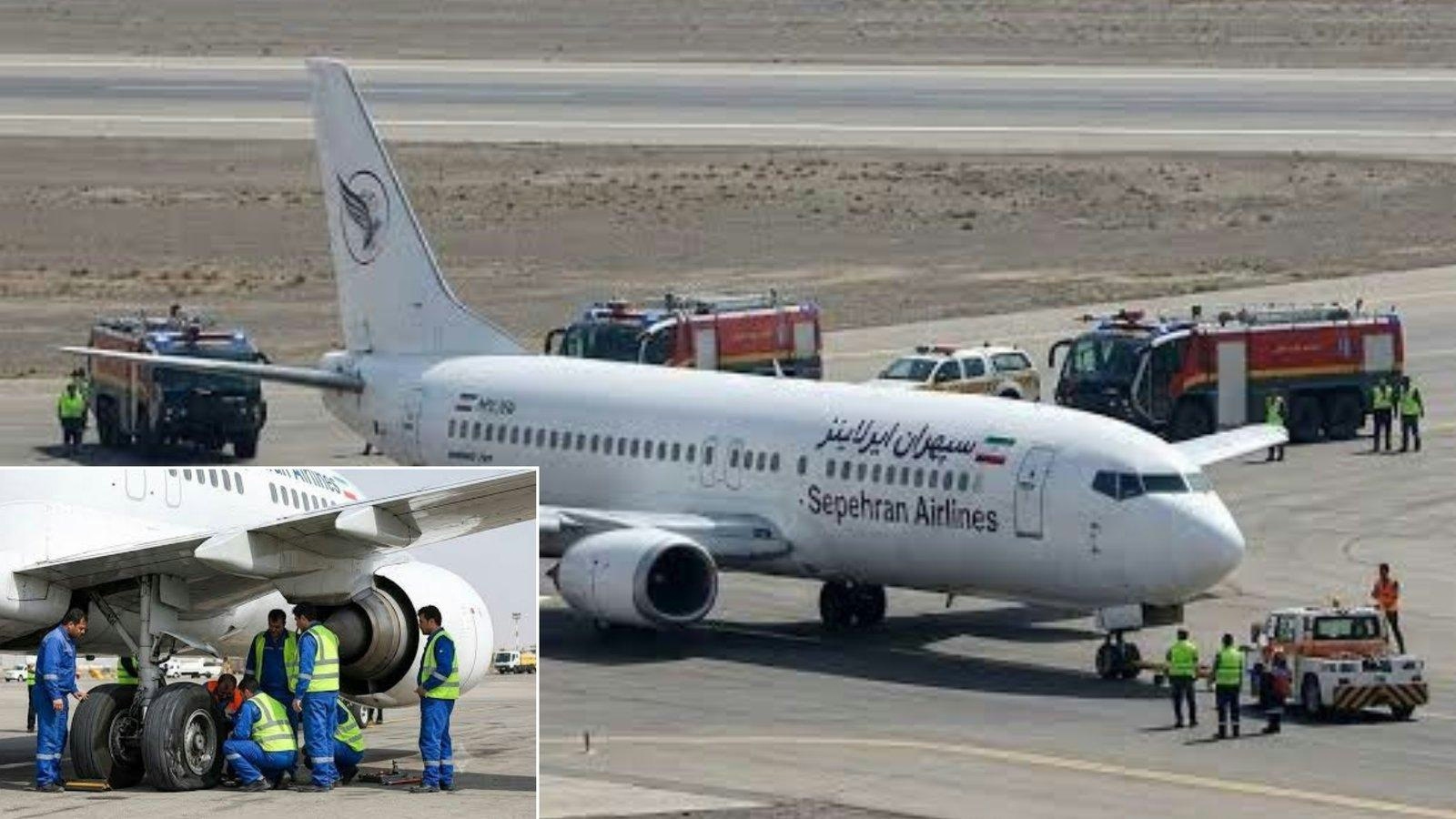
Sepehran Airlines B737 Returns to Mashhad After Tyre and Engine Issues
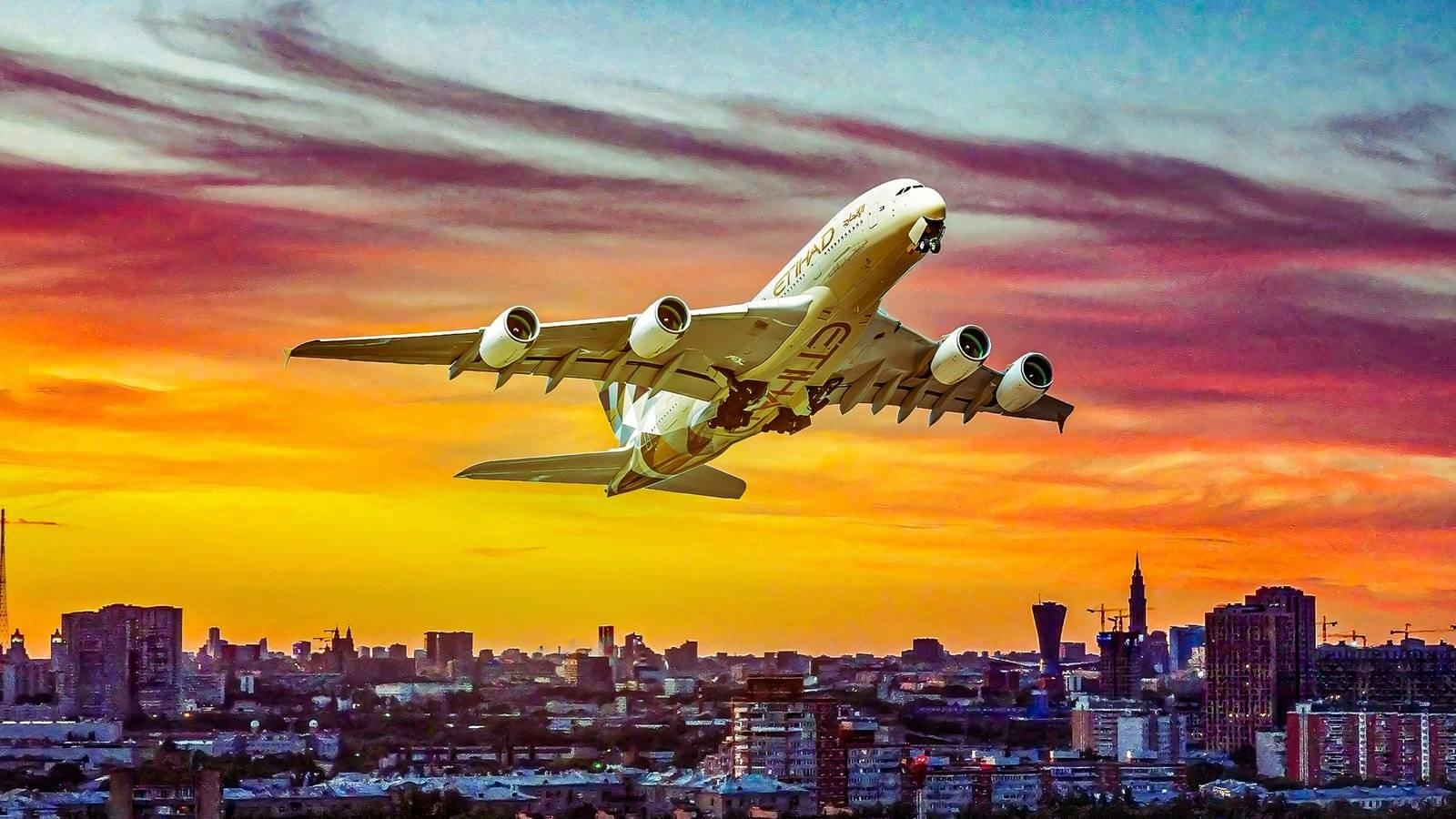
Etihad Deploys Widebody Fleet to Meet Strong Demand
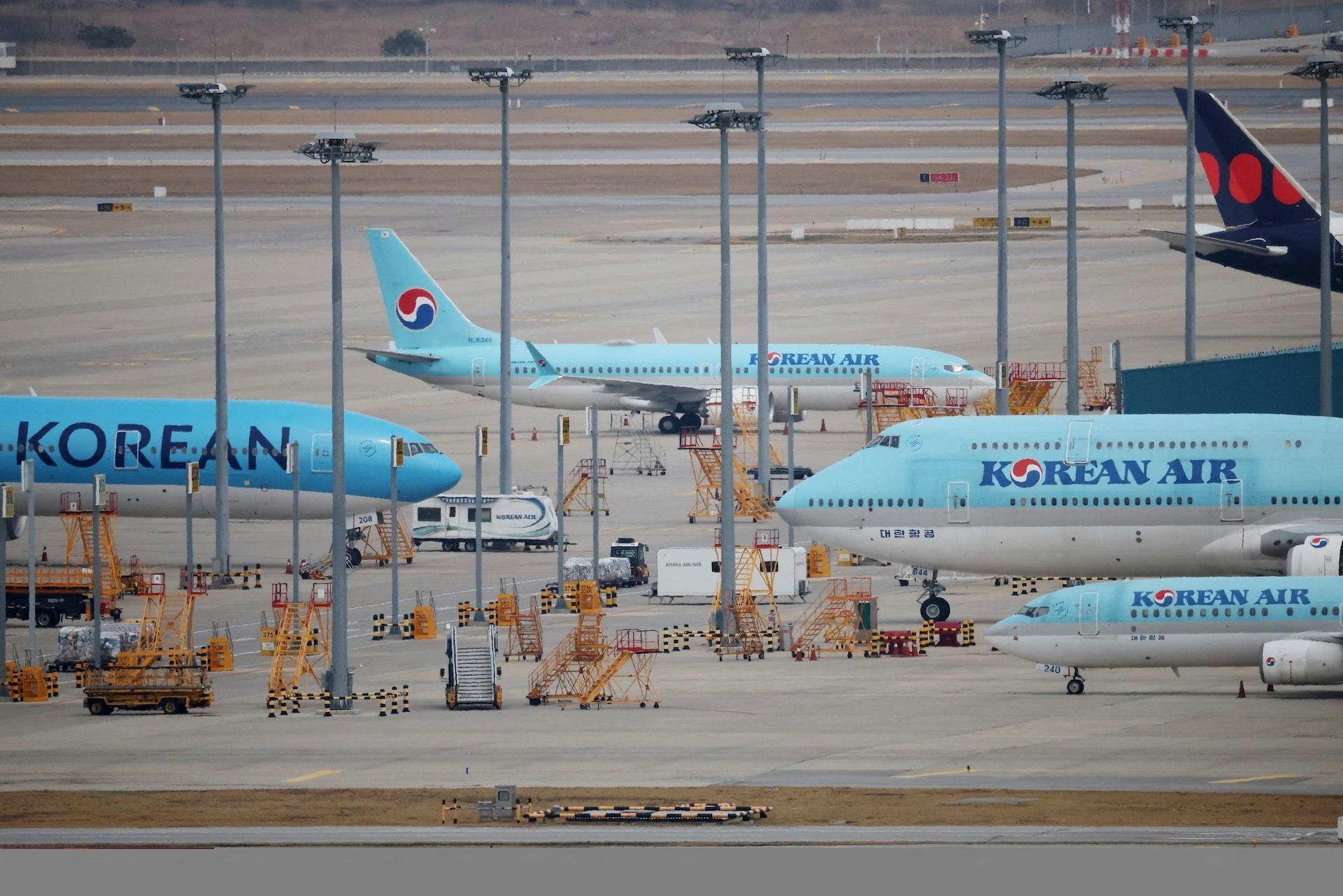
Korean Air Finalizes $36.2 Billion Deal with Boeing
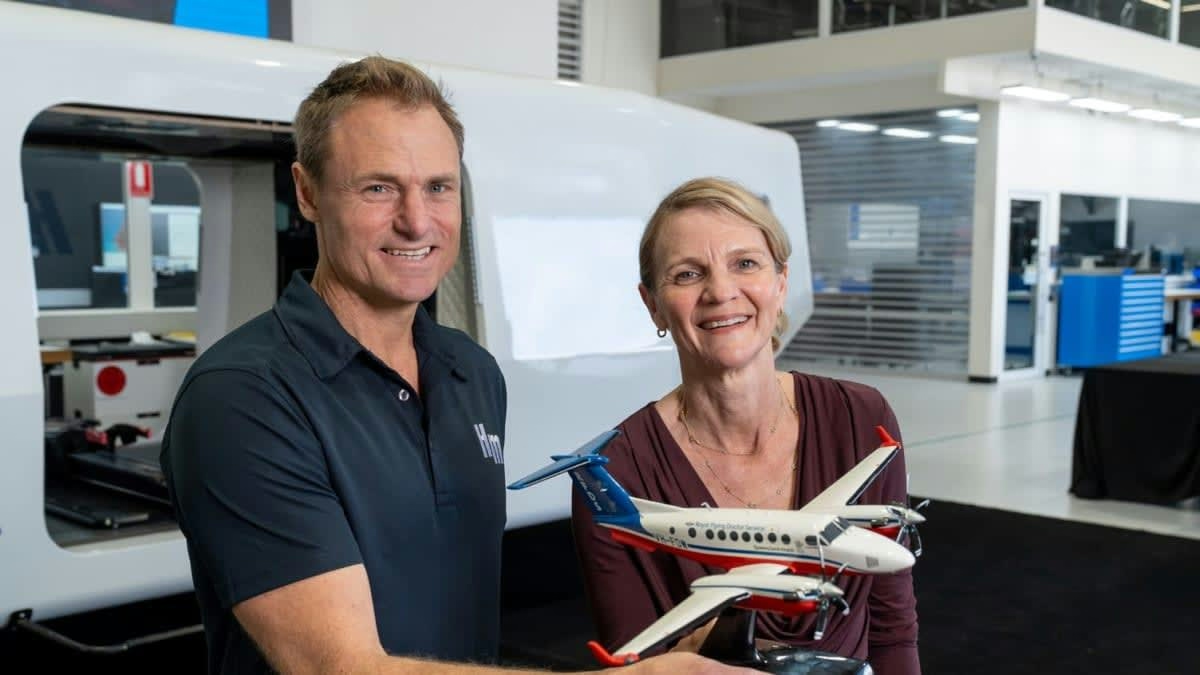
Australia’s RFDS Queensland Section Orders Six King Air 260Cs
Korean Air Finalizes Order for 103 Boeing Jets and Engines
Embraer E195-E2 Features Distinctive Engine Placement Among Regional Jets
What Passengers Can Expect on Boeing’s New 777X Jet

How Ethiopian Airlines Became Africa’s Leading Carrier Amid Gulf Competition
Joby Aviation Extends Autonomous Flight Capabilities with Cross-Country Tour
