
Trasforma le intuizioni dell’IA in azioni concrete

Tendenze
Categories
New Chitose Airport Introduces AI to Increase Capacity
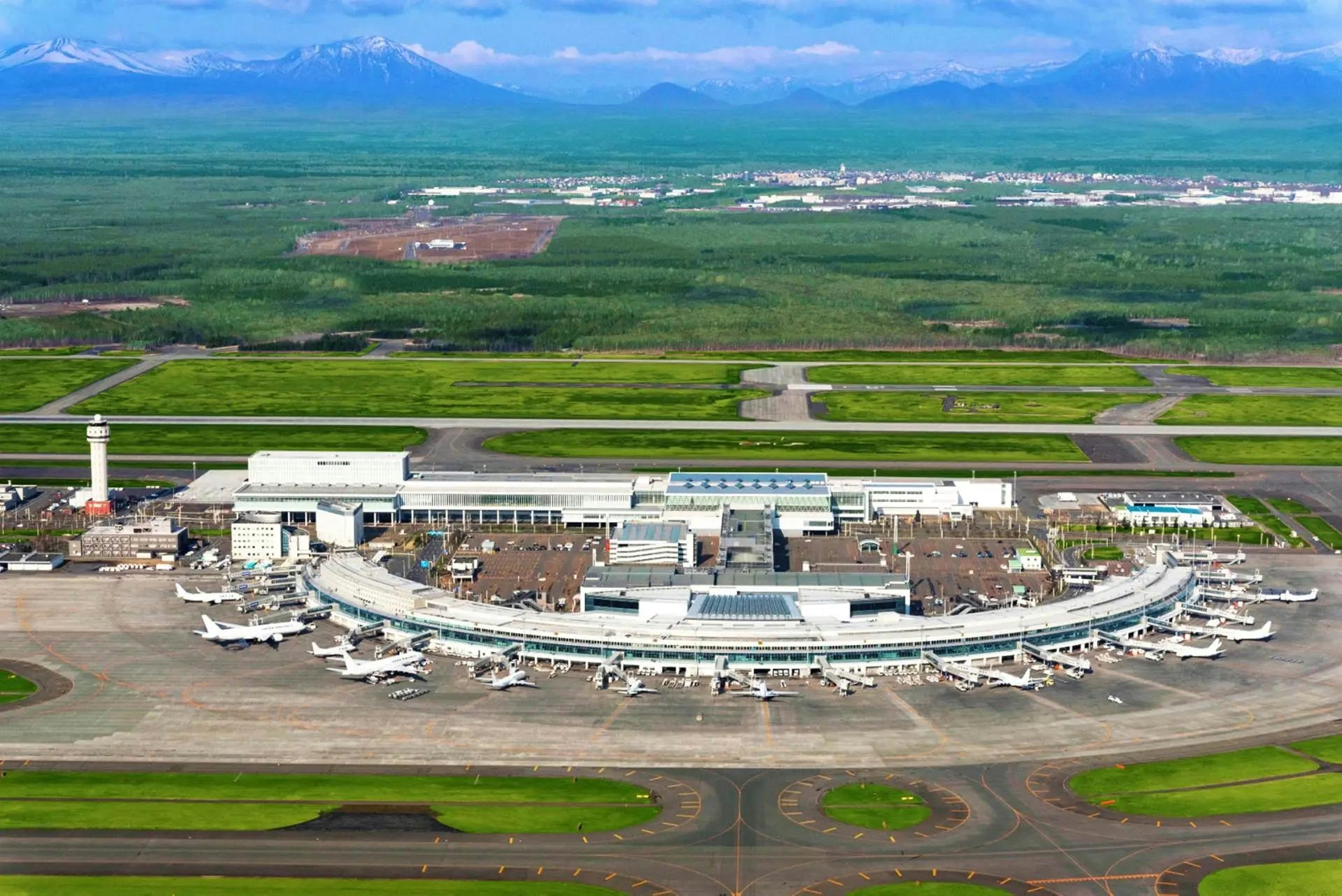
New Chitose Airport Introduces AI to Increase Capacity
Japan’s New Chitose Airport, the principal gateway to Hokkaido, has implemented advanced artificial intelligence and computer vision technologies to enhance ground operations and increase capacity without the need for costly expansions of gates or terminals. As air travel demand intensifies across Asia, airports are increasingly adopting digital innovations to streamline processes and maintain punctuality amid growing passenger volumes.
AI-Driven Operational Efficiency
The airport’s newly deployed AI management system oversees every stage of the aircraft turnaround process, including baggage unloading, cabin cleaning, refueling, and passenger boarding. By monitoring these activities in real time, the system swiftly identifies potential delays on the ground, allowing coordinators to reassign resources and ensure flights depart on schedule. This approach enables New Chitose to optimize its existing infrastructure, avoiding the financial and logistical challenges associated with major construction projects.
Computer vision technology tracks baggage retrieval to reduce wait times at claim areas, while apron milestone monitoring ensures efficient cabin servicing and catering, minimizing boarding delays. Real-time sensors coordinate refueling and push-back procedures to prevent runway slot conflicts. Additionally, AI manages gate operations to maximize terminal utilization, collectively enhancing the airport’s operational throughput.
Balancing Physical and Operational Capacity
Traditionally, airports have expanded physical capacity by adding runways, gates, and terminals to accommodate increased flight volumes. New Chitose’s strategy diverges by focusing on operational capacity—optimizing resource allocation and turnaround times through AI and computer vision. This digital-first approach offers a cost-effective alternative to large-scale infrastructure development, allowing the airport to meet rising demand within its current physical footprint.
While physical capacity depends on tangible assets such as runways and terminals, operational capacity hinges on efficient management of resources and processes. By leveraging AI to monitor and coordinate ground operations, New Chitose enhances its ability to handle more flights without expanding its physical facilities.
Enhancing the Passenger Experience
Passengers stand to benefit from these technological advancements through improved access to real-time flight information. By downloading their airline’s mobile app prior to arrival, travelers receive up-to-date notifications on flight status, gate assignments, and baggage delivery, facilitating smoother transit through the airport.
Travelers are advised to allow at least two hours for domestic-to-international connections to accommodate immigration and customs procedures. During winter months, when snow can disrupt schedules, AI-monitored de-icing queues help optimize departure times, with real-time updates displayed on terminal screens. Ground transportation is also efficient, with the JR Hokkaido Rapid Airport train providing a direct connection to Sapporo every 12 minutes, reaching the city in 37 minutes. Domestic passengers can expedite check-in by utilizing self-service baggage drop counters.
Challenges and Market Context
Despite the potential benefits, the AI implementation at New Chitose faces several challenges. High upfront costs and concerns over data security pose significant obstacles, while ongoing global supply chain disruptions may affect system reliability. Market responses have been cautious, with some investors expressing wariness about a possible AI investment bubble. Furthermore, competitive pressures are mounting as Chinese companies offer advanced digital services at lower prices, and aerospace giants such as Airbus and Boeing continue to develop their own sophisticated solutions. These dynamics may slow the pace of AI adoption even as airports strive to maintain a competitive edge in a rapidly evolving industry.
By integrating AI into its operations, New Chitose Airport seeks to establish a new benchmark for efficiency, navigating the complexities of innovation within the fast-changing aviation sector.

Hong Kong's Five-Year Plan Includes Andrew Fan's Aircraft Parts Processing Hub Proposal

ACIA Aero Leasing Delivers ATR72-600 to Air Nostrum

RTX Appoints Jill Albertelli as Head of Pratt & Whitney

TAT Technologies Joins Beyond Aero Hydrogen Aircraft Program

AURAK Study Highlights Barriers to Air Taxi Adoption in Emerging Economies

Xiamen Air Selects Altitude for 787 Maintenance at Heathrow

Etihad and Swissport Extend Global Partnership
Sepehran Airlines B737 Returns to Mashhad After Tyre and Engine Issues

Etihad Deploys Widebody Fleet to Meet Strong Demand
Korean Air Finalizes $36.2 Billion Deal with Boeing
