Immagine

AeroGenie — Il tuo copilota intelligente.

Chiedi qualsiasi cosa. Analizza tutto. Agisci immediatamente.

Tendenze

Categories

New Course on Airplane Engine Operations Launched
November 21, 2025By ePlane AI
New Course on Airplane Engine Operations Launched
0
0
PilotWorkshops
Engine Operations Training
Lycoming And Continental

New Course on Airplane Engine Operations Launched Amid Competitive Training Landscape

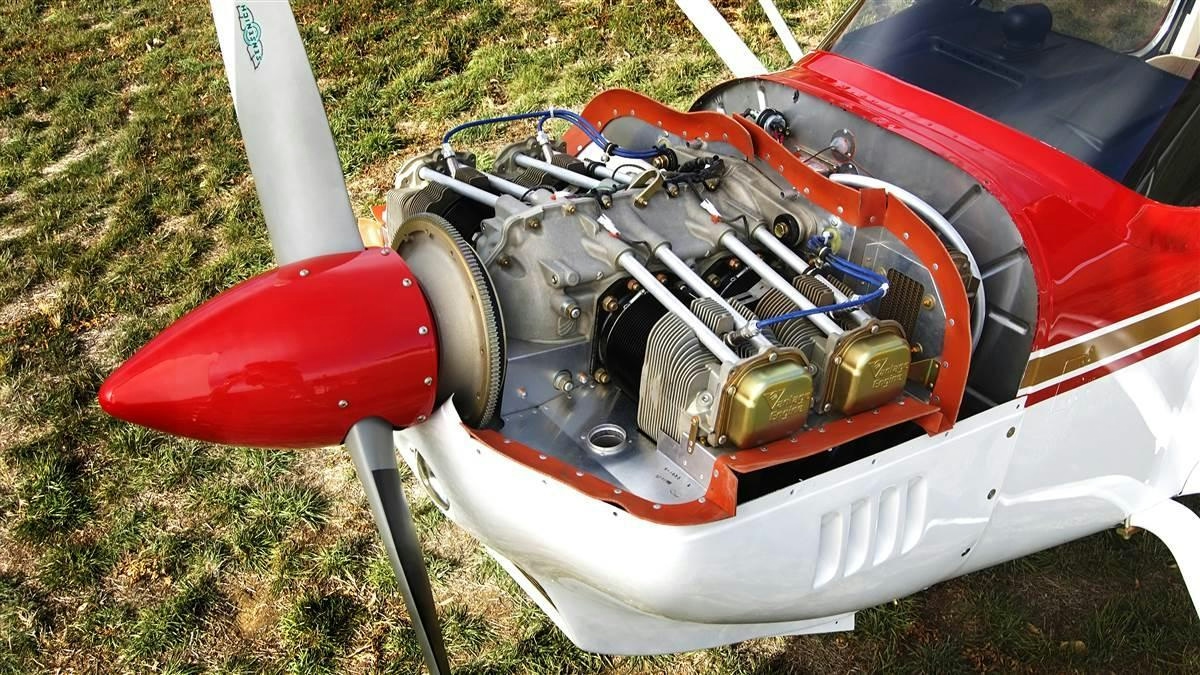
PilotWorkshops has introduced a new video course titled “Airplane Engine Operations,” designed to assist pilots in optimizing engine performance, efficiency, and longevity. The company emphasizes that effectively managing the trade-offs between speed, performance, and engine life demands specialized knowledge and techniques that are often missing from conventional flight training programs. According to officials, while pilots can maximize one aspect of engine operation, it typically requires compromising others, underscoring the need for targeted instruction that this course aims to provide.

Course Content and Instruction

The course is led by instructor Ryan Koch, who guides learners through step-by-step demonstrations of established techniques applicable to most Lycoming and Continental engines. Each lesson is supplemented with detailed charts and graphs to elucidate critical concepts, focusing on how to maximize engine performance throughout all phases of flight without causing damage. This structured approach seeks to fill a notable gap in pilot education by offering practical, engine-specific operational insights.

Market Context and Industry Challenges

The launch of this course occurs within a highly competitive aviation training sector, dominated by major industry players such as Boeing and Airbus. New entrants like PilotWorkshops face considerable challenges, including securing market access and differentiating their offerings in a crowded field. Market responses to innovative educational products can vary; some investors recognize the potential for enhanced pilot proficiency and innovation, while others remain cautious about the immediate impact on established leaders.

Competitors may respond by closely monitoring the course’s reception or developing their own training programs to protect market share. Furthermore, rapid advancements in aviation technology—exemplified by Rolls-Royce’s recent testing of a pure methanol engine—could alter market dynamics and necessitate continuous updates to training materials to maintain relevance.

PilotWorkshops is currently offering an introductory discount of $30 off the regular $129 price. Additional information is available on their website, PilotWorkshop.com.

More news
Axiom Aviation Explores AI's Impact on Private Aviation

Axiom Aviation Explores AI's Impact on Private Aviation

Axiom Aviation Explores AI's Impact on Private Aviation Axiom Aviation, a prominent private aviation firm, is highlighting the transformative influence of artificial intelligence (AI) on the private aviation sector. The integration of AI-driven technologies into aircraft management, maintenance scheduling, and operational processes is delivering measurable improvements in safety, cost efficiency, and asset preservation for aircraft owners. The Growing Significance of AI in Private Aviation As AI technology advances at a rapid pace, its application within private jet ownership and operations is becoming increasingly critical. Aircraft owners and operators are recognizing the potential of AI to enhance flight safety, reduce maintenance expenditures, and sustain aircraft value, particularly with regard to future resale considerations. The adoption of AI is emerging not only as a tool for operational efficiency but also as a strategic necessity amid the sector’s ongoing evolution. Innovations and Industry Challenges In a report published on March 16, 2026, Axiom Aviation outlined several key AI-driven developments reshaping private aviation. AI-powered avionics systems are improving safety by reducing pilot workload and enabling smoother, more secure flights. Predictive maintenance technologies utilize advanced analytics to forecast potential mechanical issues, thereby minimizing unexpected repairs and lowering long-term maintenance costs. Additionally, AI-enabled flight planning optimizes route selection and fuel management, enhancing overall operational efficiency. Despite these advancements, the industry faces significant challenges in integrating AI technologies. Regulatory fragmentation remains a pressing concern, particularly in the Asia-Pacific region, where inconsistent oversight and the proliferation of illegal charters pose risks to legitimate operators. These regulatory complexities threaten to impede the widespread adoption of AI and complicate efforts to uphold compliance and safety standards. Market Dynamics and Competitive Landscape The private aviation market is experiencing renewed growth, driven by a rebound in business travel and continuous technological innovation. Strategic partnerships and market expansion initiatives are becoming more prevalent, exemplified by FlyHouse’s collaboration with TAM to enter the Brazilian market. Competitors are also embracing digital transformation; for instance, Elevate Jet has launched a self-service air charter application, reflecting a broader industry shift toward customer-centric, technology-enabled solutions. As AI adoption accelerates, companies in the sector are encountering heightened scrutiny regarding financial transparency and operational resilience. Both investors and customers are increasingly attentive to how firms manage the integration of new technologies amid evolving regulatory and market pressures. Recommendations for Aircraft Owners Axiom Aviation advises prospective jet owners to conduct thorough evaluations before purchasing an aircraft. Key considerations include the capabilities and upgrade potential of the avionics suite, the level of manufacturer support and service infrastructure, and the alignment of aircraft features with the owner’s intended usage and operational requirements. About Axiom Aviation Axiom Aviation, Inc. specializes in tailored services for aircraft owners and finance companies, offering expertise in aircraft transactions, inspections, and appraisals. The company is led by President and Managing Partner Andy Toy, alongside COO and Managing Partner Mike Herchick. Positioned at the forefront of industry transformation, Axiom Aviation assists clients in navigating the complexities and opportunities presented by AI’s growing role in private aviation.
How the Piston Connects to the Connecting Rod in Engine Design

How the Piston Connects to the Connecting Rod in Engine Design

How the Piston Connects to the Connecting Rod in Engine Design The Titan-IO-320 engine from Continental represents the quintessential configuration in general aviation: a horizontally opposed, four-cylinder, air-cooled powerplant. For many novice pilots and aircraft builders, often lacking extensive mechanical experience, grasping the fundamental principles of engine mechanics is vital for ensuring safer, more economical, and enjoyable flying. The Core Mechanism of Piston Engines Central to any piston engine is the cylinder, within which the piston moves vertically. The piston is linked to the crankshaft—a shaft featuring offset cranks analogous to bicycle pedals—through the connecting rod. During combustion, the rapid expansion of hot gases forces the piston downward. This linear motion is transmitted via the connecting rod to the crankshaft, causing it to rotate. When a propeller is attached to the crankshaft, this rotational energy becomes the driving force behind most light aircraft. The engine’s operation follows a four-stroke cycle: intake, compression, power, and exhaust. Positioned above the piston is the combustion chamber, enclosed by the cylinder head. This chamber contains intake and exhaust valves, as well as spark plugs responsible for igniting the air-fuel mixture. The process is straightforward: air and fuel enter the chamber, ignite, expand, and push the piston downward, which in turn drives the crankshaft. Engineering Challenges at the Piston-Connecting Rod Interface While the overall concept is familiar to anyone acquainted with automotive engines, the connection between the piston and connecting rod presents significant engineering challenges. Material compatibility is paramount; both components must endure extreme pressures and temperatures without deforming or deteriorating. Variations in thermal expansion rates between the piston and connecting rod materials can induce stress, necessitating meticulous selection and engineering of alloys. Manufacturing precision is equally critical. Any misalignment or imperfection in the connection can lead to accelerated wear, diminished efficiency, or even catastrophic engine failure. These technical demands have spurred a growing market for advanced materials and manufacturing techniques aimed at enhancing durability and performance. In response, manufacturers are innovating with new piston and connecting rod designs to improve efficiency, reduce weight, and better manage the stresses generated during combustion. Balancing Power and Complexity Fundamentally, a piston engine functions as an air pump, with its power output dependent on the volume of air it can process. Increasing cylinder size, the number of cylinders, or engine speed all serve to boost airflow and, consequently, power. However, these enhancements also introduce greater complexity and heighten the need for precise engineering, particularly at the critical junction where the piston connects to the connecting rod. An essential principle underpinning engine operation is the “fire triangle”: the presence of fuel, oxygen, and an ignition source. Maintaining this balance is crucial for reliable performance. For pilots and builders alike, understanding these foundational concepts—and the intricate engineering behind the piston-connecting rod connection—provides a robust basis for safe and efficient flight.
California Air Taxi Company to Test Autonomous Flight Technology in Arizona

California Air Taxi Company to Test Autonomous Flight Technology in Arizona

California Air Taxi Company to Test Autonomous Flight Technology in Arizona Federal Initiative to Accelerate eVTOL Integration Joby Aviation, a California-based air taxi company, has been selected by the Federal Aviation Administration (FAA) to test its autonomous flight technology in Arizona. This selection, announced on March 9, is part of the FAA’s Electric Vertical Takeoff and Landing (eVTOL) Integration Pilot Program, a federal initiative supported by the White House aimed at expediting the adoption of eVTOL aircraft within the United States commercial airspace. Joby’s participation reflects a broader effort to integrate innovative electric aircraft into the national transportation infrastructure. Testing Across Diverse Environments Joby plans to conduct extensive air taxi testing across various environments in the Western United States, including urban centers, rural corridors, mountainous regions, and areas prone to wildfires. These trials are integrated into Utah’s uFLY initiative, one of eight projects selected for the federal pilot program. The company’s approach seeks to evaluate the performance and safety of autonomous eVTOL operations under a wide range of conditions, providing critical data to inform regulatory standards and operational protocols. Challenges and Competitive Dynamics Despite the promising potential of autonomous air taxis, significant challenges remain. Regulatory hurdles persist as federal and state agencies work to develop comprehensive safety and operational frameworks for this emerging technology. Safety concerns continue to be a primary focus for both regulators and the public, particularly regarding the reliability of autonomous flight in complex and dynamic environments. The competitive landscape is intensifying, with companies such as Archer Aviation advancing their own eVTOL technologies and competing for market dominance. This rivalry has occasionally escalated into legal disputes, with Archer accusing Joby of fraudulent activities related to its business dealings in China, underscoring the reputational and legal risks inherent in this rapidly evolving industry. Market and Regulatory Outlook Market responses to autonomous air taxis remain mixed. While investors and industry proponents emphasize the potential benefits, including reduced urban congestion and expanded transportation options, skepticism endures concerning safety, scalability, and regulatory preparedness. The FAA’s endorsement of pilot programs across multiple states signals increasing institutional support but also imposes expectations for stringent oversight and transparent reporting of results. As Joby and its competitors advance their technologies, the outcomes of these pilot programs in Arizona and other locations will be pivotal. They are expected to influence the development of regulatory frameworks and shape public acceptance of autonomous urban air mobility in the years ahead.
Atlas Air orders 20 Airbus A350F freighters in break from all-Boeing fleet

Atlas Air orders 20 Airbus A350F freighters in break from all-Boeing fleet

Atlas Air Breaks with Tradition, Orders 20 Airbus A350F Freighters Atlas Air has announced an order for 20 Airbus A350F freighters, marking a significant departure from its longstanding all-Boeing fleet. This agreement positions Atlas Air as the largest customer for the A350F, Airbus’s next-generation widebody freighter currently under development. The decision to select the A350F over Boeing’s 777-8F—a rival model whose development has experienced multiple delays—signals a notable shift in the U.S.-based cargo operator’s fleet strategy. Transition from an All-Boeing Fleet Until now, Atlas Air’s fleet has been exclusively composed of Boeing aircraft, including 48 747-400Fs, 17 747-8Fs (among them the final 747 ever produced), 10 767Fs, and 11 777Fs. The introduction of the A350F represents a strategic diversification, reflecting evolving market conditions and technological advancements. The A350F, derived from the A350-900 and A350-1000 passenger variants, is engineered to carry approximately 111 tonnes of payload. It features a large main deck cargo door designed to accommodate outsized freight and is notable for being the first freighter constructed predominantly from composite materials. This innovation results in a lighter airframe compared to traditional metal designs, enhancing fuel efficiency and operational performance. As of February 2026, Airbus had secured 81 firm orders for the A350F. The first prototype is in the final stages of assembly and is expected to undertake its maiden flight shortly. Airbus aims to introduce the aircraft into service by 2028, aligning with new ICAO emissions standards that will phase out production of older-generation freighters such as the 767F and 777F. Operational and Market Implications Atlas Air Worldwide Holdings’ decision to incorporate Airbus aircraft into its fleet introduces a range of operational challenges. Integrating the A350F will necessitate comprehensive training programs for flight and maintenance crews, as well as updates to existing operational procedures. Additionally, the company may encounter delivery uncertainties given the A350F’s ongoing development phase. The order has attracted considerable attention from industry analysts, who are evaluating its financial impact on Atlas Air and its competitors. This move could prompt other cargo carriers to reassess their fleet compositions, potentially accelerating diversification trends within the sector. Competitors may respond by revisiting their aircraft procurement plans or intensifying efforts to enhance operational efficiencies in order to sustain their market positions. Atlas Air’s landmark acquisition underscores the shifting dynamics within the air cargo industry, highlighting the increasing importance of next-generation, fuel-efficient freighters as operators adapt to stringent regulatory requirements and evolving market demands.
Stan Barnes Named Partner and Head of Aviation Advisory at BDO Ireland

Stan Barnes Named Partner and Head of Aviation Advisory at BDO Ireland

Stan Barnes Appointed Partner and Head of Aviation Advisory at BDO Ireland BDO Ireland has announced the appointment of Stan Barnes as Partner and Head of Aviation Advisory, a strategic decision designed to enhance the firm’s expertise in aviation finance and leasing amid significant growth and transformation within the sector. This move aligns with BDO’s broader objective to strengthen its market position in a highly competitive environment, building on recent merger momentum to expand its presence in the aviation advisory space. Extensive Experience in Aviation Finance and Technology Stan Barnes brings over 18 years of senior leadership experience across aviation finance, leasing, and technology. His career includes executive roles advising global aviation stakeholders on large-scale transformation, transaction, and growth initiatives. Most recently, Barnes served as Chief Executive Officer of AerPrice, where he spearheaded the development of advanced aircraft pricing, valuation, and analytics software aimed at supporting data-driven decision-making in aviation markets. Before his tenure at AerPrice, Barnes spent eight years at Aergo Capital as Chief Financial Officer and Head of Human Resources. During this period, he was instrumental in expanding Aergo’s portfolio to $6 billion, encompassing more than 250 aircraft, and played a key role in the company’s inaugural asset-backed securities (ABS) transaction, METAL 2017-1. Earlier in his career, Barnes held senior finance positions at Standard Chartered Aviation Finance following its acquisition of Pembroke Capital, ultimately serving as CFO and overseeing the growth of a global portfolio exceeding 120 aircraft. Barnes’s expertise spans portfolio valuation, pricing, structured finance, transaction support, acquisitions, ABS structures, capital strategy, and integration programmes. He has also led finance transformation initiatives and implemented technology-enabled solutions to improve reporting, analytics, and asset management. Strategic Vision and Industry Context Brian McEnery, Managing Partner at BDO Ireland, welcomed Barnes’s appointment, emphasizing the importance of his diverse experience. McEnery noted, “Ireland remains the global centre of aviation leasing and finance, and the sector continues to evolve rapidly as capital markets, technology, and fleet strategies develop. Stan brings a rare combination of commercial, financial, and technology experience within aviation, so his appointment enhances our ability to support aviation businesses as they pursue growth, manage portfolio strategy, and respond to changing market dynamics.” Barnes expressed enthusiasm about joining BDO Ireland during a pivotal period for the aviation sector. He remarked, “I’m very pleased to be joining BDO Ireland at a time of significant change and opportunity across the aviation sector. The sector is entering a new phase where data, capital strategy, and operational efficiency will play an even greater role in shaping competitive advantage. BDO has built a strong advisory platform across transactions, finance, and transformation, and I’m looking forward to working with clients across the aviation ecosystem to help them navigate complex decisions and unlock new opportunities.” As Barnes assumes his new role, he will confront a competitive landscape shaped by evolving regulatory and safety concerns. The appointment is expected to attract increased attention from competitors and stakeholders regarding BDO’s strategic direction in aviation advisory. Industry analysts anticipate that rivals may intensify efforts to capture market share or seek collaborative ventures to address shared challenges, highlighting the dynamic environment in which BDO and Barnes will operate.
China Leads as Counter-Drone Patent Filings Increase 27%

China Leads as Counter-Drone Patent Filings Increase 27%

China Leads Global Surge in Counter-Drone Patent Filings Counter-drone patent applications have risen sharply by 27% over the past year, signaling a worldwide effort to confront the rapid expansion of unmanned aerial vehicles (UAVs) and the security challenges they present. A recent report from intellectual property firm Mathys & Squire reveals that China now dominates the global landscape in anti-drone technology patent filings, a development with far-reaching implications for international drone markets and security frameworks. Between April 2024 and March 2025, a total of 126 anti-UAV patent applications were submitted globally, up from 99 in the previous year. China accounted for 82 of these filings, significantly outpacing the United States, which filed 22, and South Korea. European applicants lagged behind despite recent drone-related disruptions at major airports such as Brussels and Munich, highlighting a regional disparity in innovation activity. Trends and Implications in Counter-Drone Technology The surge in Chinese patent activity coincides with growing global demand for counter-drone systems, particularly in regions like the Middle East and Africa where aerial smuggling poses an increasing threat. In the United States, the Federal Communications Commission’s ban on foreign-made drones—primarily targeting Chinese manufacturers—has disrupted sectors including agriculture, creating both challenges and opportunities for domestic drone producers. Chinese companies such as DJI have responded with legal challenges to the ban, underscoring the high stakes involved in the evolving drone technology arena. Mathys & Squire’s report identifies interference and jamming technologies as the most prevalent area of innovation, with 49 new patents focused on disrupting drone communications and navigation, up from 33 the previous year. Laser-based countermeasures follow closely with 39 patents, while microwave technologies account for 24. Other methods, including bullet-based, target-capturing, and rocket countermeasures, remain less common. The increasing sophistication of counter-drone technologies is also reflected in their deployment at major international events. For instance, Fortem Technologies’ net-based system has been selected to secure the 2026 FIFA World Cup, illustrating the growing global reliance on advanced counter-UAS solutions amid escalating aerial threats. Despite the rise in patent filings, experts caution that the volume of patents does not necessarily equate to technological leadership. Many military-grade counter-drone innovations remain classified and are not patented due to security concerns. In the United States, the Invention Secrecy Act of 1951 permits the government to restrict patenting of sensitive technologies, potentially distorting the apparent distribution of innovation. Ukraine, recognized as a leader in counter-drone warfare, exemplifies this dynamic, with much of its wartime innovation absent from patent records. The report emphasizes that while China’s dominance in patent numbers is significant, it does not fully reflect the quality or operational effectiveness of counter-drone technologies worldwide. As aerial threats and smuggling risks escalate, and as major events increasingly depend on sophisticated counter-UAV systems, the competition to develop and deploy effective counter-drone solutions is poised to intensify, reshaping both the security environment and the global drone industry.
AI Engineering Services Limited Receives Decarbonization Co-Benefits Award at Water Transversality Global

AI Engineering Services Limited Receives Decarbonization Co-Benefits Award at Water Transversality Global

AI Engineering Services Limited Receives Decarbonization Co-Benefits Award at Water Transversality Global AI Engineering Services Limited (AIESL), India’s largest aviation Maintenance, Repair, and Overhaul (MRO) organization, was honored with the Decarbonization Co-Benefits Award at the Water Transversality Global Awards and Conclave 2026. The event, hosted by the India Water Foundation, took place on March 6-7 at the India International Centre in New Delhi. The award was presented to Shri Amit Kumar, Chairman of AIESL, by the Chief Guest Shri Om Birla, Hon’ble Speaker of the Lok Sabha. Recognition for Comprehensive Decarbonization Initiatives AIESL received the award in recognition of its extensive decarbonization efforts implemented across its nationwide aviation MRO network. The company has consistently met emission reduction targets while maintaining stringent operational and safety standards. As a key player in India’s aviation engineering sector, AIESL operates energy-intensive facilities, including 13 aircraft hangars, engine workshops, and extensive ground operations. Historically, these operations have depended on high-energy lighting, diesel-powered ground support equipment (GSE), and paper-based documentation, all of which contributed significantly to carbon emissions and resource consumption. To mitigate these environmental impacts, AIESL adopted a systematic decarbonization and modernization strategy. This included upgrading to LED and high-efficiency lighting systems in hangars and workshops, which directly reduced electricity consumption and Scope 2 emissions. The company also phased in electrified GSE to replace diesel-powered equipment, cutting fuel use and Scope 1 emissions while enhancing the working environment for technical staff. Digital transformation played a crucial role, with the introduction of electronic work packages and digital documentation reducing paper consumption and minimizing the need for physical file movement. Additionally, AI-based planning tools were deployed to improve maintenance forecasting, resource utilization, and workflow efficiency, thereby reducing rework and unnecessary energy use. Administrative processes were streamlined through a 24×7 online payment gateway and digital financial systems, further lowering indirect emissions. Enhanced waste management and recycling programs promoted material efficiency and circular resource use within maintenance operations. These initiatives have yielded measurable environmental and operational benefits, including reduced energy intensity per maintenance event, decreased reliance on fossil-fuel-based equipment, faster aircraft maintenance turnaround times, and improved utilization of engineering infrastructure. Context Within the Global Industrial Decarbonization Landscape AIESL’s achievements come amid a growing global emphasis on industrial decarbonization. The market for industrial decarbonization is projected to reach USD 101.20 billion by 2035, driven by corporate environmental, social, and governance (ESG) commitments and increasing consumer demand for sustainable products. Artificial intelligence is emerging as a critical tool in this transition, optimizing energy efficiency, minimizing waste, and stabilizing processes in heavy industries to achieve significant emissions reductions. Currently, the consulting and advisory segment dominates this market, highlighting the importance of specialized expertise in meeting sustainability objectives. In response, industry competitors are expected to escalate investments in AI technologies and decarbonization strategies to sustain their market positions. During the conclave, Shri Amit Kumar also contributed to the CEO’s Leadership Dialogue, where industry leaders deliberated on the evolving role of corporate leadership in advancing cross-sector sustainability initiatives.
Air Niugini Cancels Boeing 787 Order, Faces Uncertain Wide-Body Fleet Future

Air Niugini Cancels Boeing 787 Order, Faces Uncertain Wide-Body Fleet Future

Air Niugini Cancels Boeing 787 Order, Faces Uncertain Wide-Body Fleet Future Air Niugini, the national airline of Papua New Guinea, has quietly canceled its order for two Boeing 787-8 Dreamliners, raising significant questions about the future of its wide-body fleet. This development, initially reported by ch-aviation, comes as the carrier’s existing wide-body aircraft—two aging Boeing 767-300ERs—approach the end of their lease agreements in 2026. Background and Implications of the Cancellation The 2023 order for the Dreamliners was originally viewed as a pivotal advancement for Air Niugini, promising enhanced passenger comfort, extended range, and increased capacity. Deliveries were anticipated to begin as early as 2026, later deferred to late 2027, with the 787s intended to replace the airline’s three-decade-old 767s. With the cancellation, however, Air Niugini currently holds no wide-body aircraft on order, leaving the airline’s long-haul route strategy in a state of uncertainty once the current leases expire. While the possibility of extending the 767 leases remains, the advanced age of these aircraft and their limited alternative uses make this a less viable long-term solution. The absence of a clear replacement plan has drawn scrutiny from industry analysts and investors alike. This decision coincides with Air Niugini’s ongoing efforts to modernize its narrow-body fleet, having recently taken delivery of 11 Airbus A220s—comprising eight A220-100s and three A220-300s—to phase out its Fokker 70s and Fokker 100s. Although the narrow-body renewal program continues apace, the lack of a parallel wide-body strategy presents a stark contrast. Market and Strategic Considerations The cancellation carries broader implications for the regional aviation market. As Air Niugini retreats from wide-body expansion, competitors such as Sun PhuQuoc Airways and Thai Airways—both of which have recently placed substantial orders for Boeing 787s—stand to benefit. These carriers are positioned to strengthen their foothold in regional and long-haul markets, potentially attracting increased business and market attention as they expand their wide-body fleets. This shift underscores the competitive dynamics within the sector, where fleet renewal decisions are closely monitored by market participants and industry observers. Internally, Air Niugini’s leadership has emphasized a focus on “maintaining and enhancing operations and profitability” in the near term, while preparing the airline for potential partial privatization in the future. The recent return of a former CEO, who led the airline until 2020, signals a period of strategic reassessment. Rising aircraft acquisition costs and evolving government priorities appear to have influenced the decision to withdraw from the Dreamliner agreement. As Air Niugini navigates these challenges, questions persist regarding its long-term strategy for international operations and its capacity to compete in a region where rivals are intensifying their wide-body investments. For now, the airline’s wide-body future remains uncertain, with industry watchers closely observing its forthcoming decisions.
IAT Secures A330 Freighter Deal for Amazon Air

IAT Secures A330 Freighter Deal for Amazon Air

IAT Secures A330 Freighter Deal for Amazon Air Strategic Acquisition and Lease Management IAT Leasing Limited (IAT) has announced its pivotal role in facilitating the acquisition and ongoing lease management of a portfolio comprising ten Airbus A330 freighter aircraft. These aircraft are currently leased to Amazon Air and operated by Alaska Airlines. The transaction involved the acquisition of the aircraft from funds managed by Altavair on behalf of Blue Owl Capital, with financing support provided by MUFG. Going forward, IAT will be responsible for the administration of leases and asset management for the entire portfolio. This deal represents a significant development for IAT, marking the addition of dedicated widebody freighter aircraft to its serviced portfolio. It also establishes a new relationship with Amazon Air while reinforcing the company’s existing partnership with Alaska Airlines. Furthermore, the acquisition expands IAT’s collaboration with Blue Owl Capital, following their joint participation in the Rolls-Royce LessorCare+ programme announced in January 2026. This programme further solidifies the ties between the parties and supports the underwriting of the aircraft involved. Market Context and Challenges The transaction occurs amid persistent challenges within the widebody freighter market. Supply chain disruptions continue to impact aircraft manufacturing, with Willie Walsh, Director General of the International Air Transport Association (IATA), recently highlighting that supply chains remain unstable and problematic. These ongoing issues may present obstacles for IAT as it manages and potentially seeks to expand its freighter portfolio. In addition, the market for converted freighters is becoming increasingly competitive. Companies such as Elbe Flugzeugwerke have secured recent deals, including a notable agreement with Asia Pacific Aviation Leasing Group, signaling intensified competition in this sector. Competitors are likely to pursue additional conversion contracts or enhance their conversion capabilities to meet the rising demand for freighter aircraft. Positioning in a Competitive Landscape Despite these market challenges, IAT’s latest acquisition underscores its commitment to expanding its footprint in the widebody freighter segment and strengthening relationships with key industry stakeholders. Through its ongoing partnerships and asset management initiatives, IAT is well-positioned to navigate the evolving dynamics of the air cargo leasing market.
PXCom and FPT Software Sign Strategic Memorandum of Understanding

PXCom and FPT Software Sign Strategic Memorandum of Understanding

PXCom and FPT Software Sign Strategic Memorandum of Understanding Advancing In-Flight Digital Experience Through Strategic Partnership PXCom, a specialist in in-flight entertainment and connectivity (IFEC), and global technology consultancy FPT Software have formalized a strategic memorandum of understanding aimed at enhancing digital offerings within the aviation sector. This alliance is designed to strengthen PXCom’s “glocal” presence by providing localized, day-to-day operational support for its SkyVerse platform as the company expands its footprint across five continents. Cyril Jean, CEO of PXCom, highlighted the necessity of this collaboration, stating that as the company’s activities grow globally, it is essential for customers to benefit from a local presence trained specifically on the SkyVerse platform. The partnership enables FPT Software to expand its aviation portfolio by integrating PXCom’s digital in-flight products, positioning both firms to deliver enriched content and advanced analytics to airlines worldwide. The Head of Aviation Technology at FPT Software emphasized the alignment of this alliance with their mission to deliver world-class digital experiences to complex industries. By combining FPT’s cloud-native software, artificial intelligence capabilities, and system integration expertise with PXCom’s IFEC platform, the partnership aims to facilitate a seamless passenger journey while enhancing operational efficiency for airlines. Navigating Technological Disruption and Market Challenges This collaboration emerges amid rapid technological evolution and intensifying competition within the aviation and technology sectors. Both companies face the dual challenge of transitioning to cloud-based services and contending with the rise of generative AI tools, which are transforming digital experiences across industries. Recent market volatility, exemplified by Dassault Systèmes’ significant share decline following concerns over AI integration and a cautious outlook, underscores the uncertainties surrounding digital transformation in aviation. Competitors are also making strategic investments to secure their positions in this shifting landscape. Meta’s recent chip deal with AMD, for instance, signals a broader industry commitment to long-term AI infrastructure development. PXCom and FPT Software must navigate these dynamics while addressing structural barriers in their respective markets—challenges reminiscent of those encountered by Azul in Brazil’s aviation sector, where regulatory and operational complexities have constrained growth. Cyril Jean underscored the critical role of strategic partnerships in this environment, describing PXCom as a technology enabler that relies on a select group of high-value partners to complement its capabilities and deliver superior in-flight digital platforms. He expressed enthusiasm about the significant advancement represented by the partnership with FPT Software. The Head of Aviation Technology at FPT Software further elaborated on the transformative potential of the alliance, stating that the collaboration goes beyond system integration to redefine the digital architecture of air travel. By merging expertise in AI and edge caching with world-class connectivity, the partnership seeks to eliminate traditional limitations of in-flight technology, aiming to make the cabin experience as seamless and intelligent as the connected world on the ground. As the aviation industry continues to grapple with digital disruption and AI-driven innovation, the PXCom-FPT Software alliance is poised to serve as a noteworthy example of how strategic collaboration can balance technological ambition with the practical realities of a rapidly evolving market.
line










