Immagine

Trasforma le intuizioni dell’IA in azioni concrete

Unisciti oggi alla lista d’attesa di AeroGenie!

Tendenze

Categories

Norse Atlantic Airways Offers Low-Cost Tickets with Conditions
June 1, 2026By ePlane AI
Norse Atlantic Airways Offers Low-Cost Tickets with Conditions
0
0
Norse Atlantic Airways
Low-Cost Airlines
Customer Service Issues

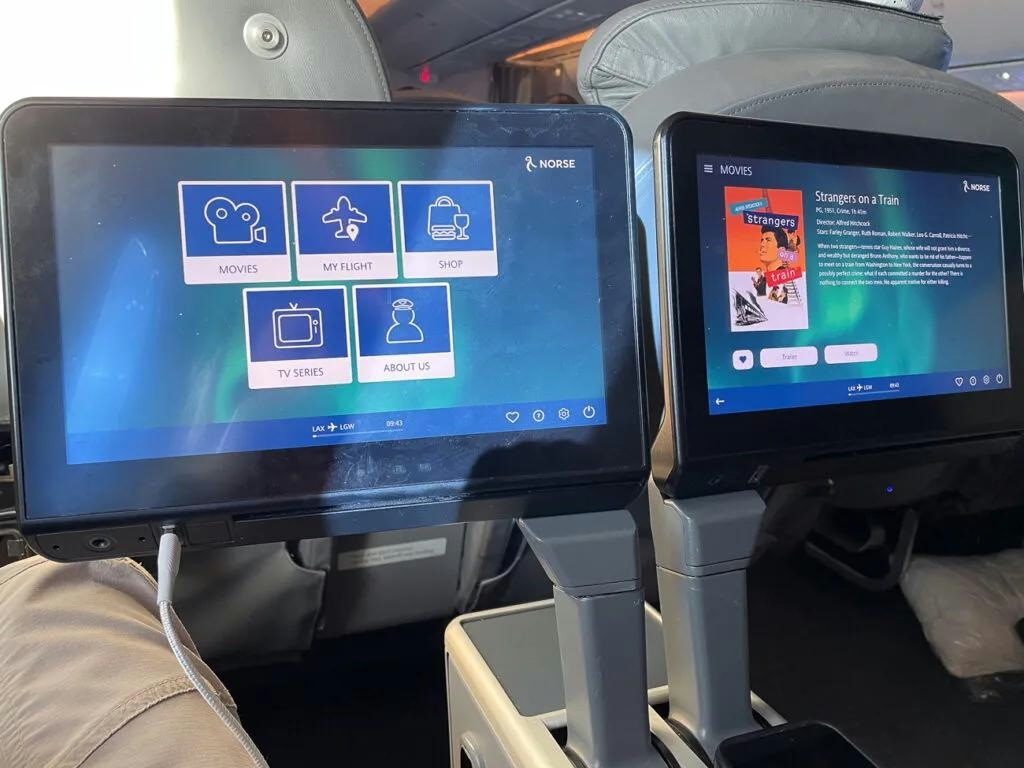
Norse Atlantic Airways Offers Low-Cost Tickets—But at a Cost

Customer Service Struggles Amid Flight Cancellations

On March 31, Norse Atlantic Airways notified passengers, including myself, that round-trip flights to Rome priced at $940 had been canceled, with a 14-day window to request refunds. Initially, this seemed manageable; however, attempts to access the airline’s refund request page repeatedly failed across multiple browsers and devices. Efforts to contact customer service were met with silence, compounded by the absence of a direct phone line. Frustrated, I turned to online forums such as Reddit, where numerous users shared similar grievances regarding Norse’s opaque and unresponsive customer support.

In pursuit of clarity, I submitted a public records request to the Federal Trade Commission (FTC). The agency’s response revealed approximately 75 detailed complaints from customers who had either purchased or attempted to purchase tickets from Norse. Many described a customer service system so convoluted that it became vulnerable to exploitation by scammers. Among 41 complaints citing financial losses, 21 involved sums exceeding $1,000, underscoring the severity of the issue.

Technology-Driven Support Model and Its Limitations

Founded in February 2021, Norse Atlantic Airways positions itself as a “modern, long-haul, low-cost airline” with a lean operational model. The company has heavily invested in technology to streamline customer service, employing platforms like Sprinklr to consolidate inquiries and, more recently, deploying AI agents as the primary interface for customer support. Bård Nordhagen, Norse’s chief customer and communications officer, emphasized that technology enables “a higher level of availability and customer support, while still maintaining low fares for more people to enjoy travel between continents.”

In practice, however, this technology-centric approach has generated widespread dissatisfaction. Norse removed its customer support email from its website, replacing it with an AI chatbot initially named “Odin,” later succeeded by “Freya.” Delight.ai, the developer behind Freya, reported that the airline’s no-human-intervention inquiry resolution rate increased from 60% to 80% within two weeks of Freya’s deployment. Alf Lim, Norse’s chief product officer, described Freya as a “core part of the team,” envisioning a future where human employees serve primarily as AI managers, overseeing and optimizing automated support.

Despite these advancements, numerous customer accounts—including my own—highlight that reliance on AI can render issue resolution slow, frustrating, and occasionally costly. The absence of accessible human support has left many travelers struggling to navigate cancellations, refunds, and other service disruptions.

Financial Challenges and Market Pressures

Norse Atlantic’s customer service difficulties coincide with broader financial challenges. The airline has grappled with profitability amid volatile market conditions, rising jet fuel costs, and fluctuating transatlantic travel demand. CEO Eivind Roald has introduced cost-cutting measures such as crew furloughs, temporary pay reductions, and workforce downsizing to strengthen the company’s financial position. Nevertheless, Norse’s first-quarter net losses have deepened, reflecting the ongoing struggle to stabilize operations.

Competition is intensifying as other carriers increasingly target long-haul narrowbody routes across the Atlantic, a trend toward “skinny” routes that may undermine Norse’s business model. The wider low-cost airline sector, including carriers like Spirit Airlines, has also encountered setbacks related to oversized aircraft and operational complexities, illustrating the inherent risks in Norse’s low-cost strategy.

For travelers, Norse Atlantic’s promise of affordable transatlantic flights is tempered by significant caveats: while ticket prices may be attractive, customer support remains difficult to access, and the airline’s financial outlook is uncertain.

More news
Saudia Plans to Add 12 New Aircraft to Fleet in 2026

Saudia Plans to Add 12 New Aircraft to Fleet in 2026

Saudia to Expand Fleet with 12 New Aircraft by 2026 Saudia, the national airline of Saudi Arabia, has announced plans to augment its fleet with 12 new aircraft by 2026. This expansion, which notably includes the advanced Airbus A321XLR model, reflects the carrier’s strategic intent to enhance its international connectivity and bolster its competitive position within the Gulf aviation market. The move is part of a broader effort to capture a larger share of the region’s growing air travel demand. Navigating a Competitive and Challenging Market The planned fleet expansion comes amid a highly competitive and rapidly evolving aviation landscape. Saudia faces significant challenges, including the need to maintain competitive pricing despite rising operational costs and to secure advantageous routes essential for sustaining profitability and market share. Industry analysts have responded positively to Saudia’s focus on expanding its long-haul capabilities, but they caution that the airline’s success will depend on its ability to effectively manage these operational complexities. Competition in the Gulf aviation sector is intensifying, with regional rivals pursuing aggressive growth strategies. The Emirates Group recently reported record profits and announced further expansion plans, underscoring the robust competition for passengers and key air routes. Additionally, the emergence of Riyadh Air, which aims to connect 100 cities within five years, introduces a new dynamic that could significantly reshape regional air travel patterns. Regional Security Dynamics and Their Impact on Aviation This period of aviation growth unfolds against a backdrop of shifting security and diplomatic strategies in the Gulf. A recent report by Ambassador Alessandro Minuto-Rizzo, President of the NATO Defense College Foundation and former Deputy Secretary General of NATO, highlights how Gulf states are increasingly adopting multi-layered security approaches. Published by the Gulf Research Center in Jeddah, the report argues that these countries are well positioned to play a more influential role in regional security architecture by combining enhanced self-reliance with expanded international partnerships. Minuto-Rizzo emphasizes that partnerships with organizations such as NATO provide Gulf states with opportunities to strengthen defense capabilities and strategic dialogue, while maintaining strong ties with the United States and deepening engagement with Europe. He notes the political prudence demonstrated by Gulf states in recent conflicts, particularly their avoidance of direct military escalation with Iran and their pursuit of diplomatic initiatives, including the restoration of Saudi-Iranian relations facilitated by Chinese mediation. The report also reaffirms the enduring centrality of the United States in Gulf security, despite ongoing debates about Washington’s regional role. While recent conflicts have exposed some limitations in traditional deterrence strategies, the Gulf’s strategic importance ensures continued US engagement, even as new partnerships and regional initiatives gain traction. As Saudia and other Gulf carriers advance their ambitious expansion plans, their success will be influenced not only by market dynamics and operational decisions but also by the evolving security environment and international partnerships in the region. The intersection of aviation growth and broader geopolitical strategies will be pivotal in shaping the future of Gulf connectivity and influence.
Floating Fleet AI Unveils Aviation Scheduling Platform at Aviation Festival Americas 2026

Floating Fleet AI Unveils Aviation Scheduling Platform at Aviation Festival Americas 2026

Floating Fleet AI Unveils Aviation Scheduling Platform at Aviation Festival Americas 2026 **WHITE PLAINS, N.Y., June 1, 2026** — Floating Fleet AI, a leading provider of AI-driven scheduling and planning solutions for aviation operators, is set to launch its aviation scheduling platform at Aviation Festival Americas 2026. The event, taking place from June 3 to 4 at the Miami Beach Convention Center, convenes key figures from airlines, airports, and aviation technology sectors across the Americas to explore emerging strategies and innovations shaping the future of the industry. Advanced Scheduling Technology for Diverse Aviation Sectors At the festival, Floating Fleet AI will demonstrate its sophisticated scheduling platform, which offers comprehensive solutions for aircraft scheduling, crew assignment, and crew rostering. Originally designed to address the intricate scheduling challenges of private aviation—a sector known for its operational complexity—the platform is now being expanded to serve commercial airlines, regional carriers, and corporate flight departments. The company’s objective is to enhance operational efficiency, minimize manual scheduling efforts, and enable more informed real-time decision-making. Dr. Roger Zhan, Founder and CEO of Floating Fleet AI, emphasized the platform’s origins and ambitions: “Private aviation has some of the industry’s most complex scheduling environments, which made it the ideal proving ground for our technology. We are excited to introduce our platform to a broader aviation market at Aviation Festival Americas. Our goal is simple: help operators make faster, smarter, and more resilient scheduling decisions.” Optimizing Operations Amid Industry Challenges Floating Fleet AI’s platform continuously assesses a range of critical factors, including aircraft availability, crew constraints, customer demand, maintenance schedules, and operational disruptions. Its powerful optimization engine can analyze complex scheduling scenarios within seconds, allowing operators to reduce manual planning, improve asset utilization, lower operational costs, and respond more effectively to irregular operations. The company will also highlight new crew rostering features designed to balance operational efficiency with crew quality-of-life considerations. As Floating Fleet AI extends its reach beyond private aviation, it enters a competitive market dominated by established aviation technology providers. The company faces challenges such as integrating its platform with existing airline systems and adapting to evolving regulatory requirements. Market responses are anticipated to be varied; while some airlines may be attracted to the platform’s innovative capabilities, others might hesitate due to concerns over integration complexity and associated costs. Competitors are likely to respond by accelerating their own AI-driven scheduling developments or enhancing current offerings to maintain market share. Aviation Festival Americas represents a pivotal moment for Floating Fleet AI as it introduces its technology to a wider audience of aviation leaders committed to modernizing operational planning and workforce management. About Floating Fleet AI Floating Fleet AI specializes in delivering transparent and reliable AI scheduling and planning solutions tailored for aviation operators and corporate flight departments. By integrating advanced optimization technology with deep operational expertise, the company supports aviation businesses in improving efficiency, reducing costs, and maintaining competitiveness in a rapidly evolving market. Floating Fleet AI remains dedicated to continuous innovation and collaborates closely with partners and customers to provide practical, high-impact solutions for fleet and workforce management. For further information, visit www.floatingfleet.ai.
APATS 2026 to Address AI, Pilot Shortages, and Training Standards in Bangkok

APATS 2026 to Address AI, Pilot Shortages, and Training Standards in Bangkok

APATS 2026 to Address AI, Pilot Shortages, and Training Standards in Bangkok The Asia-Pacific Aviation Training Summit (APATS) is set to return to Bangkok from 31 August to 2 September 2026, focusing on critical issues such as artificial intelligence integration, competency-based training, and the escalating workforce challenges within the aviation industry. Hosted at the Queen Sirikit National Convention Centre (QSNCC), the summit is anticipated to attract over 700 professionals, including airline training experts, regulators, aircraft manufacturers, and aviation technology providers from across the Asia-Pacific region. Focus Areas and Emerging Trends Recognized as the largest aviation training event in the Asia-Pacific, APATS 2026 will spotlight the rapid transformation occurring in pilot, cabin crew, and maintenance training. The agenda emphasizes persistent pilot shortages, the advancement of Competency and Evidence-Based Training (CBTA/EBT), developments in Multi-Crew Pilot Licence (MPL) programs, and the increasing incorporation of artificial intelligence and sophisticated simulation technologies into airline training systems. The opening plenary will feature a keynote address on the future of aviation workforce development, highlighting the operational demands driven by regional airline growth. A prominent theme throughout the summit is the expanding role of artificial intelligence in aviation training. Dedicated sessions will examine AI-driven pilot instruction, the identification of “silent failures” in flight operations, and the application of AI in maintenance training environments. Human performance and resilience will also be central topics, with discussions on pilot wellbeing, resilience indicators in ab-initio training, scalable instructor capabilities, and the integration of psychological assessment within modern aviation training frameworks. Regulatory Developments and Training Innovations A newly introduced stream will concentrate on aviation regulators and flight simulator training device operators and manufacturers. This segment will include participation from the International Civil Aviation Organization (ICAO), the European Union Aviation Safety Agency (EASA), and various Asia-Pacific national aviation authorities. These sessions aim to provide updates on flight simulation training device oversight, regulatory harmonization, and the adoption of emerging technologies. The pilot training stream will explore the implementation of Evidence-Based Training (EBT), CBTA, and MPL programs, while evaluating how airlines are adapting training frameworks to expedite pilot development without compromising safety standards. Cabin crew training will receive heightened attention through workshops focused on enhancing training realism, leadership development, and crew wellness, reflecting airlines’ efforts to modernize preparation for operational demands. Maintenance training discussions will emphasize competency-based approaches, instructor standardization, human factors, and the growing use of remote and online learning technologies. Sessions dedicated to Approved Training Organisations (ATOs) will address professionalism in pilot training, standardization of instructor conduct, and leveraging operational data to improve training outcomes. Challenges and Industry Response The aviation training sector faces significant challenges, including the need for substantial investment in infrastructure to meet evolving training standards. Resistance from traditional training providers toward adopting new technologies may further complicate progress. Failure to effectively implement new training programs risks exacerbating existing pilot shortages. In response, the market is expected to see increased demand for advanced training technologies and a shift toward more comprehensive pilot training programs. Competitors are likely to develop innovative programs incorporating AI and virtual reality, while forming partnerships with technology firms to integrate cutting-edge solutions. Alongside the conference, APATS 2026 will host a major exhibition showcasing the latest training technologies, flight simulation systems, digital learning platforms, and operational support solutions. Networking opportunities, including exhibition floor receptions, airline meetings, and industry roundtables, will facilitate partnership development across the aviation training sector.
Textron Expands Flight Test Capabilities

Textron Expands Flight Test Capabilities

Textron Expands Flight Test Capabilities Amid Growing Market Demand Textron Aviation has completed a major expansion of its flight test hangar at the East Wichita Campus, significantly enhancing its capacity to support the increasing global demand for the Cessna SkyCourier and to advance development across its turboprop aircraft portfolio. The 57,000-square-foot extension adds six new hangar bays to the north side of the facility, substantially increasing space dedicated to flight test operations. Supporting the SkyCourier and Turboprop Development This expansion coincides with heightened activity surrounding the twin-engine Cessna SkyCourier, which continues to attract interest from commercial passenger, cargo, and special missions operators worldwide. The enlarged facility will also facilitate ongoing flight testing and entry-into-service activities for the Beechcraft Denali. Textron Aviation emphasizes that the additional capacity will enable flight test teams to operate more efficiently by streamlining aircraft preparation, data collection, and evaluation processes. This enhanced operational efficiency is particularly important as the SkyCourier expands its role across a broader range of missions and testing requirements. Designed as a versatile utility aircraft, the SkyCourier serves passenger, freight, and specialist operational needs through multiple configurations. Its expanding role into defense and special missions markets is underscored by the program’s first military order. Recent upgrades, including the introduction of an in-flight operable door option, have further increased the aircraft’s flexibility for diverse operational environments. Strategic Commitment Amid Industry Competition Textron states that the expansion reflects its commitment to meeting customer demand while maintaining the resources necessary to advance its aircraft development programs. The investment is expected to strengthen the company’s ability to support both current production requirements and future growth across its turboprop product line. This development occurs amid intensifying competition within the business aviation sector. Leading industry players such as Gulfstream and Embraer may respond with their own enhancements to flight test and maintenance services, potentially triggering a wave of facility upgrades or strategic partnerships aimed at preserving competitive advantage. Market reactions to Textron’s expansion are likely to be mixed; while some investors may view the move as a positive step toward increasing market share, others may express concerns about rising operational costs and potential impacts on profit margins. As Textron Aviation enhances its flight test capabilities, the company navigates new opportunities and challenges within a dynamic and competitive market landscape.
Titan Aviation Leasing Sells Boeing 767-300ERF to CAM

Titan Aviation Leasing Sells Boeing 767-300ERF to CAM

Titan Aviation Leasing Sells Boeing 767-300ERF to Cargo Aircraft Management Titan Aviation Leasing, a subsidiary of Atlas Air Worldwide and Bain Capital, has finalized the sale of a Boeing 767-300ERF to Cargo Aircraft Management (CAM), itself a division of Air Transport Services Group (ATSG). This transaction highlights Titan’s strategic focus on actively managing and optimizing its aircraft portfolio in response to the shifting fleet demands of prominent cargo operators and leasing platforms globally. Strategic Asset Management and Market Implications Eamonn Forbes, Senior Vice President and Chief Commercial Officer of Titan Asset Management Ireland, emphasized that the sale exemplifies the company’s disciplined approach to portfolio management and its capacity to monetize high-quality assets through partnerships with established industry players like CAM. However, the divestment presents challenges for Titan, including navigating the financial consequences of relinquishing a significant asset and ensuring adherence to contractual commitments. Maintaining strong relationships with existing aircraft customers remains a priority amid these adjustments. Market analysts and investors are expected to closely monitor the transaction’s impact on Titan’s financial standing and its strategic positioning following the sale. The Boeing 767-300ERF’s Role in Global Air Cargo The Boeing 767-300ERF continues to be one of the most versatile and widely utilized freighter aircraft in the international air cargo sector. Its operational reliability, substantial payload capacity, and efficiency on regional and medium-haul routes make it a critical asset for supporting the expansion of e-commerce, express parcel networks, and general freight operations across key markets. Andy Lawrence, President of Cargo Aircraft Management, noted the sustained strong demand for the Boeing 767 freighter platform, underscoring its proven reliability and adaptability to diverse cargo missions. He affirmed that this acquisition reinforces CAM’s position as the world’s leading cargo leasing business while enabling continued support for the evolving requirements of the global air cargo industry. Competitive Dynamics in Aircraft Leasing The sale occurs amid intensified competition within the aircraft leasing sector. Rival firms may respond with strategic initiatives such as adjusting pricing models or acquiring comparable aircraft to enhance their portfolios and maintain market competitiveness. In this environment, Titan’s ability to create value through proactive asset management and to sustain robust relationships with airlines, lessors, and investors remains central to its business strategy. The transaction thus encapsulates both the opportunities and complexities confronting Titan Aviation Leasing as it navigates a dynamic and competitive market landscape, balancing asset optimization with financial, contractual, and competitive considerations.
Saudi Arabia Explores Advanced Airspace and Operational Feasibility to Support Future Aviation

Saudi Arabia Explores Advanced Airspace and Operational Feasibility to Support Future Aviation

Saudi Arabia Advances Airspace and Operational Feasibility for Future Aviation Saudi Arabia is undertaking a pivotal initiative to evaluate the feasibility of Advanced Air Mobility (AAM) within its airspace, marking a significant stride toward the future of travel and tourism. This effort stems from a Memorandum of Understanding between Boeing Saudi Arabia and the General Authority of Civil Aviation (GACA), aimed at assessing the kingdom’s preparedness for integrating both autonomous and piloted aerial vehicles into its transportation network. The study aligns with the GACA Advanced Air Mobility Roadmap and the National Strategy of Transportation and Logistics Services (NTLS), positioning Saudi Arabia at the forefront of automated flight regulation development. It will comprehensively analyze AAM routes, airspace management, vertiport integration, and the necessary communications and navigation infrastructure to ensure safe and efficient operations. The assessment will also consider various flight rules to accommodate autonomous and piloted aircraft navigating urban, regional, and remote environments. Integrating Advanced Air Mobility to Enhance Tourism and Connectivity The adoption of AAM technology holds transformative potential for Saudi Arabia’s tourism sector by significantly reducing travel times between major cities, airports, and remote destinations. This enhanced connectivity is expected to facilitate greater access to the kingdom’s cultural, heritage, and luxury sites, thereby strengthening its position as a global tourism hub. SkyGrid, a leader in digital operations and AAM traffic management, is contributing expertise in real-time traffic surveillance, situational awareness, micro-weather intelligence, and vertiport resource management. These capabilities are designed to support safe and scalable aerial mobility for both business and leisure travelers. Additionally, the King Abdullah University of Science and Technology (KAUST) is providing research in engineering, data science, and systems validation to ensure that Saudi Arabia’s AAM ecosystem adheres to international standards of safety, efficiency, and reliability. This research further supports the seamless integration of aerial mobility with the country’s tourism offerings. Addressing Regional Challenges and Market Dynamics Despite these advancements, Saudi Arabia faces considerable challenges in implementing advanced airspace solutions. Regional airspace restrictions and operational disruptions have had tangible impacts on the aviation sector, as evidenced by Air Arabia’s reported 22% decline in first-quarter profits, which reflects broader geopolitical tensions affecting the industry. Moreover, Saudi Arabia’s recent decision to restrict US military flights through its airspace may have implications for regional military operations and diplomatic relations. Market responses to these developments remain mixed. Riyadh Air, the kingdom’s emerging national carrier, continues to progress toward its full launch but is contending with delays and supply chain constraints. Meanwhile, competing airlines in the region may need to adjust their strategies in response to Saudi Arabia’s Vision 2030 ambition to establish Riyadh Air as a leading global airline. Economic and Tourism Implications The introduction of AAM is anticipated to reshape Saudi Arabia’s travel and tourism landscape by expanding access to key destinations through faster and more convenient connections. Enhanced regional connectivity is expected to shorten travel times for both domestic and international visitors, potentially increasing the duration of stays and overall tourist expenditure. Furthermore, investments in AAM infrastructure and aviation technology are projected to stimulate economic growth by creating jobs and bolstering sectors such as hospitality, transportation, and services. As Saudi Arabia advances its commitment to airspace innovation and operational excellence, the kingdom is poised to enter a transformative phase in its aviation and tourism industries, navigating both the opportunities and challenges that lie ahead.
Egypt Invests in Aviation Modernization Through AI and IoT

Egypt Invests in Aviation Modernization Through AI and IoT

Egypt Invests in Aviation Modernization Through AI and IoT Egypt is undertaking a comprehensive modernization of its aviation sector by integrating artificial intelligence (AI) and Internet of Things (IoT) technologies to enhance airport operations and stimulate economic development. Key airports, including Cairo International, Hurghada, and Sharm El-Sheikh, serve as vital entry points for millions of travelers each year. However, these facilities have historically faced operational inefficiencies that have constrained Egypt’s ambitions to establish itself as a premier regional hub for tourism and commerce. To overcome these challenges, the Egyptian government has initiated a series of ambitious infrastructure projects while actively promoting private sector investment. This approach aligns with global trends, as airports worldwide increasingly adopt smart technologies to improve operational efficiency and passenger experience. Major Expansion and Private Sector Engagement Cairo International Airport is currently undergoing a $4.5 billion expansion of Terminal 4, which is expected to double its annual passenger capacity from 30 million to 60 million. According to Minister of Civil Aviation Sameh El Hefny, this expansion underscores Egypt’s strategic focus on aviation infrastructure as a catalyst for tourism, trade, and regional connectivity. Hurghada International Airport has emerged as a key site for private sector involvement, with passenger numbers reaching 10.5 million in the fiscal year 2024/2025—a 22 percent increase compared to the previous year. In collaboration with the International Finance Corporation (IFC), the government has launched a public-private partnership (PPP) initiative designed to attract private operators into airport management. The initiative has garnered interest from over 60 international consortia, reflecting strong investor confidence in Egypt’s aviation development plans. Similarly, Sharm El-Sheikh International Airport is undergoing a phased upgrade valued at $420 million, aimed at expanding its capacity beyond 10 million passengers annually. Terminal 1 has been modernized to include enhanced retail and dining facilities, while Terminal 2 continues to accommodate EgyptAir and charter flights. These improvements form part of Egypt’s broader objective to attract 30 million tourists by 2030. Digital Transformation and Smart Systems In response to increasing passenger volumes and congestion, Egypt is making significant investments in digital infrastructure. Current initiatives emphasize the deployment of biometric systems, automated check-in and boarding processes, and advanced security technologies. Aly Sameh, an aviation sector expert, notes that “biometric check-in systems help reduce queues and speed up passenger processing, improving the overall travel experience.” Additionally, AI-driven scheduling tools are being implemented to optimize resource allocation, staff deployment, and operational efficiency. The success of these technological advancements depends heavily on robust public-private partnerships, which remain central to Egypt’s modernization strategy. Nonetheless, the rapid integration of AI and IoT presents several challenges. Intensifying global competition in AI and IoT markets, supply chain disruptions exacerbated by geopolitical tensions in the Middle East, and the need for substantial technological and regulatory adjustments all pose significant risks. The global AI industry, dominated by firms such as Nvidia, is experiencing heightened competition and margin pressures, while semiconductor supply chains remain volatile, potentially affecting Egypt’s project timelines and costs. Moreover, as AI technologies become more embedded in government contracts and airport operations, compliance and cybersecurity requirements are becoming increasingly stringent. Ensuring data protection and regulatory adherence will be critical as Egypt advances its efforts to modernize the aviation sector and strengthen its position as a leading regional hub. Despite these obstacles, Egypt’s dedication to digital transformation and strategic partnerships is laying the groundwork for a new era in aviation, promising enhanced operational efficiency, improved passenger experiences, and sustained economic growth.
LATAM Boeing 787 Grounded at Remote Airport After Door Damaged by Airstairs

LATAM Boeing 787 Grounded at Remote Airport After Door Damaged by Airstairs

LATAM Boeing 787 Grounded on Easter Island Following Door Damage A LATAM Boeing 787 Dreamliner has been grounded at Mataveri International Airport on Easter Island after its L2 passenger door was severely damaged by an airstairs vehicle. The aircraft, tail number CC-BBD, had just completed a five-hour, 2,336-mile flight from Santiago de Compostela Airport (SCL) when the incident occurred. This nearly 13-year-old jet, in service with LATAM since 2013, had no prior incidents on record. Incident Details and Operational Challenges According to initial reports, the airstairs truck caused significant damage by ripping off the 787’s L2 door shortly after landing. The remote location of Mataveri International Airport presents considerable operational challenges. The airport’s airspace permits only one aircraft at a time due to the absence of alternative runways, complicating logistics. Although the runway extends 10,885 feet—originally lengthened by NASA in 1987 as an emergency landing site for the US Space Shuttle—the airport lacks maintenance facilities equipped to handle widebody jets such as the 787. Repairing a passenger door on the Boeing 787 is particularly complex because of its advanced composite construction. Unlike traditional aluminum aircraft, the 787’s carbon-fiber reinforced plastic can conceal structural damage beneath the surface. LATAM must therefore deploy a specialized Nondestructive Testing team, equipped with ultrasound scanners, to thoroughly assess the damage before any repair work can commence. Logistics and Repair Efforts With no other commercial airlines operating to Easter Island, LATAM faces the logistical challenge of transporting a replacement door, specialized tools, and heavy equipment from its primary maintenance hubs in Santiago or Sao Carlos Airport (QSC). The airport’s facilities lack hangars large enough to shelter a 787, forcing maintenance crews to conduct repairs on the exposed tarmac. This environment, characterized by high winds, dust, and humidity, is far from ideal for the delicate composite repairs required. The immediate objective is to perform a temporary structural fix and secure the replacement door to render the aircraft safe for a one-time ferry flight back to a LATAM maintenance facility. Only after comprehensive reconstruction and rigorous testing will the aircraft be cleared to resume passenger operations. Wider Implications and Industry Impact The grounding of the 787 is expected to cause operational disruptions for LATAM, potentially leading to compensation claims and increased scrutiny of the airline’s maintenance protocols. Insurance claims are anticipated, and the incident may raise concerns within the market regarding the reliability of Boeing’s 787 fleet. Competitors, particularly operators of Airbus aircraft, may seize the opportunity to emphasize their own models’ reliability. This event also recalls previous high-profile challenges faced by Boeing, including the 737 MAX grounding and maintenance issues experienced by other carriers such as British Airways. Consequently, Boeing may encounter renewed questions about its quality control standards and competitive standing. Safety Remains Paramount Despite these challenges, Mataveri International Airport continues to uphold an excellent safety record. LATAM’s priority remains the safe return of the aircraft to a maintenance base, highlighting the complexities involved in operating and repairing advanced aircraft in remote and logistically demanding locations.
Qatar Airways Boosts Budapest-Paris Flights with New Wide-Body Jets Ahead of PSG Matches

Qatar Airways Boosts Budapest-Paris Flights with New Wide-Body Jets Ahead of PSG Matches

Qatar Airways Expands Budapest-Paris Service with Wide-Body Jets Ahead of Champions League Final Qatar Airways has significantly increased its flight capacity between Budapest and Paris by deploying new wide-body aircraft to accommodate the surge in demand from Paris Saint-Germain (PSG) supporters traveling to the UEFA Champions League final. On May 31, over 30 flights operated from Budapest to Paris, turning both cities into vibrant centers of football enthusiasm and tourism. Strategic Expansion Amid Rising Demand The heightened air traffic is a direct response to PSG’s consecutive Champions League victories, which have ignited unprecedented enthusiasm among fans eager to witness another historic match. Airlines have adapted by offering a range of services, from budget to premium, effectively transforming the travel experience into an extension of the Champions League excitement. Qatar Airways’ introduction of wide-body jets on this route demonstrates the airline’s strategic ambition and operational flexibility. The increased capacity is designed to facilitate thousands of fans seeking direct and timely connections. However, this expansion entails considerable challenges, including elevated operational costs and complex logistics, particularly given the high demand and tight turnaround schedules. The market reacted swiftly to these developments, with ticket prices rising sharply as fans competed for seats. Competitors such as Wizz Air and Air France responded by adjusting their own offerings, launching special promotions and adding flights to capitalize on the influx of football travelers, thereby intensifying competition on the Budapest-Paris corridor. Responses from Wizz Air and Air France Low-cost carrier Wizz Air played a crucial role by operating nine dedicated flights exclusively for PSG supporters. These affordable, direct services became essential for fans, with entire groups booking out flights and filling cabins with team colors. Wizz Air’s rapid deployment ensured that thousands of supporters could travel without missing any of the match-day excitement. Meanwhile, legacy carrier Air France increased its presence by operating four flights from Budapest to Paris, including two using the Boeing 777-300ER wide-body jets. Typically reserved for long-haul routes, these aircraft were repurposed to transport large groups of fans comfortably, highlighting the scale and significance of the operation. Aviation Logistics and Fan Tourism The volume of flights and the diversity of carriers involved underscored the logistical complexity of moving thousands of supporters across Europe within a single day. Airports were abuzz with anticipation as fans filled terminals, lounges, and transport services, while Parisian hotels and restaurants became focal points of celebration. As Qatar Airways and its competitors continue to adapt their operations in response to PSG’s ongoing success and the evolving demands of major sporting events, the Budapest-Paris air route exemplifies the powerful convergence of sport, travel, and commerce. The Champions League final not only electrified the stadium but also set new standards for aviation logistics and fan-driven tourism across the continent.
The Role of Artificial Intelligence and Machine Learning in Marine Corps Aviation

The Role of Artificial Intelligence and Machine Learning in Marine Corps Aviation

The Role of Artificial Intelligence and Machine Learning in Marine Corps Aviation Carl von Clausewitz famously noted that while the nature of war remains constant, its character is subject to change. This observation resonates profoundly in the current era, as artificial intelligence (AI) and machine learning (ML) are fundamentally transforming military aviation. AI, when directed by human-defined objectives, can process vast amounts of data and generate recommendations at unprecedented speeds. Machine learning, a subset of AI, empowers systems to learn from data and make informed inferences, thereby accelerating decision-making processes and potentially shortening the military kill chain. The U.S. Marine Corps has acknowledged the transformative potential of these technologies, positioning AI and ML integration as a cornerstone of its Aviation Plan. Their applications span a broad spectrum, including decision-support tools for operations and planning, predictive maintenance, and supply chain optimization. As the Corps modernizes its aviation assets—highlighted by the recent acquisition of UC-12W support aircraft—leaders remain attentive to the ethical and practical boundaries inherent in deploying these powerful tools. Enhancing Safety and Lethality through Computer Vision Among the most promising AI applications is computer vision, which serves critical roles in both identification and targeting. On the flight deck, AI-enabled systems are being developed to provide real-time digital visualization, tracking the precise location and movement of every aircraft. Initially validated on aircraft carriers, this technology is expected to extend to amphibious platforms, thereby enhancing safety and mitigating collision risks. This development is particularly significant as the fleet increasingly incorporates unmanned aerial vehicles such as the MQ-9A. Beyond the flight deck, AI-powered vision systems are being designed to enable drones to autonomously detect and avoid other aircraft within increasingly congested airspace. These safety enhancements not only protect valuable assets but also facilitate more complex and integrated operational capabilities. AI’s offensive applications are also advancing. Lockheed Martin’s Project Overwatch, for instance, seeks to integrate AI-enhanced combat identification into the F-35’s electronic suite. These systems are not intended to automate lethal decisions but rather to support pilots by enabling faster and more accurate threat assessments amid the uncertainties of air combat. Navigating Challenges and Competitive Pressures Despite these technological advances, integrating AI and ML into Marine Corps aviation presents significant challenges. Cybersecurity vulnerabilities remain a critical concern, as underscored by industry experts such as Okta. The increasing interconnectivity of military systems heightens the risk of cyberattacks targeting AI-driven platforms, necessitating robust and adaptive security measures. The Department of Defense’s collaboration with leading technology firms highlights the strategic importance of AI in enhancing warfighter decision-making. Nevertheless, the military faces intense competition from the commercial sector for skilled personnel, particularly aviators. The allure of higher salaries in civilian aviation continues to affect pilot retention, complicating efforts to cultivate and maintain a technologically advanced force. As the Marine Corps advances its modernization efforts, the interplay between technological innovation, workforce dynamics, and security considerations will critically influence the future trajectory of military aviation. The ultimate impact of AI and machine learning will depend not only on their technical capabilities but also on the thoughtful and ethical manner in which they are employed in service of national defense.
line









