
Trasforma le intuizioni dell’IA in azioni concrete

Tendenze
Categories
One of the Largest Widebody Aircraft Is the Cheapest to Fly in the U.S.
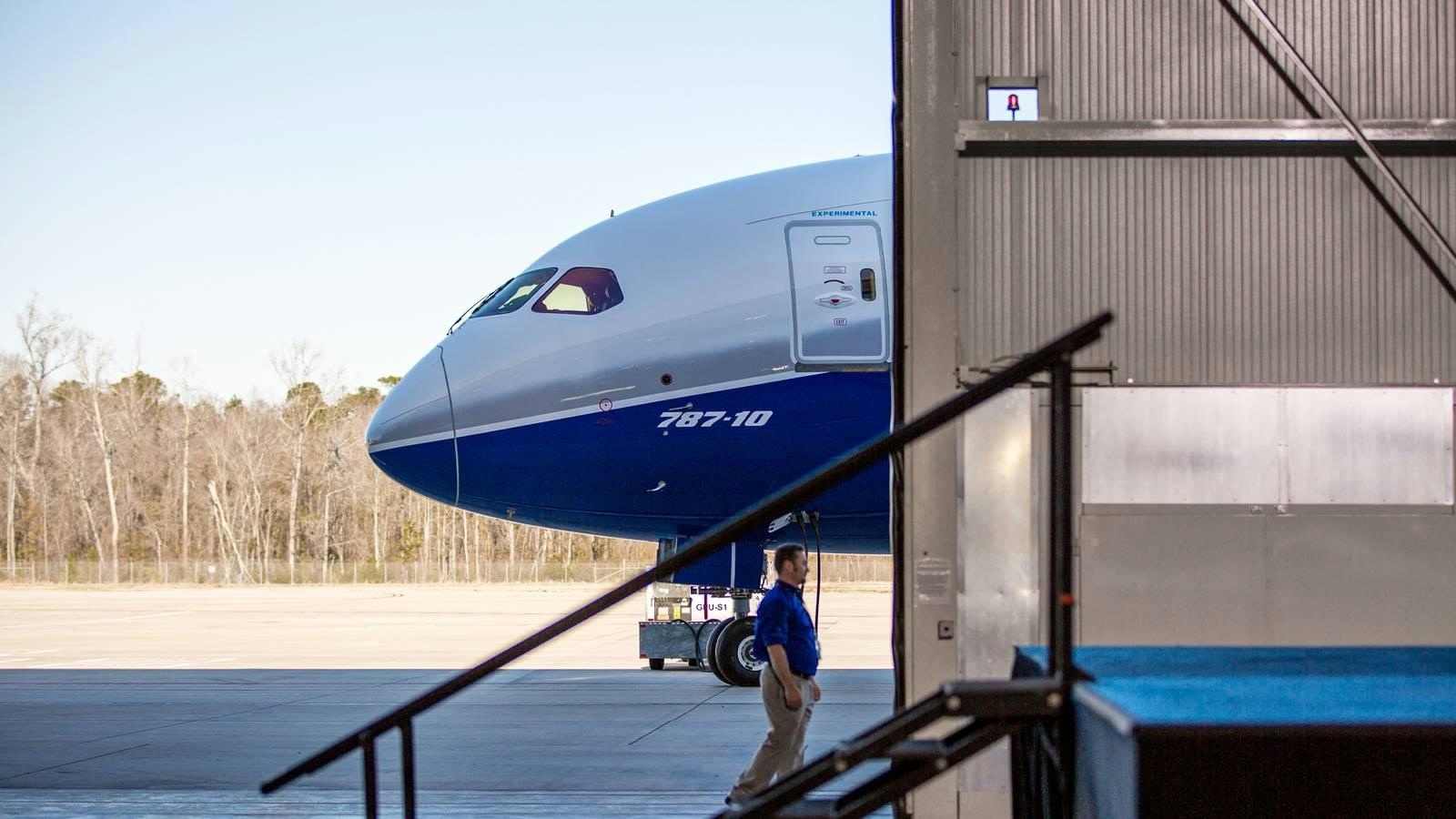
One of the Largest Widebody Aircraft Is the Cheapest to Fly in the U.S.
Operational Cost Efficiency of the Boeing 787-10 Dreamliner
Recent quarterly financial disclosures from major U.S. airlines have highlighted a notable operational insight: the Boeing 787-10 Dreamliner, one of the largest twin-engine widebody jets, currently stands as the most cost-effective widebody aircraft in domestic and transatlantic service. While international airshow order announcements often capture public attention, the true economics of operating these aircraft emerge from detailed data submitted to the U.S. Department of Transportation (DOT) through Form 41 balance sheets.
Despite its substantial 224-foot (68-meter) fuselage, the stretched 787-10 achieves lower direct operating costs per seat than many smaller twin-engine jets. Its high-density seating configurations enable airlines to maximize passenger capacity on high-demand routes without a corresponding increase in fuel consumption or maintenance expenses. According to aviation intelligence firm AirInsight, the 787-10’s direct operating cost stands at just $19.54 per seat-hour, encompassing fuel, crew, maintenance, and insurance.
Comparative Cost Advantages and Design Efficiencies
This cost efficiency is particularly significant when compared to other widebody aircraft. The Airbus A330-300, for instance, incurs a direct operating cost of $21.43 per seat-hour, representing a 9.7% premium over the 787-10. The Boeing 767-400ER is even less economical, with costs of $22.91 per seat-hour, or 17.2% higher. While savings of $1.89 to $3.37 per seat-hour may appear modest on an individual flight, these margins accumulate rapidly. On a 10-hour transatlantic journey with 318 seats, operating a 787-10 instead of a 767-400ER can save an airline more than $10,700 per departure. Over the course of 300 annual flights, this translates to over $3.2 million in direct cost reductions per aircraft.
The 787-10’s efficiency largely results from Boeing’s strategy of stretching the Dreamliner airframe without redesigning its core wings or propulsion systems. Sharing 95% of its components with the smaller 787-9, the aircraft benefits from minimized production and maintenance costs while avoiding the weight penalties typically associated with entirely new widebody designs. This approach prioritizes optimizing fuel capacity for payload rather than maximizing range, making the 787-10 particularly well-suited for high-density, medium- to long-haul routes.
Market Dynamics and Industry Implications
This operational advantage emerges amid shifting dynamics in the widebody aircraft market. Airbus has been gaining momentum, securing new orders and delivering more widebody aircraft than Boeing in recent years. This trend is prompting airlines to reevaluate their fleet strategies, balancing the cost efficiencies of models like the 787-10 against the increasing appeal and availability of Airbus alternatives. In response, both manufacturers face pressure to innovate—Boeing by enhancing efficiency and reliability within its existing lineup, and both companies by investing in the development of next-generation aircraft to meet evolving airline requirements.
As airlines navigate these competitive pressures, the 787-10’s cost leadership highlights the critical role of operational efficiency in fleet planning. With profit margins under constant strain, the ability to transport more passengers at a lower per-seat cost represents a significant competitive advantage that may shape fleet decisions and industry strategies in the years ahead.

Etihad Airways Suspends Airbus A380 Flights on Key Route

Aditya Birla Group Seeks Approval for Aircraft Leasing in GIFT City

Qatar Airways Highlights Innovation and Connectivity at Arabian Travel Market 2026

Hong Kong's Five-Year Plan Includes Andrew Fan's Aircraft Parts Processing Hub Proposal

ACIA Aero Leasing Delivers ATR72-600 to Air Nostrum

RTX Appoints Jill Albertelli as Head of Pratt & Whitney

TAT Technologies Joins Beyond Aero Hydrogen Aircraft Program

AURAK Study Highlights Barriers to Air Taxi Adoption in Emerging Economies

Xiamen Air Selects Altitude for 787 Maintenance at Heathrow

Etihad and Swissport Extend Global Partnership
