
Trasforma le intuizioni dell’IA in azioni concrete

Tendenze
Categories
Outlook on the UAE Helicopter Services Industry: Growth and Challenges
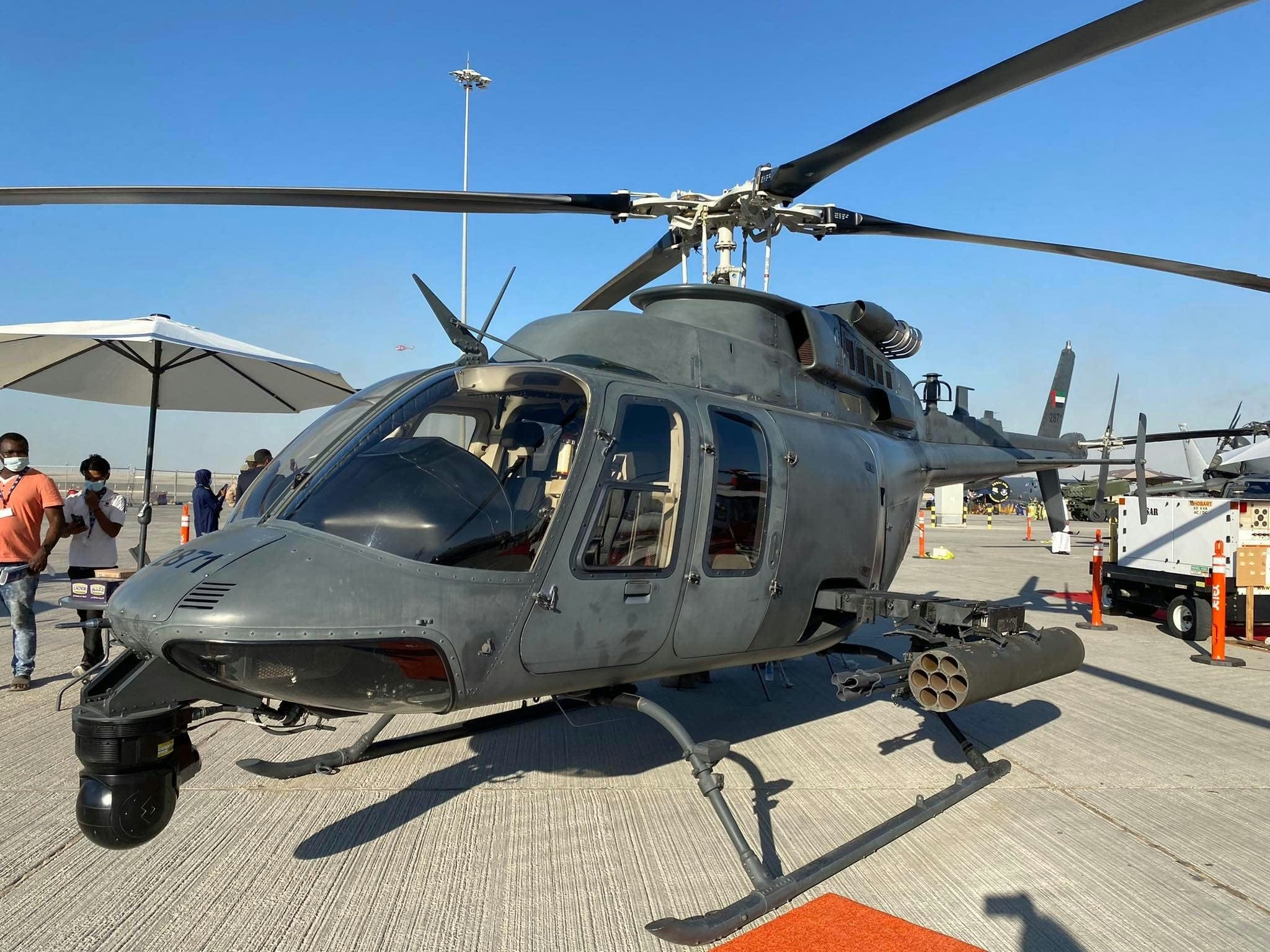
Outlook on the UAE Helicopter Services Industry: Growth and Challenges
The helicopter services market in the United Arab Emirates is set for steady growth over the coming decade. According to the IMARC Group, the market size is estimated at USD 13.03 million in 2024, with projections indicating an increase to USD 16.62 million by 2033, reflecting a compound annual growth rate of 2.74%. This expansion is driven by a combination of technological innovation, regulatory reforms, and rising demand across critical sectors such as energy, defense, and urban mobility.
Technological Innovation and AI Integration
Artificial intelligence is playing a transformative role in reshaping helicopter operations within the UAE. Leading operators like Abu Dhabi Aviation have adopted AI-powered predictive maintenance platforms that enable real-time engine monitoring and early detection of mechanical faults. This approach significantly reduces downtime by facilitating data-driven maintenance scheduling. Additionally, autonomous flight control systems, such as Shield AI’s Hivemind software deployed in Abu Dhabi, allow helicopters to execute automated takeoff, landing, and navigation, thereby enhancing safety and operational efficiency.
AI technologies also contribute to optimized scheduling and route planning. Falcon Aviation utilizes these tools to maximize helicopter utilization, reduce operational costs, and improve service reliability. Enhanced obstacle detection systems, powered by AI, have improved avoidance capabilities by 63% and increased mission success rates by 39% under challenging conditions. Furthermore, weather decision-making accuracy has improved by 78%, a critical advancement given the UAE’s harsh desert environment.
The industry is witnessing growing interest in electric vertical takeoff and landing (eVTOL) aircraft and uncrewed logistics helicopters. AeroGulf’s intention to acquire up to 20 SkyDrive eVTOL aircraft signals a strategic shift toward electric aviation. Meanwhile, Edge Group’s expanding orders for autonomous helicopters from the Ministry of Defence underscore the increasing reliance on unmanned solutions for logistics and military applications. Despite these promising developments, integrating new technologies with existing infrastructure and navigating evolving regulatory frameworks remain significant challenges for industry stakeholders.
Regulatory Modernization and Strategic Vision
The UAE’s long-term strategic initiatives, including the "We the UAE 2031" vision and the Smart Aviation 2030 roadmap, are catalyzing transformative changes in the helicopter services sector. The government has committed substantial investments to expand aviation infrastructure, exemplified by the $35 billion development of Al Maktoum International Airport and enhancements to Zayed International Airport, which is projected to accommodate 45 million passengers annually. These expansions are expected to increase demand for inter-airport helicopter transfers and urban air mobility solutions.
Aviation now accounts for 18.2% of the UAE’s GDP and supports nearly one million jobs, underscoring its strategic importance. The General Civil Aviation Authority (GCAA) has introduced updated Heliport Design and Safety Guidelines and approved hybrid heliport infrastructure capable of supporting both conventional helicopters and eVTOL aircraft. This regulatory framework represents the world’s first for dual-use vertiports. Additionally, Dubai’s Roads and Transport Authority (RTA) has formalized agreements to facilitate air taxi operations, with four vertiport sites currently under development to connect major urban hubs.
Market Dynamics and Competitive Environment
The offshore oil and gas sector remains a primary driver of helicopter demand, particularly for crew transport and emergency medical services. Continued offshore exploration in the Arabian Gulf has reinforced the necessity of helicopters for safe and efficient transit between land bases and remote rigs. ADNOC’s renewed contracts with Abu Dhabi Aviation, alongside Falcon Aviation’s new agreements for aerial surveys and medevac services, highlight the sector’s sustained reliance on helicopter operations. The delivery of six AW139 helicopters to Abu Dhabi Aviation by Leonardo through 2026 further reflects confidence in the market’s prospects.
The competitive landscape is intensifying as new entrants seek to capitalize on emerging opportunities. Companies such as SkyDrive and Edge Group have secured substantial orders, signaling robust market interest. In response, established operators are expanding fleet harmonization strategies and investing in advanced helicopter technologies to maintain their leadership positions. Nonetheless, the integration of cutting-edge technologies and adherence to evolving regulatory standards continue to pose challenges as the UAE strives to establish itself as a global hub for advanced air mobility.

Etihad Airways Suspends Airbus A380 Flights on Key Route

Aditya Birla Group Seeks Approval for Aircraft Leasing in GIFT City

Qatar Airways Highlights Innovation and Connectivity at Arabian Travel Market 2026

Hong Kong's Five-Year Plan Includes Andrew Fan's Aircraft Parts Processing Hub Proposal

ACIA Aero Leasing Delivers ATR72-600 to Air Nostrum

RTX Appoints Jill Albertelli as Head of Pratt & Whitney

TAT Technologies Joins Beyond Aero Hydrogen Aircraft Program

AURAK Study Highlights Barriers to Air Taxi Adoption in Emerging Economies

Xiamen Air Selects Altitude for 787 Maintenance at Heathrow

Etihad and Swissport Extend Global Partnership
