
Trasforma le intuizioni dell’IA in azioni concrete

Tendenze
Categories
PD-35 Engine Features Smaller Fan Compared to GE9X
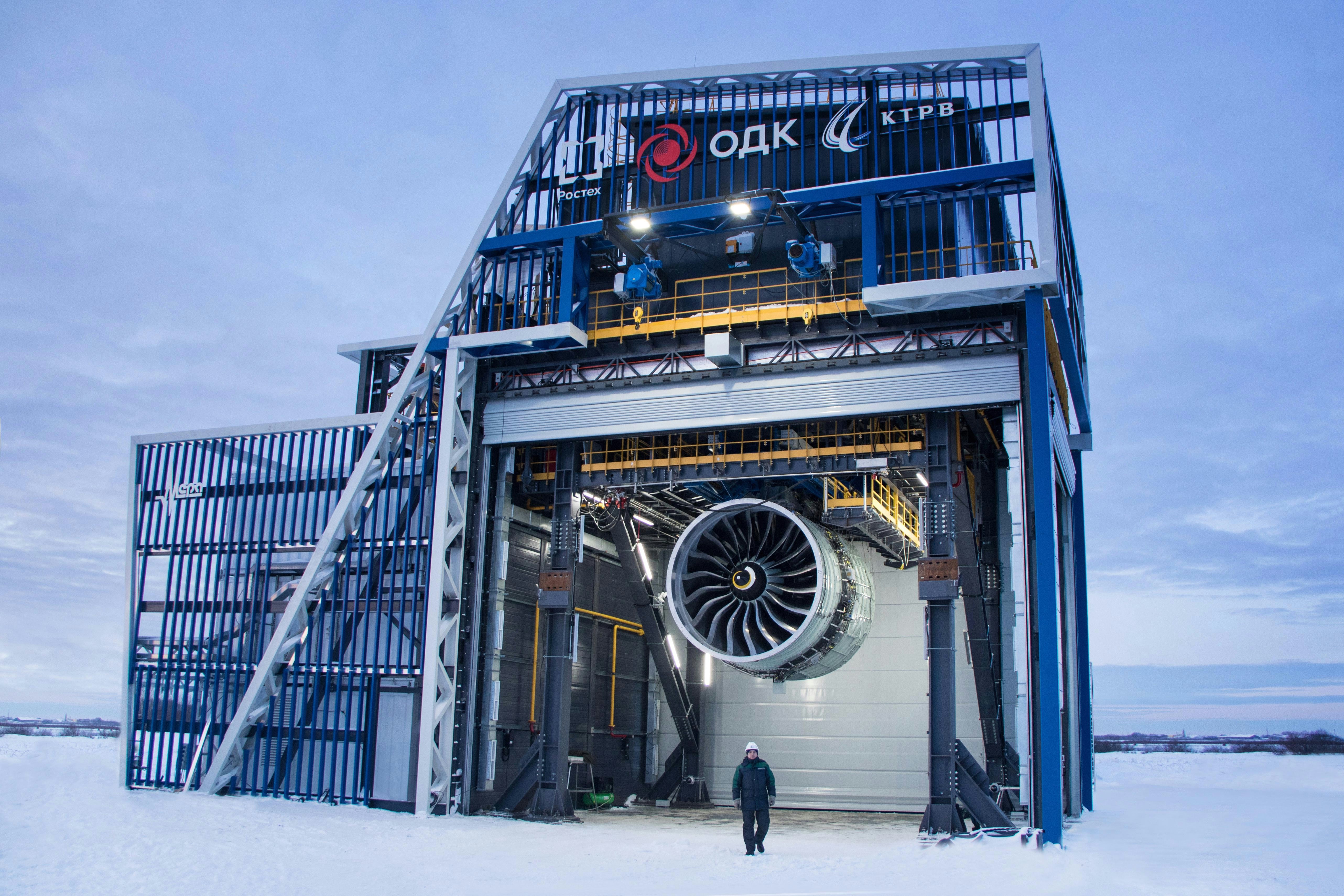
PD-35 Engine Features Smaller Fan Compared to GE9X
Fan Size and Design Differences
The Russian PD-35 engine is equipped with a fan measuring 3.1 meters in diameter, which is notably smaller than the 3.4-meter fan of its American counterpart, the GE9X. This 30-centimeter difference, approximately 8%, initially suggests an advantage for the GE9X, as larger fans typically allow for greater air intake. However, the relationship between fan diameter and engine performance is more complex. Since the fan’s cross-sectional area increases with the square of its radius, the GE9X’s fan has an area of about 9.1 square meters, nearly 20% larger than the PD-35’s 7.5 square meters. This larger area enables the GE9X to move significantly more air, contributing to its imposing size. During flight tests, General Electric had to modify a Boeing 747’s pylon to accommodate the GE9X’s record-breaking 134-inch fan, ensuring adequate ground clearance.
Bypass Ratio and Engine Efficiency
Despite its smaller fan, the PD-35 achieves a bypass ratio of 11:1, surpassing the GE9X’s 10:1. The bypass ratio, which measures the volume of air passing through the engine’s outer duct relative to the inner core, is a critical indicator of engine efficiency. Achieving a higher bypass ratio with a smaller fan underscores the importance of overall engine design rather than fan size alone. Key factors include the dimensions of the gas generator, core airflow, and specific fan parameters. The GE9X, designed for the Boeing 777X, incorporates a powerful gas generator that demands substantial core airflow, which in turn limits its bypass ratio despite the larger fan diameter.
Market Positioning and Challenges
The PD-35, with a calculated takeoff thrust of approximately 35 tonnes-force (tf), occupies a different market segment compared to the GE9X, which delivers between 47 and 49 tf. The Russian engine’s design emphasizes flexibility and technological evolution within its family, prioritizing adaptability over sheer size. This approach demonstrates that a larger fan does not necessarily guarantee the highest bypass ratio or overall efficiency.
However, the PD-35’s smaller fan introduces challenges related to manufacturing adaptation, integration with existing aircraft systems, and meeting stringent performance and cost-effectiveness criteria. Industry analysts remain skeptical about the PD-35’s ability to match the efficiency and competitiveness of the GE9X, particularly as global demand for advanced turbofan engines continues to grow.
Industry Implications
Competition in the large commercial aircraft engine sector is expected to intensify as manufacturers highlight their technological advancements and performance metrics. The market for aircraft fan frames—a critical component of these engines—is projected to grow at a compound annual growth rate of 5.7% through 2036, with front fan frames and turbofan engines representing significant segments.
The PD-35’s design highlights that engine performance results from a complex interplay of factors beyond fan diameter. As manufacturers innovate and respond to evolving market demands, the debate over size versus efficiency will remain a central theme in the aviation industry.

Etihad Airways Suspends Airbus A380 Flights on Key Route

Aditya Birla Group Seeks Approval for Aircraft Leasing in GIFT City

Qatar Airways Highlights Innovation and Connectivity at Arabian Travel Market 2026

Hong Kong's Five-Year Plan Includes Andrew Fan's Aircraft Parts Processing Hub Proposal

ACIA Aero Leasing Delivers ATR72-600 to Air Nostrum

RTX Appoints Jill Albertelli as Head of Pratt & Whitney

TAT Technologies Joins Beyond Aero Hydrogen Aircraft Program

AURAK Study Highlights Barriers to Air Taxi Adoption in Emerging Economies

Xiamen Air Selects Altitude for 787 Maintenance at Heathrow

Etihad and Swissport Extend Global Partnership
