Immagine

Trasforma le intuizioni dell’IA in azioni concrete

Unisciti oggi alla lista d’attesa di AeroGenie!

Tendenze

Categories

Pearl 700 Completes Flight Using 100% Sustainable Aviation Fuel
July 8, 2026By ePlane AI
Pearl 700 Completes Flight Using 100% Sustainable Aviation Fuel
0
0
Pearl 700
Sustainable Aviation Fuel
Gulfstream G800

Pearl 700 Powers First Flight Using 100% Sustainable Aviation Fuel

Rolls-Royce has announced a significant advancement in sustainable aviation with the successful operation of its Pearl 700 engines on a Gulfstream G800 flight powered entirely by 100% sustainable aviation fuel (SAF). This milestone represents a crucial step in reducing non-CO₂ emissions in business aviation, particularly those contributing to contrail formation, which have notable climate impacts.

High-Altitude Testing and Collaborative Research

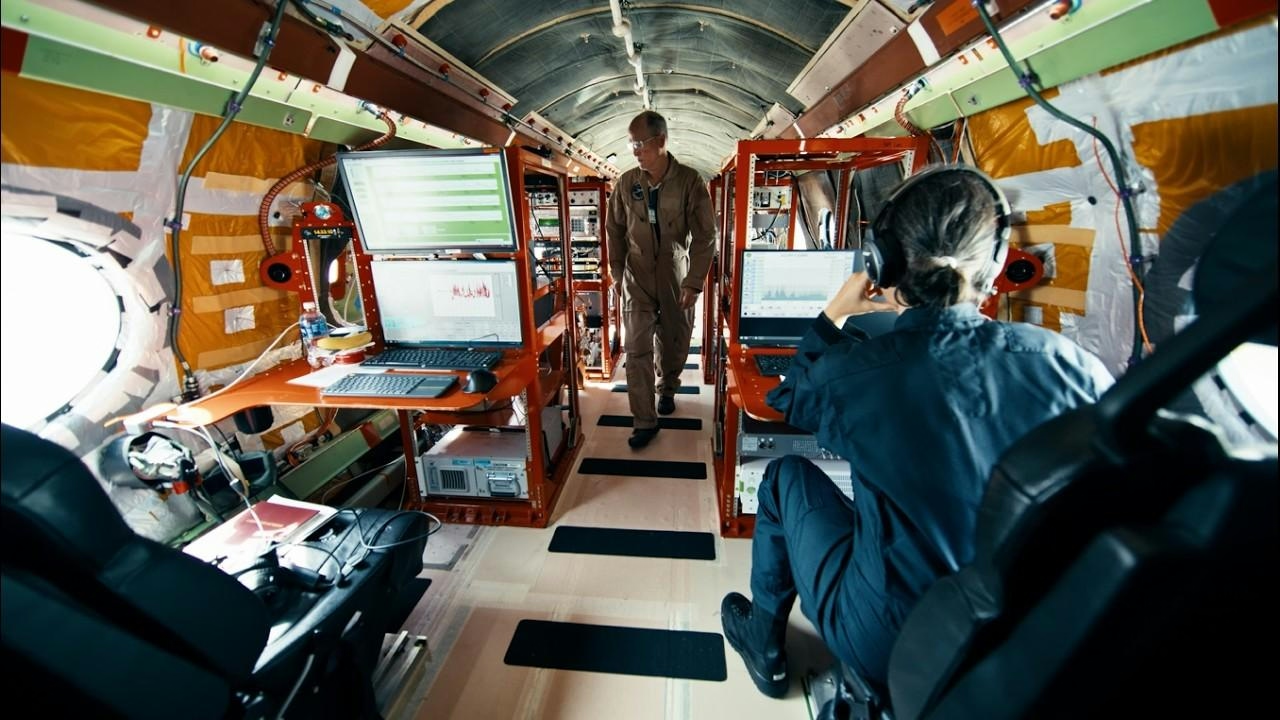
The flight was conducted as part of Gulfstream Aerospace’s high-altitude test campaign, aimed at assessing the effects of neat SAF—composed solely of hydroprocessed esters and fatty acids (HEFA)—on particulate emissions at cruising altitudes reaching 50,000 feet. A modified Gulfstream G700, also equipped with Pearl 700 engines, accompanied the G800 to serve as an airborne emissions laboratory. Flying in close formation, the two aircraft enabled researchers to collect real-world data on particulate emissions and atmospheric conditions typical of business jet operations.

This initiative involved a broad coalition of partners, including Gulfstream Aerospace, the US Federal Aviation Administration (FAA), NASA, the German Aerospace Center (DLR), Missouri University of Science and Technology, Rolls-Royce, Aerodyne Research, Montana Renewables, and World Fuel Services. The program compared emissions from conventional Jet A fuel, low-sulphur Jet A, and neat SAF to evaluate how fuel composition influences non-CO₂ emissions. Preliminary findings suggest that neat SAF, which lacks sulphur and aromatic compounds, substantially reduces particulate emissions associated with contrail formation.

Challenges and Industry Implications

While the successful flight demonstrates the technical feasibility and environmental advantages of operating on 100% SAF, widespread adoption remains constrained by significant challenges. Currently, sustainable aviation fuel constitutes less than 1% of global jet fuel consumption, primarily due to limited production capacity and availability. This scarcity poses a major barrier to scaling up SAF use despite increasing interest within the aviation industry.

The achievement by Gulfstream and Rolls-Royce is expected to heighten industry focus on SAF as a viable means to mitigate aviation’s climate impact. Observing the benefits, such as reduced contrail emissions, other manufacturers and operators may accelerate their SAF initiatives or pursue partnerships to enhance their sustainability profiles. However, the transition to sustainable aviation fuel will require evolving regulatory frameworks and substantial infrastructure upgrades at airports to support new fuel types.

Competitors in the business aviation sector are likely to respond by investing in SAF technologies or forming strategic alliances to maintain competitiveness in a market increasingly driven by sustainability considerations. The Pearl 700’s successful flight underscores both the promise and complexity of decarbonizing aviation, highlighting the need to overcome supply, regulatory, and infrastructure challenges to establish sustainable aviation fuel as a mainstream solution.

More news
Etihad Deploys Widebody Fleet to Meet Strong Demand

Etihad Deploys Widebody Fleet to Meet Strong Demand

Etihad Deploys Widebody Fleet to Meet Strong Demand Strategic Focus on High-Demand Routes Etihad Airways is intensifying its focus on deploying widebody aircraft to routes exhibiting the strongest passenger demand, moving away from an even distribution of capacity across its network. This demand-driven approach is particularly evident in the airline’s summer 2026 schedule, where flagship Airbus A380s and Boeing 777s are concentrated on key markets such as Paris, Tokyo, and Dhaka. By aligning aircraft deployment with market demand, Etihad aims to optimize capacity utilization and enhance its competitive positioning on premium long-haul routes. Capacity Expansion in Paris, Tokyo, and Dhaka Paris Charles De Gaulle Airport (CDG) exemplifies Etihad’s strategic widebody deployment. Beginning July 1, 2026, the airline will operate three daily flights between Abu Dhabi and Paris, including two Airbus A380 services and one Boeing 787-9 flight. The A380, Etihad’s flagship aircraft featuring four distinct cabins—The Residence, First Apartments, Business Class, and Economy—reflects the carrier’s commitment to premium travel experiences. Chief Revenue and Commercial Officer Arik De described the double-daily A380 operation as a “statement of confidence” in the Paris market. The flight schedule, with departures at 02:35, 08:50, and 14:20 from Abu Dhabi, is designed to serve diverse passenger segments and strengthen Etihad’s share of premium and long-haul traffic between the UAE and France. Similarly, Etihad has expanded its Tokyo Narita Airport (NRT) service with the introduction of daily A380 flights starting June 18, 2026. This deployment, which reactivates the airline’s eighth A380, responds to robust demand for premium travel on the Abu Dhabi–Tokyo route. The A380’s configuration—comprising 70 Business Class seats, 415 Economy seats, nine First suites, and The Residence—significantly enhances both overall and premium capacity. In Dhaka, the airline has established year-round Boeing 777 operations following a sold-out launch, further demonstrating its commitment to matching aircraft size with market demand. Meanwhile, routes with lower demand are served by narrowbody aircraft such as the A321LR and A320, ensuring efficient fleet utilization. Opportunities and Challenges Ahead Etihad’s targeted widebody deployment is driving growth in established markets, yet the airline faces several challenges. Aircraft availability remains the primary medium-term constraint, limiting the pace at which Etihad can expand its widebody operations. The carrier is also focusing on Africa and China as key growth markets for 2025, with strong bookings reported for new capacity in these regions. External factors continue to complicate network planning. The ongoing Middle East conflict has contributed to elevated fuel costs and potential route disruptions. Additionally, competitive pressures are intensifying as rival airlines pursue fleet modernization initiatives. For instance, KLM has completed test flights of its new A350 aircraft ahead of deliveries, while BermudAir plans to replace its Embraer E-Jet fleet with Airbus A220s. Etihad’s evolving strategy reflects a shift toward a more agile and market-responsive deployment of its widebody fleet. By concentrating capacity on routes with the strongest demand and adapting to changing market conditions, the airline seeks to maximize profitability and enhance customer satisfaction amid a challenging industry landscape.
Korean Air Finalizes $36.2 Billion Deal with Boeing

Korean Air Finalizes $36.2 Billion Deal with Boeing

Korean Air Finalizes $36.2 Billion Aircraft Order with Boeing Korean Air has confirmed a landmark agreement to acquire 103 aircraft from Boeing, representing a $36.2 billion deal at list prices. The order encompasses a diverse mix of wide-body passenger jets, freighters, and single-aisle planes, reflecting the airline’s strategic intent to expand and modernize its fleet amid intensifying competition within the global aviation sector. Strengthening a Longstanding Partnership Amid Industry Challenges Originally announced in 2025, this transaction further solidifies the enduring relationship between Korean Air and Boeing. However, the airline faces significant challenges as it proceeds with this major investment. Rising fuel prices and ongoing disruptions to flight routes—particularly those linked to conflicts in the Middle East—pose risks to operational costs and scheduling. These factors may constrain Korean Air’s ability to fully leverage its expanded fleet in the short term. Market analysts and investors are closely scrutinizing the financial ramifications of such a substantial order. Some have voiced concerns regarding the timing and scale of the commitment, especially given the current headwinds facing the aviation industry. Korean Air’s move is also expected to influence competitive dynamics in the region. Rivals such as Vietnam Airlines may consider placing similar large-scale orders to preserve their market share, while other carriers might explore partnerships with alternative manufacturers like Airbus or Embraer, potentially reshaping the competitive landscape. Implications for Sustainability and Industry Evolution The agreement arrives at a critical juncture as the aviation industry faces mounting pressure to meet sustainability and decarbonization targets. With global efforts aimed at reducing carbon emissions by 2050, large-scale fleet renewals such as Korean Air’s are likely to intensify discussions around the adoption of new technologies and the future trajectory of commercial aviation. Despite the prevailing challenges, Korean Air’s significant investment underscores its confidence in long-term growth prospects and its commitment to maintaining a competitive position in the international market.
Australia’s RFDS Queensland Section Orders Six King Air 260Cs

Australia’s RFDS Queensland Section Orders Six King Air 260Cs

Australia’s RFDS Queensland Section Orders Six King Air 260Cs The Royal Flying Doctor Service (RFDS) Queensland Section has placed an order for six King Air 260C twin turboprop aircraft from Textron Aviation, marking a pivotal advancement in its fleet modernisation efforts. These new aircraft are intended to replace the organisation’s ageing King Air 200s, with the first fully aeromedical-equipped King Air 260C scheduled for delivery in 2028. The remaining five aircraft will be delivered progressively over the following four years. Enhanced Capabilities and Fleet Modernisation The King Air 260C offers significant improvements in performance, including higher cruise speeds and state-of-the-art avionics, navigation, and safety systems, surpassing those of the RFDS’s current fleet of sixteen King Air 200s, which comprises both standard and C variants. The aeromedical systems for the new aircraft will be designed and installed by HeliMods, a company with prior experience modifying six King Air B360s for the RFDS. The organisation currently operates ten King Air B360s, further underscoring its reliance on the King Air platform. This strategic upgrade aligns with broader trends in the Australian aviation sector, which increasingly prioritises enhanced aircraft performance and technological innovation. The RFDS’s investment in the King Air 260C is anticipated to establish a new standard for aeromedical operations within the region. However, this development may also trigger competitive responses from other regional air services, potentially prompting similar fleet expansions as they seek to maintain their market positions. Operational and Market Implications As the RFDS integrates the King Air 260Cs into its operations, it will encounter challenges related to operational integration and regulatory compliance. The introduction of advanced aircraft is likely to attract increased scrutiny concerning operational efficiency and cost management, as the sector strives to balance technological advancement with financial sustainability. These dynamics are expected to influence competitor strategies and shape the broader market landscape within Australia’s regional aviation industry. The RFDS Queensland Section’s commitment to modernising its fleet reflects its enduring mission to provide high-quality aeromedical services across the state, while adapting to the evolving demands and competitive pressures of the aviation sector.
Korean Air Finalizes Order for 103 Boeing Jets and Engines
Korean Air Finalizes Order for 103 Boeing Jets and Engines

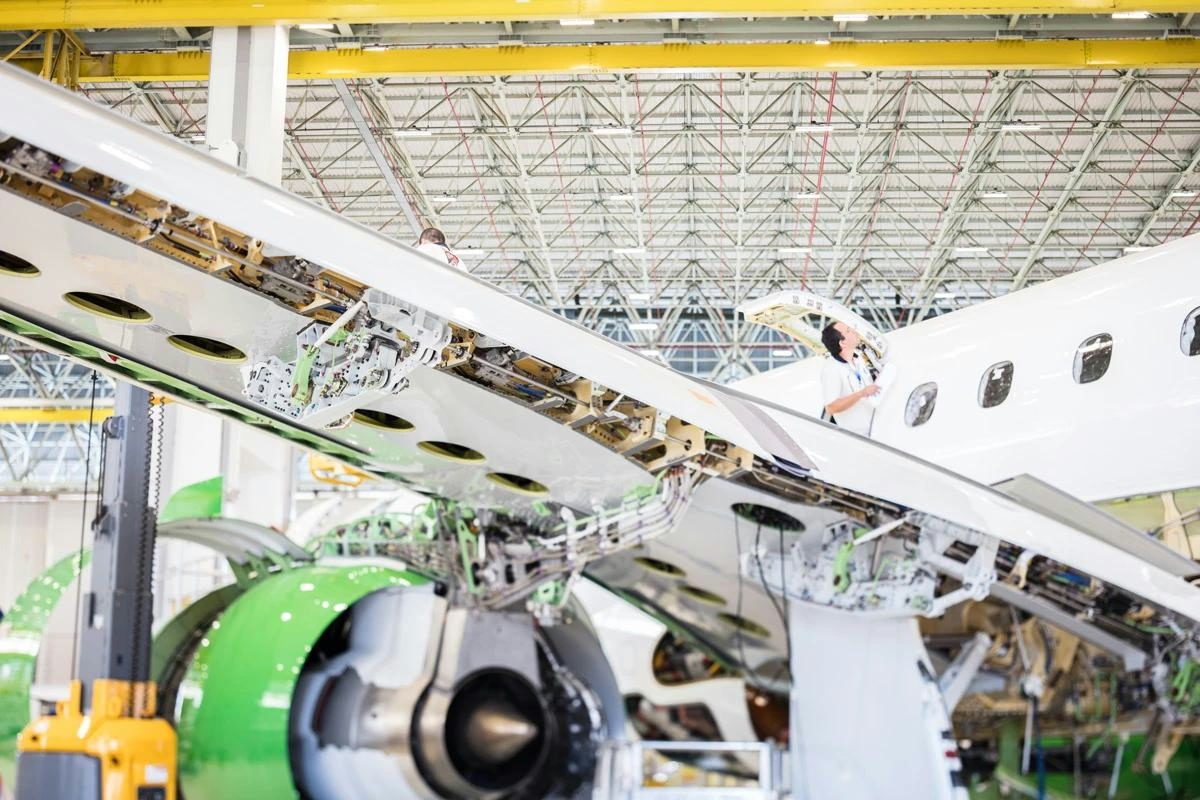
Korean Air Finalizes Order for 103 Boeing Jets and Engines Korean Air has confirmed a landmark order for 103 Boeing aircraft and engines, representing one of the most significant fleet investments in the airline’s history. This strategic acquisition aims to modernize the carrier’s fleet and improve operational efficiency amid intensifying competition within the global aviation industry. Strategic Implications and Market Reactions The scale of the order presents considerable challenges, particularly regarding the substantial upfront costs and long-term financial commitments involved. Market responses have been mixed; some investors regard the deal as a forward-looking move that positions Korean Air for future growth and enhanced fuel efficiency. Conversely, others express concern over the potential financial strain this large purchase may impose on the airline’s balance sheet. Industry analysts observe that Korean Air’s decision aligns with a broader trend among major carriers investing heavily in fleet modernization. Airlines such as Air Canada and Flydubai have recently announced significant aircraft orders, signaling an industry-wide push toward expansion and renewal. This wave of investment is expected to reshape market dynamics, prompting competitors to consider similar large-scale acquisitions or to adjust their fleet management and operational cost strategies to maintain competitiveness. Environmental Considerations and Regulatory Context The timing of Korean Air’s order coincides with increasing scrutiny of the aviation sector’s environmental impact and sustainability commitments. In the United Kingdom, the Climate Change Committee (CCC) has recently recommended that approval for Heathrow Airport’s third runway should be contingent upon the enactment of stricter legislation to ensure the aviation industry finances its own decarbonization efforts by 2050. This development underscores the mounting pressure on airlines globally to reconcile growth ambitions with environmental responsibility. As Korean Air advances with its ambitious fleet renewal, it faces the dual challenge of managing the financial implications of its investment while adapting to an evolving regulatory environment. The airline’s approach and its outcomes will be closely monitored by industry stakeholders, investors, and competitors worldwide.
Embraer E195-E2 Features Distinctive Engine Placement Among Regional Jets
Embraer E195-E2 Features Distinctive Engine Placement Among Regional Jets

Embraer E195-E2 Features Distinctive Engine Placement Among Regional Jets Innovative Engineering for Larger Engines The Embraer E195-E2 distinguishes itself in the regional jet market through its innovative engine placement, necessitated by the integration of two Pratt & Whitney PW1900G geared turbofan engines. These engines feature a 73-inch (190 cm) fan diameter and a bypass ratio of 12:1, significantly larger than the General Electric CF34-10E engines used on the first-generation E195, which had 52-inch (132 cm) fans and a bypass ratio of 5.4:1. The adoption of such large engines presented a considerable engineering challenge, particularly given the aircraft’s low ground clearance. To accommodate the larger powerplants, Embraer undertook a comprehensive redesign of the wing, landing gear, and gear retraction system. The wing was reshaped with an upward bend inboard, creating a gull-wing configuration that raised the engine pylons. The landing gear was extended by 20 inches (51 cm) compared to the original E195, ensuring sufficient clearance during takeoff and landing. Rather than employing a single wing design across the E2 family, Embraer developed three bespoke wings, with the E195-E2’s wing boasting one of the highest aspect ratios in its class. Its wingspan measures 115 feet (35.1 meters), only marginally shorter than the larger Airbus A320neo, and features raked wingtips to enhance aerodynamic efficiency. Efficiency and Performance Gains The decision to equip the E195-E2 with larger fans was deliberate and central to Embraer’s performance objectives. Luis Carlos Affonso, Embraer’s Senior Vice President of Engineering, emphasized that the engines are “extremely large for the size of the aircraft.” Larger fans move greater volumes of air at lower velocities, which improves fuel efficiency and reduces noise. The PW1900G’s bypass ratio of 12:1—more than double that of the previous generation—contributes to a 25% reduction in fuel consumption per seat and delivers the lowest noise signature among narrowbody jets currently in production. Integrating these engines beneath a low-fuselage aircraft required more than technical innovation. The original E195’s landing gear and wing configuration provided adequate clearance for the smaller CF34 engines, but the new 73-inch fans would have been perilously close to the runway during critical phases such as takeoff rotation. Embraer’s redesign addressed these concerns, ensuring both safe ground clearance and optimal aerodynamic performance. Market Challenges and Commercial Prospects Despite the engineering advancements embodied in the E195-E2, Embraer faces significant challenges in a highly competitive regional jet market. Established manufacturers such as Airbus, Boeing, and China’s COMAC continue to vie aggressively for market share. Airbus executives have acknowledged the intensity of this competition, and industry responses to Embraer’s expanded E-Jet program have been mixed. While some airlines have shown interest in the new model, others remain cautious, carefully evaluating the aircraft’s advantages against competitive pricing and technological innovations offered by rivals. Moreover, Embraer must navigate the financial risks inherent in developing a larger single-aisle aircraft within an already saturated market. The company’s ability to balance its engineering innovations with economic realities will be critical as it seeks to expand its footprint and secure orders for the E195-E2. The distinctive engine placement of the Embraer E195-E2 underscores the manufacturer’s engineering capabilities, yet its commercial success will ultimately depend on how effectively Embraer contends with the pressures of a fiercely contested regional jet sector.
What Passengers Can Expect on Boeing’s New 777X Jet

What Passengers Can Expect on Boeing’s New 777X Jet

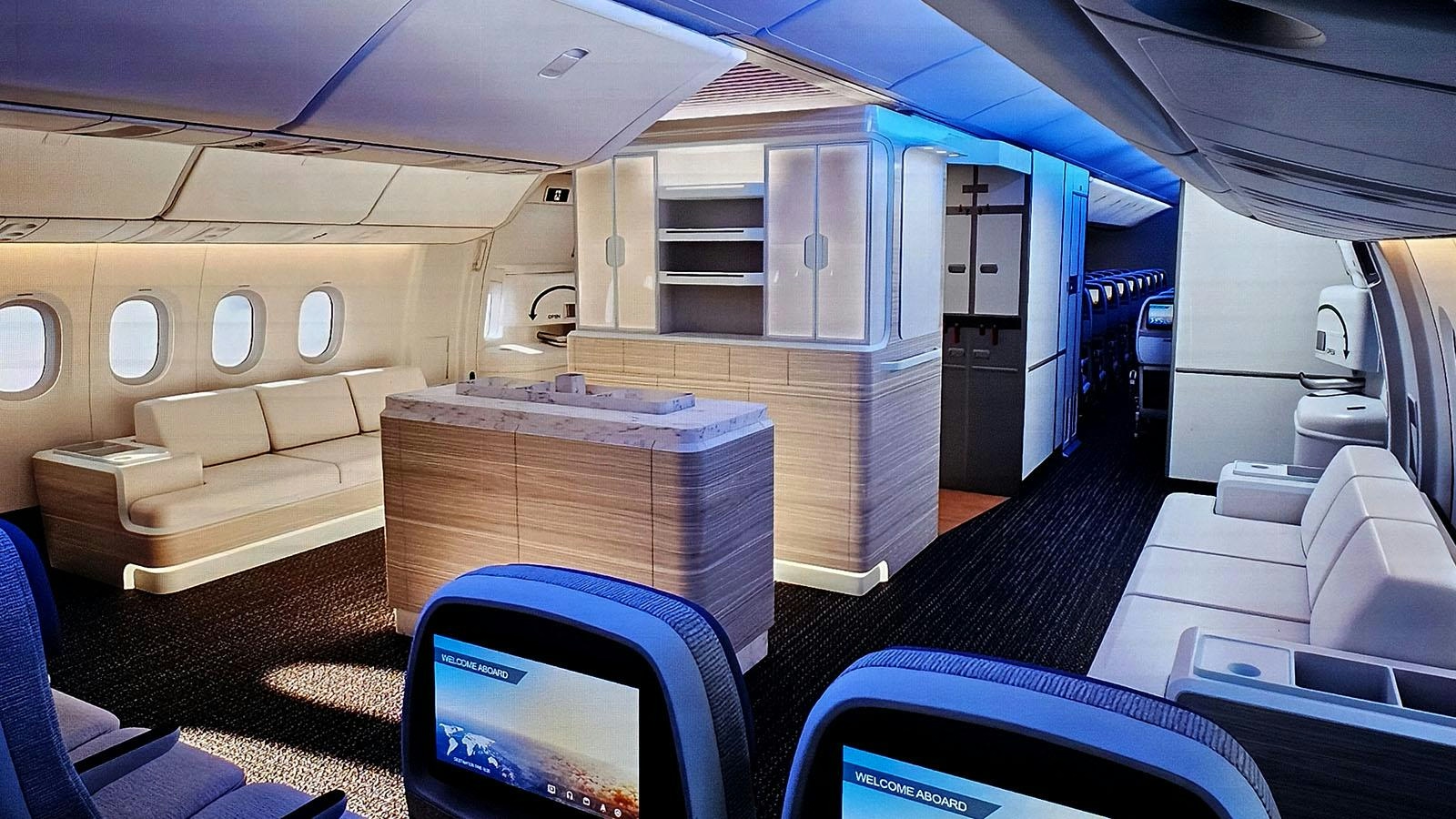
What Passengers Can Expect on Boeing’s New 777X Jet Boeing’s 777X, the world’s largest twin-engine widebody aircraft, is poised to enter passenger service in 2027, marking a significant milestone after a protracted development period that has extended seven years beyond the original schedule. The program has incurred over $15 billion in development costs, reflecting the complexity and scale of the project. More than a dozen airlines, including launch customer Lufthansa, eagerly await delivery of the yet-to-be-certified aircraft, which boasts seating for over 400 passengers and a nonstop range of up to 9,000 miles. Development Challenges and Market Impact The 777X represents a critical initiative for Boeing amid mounting pressure from regulators and fierce competition in the aerospace industry. The extended timeline has not only escalated costs but also intensified scrutiny following a series of quality-control and safety concerns. These delays have caused frustration among key customers such as Emirates, which has declined to accept some of the earliest-built jets due to their age and the financial burden of maintaining older aircraft during the interim. Several 777X planes have now approached eight years in storage without having carried a single passenger. Despite these setbacks, the aircraft has secured more than 560 orders across its variants, amounting to billions of dollars in value. The 777X is central to many airlines’ strategies to expand their long-haul networks, capitalize on growing demand for premium travel, and replace aging, less efficient widebody fleets. For Boeing, the success of the 777X is pivotal to restoring confidence and financial stability after years of challenges that have eroded trust among customers and the public alike. Competitive dynamics with Airbus have also influenced the 777X’s development. In response to Airbus’s advancements, Boeing enhanced the 777X’s range capabilities without increasing its maximum takeoff weight, thereby offering airlines greater operational flexibility and efficiency. As the 777X approaches entry into service, Airbus is expected to upgrade its own widebody models to maintain market share, sustaining the intense rivalry between the two aerospace giants. Passenger Experience and Cabin Innovations At the Farnborough International Airshow in July, Business Insider previewed a mock-up of the 777X cabin and engaged with Boeing representatives to explore what passengers can anticipate. The 777X features the widest cabin in its class, configured with 10 seats abreast and 18-inch-wide seats in the mock-up. Airlines will have the flexibility to customize seat width and aisle spacing to align with their service models. Additional innovations include longer wings equipped with folding wingtips, large General Electric engines, advanced lighting systems, and strategically placed doors designed to optimize premium cabin layouts. Justin Hale, Boeing’s managing director of product marketing, analysis, and competitive intelligence, emphasized the company’s intent to create a cabin environment that is both distinctive and marketable. “We wanted to produce a cabin that would be distinctive and unique—something airlines could market as different,” he stated. “We believe we’ve achieved that with the 777X.” While the double-decker Airbus A380 and Boeing 747 remain the largest and widest passenger aircraft, the 777X aims to establish a new benchmark for efficiency, comfort, and range within the twin-engine widebody category. As airlines and passengers await its long-delayed debut, the 777X stands at the forefront of Boeing’s efforts to reclaim its position in the highly competitive long-haul aviation market.
How Ethiopian Airlines Became Africa’s Leading Carrier Amid Gulf Competition

How Ethiopian Airlines Became Africa’s Leading Carrier Amid Gulf Competition

How Ethiopian Airlines Became Africa’s Leading Carrier Amid Gulf Competition Ethiopian Airlines, unlike the Gulf carriers of Dubai and Doha, does not rely on immense wealth or a luxury brand image. Instead, it has established a deeply embedded and expansive aviation network across Africa—one that Gulf airlines have struggled to replicate. While Emirates and Qatar Airways have transformed global aviation by turning their home cities into major transit hubs with large fleets and premium services, Ethiopian Airlines has carved out a unique and sustainable advantage within the African continent. A Network Tailored to Africa’s Complex Realities Africa remains one of the most challenging aviation markets worldwide, characterized by dispersed passenger demand, thin routes, inconsistent airport infrastructure, volatile currencies, and protective government policies. Ethiopian Airlines has successfully navigated these complexities by transforming its base in Addis Ababa into a powerful connecting hub. Rather than relying solely on traffic originating in Ethiopia, the airline aggregates passengers from dozens of African cities, channeling them to destinations across Europe, Asia, North America, and the Middle East. This hub-and-spoke model enables the airline to sustain routes that would otherwise be unprofitable by combining travelers from multiple markets onto single onward flights. The scale of Ethiopian’s network is a significant competitive advantage. In September 2026, the airline scheduled over 2.09 million seats—a 10% increase year-on-year and substantially more than any other African operator. By contrast, Emirates offered approximately 427,000 seats into Africa during the same period. This stark difference highlights Ethiopian Airlines’ structural integration within the continent, as opposed to Emirates’ external service model. Strategic Regional Partnerships and Expansion Central to Ethiopian Airlines’ strategy is its investment in regional carriers. Rather than attempting to serve every market directly from Addis Ababa, Ethiopian has acquired stakes in several African airlines, including ASKY Airlines in Togo, Malawi Airlines, Zambia Airways, and Air Congo. These partnerships provide access to local and regional traffic that non-African carriers find difficult to penetrate. For instance, ASKY Airlines operates from Lomé, connecting destinations across West Africa and feeding passengers into Ethiopian’s broader network. Ethiopian Airlines has also played a crucial role in enhancing Kinshasa’s connectivity through new routes and partnerships, positioning the city as a key hub in Central Africa. This regional integration further solidifies Ethiopian’s dominance on the continent. Navigating Challenges Amid Growing Competition Despite its achievements, Ethiopian Airlines faces significant challenges. The airline currently holds $90 million in trapped overseas revenue due to foreign-exchange shortages and international banking sanctions, with half of these funds frozen in Russia. Nonetheless, the carrier continues to report record revenues and expand its operations. Competition within Africa’s aviation sector is intensifying. Nigeria’s Air Peace, for example, has increased its scheduled capacity by 55%, re-entering the top ten African airlines by seat capacity. Yet, Ethiopian Airlines’ deeply rooted network, strategic regional partnerships, and adaptive business model maintain its position at the forefront of the continent’s aviation industry. In a region where aviation is fraught with obstacles, Ethiopian Airlines has developed a resilient and expansive model that not only endures but outpaces even the world’s most powerful carriers.
Joby Aviation Extends Autonomous Flight Capabilities with Cross-Country Tour

Joby Aviation Extends Autonomous Flight Capabilities with Cross-Country Tour

Joby Aviation Advances Autonomous Flight with Cross-Country Tour Joby Aviation has embarked on a significant cross-country tour featuring its J208 autonomous aircraft, marking a pivotal development in the company’s pursuit of advancing autonomous flight technology and expanding its commercial applications. Spanning ten states over the course of a month, this journey not only demonstrates the increasing sophistication of Joby’s autonomy platform but also underscores its potential utility beyond passenger air mobility. The company envisions applications in commercial freight, medical transport, emergency response, and defense logistics, reflecting a broadening scope for autonomous aviation. Demonstrating Capability and Building Partnerships The J208 has already accumulated an impressive record, with over 400 flights and 800 automated flight hours, including participation in three U.S. military exercises. These real-world operations have validated the aircraft’s performance in complex logistics scenarios, fostering confidence among both commercial and government stakeholders. The ongoing tour offers Joby the opportunity to operate in diverse environments, further testing the aircraft’s capabilities while strengthening relationships with government agencies and industry partners. Joby’s engagement with the White House-backed eIPP program, alongside collaborations with transportation authorities in Texas, North Carolina, and other states, supports its efforts to collect operational data, demonstrate integration within controlled airspace, and accelerate the development of autonomous aviation networks. The J208’s supervised autonomy model, wherein a ground-based remote pilot acts as Pilot in Command, provides a pragmatic approach toward broader deployment of autonomous aircraft. Challenges and Market Dynamics Despite these advancements, the expansion of autonomous flight faces considerable challenges. Regulatory approval processes and achieving widespread acceptance of autonomous aircraft remain significant obstacles. Joby must consistently demonstrate the safety and reliability of its technology, particularly as operations extend into more complex airspace and varied environmental conditions. The company also contends with skepticism from traditional aviation stakeholders, who remain cautious about integrating emerging technologies into established systems. In response, competitors may intensify investments in similar autonomous technologies or pursue strategic partnerships to maintain their market positions amid evolving industry dynamics. Joby’s success will depend on its ability to address safety concerns, prove operational efficiency, and comply with stringent aviation regulations. Extensive testing and regulatory compliance will be critical factors influencing the company’s progress. Market Performance and Outlook Over the past year, Joby Aviation’s share price has declined by 56.2%, a steeper drop compared to the 11.3% decrease observed in the broader Aerospace-Defense sector. This reflects both the inherent volatility of the industry and investor caution surrounding emerging technologies. Looking ahead, Joby’s continued advancement of autonomous flight capabilities, coupled with its navigation of regulatory and market challenges, will be essential to achieving large-scale commercial adoption. The ongoing cross-country tour highlights the company’s commitment to innovation and positions it as a potential leader in the rapidly evolving autonomous air logistics sector.
Strengthening Europe's Aviation Supply Chain Amid Uncertainty
Strengthening Europe's Aviation Supply Chain Amid Uncertainty

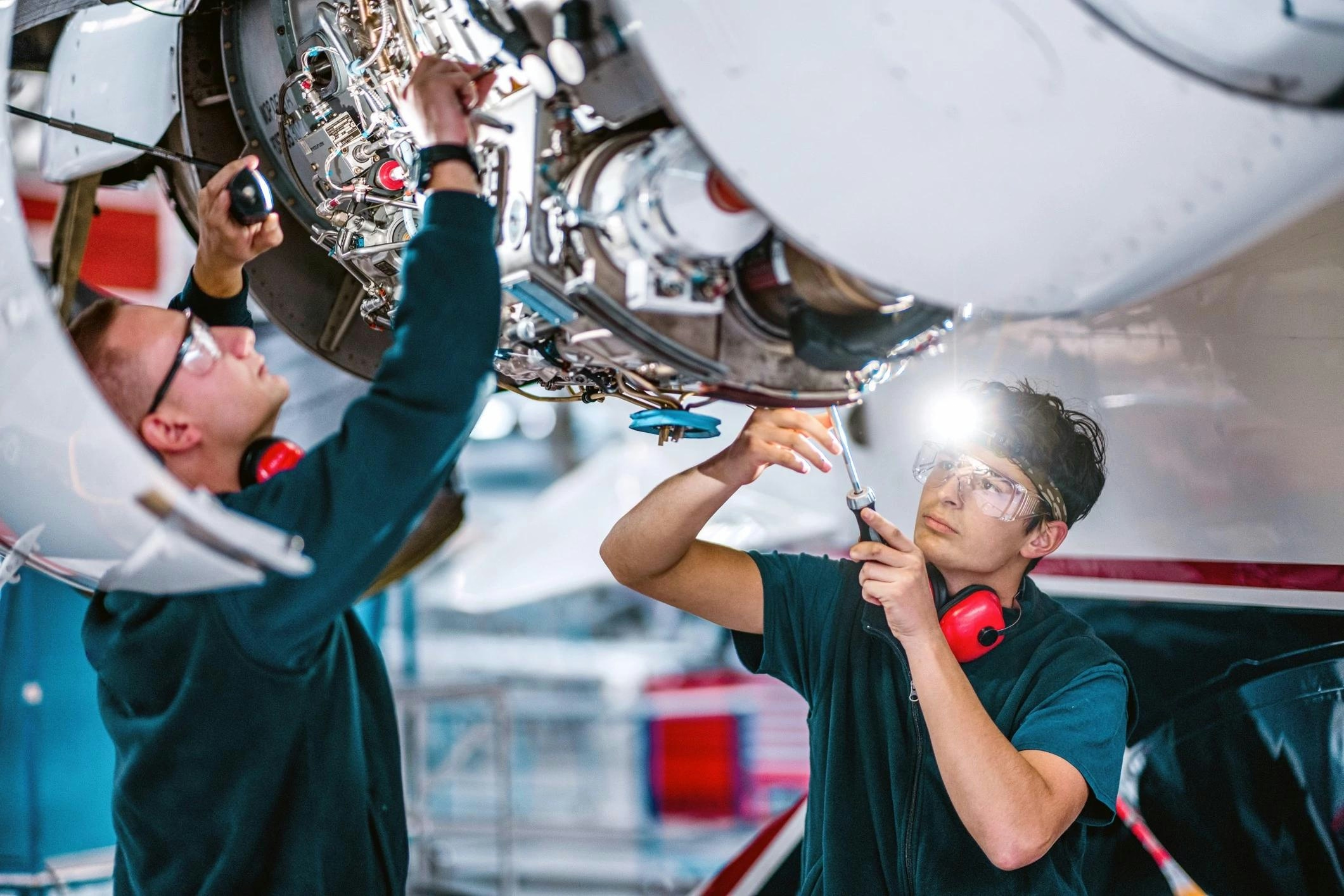
Strengthening Europe’s Aviation Supply Chain Amid Uncertainty Europe’s aviation industry is currently confronting unprecedented challenges as it grapples with a landscape defined by persistent disruption and uncertainty. The combined effects of the COVID-19 pandemic, ongoing regional conflicts, and shifting geopolitical dynamics have revealed significant vulnerabilities within the sector. These challenges are deeply interconnected, posing a serious threat to the resilience and stability of Europe’s aviation supply chain. The Scale and Complexity of the Challenge The magnitude of the problem is considerable. According to analyses by Oliver Wyman and the International Air Transport Association (IATA), supply chain disruptions cost airlines more than $11 billion in the past year alone. Aircraft backlogs have surged to approximately 17,500 units, and at current production rates, it may take up to a decade to clear this backlog. Delivery timelines have nearly doubled, compelling airlines to continue operating older, less fuel-efficient aircraft. This reliance has resulted in excess fuel costs exceeding $4.2 billion annually, further straining airline finances. Central to these difficulties is the intricate complexity of the aviation supply network. A typical aircraft manufacturer depends on over 200 direct suppliers and more than 12,000 indirect ones. This extensive and multifaceted network has become increasingly fragile, with several key factors exacerbating its vulnerability. Drivers of Supply Chain Vulnerability Geopolitical shocks have played a significant role in destabilizing the supply chain. The Russia-Ukraine conflict, for instance, has highlighted the risks associated with dependence on single sources for critical materials such as titanium. Disruptions to borders and trade routes can abruptly halt the flow of essential supplies. The repercussions of this conflict have extended beyond aviation, affecting other European industries, including Northern Europe’s furniture manufacturing sector, thereby underscoring the widespread exposure to geopolitical instability. Industry consolidation has further reduced the number of alternative suppliers available. This concentration means that when one supplier encounters difficulties, the resulting disruptions cascade through the supply chain, amplifying risks due to the lack of redundancy. Workforce shortages also compound these issues. Training maintenance technicians requires five to six years, making it challenging to address gaps swiftly. Recent surveys indicate that two-thirds of Maintenance, Repair, and Overhaul (MRO) providers identify the need for improved inventory availability and shorter lead times, reflecting broader inefficiencies within the network. Additionally, manufacturing remains concentrated in regions susceptible to natural disasters. Events such as floods or earthquakes can disrupt production far beyond the immediate area, further destabilizing supply chains. Investment and Innovation Amidst Challenges The current investment climate presents additional obstacles, delaying critical technological advancements. For example, the inaugural flight of Electron’s prototype has been postponed until 2028, signaling broader setbacks in innovation and modernization efforts across the sector. In response to these pressures, industry competitors are intensifying efforts to digitalize and automate operations, aiming to create more agile and transparent supply chains. Investments in sustainable technologies, particularly Sustainable Aviation Fuel (SAF), are gaining traction as airlines seek to reduce operational costs and align with growing consumer demand for environmentally responsible travel. As Europe’s aviation sector adapts to these multifaceted challenges, building resilience will necessitate a coordinated strategy. This includes diversifying supplier bases, investing in workforce development, embracing digital transformation, and prioritizing sustainability initiatives. Addressing these interconnected risks is essential for securing the industry’s future amid an increasingly uncertain global environment.
The Evolution of the Aircraft Maintenance Engineer Role

The Evolution of the Aircraft Maintenance Engineer Role

The Evolution of the Aircraft Maintenance Engineer Role From Hands-On Ingenuity to Digital Precision In 1980, the role of the aircraft maintenance engineer (AME) was defined by practical resourcefulness and mechanical skill. Maintaining helicopters such as the Bell 206 and early AStars depended largely on a sturdy toolbox, printed manuals, and the engineer’s own experience and intuition. Communication with base was limited to high-frequency radios, and diagnosing faults in remote locations required the engineer to rely on hands-on troubleshooting with minimal external support. Today, the profession has undergone a profound transformation. Modern AMEs operate in a highly digitized environment, utilizing iPads, digital logbooks, and adhering to stringent corporate protocols. Aircraft themselves have evolved, featuring digital glass cockpits, composite materials, and sophisticated fly-by-wire systems. Troubleshooting now frequently involves interfacing with the aircraft’s central computer to interpret fault codes, marking a significant shift from purely mechanical diagnostics to data-driven analysis. Changing Expectations and Global Expansion This technological evolution has been accompanied by a shift in the expectations and compensation for AMEs. Entry-level engineers now command salaries more than six times higher than those in 1980, reflecting the increased complexity and responsibility inherent in the role. The tools of the trade have expanded as well; what once fit into a compact “bush box” now often requires a dedicated workspace equipped with advanced diagnostic devices. The demand for skilled AMEs is growing rapidly on a global scale, particularly in the Asia-Pacific region, where expanding aircraft fleets are placing considerable strain on maintenance, repair, and overhaul (MRO) capacities. In response, companies are making strategic investments to strengthen their foothold in emerging markets. For instance, SIA Engineering Company (SIAEC) recently acquired a 30% stake in Arport AME Fujian, underscoring the increasing strategic importance of maintenance operations in China’s burgeoning aviation sector. Innovation and the Future of Maintenance Manufacturers and MRO providers are embracing integrated data systems and artificial intelligence to advance predictive maintenance capabilities. This approach not only enhances safety and operational efficiency but also addresses labor challenges associated with a growing and aging global fleet. Despite these technological advancements, the fundamental mission of the AME remains unchanged: to ensure aircraft are safe, reliable, and ready for flight. The profession continues to demand adaptability, problem-solving skills, and a steadfast commitment to excellence. For those entering the field today, the opportunities are broader and the challenges more complex, yet the core sense of purpose and excitement endures. Whether working on the hangar floor or in the field, aircraft maintenance engineers remain at the forefront of an industry that is more dynamic and essential than ever, playing a pivotal role not only in keeping aircraft flying but in shaping the future of aviation itself.
line