Immagine

Trasforma le intuizioni dell’IA in azioni concrete

Unisciti oggi alla lista d’attesa di AeroGenie!

Tendenze

Categories

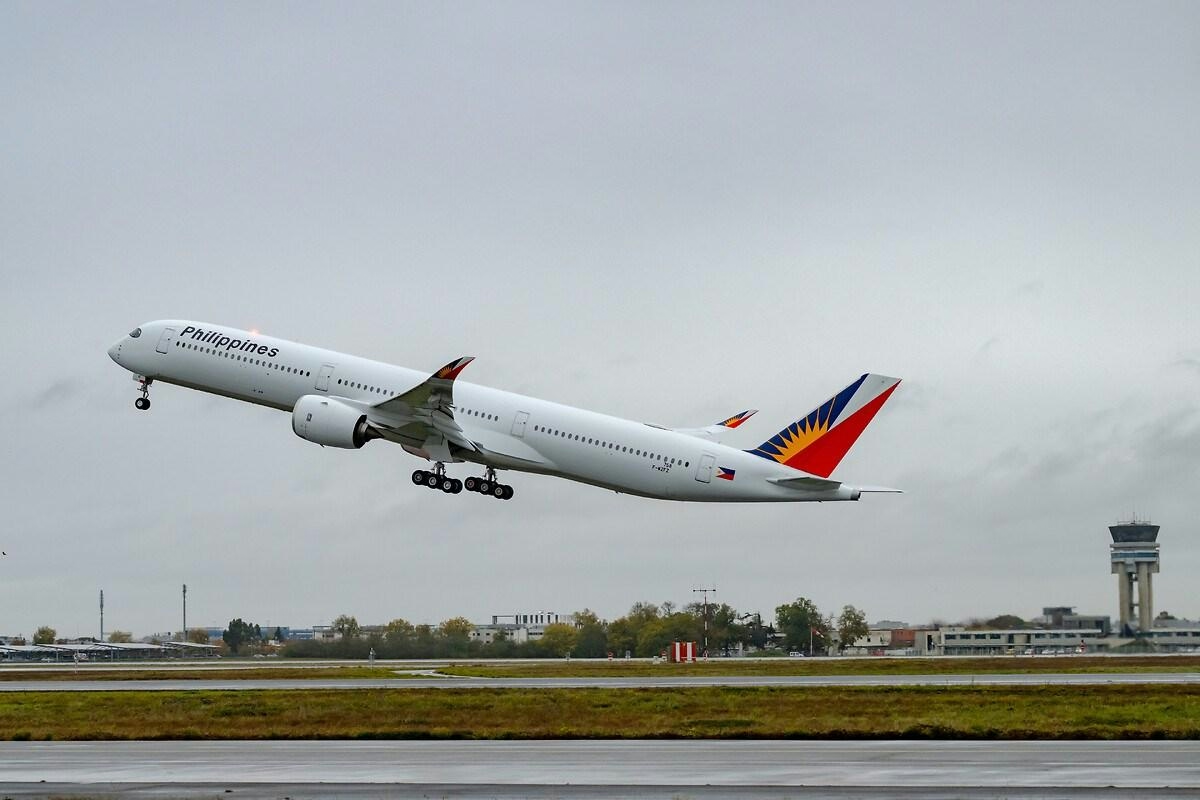
Philippine Airlines Orders Rolls-Royce Engines for A350-1000 Fleet
July 21, 2026By ePlane AI
Philippine Airlines Orders Rolls-Royce Engines for A350-1000 Fleet
0
0
Philippine Airlines
Airbus A350-1000
Rolls-Royce Trent XWB-97

Philippine Airlines Expands A350-1000 Fleet with Rolls-Royce Engine Order

Philippine Airlines (PAL) has formalized a significant agreement with Rolls-Royce, signing a Memorandum of Understanding (MoU) for 18 Trent XWB-97 engines. This order will equip nine additional Airbus A350-1000 aircraft, with provisions to cover engines for up to five more jets under PAL’s existing purchase rights. Announced on July 21, 2026, at the Farnborough International Airshow, the deal also includes PAL’s enrollment in Rolls-Royce’s TotalCare service program, which will manage the maintenance and operational health of the airline’s engine fleet.

Strategic Partnership and Technological Advancements

The Trent XWB-97 engine is the exclusive powerplant for the A350-1000 and is widely recognized for its fuel efficiency, reliability, and environmental performance. Lucio C. Tan III, President and Chief Operating Officer of PAL Holdings, emphasized that this investment reflects the airline’s confidence in its future growth. He noted that the combination of the A350-1000 aircraft with the Trent XWB-97 engine will continue to define PAL’s flagship long-haul operations. Furthermore, the TotalCare program is expected to enhance fleet availability and provide greater predictability in maintenance costs as the airline expands its widebody operations.

Rob Watson, President of Civil Aerospace at Rolls-Royce, underscored the deepening collaboration between the two companies. He described the Trent XWB-97 as an exceptional engine with a proven track record of reliability and efficiency, highlighting that it has been Rolls-Royce’s best-selling engine over the past 18 months. Watson also pointed to the TotalCare program as a critical element in supporting PAL’s operational performance amid the growth of its A350-1000 fleet.

Fleet Modernization Amid Industry Challenges

PAL’s decision to order additional Rolls-Royce engines aligns with a broader strategy to modernize its long-haul fleet. Alongside the commitment to nine more A350-1000 aircraft from Airbus, the airline has also placed an order for up to 20 Boeing 787-10s. This dual investment signals a concerted effort to enhance PAL’s long-haul capabilities with next-generation widebody jets that prioritize fuel efficiency and operational reliability.

Nevertheless, the expansion of a Rolls-Royce-powered fleet comes with potential challenges. Industry analysts and competitors are expected to scrutinize the order, particularly in light of ongoing concerns within the aviation sector regarding engine reliability, maintenance expenses, and possible delivery delays. Some competitors may respond by diversifying their engine portfolios or emphasizing cost-efficiency as they monitor Rolls-Royce’s evolving reputation for reliability and operational support.

Despite these considerations, PAL’s expanded commitment to both Airbus and Boeing widebody aircraft underscores its ambition to strengthen its position in the competitive long-haul market. The partnership with Rolls-Royce and the adoption of the TotalCare program are poised to play a pivotal role in supporting the airline’s growth and operational resilience as it navigates the evolving aviation landscape.

More news
Farnborough News Summary, July 21, 2026

Farnborough News Summary, July 21, 2026

Farnborough News Summary, July 21, 2026 Milestone in Hybrid Electric Flight GE Aerospace has achieved a landmark in aviation by successfully completing the first hybrid electric flight above 30,000 feet, a cruising altitude typical for commercial passenger aircraft. This accomplishment, realized in collaboration with NASA, BETA Technologies, and Boeing, underscores the potential of more electric aircraft engine systems to shape the future of flight. The test campaign included a hybrid electric operation lasting over two hours, setting a new industry standard for endurance. The record-setting flights utilized a modified Saab 340B as part of NASA’s Electrified Powertrain Flight Demonstration (EPFD) project. The aircraft’s right nacelle was inverted and specially ventilated to accommodate GE Aerospace’s fully integrated megawatt-class, multi-kilovolt hybrid electric propulsion system. This advanced system incorporates GE-developed motor/generators, power converters, controllers, Avio Aero gearboxes, Dowty propellers, Unison heat exchangers, and a CT7 engine. BAE Systems supplied the batteries, while Boeing subsidiary Aurora Flight Sciences provided the complete nacelle, highlighting a complex collaboration across multiple aerospace leaders. Strategic Partnerships and Sustainability Initiatives In a separate announcement, GE Aerospace revealed a five-year agreement with the Air France KLM Group—including Air France, Hop!, and Transavia France—to deploy its Fuel Insight analytics solution across the entire group. Already in use by KLM, KLC, Martinair, and Transavia Holland, Fuel Insight will support enhanced fuel optimization, sustainability reporting, and foster greater internal collaboration and best-practice sharing within the group. Meanwhile, Air Canada and Airbus unveiled plans to establish a Sustainability Co-Investment Platform aimed at accelerating the development of a commercial-scale Sustainable Aviation Fuel (SAF) industry in Canada. The initiative, which plans to invest up to CAD 13.7 million (approximately US$10 million), is contingent on supportive public policy and seeks to advance a Canadian SAF project toward a final investment decision. Both companies emphasized the critical role of industry-government collaboration to ensure domestic SAF production, price competitiveness, and the affordability of air travel. This effort aligns with ongoing advocacy through the Canadian Sustainable Aviation Fuel Coalition (C-SAF). Industry Trends and Market Dynamics The Farnborough Airshow also highlighted broader industry trends, particularly the growing market interest in emerging technologies such as electric vertical takeoff and landing vehicles (eVTOLs) and drones. This shift in focus may redirect investment away from traditional aerospace sectors, intensifying competition among established suppliers. New entrants like Phinia, which is expanding into the European market with precision laser machining technology, face significant challenges from entrenched aerospace giants. Despite these obstacles, Phinia’s market entry was met with positive reception, prompting major players including Airbus and Boeing to sharpen their innovation and market positioning strategies. Both Airbus and Boeing secured substantial orders during the event, underscoring the dynamic and competitive nature of the aerospace sector. As the industry continues to evolve, the Farnborough Airshow served as a platform not only for showcasing technological breakthroughs and sustainability initiatives but also for revealing the shifting priorities and competitive pressures that will shape the future of aerospace.
Japan Airlines Partners with JetZero on Z4 Aircraft for Early 2030s Service

Japan Airlines Partners with JetZero on Z4 Aircraft for Early 2030s Service

Japan Airlines and JetZero Collaborate on Next-Generation Z4 Aircraft for Early 2030s Japan Airlines (JAL) has entered into a strategic partnership with U.S.-based aerospace developer JetZero to jointly develop, operate, and maintain the innovative Z4 midsize passenger jet. Announced on July 21, the collaboration seeks to integrate JAL’s operational and maintenance expertise from the outset of the Z4 program, supporting the aircraft’s anticipated commercial launch in the early 2030s. This initiative also aligns with broader industry efforts to achieve net-zero carbon dioxide emissions by 2050. Innovative Design and Performance Goals The JetZero Z4 employs a blended-wing-body (BWB) design, which merges the wing and fuselage into a single lifting surface. This configuration is expected to significantly reduce aerodynamic drag, targeting a 30 to 50 percent improvement in fuel efficiency over current midsize aircraft, while also lowering operating costs. The aircraft is designed to accommodate 250 passengers and cover a range of approximately 9,300 kilometers, enabling nonstop flights on routes such as Tokyo to the northern U.S. West Coast. Despite its novel design, the Z4 aims to maintain compatibility with existing airport infrastructure, including parking stands and passenger boarding bridges, while offering a more spacious cabin environment. Partnership Focus and Industry Implications The collaboration between JAL and JetZero will concentrate on defining the aircraft’s basic specifications, verifying its compatibility with airport operations, and establishing a future maintenance, repair, and overhaul (MRO) framework. JAL’s involvement reflects its medium- to long-term fleet strategy, which prioritizes the adoption of more efficient and environmentally sustainable aircraft. As of March 2026, JAL operated a fleet of 234 aircraft and, together with partner airlines, served 413 airports across 71 countries. JetZero, founded in 2021, is dedicated to advancing next-generation aircraft technologies through partnerships with manufacturers and technology firms. While the partnership represents a significant advancement toward commercializing blended-wing-body technology, several challenges remain. Regulatory approval processes, technological maturity, and market acceptance are critical factors that could affect the timeline, potentially delaying service entry beyond the early 2030s. Furthermore, competitive pressures may prompt other industry players to accelerate their sustainable aviation initiatives or form alliances to develop alternative technologies. These dynamics are likely to intensify interest in BWB designs and contribute to a broader shift toward sustainable aviation solutions. Blended-wing-body aircraft have long been recognized for their aerodynamic advantages, yet commercial adoption has been limited by certification complexities, cabin layout considerations, and airport handling requirements. JAL’s early participation as an airline operator brings valuable practical insights to JetZero’s development efforts, potentially helping to overcome these challenges and facilitate the introduction of next-generation aircraft into commercial service.
Acron Aviation and Deutsche Aircraft Sign Supply Agreement

Acron Aviation and Deutsche Aircraft Sign Supply Agreement

Acron Aviation and Deutsche Aircraft Establish Long-Term Supply Partnership Acron Aviation and Deutsche Aircraft have formalized a long-term supply agreement for Acron’s Flight Recorder and Standby solutions, announced on the second day of the Farnborough International Airshow 2026. This collaboration will integrate Acron’s advanced safety and monitoring systems into Deutsche Aircraft’s forthcoming D328eco regional turboprop, a 40-seat aircraft designed specifically for short-range regional air transport. Enhancing Safety and Sustainability in Regional Aviation The partnership is intended to bolster the D328eco’s safety, operational efficiency, and environmental sustainability. Acron’s 25-hour Recorder and Standby systems are engineered to meet evolving regulatory and operational requirements, complementing Deutsche Aircraft’s mission to deliver high-performance, certified, and environmentally responsible aircraft. These systems will provide next-generation flight monitoring and performance metrics, supporting the D328eco’s objective of achieving more sustainable operations. Ron Nye, President of Acron Aviation, described the agreement as more than a conventional supplier relationship, emphasizing its foundation on shared values and innovation. He highlighted the significance of supporting Deutsche Aircraft’s D328eco programme with trusted Recorder and Standby technologies, noting the manufacturer’s role as a leading force in redefining sustainable regional flight. Patricia Ferrari, Vice President Supply Chain at Deutsche Aircraft, underscored the critical importance of strong supplier partnerships. She praised Acron Aviation’s expertise in safety-critical avionics and their proven reliability, framing the agreement as a reflection of mutual commitment to quality and innovation. Ferrari emphasized the goal of delivering a next-generation regional aircraft that meets the evolving demands of operators and regulators worldwide. Strategic Collaboration Amid Industry Challenges Both companies stressed that their partnership aims to strengthen aerospace supply chains through sustained collaboration and technological innovation. By combining Deutsche Aircraft’s next-generation regional platform with Acron Aviation’s avionics capabilities, they seek to influence the future landscape of regional air connectivity. Nonetheless, the partnership faces potential challenges. Navigating supply chain complexities and ensuring the timely delivery of flight recorders remain critical concerns, particularly in the context of ongoing global geopolitical uncertainties. The agreement is expected to attract close scrutiny from aviation regulators and airline operators, who will monitor compliance and the reliability of the supplied avionics systems. Additionally, competitors within the avionics sector may respond strategically, either by attempting to fill any market gaps or by leveraging the partnership to strengthen their own positions. The D328eco: A New Standard in Regional Turboprops The D328eco, developed as the successor to the Dornier 328, integrates proven performance with cutting-edge technologies aimed at improving efficiency, sustainability, and passenger comfort. Powered by two Pratt & Whitney Canada PW127XT-S engines, the aircraft offers reduced fuel consumption, lower maintenance costs, and full compatibility with 100% Sustainable Aviation Fuel (SAF). Its advanced Garmin G5000 PRIME avionics suite enhances safety and reduces pilot workload, while a stretched fuselage increases seating capacity to 40 passengers. As the D328eco programme progresses, the partnership between Acron Aviation and Deutsche Aircraft is positioned to play a crucial role in advancing a safer, more efficient, and environmentally sustainable future for regional aviation.
Embraer and SkyWest Extend Maintenance Agreement for 271 E175 Aircraft

Embraer and SkyWest Extend Maintenance Agreement for 271 E175 Aircraft

Embraer and SkyWest Extend Maintenance Agreement for 271 E175 Aircraft At the 2026 Farnborough International Airshow, Embraer and SkyWest Airlines announced the extension of their long-term heavy maintenance agreement, which now encompasses SkyWest’s entire fleet of 271 Embraer E175 aircraft operating in the United States. This expanded partnership increases maintenance capacity and broadens the scope of services provided. Maintenance operations will continue at Embraer Services & Support facilities located in Nashville, Tennessee; Macon, Georgia; and Fort Worth, Texas. Joe Sigg, SkyWest’s vice president of maintenance, highlighted the importance of the agreement in maintaining the strength and reliability of their E175 fleet. Supporting the Largest E175 Fleet SkyWest holds the distinction of being the world’s largest owner-operator of the Embraer E175, operating under capacity-purchase and partnership agreements with major U.S. carriers including United Airlines, Delta Air Lines, American Airlines, and Alaska Airlines. The E175 plays a pivotal role in the U.S. regional network, servicing short- and medium-haul routes that connect smaller communities to major airline hubs. In 2025, SkyWest transported 46 million passengers and managed a fleet of approximately 500 aircraft, serving over 260 destinations across North America. Embraer Expands U.S. MRO Footprint Given the scale of SkyWest’s E175 fleet, heavy maintenance capacity is a critical strategic asset. Embraer is responding by expanding its maintenance, repair, and overhaul (MRO) network in the United States, including a $70 million investment in a new commercial aviation MRO facility at Perot Field Alliance Airport in Fort Worth. Scheduled to open in 2027, this facility will increase Embraer’s U.S. service capacity for E-Jets customers by more than 50%. This development complements the ongoing services at Alliance Airport, which commenced in June 2025. Carlos Naufel, president and CEO of Embraer Services & Support, emphasized that the extension of the SkyWest agreement underscores Embraer’s commitment to OEM-led maintenance solutions, which enhance fleet reliability and operational efficiency. Market Dynamics and Competitive Landscape The extension of this maintenance agreement occurs amid shifting market dynamics within the regional aircraft sector. Embraer’s reinforced support for its E-Jets family is expected to bolster customer confidence and may attract new operators. Competitors such as Bombardier and ATR are likely to respond by enhancing their own maintenance offerings to maintain or grow their market share. Embraer’s recent certifications in India and increasing deliveries across both commercial and executive segments further solidify its strong market position, potentially influencing competitor strategies and shaping the future competitive landscape. Maintenance Takes Center Stage While aircraft orders often dominate industry headlines, maintenance capacity is becoming increasingly vital to airline operations. For SkyWest, ensuring the reliability of its 271 E175 aircraft is central to its role within the U.S. regional system. For Embraer, the agreement strengthens its Services & Support business around one of its most significant installed fleets. The E175’s unique position in the U.S. market—reinforced by scope-clause limits in major airline pilot contracts—makes ongoing maintenance support essential. As airlines and regional partners continue to rely on the E175, robust maintenance agreements such as this will be crucial in determining the availability and reliability of regional air service in the years ahead.
Fuel Contamination Causes Fatal Beech B-60 Crash, Killing Three

Fuel Contamination Causes Fatal Beech B-60 Crash, Killing Three

Fuel Contamination Causes Fatal Beech B-60 Crash, Killing Three Incident Overview and Maintenance History A recent crash involving a Beech B-60 aircraft has resulted in the deaths of three individuals, drawing renewed attention to the critical importance of fuel quality and maintenance standards within general aviation. The pilot had acquired the aircraft on September 1, 2023, shortly after its most recent annual inspection. The last documented maintenance took place on July 17, 2024, just two days before the accident. This maintenance included the application of sealer to the wing deice boots near the fuel filler caps, as well as oil and filter changes on both engines. The mechanic responsible for the service reported that the oil was initially “black and nasty” during the first change, with the oil filter having not been replaced for over two years. It required two additional oil changes before the oil condition improved sufficiently to sign off the maintenance in the logbooks. Notably, the 2023 annual inspection records contained no entries for oil or filter changes, raising questions about the thoroughness of prior maintenance. Pre-Flight Concerns and Flight Details A personal acquaintance of the pilot, familiar with the aircraft’s condition, expressed serious concerns about its airworthiness. The aircraft had reportedly been parked outdoors in Plattsburgh, New York, for several months, exposed to harsh winter weather and accumulating snow. The acquaintance cited multiple unresolved issues, including damage from a previous hard landing, water contamination in the fuel tanks, hydraulic system problems, and dry rot on the tires. Additionally, the pilot had reported left engine backfiring but appeared intent on returning the aircraft to service despite warnings to address these problems. On July 19, 2024, ADS-B data recorded the Beech B-60’s departure from Plattsburgh International Airport (KPBG), bound for John Glenn Columbus International Airport (KCMH) in Ohio. The aircraft climbed to 16,500 feet before the pilot reported a problem to air traffic control approximately 75 miles northeast of Youngstown/Warren Regional Airport (KYNG). Although offered a closer airport, the pilot requested KYNG, citing its longer 9,003-foot runway. Shortly thereafter, the pilot reported that the left engine was “dead.” The aircraft circled twice near the approach end of Runway 32 at KYNG before lining up for final approach. At approximately 500 feet above ground level, the airplane continued descending along the runway centerline. ADS-B data indicated the aircraft was near airport elevation, traveling at a ground speed of 131 knots roughly 3,500 feet from the runway’s end. Industry Implications and Safety Concerns The fatal crash has intensified scrutiny of fuel quality and contamination prevention measures across the aviation sector. Experts emphasize the necessity of rigorous fuel inspections and strict adherence to minimum fuel requirements prior to takeoff. In response to the accident, the industry is witnessing concerns over rising insurance premiums and the implementation of heightened safety protocols. Competitors are reportedly reviewing and enhancing their safety procedures and fuel system designs to mitigate the risk of similar incidents. This tragedy highlights the indispensable role of comprehensive maintenance and preflight inspections, particularly regarding fuel integrity, in safeguarding flight operations.
Shohin Airlines Orders Four Airbus A320neos at Farnborough Airshow

Shohin Airlines Orders Four Airbus A320neos at Farnborough Airshow

Shohin Airlines Places Landmark Order for Airbus A320neo Family Jets at Farnborough Airshow Shohin Airlines, a private carrier headquartered in Dushanbe, Tajikistan, has announced its inaugural order for Airbus aircraft, securing four jets from the A320neo family at the 2026 Farnborough International Airshow. The agreement, disclosed on the event’s second day, comprises two A320neo and two A321neo aircraft, marking a pivotal development for both the airline and Tajikistan’s civil aviation sector. Strategic Expansion and Fleet Configuration Established in mid-2025, Shohin Airlines currently operates helicopters for specialized charter missions within Tajikistan and is preparing to launch scheduled passenger services. The airline intends to utilize the new Airbus jets to broaden its route network, enhance international connectivity, and cultivate a strong national airline brand. The A320neo aircraft will be configured with 176 seats in a single-class layout, while the larger A321neos will accommodate 196 passengers across two classes. These aircraft are expected to support both passenger and cargo operations, positioning Shohin Airlines for growth across domestic, regional, and international markets. Zafar Ahmadzoda, Chief Executive Officer of Shohin Airlines, described the Airbus contract as a milestone for the airline and the country’s aviation industry. He emphasized that the A320neo family will form the backbone of a modern, efficient, and environmentally sustainable fleet. Ahmadzoda reaffirmed the airline’s commitment to delivering the highest standards of safety, comfort, and service quality while expanding Tajikistan’s international air connectivity. He further noted that the partnership with Airbus provides a solid foundation for Shohin Airlines’ long-term growth and its ambition to become a world-class carrier. Benoît de Saint-Exupéry, Airbus Executive Vice President for Commercial Aircraft Sales, welcomed Shohin Airlines as a new customer. He highlighted Airbus’s pride in supporting the airline’s vision to connect Tajikistan globally, describing the agreement as the beginning of a strong partnership. De Saint-Exupéry underscored that the deal would enable Shohin Airlines to set a new regional standard for fleet optimization, operational excellence, and passenger experience from the outset. Challenges and Regional Implications As Shohin Airlines prepares to integrate the new A320neo family jets, it faces several operational challenges, including pilot and maintenance training, fleet integration, and potential delivery delays. Industry analysts are closely monitoring how the airline’s expansion strategy will influence regional competition and market dynamics. This move may prompt rival carriers in Tajikistan and neighboring countries to pursue similar fleet upgrades to maintain competitiveness. The Farnborough Airshow itself has witnessed a surge in aircraft orders, with both Airbus and Boeing securing significant commitments. This heightened activity is expected to shape market strategies and intensify competition among carriers in Central Asia and beyond. In addition to the Airbus order, Shohin Airlines is investing in fleet development for domestic routes, with plans to introduce the L-410 NG regional turboprop. As the airline finalizes its operational readiness, its entry into scheduled passenger services is poised to reshape Tajikistan’s aviation landscape.
Philippine Airlines to Order Nine Additional A350-1000 Aircraft at Farnborough

Philippine Airlines to Order Nine Additional A350-1000 Aircraft at Farnborough

Philippine Airlines to Double A350-1000 Fleet with New Order at Farnborough Philippine Airlines (PAL) has announced a significant expansion of its long-haul fleet with a Memorandum of Understanding (MoU) to acquire nine additional Airbus A350-1000 aircraft. The agreement was formalized during the Farnborough Airshow, held from July 20 to 24, in a ceremony attended by Lucio C. Tan III, President and COO of PAL Holdings, Inc., Richard Nuttall, President of Philippine Airlines, and Airbus executives Lars Wagner and Benoît de Saint-Exupéry. This new order will double PAL’s total commitments for the A350-1000 to 18 aircraft, following the delivery of the first two earlier this year. The A350-1000 is poised to become the airline’s flagship model, underpinning its strategy to expand long-haul operations, particularly non-stop flights connecting Manila with major cities on the East Coast of the United States and Canada. Fleet Configuration and Strategic Implications The additional A350-1000s will be configured in a three-class layout, accommodating 382 passengers. This includes 42 Business Class suites featuring privacy doors and fully flat beds, 24 seats in a dedicated Premium Economy cabin, and 316 Economy seats. All cabins will be equipped with the latest in-flight entertainment and connectivity technologies, enhancing passenger comfort and experience. Alongside this order, PAL has confirmed plans to acquire up to 20 Boeing 787-10 aircraft, reflecting a broader commitment to modernizing both its long-haul and regional fleets. This dual approach is expected to bolster investor confidence and support the airline’s growth ambitions. Nevertheless, PAL faces challenges such as potential supply chain disruptions, volatile fuel prices, and intensified competition as other carriers accelerate their own fleet renewal programs. Current Fleet and Aircraft Performance Philippine Airlines currently operates a diverse Airbus fleet, including A330-300s serving routes to the Middle East, Australia, and Asia, as well as A320 and A321 single-aisle aircraft for domestic and regional services. The A350-1000, capable of flying up to 9,700 nautical miles (18,000 kilometers) non-stop, is distinguished by its advanced aerodynamics, state-of-the-art Rolls-Royce engines, and extensive use of lightweight materials. These features contribute to a 25% improvement in fuel efficiency, operating costs, and CO2 emissions compared to previous-generation aircraft. The aircraft’s Airspace cabin is designed to enhance passenger comfort through modern amenities and spacious interiors. As of June 2026, the Airbus A350 Family had secured 1,595 firm orders from 68 customers worldwide, underscoring its strong position in the global aviation market. Industry Context at Farnborough In related developments at the Farnborough Airshow, Shohin Airlines of Tajikistan announced its inaugural Airbus order for four A320neo Family aircraft. This move aims to expand the airline’s network and strengthen its presence in both regional and international markets. The A320neo Family remains the world’s most popular single-aisle aircraft, noted for its significant fuel savings and reduced emissions. Philippine Airlines’ latest orders highlight a robust commitment to fleet modernization and network expansion, positioning the carrier to compete more effectively in the evolving global aviation landscape.
Ontic and CFS Aero Partner on Engine Support Services

Ontic and CFS Aero Partner on Engine Support Services

Ontic and CFS Aero Forge Strategic Partnership in Engine Support Services Ontic, a leader in aerospace product licensing and lifetime support, has entered into a strategic partnership with UK-based engine maintenance specialist CFS Aeroproducts (CFS Aero). The collaboration targets engine and auxiliary power unit (APU) licensing, transition, and support opportunities within the global aerospace market. By combining Ontic’s extensive experience in product licensing with CFS Aero’s established capabilities in engine and APU maintenance, repair, and overhaul (MRO), the partnership aims to provide original equipment manufacturers (OEMs) with a streamlined pathway to transfer mature engine programmes. This approach allows OEMs to concentrate their investments on the development of next-generation propulsion technologies. Expertise and Market Positioning CFS Aero brings over three decades of experience in engine and APU repair, overhaul, testing, and engineering support, complementing Ontic’s track record of transitioning more than 200 aerospace product lines from OEMs under its licensing model. The alliance is designed to ensure sustained, long-term support for legacy engine and APU programmes that are expected to remain operational for many years. At the same time, it enables manufacturers to prioritize innovation and the advancement of future aircraft technologies. Competitive Landscape and Industry Dynamics The partnership enters a competitive aerospace services market, where other providers are intensifying their efforts. Notably, companies such as FDH Aero and Embraer are expanding their supply chain solutions and aircraft production capabilities, heightening competition. FDH Aero, for instance, plans to highlight its global expansion and enhanced supply chain offerings at the 2026 Farnborough International Airshow, signaling a strategic push to increase its market share. As Ontic and CFS Aero advance their collaboration, industry observers anticipate increased scrutiny regarding the reliability and cost-effectiveness of their combined services. Competitors are expected to respond by further enhancing their supply chain and support services to maintain their competitive positions. These evolving dynamics emphasize the critical role of innovation and operational excellence as aerospace companies strive to support both legacy and next-generation aircraft programmes. The partnership between Ontic and CFS Aero exemplifies a broader industry trend toward collaboration and specialization. OEMs are increasingly seeking efficient solutions to sustain mature product lines while simultaneously advancing new technologies. The ultimate success of this alliance will depend on the partners’ technical expertise and their ability to adapt to shifting market demands and competitive pressures.
StandardAero Signs LEAP Lease Agreement with Lessor Avolon

StandardAero Signs LEAP Lease Agreement with Lessor Avolon

StandardAero and Avolon Forge Strategic LeaseTEAM Agreement for LEAP Engine Services StandardAero, Inc. (NYSE: SARO), a prominent independent provider of aerospace engine aftermarket services, has formalized a LeaseTEAM agreement with Avolon, a leading global aircraft leasing company. This partnership will enable Avolon’s customers to access an extensive range of maintenance, repair, and overhaul (MRO) services for the CFM International LEAP-1A and LEAP-1B engine families. Enhancing Maintenance Flexibility for Avolon’s Fleet Avolon’s current fleet comprises approximately 150 Airbus A320neo aircraft powered by LEAP-1A engines and 54 Boeing 737 MAX aircraft equipped with LEAP-1B engines, reflecting its substantial footprint in the new-generation narrowbody market. The multi-year, non-exclusive LeaseTEAM agreement grants Avolon the ability to offer its airline customers priority induction bookings, allowing for advance reservation of engine maintenance slots to reduce aircraft downtime. Additionally, the agreement includes not-to-exceed pricing on specified LEAP maintenance events, designed to support Avolon’s maintenance needs while providing enhanced flexibility and cost predictability for its airline clients. This arrangement leverages Avolon’s scale and purchasing power to optimize service delivery. Lewis Prebble, President of Commercial Engine Services at StandardAero, emphasized the company’s commitment to meeting the engine support requirements of Avolon’s A320neo and 737 MAX operators. He highlighted the global reach of the services, which will be available across North America, Latin America, Europe, the Middle East, Africa, South Asia, and the Asia-Pacific region. Will Pitcher, Head of Powerplant Strategy & Asset Solutions at Avolon, noted the importance of proactive maintenance planning for new technology engines such as the CFM LEAP. He described the agreement as a strategic safeguard for Avolon and an additional option for its customers, underscoring the benefits of priority induction slots, capped pricing, and access to spare engine capacity as mutually advantageous features. Market Context and Competitive Dynamics This agreement emerges amid intensifying competition within the aircraft leasing and engine services sectors. Avolon is actively expanding its market presence, recently acquiring 11 A321neos from Frontier Airlines, a move expected to strengthen its fleet and customer offerings. Concurrently, rival lessor AerCap has launched a joint venture with Air France-KLM Engineering & Maintenance focused on LEAP engine leasing, signaling heightened rivalry in this space. These developments may compel StandardAero to further refine and expand its service portfolio to sustain its competitive position, particularly as Avolon’s fleet grows and AerCap enhances its engine leasing capabilities. Aircraft leasing companies like Avolon now control approximately half of the global commercial aircraft fleet, underscoring the strategic significance of such partnerships in the aviation industry. StandardAero operates its LEAP-1A and LEAP-1B engine support services from an 810,000-square-foot facility in San Antonio, serving a worldwide customer base as an authorized CFM LEAP service provider.
Boeing Projects 43,625 Commercial Aircraft Deliveries by 2045

Boeing Projects 43,625 Commercial Aircraft Deliveries by 2045

Boeing Projects Nearly 44,000 Commercial Aircraft Deliveries by 2045 On July 21, 2026, Boeing unveiled its latest market outlook, forecasting significant growth in the global commercial aircraft fleet over the next two decades. The company projects that the worldwide fleet will expand by nearly 80%, reaching a total of 50,095 aircraft by 2045. To meet the anticipated surge in passenger traffic, which is expected to double during this period, Boeing plans to deliver approximately 43,625 new commercial aircraft. Growth Drivers and Fleet Modernization Boeing’s forecast is grounded in an estimated annual growth rate of 3% for the global jet fleet. Importantly, nearly half of the projected deliveries are intended to replace aging aircraft, reflecting airlines’ ongoing efforts to modernize their fleets. This modernization aims to enhance operational efficiency and sustainability, aligning with broader industry trends toward reducing environmental impact. Industry Response and Market Challenges Reactions to Boeing’s forecast have been varied within the aviation sector. Some analysts have raised concerns about potential disruptions stemming from supply chain issues and geopolitical uncertainties, which could complicate delivery schedules and challenge Boeing’s ambitious targets. These factors highlight the complexities of sustaining growth amid a volatile global environment. In parallel, Airbus, Boeing’s chief competitor, has maintained its overall demand forecast but has slightly lowered its projections, citing similar external pressures. Despite these challenges, Boeing remains optimistic about the long-term expansion of air travel demand. The company emphasizes the resilience of the aviation industry and the critical need for both fleet renewal and expansion to accommodate future growth. Boeing’s outlook thus encapsulates the dual nature of the commercial aviation sector’s future—marked by substantial opportunities alongside significant challenges as the industry adapts to evolving market dynamics.
line