
Trasforma le intuizioni dell’IA in azioni concrete

Tendenze
Categories
Pilot Performs Rare 'Impossible Turn' Maneuver
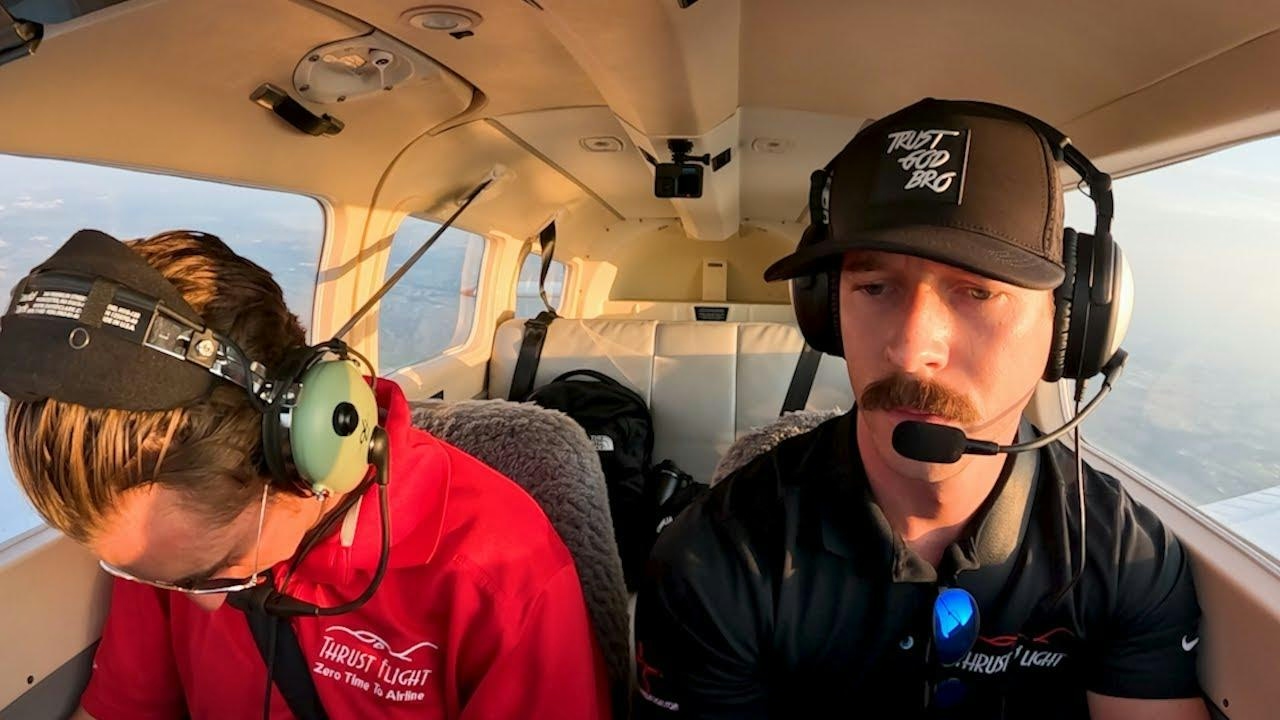
Pilot Executes Rare 'Impossible Turn' Maneuver, Prompting Safety Scrutiny
Emergency at DeLand Municipal Airport
On the night of January 6, a routine training session at DeLand Municipal Airport (KDED) in Florida took an unexpected turn when a flight instructor experienced an abrupt engine failure during a standard climbout. Night flying, often characterized by calm conditions and minimal distractions, typically allows pilots to focus intensely on skill development. However, in this instance, the instructor was forced to transition instantly from routine instruction to emergency response, attempting the highly risky and seldom-successful maneuver known as the "impossible turn."
The "impossible turn" involves a 180-degree return to the runway immediately following an engine failure shortly after takeoff. Aviation training generally advises pilots to avoid this maneuver due to the high risk of loss of control or insufficient altitude to complete the turn safely. Despite these warnings, the pilot assessed the situation, including altitude and wind conditions, and elected to attempt the turn. The aircraft ultimately landed safely, but the decision has ignited considerable debate within the aviation community regarding the appropriateness and risks of such maneuvers.
Regulatory and Industry Response
In the aftermath of the incident, aviation regulatory authorities have launched a review of the circumstances surrounding the event. This investigation aims to determine whether existing pilot training protocols sufficiently prepare aviators for emergencies of this nature. Safety experts caution that while the successful outcome is noteworthy, it should not be interpreted as an endorsement for routine attempts of the "impossible turn" without comprehensive training and careful risk assessment.
The incident has also prompted a swift response from airlines and flight schools, many of which are now facing increased scrutiny over their operational procedures and pilot training standards. Some organizations have taken the opportunity to reinforce their safety protocols publicly, emphasizing their commitment to rigorous training and effective risk management in light of the event.
Communication Challenges Under Pressure
Attention has also turned to the interaction between the pilot and air traffic control (ATC) during the emergency. The high-stress situation exposed potential weaknesses in communication, highlighting the need for clearer and more supportive exchanges during critical moments. Industry analysts suggest that these findings could influence future training and operational procedures for both pilots and controllers, aiming to enhance coordination and decision-making under pressure.
As investigations continue, the aviation community grapples with the lessons presented by this rare and successful execution of the "impossible turn." The incident underscores the unpredictable nature of flight and reinforces the paramount importance of preparation, communication, and sound judgment in ensuring safety in the cockpit.
Comments

Etihad Airways Suspends Airbus A380 Flights on Key Route

Aditya Birla Group Seeks Approval for Aircraft Leasing in GIFT City

Qatar Airways Highlights Innovation and Connectivity at Arabian Travel Market 2026

Hong Kong's Five-Year Plan Includes Andrew Fan's Aircraft Parts Processing Hub Proposal

ACIA Aero Leasing Delivers ATR72-600 to Air Nostrum

RTX Appoints Jill Albertelli as Head of Pratt & Whitney

TAT Technologies Joins Beyond Aero Hydrogen Aircraft Program

AURAK Study Highlights Barriers to Air Taxi Adoption in Emerging Economies

Xiamen Air Selects Altitude for 787 Maintenance at Heathrow

Etihad and Swissport Extend Global Partnership
