
Trasforma le intuizioni dell’IA in azioni concrete

Tendenze
Categories
Portuguese President Approves TAP Privatization
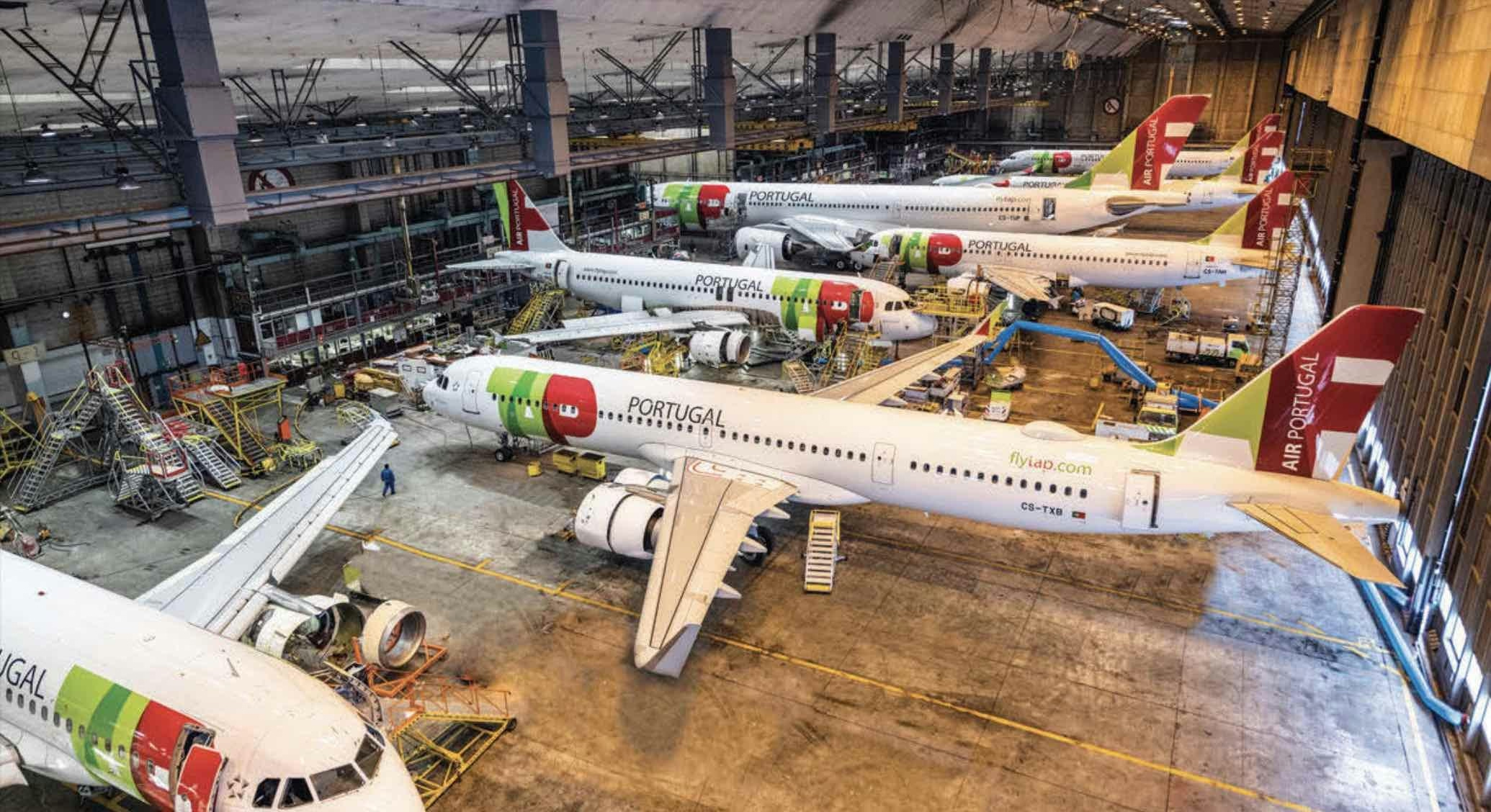
Portuguese President Endorses TAP Air Portugal Privatization
Portuguese President Marcelo Rebelo de Sousa has formally approved a government decree authorizing the privatization of TAP Air Portugal, marking a pivotal development in the future of the national carrier. The legislation sets a clear timeline for the process: interested investors will have 60 days to prequalify, followed by a 90-day period to submit non-binding proposals to acquire up to a 44.9% stake in the airline.
Background and Investor Interest
This move follows a previous attempt to sell a majority stake of at least 51% in TAP, which President de Sousa vetoed in October 2023 due to concerns over transparency and the state’s capacity to maintain oversight of a company considered strategically important for Portugal. After the national elections in May 2025, the newly formed government reaffirmed its commitment to privatization, opting instead to offer a minority share. The president’s approval came after government officials provided assurances regarding the terms of the sale and the mechanisms that would ensure continued state oversight.
Several major European airline groups, including Lufthansa Group, Air France-KLM, and IAG International Airlines Group, have already expressed interest in becoming shareholders. Their involvement signals significant international attention and potential shifts in the competitive landscape of the region’s aviation sector.
Challenges and Market Implications
The privatization process is expected to encounter several challenges. Navigating the complex regulatory environment of the airline industry and managing the transition from public to private ownership will require careful coordination. Furthermore, the government and TAP’s management must address concerns among employees about job security and working conditions during this period of change.
Market reactions will likely depend on investor confidence in the new ownership structure and the strategic direction adopted by TAP. Competitors may respond by adjusting their operational strategies, including pricing and efforts to protect or expand their market share in the region.
As the privatization unfolds, attention will focus on how effectively the government manages these complexities and how the market and TAP’s workforce respond to the evolving situation.

Etihad Airways Suspends Airbus A380 Flights on Key Route

Aditya Birla Group Seeks Approval for Aircraft Leasing in GIFT City

Qatar Airways Highlights Innovation and Connectivity at Arabian Travel Market 2026

Hong Kong's Five-Year Plan Includes Andrew Fan's Aircraft Parts Processing Hub Proposal

ACIA Aero Leasing Delivers ATR72-600 to Air Nostrum

RTX Appoints Jill Albertelli as Head of Pratt & Whitney

TAT Technologies Joins Beyond Aero Hydrogen Aircraft Program

AURAK Study Highlights Barriers to Air Taxi Adoption in Emerging Economies

Xiamen Air Selects Altitude for 787 Maintenance at Heathrow

Etihad and Swissport Extend Global Partnership
