
Trasforma le intuizioni dell’IA in azioni concrete

Tendenze
Categories
Pratt & Whitney Releases Video of XA103 Engine with Canard-Equipped NGAD Design
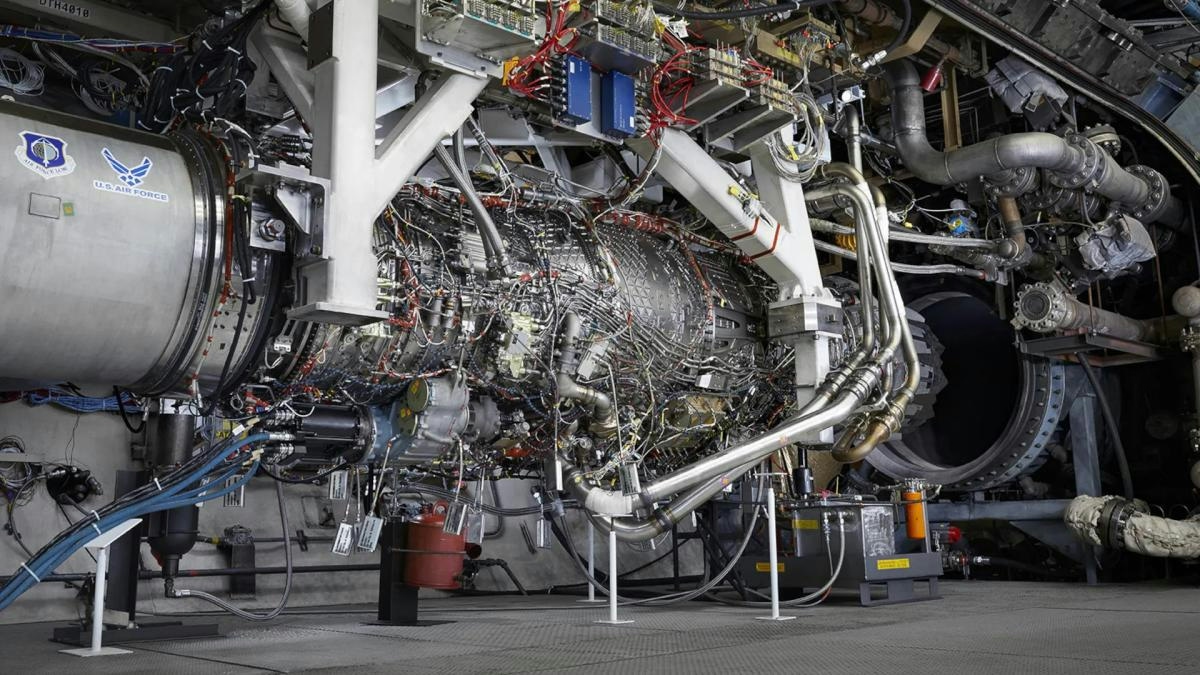
Pratt & Whitney Unveils XA103 Engine in Canard-Equipped NGAD Concept Video
Pratt & Whitney, under its parent company RTX (formerly Raytheon Technologies), has released a promotional video showcasing its XA103 adaptive cycle engine, a leading candidate for the U.S. Air Force’s Next Generation Air Dominance (NGAD) program. Published on RTX’s YouTube channel on June 24, 2025, the video features computer-generated imagery of the XA103 powering a conceptual next-generation fighter aircraft.
Design Origins and Controversies
The aircraft depicted in the video bears a strong resemblance to official renderings of the Boeing F-47 but is actually based on a conceptual design by artist Rodrigo Avella. Originally created in 2017 as a notional F/A-XX concept for the Navy’s NGAD program, Avella’s design has gained widespread circulation online and has even been referenced in past Air Force presentations. Notably, the model features a stealthy, tailless configuration with canard control surfaces and lacks vertical stabilizers. These design elements have fueled ongoing speculation about the true configuration of the F-47 and other NGAD contenders.
The presence of canards in both Avella’s model and various official images has sparked debate within defense circles. Some analysts argue that canards could increase an aircraft’s radar cross-section, potentially compromising stealth. Conversely, others contend that modern design and materials can mitigate such effects. The Air Force’s official images are believed to have been deliberately altered to obscure critical design details, leaving the question of whether canards will appear on the final production aircraft unresolved.
The XA103 Engine and NGAD Competition
The XA103 engine is a key component of the Next Generation Adaptive Propulsion (NGAP) program and is in direct competition with General Electric’s XA102 engine. Both engines are expected to deliver thrust in the range of 35,000 to 40,000 pounds-force, although detailed specifications remain classified. The rivalry between Pratt & Whitney and General Electric is intensifying as both companies strive to power the Air Force’s forthcoming sixth-generation fighter.
Despite its technological promise, Pratt & Whitney faces significant challenges. The company is still addressing delays in its F-35 engine upgrade program, which has already been postponed by a year. This history has raised concerns about potential production and integration delays for the XA103, particularly as the NGAD program demands rapid development and deployment. Reactions to the video have been mixed, with some expressing heightened interest in the NGAD’s advanced capabilities, while others remain skeptical about Pratt & Whitney’s ability to meet the program’s ambitious timelines.
As the Air Force advances its NGAD initiative, competition between engine manufacturers is expected to intensify, with both technological innovation and production reliability under close scrutiny. The release of the XA103 in a canard-equipped NGAD concept highlights the evolving design philosophies and high stakes shaping the future of American air superiority.

Etihad Airways Suspends Airbus A380 Flights on Key Route

Aditya Birla Group Seeks Approval for Aircraft Leasing in GIFT City

Qatar Airways Highlights Innovation and Connectivity at Arabian Travel Market 2026

Hong Kong's Five-Year Plan Includes Andrew Fan's Aircraft Parts Processing Hub Proposal

ACIA Aero Leasing Delivers ATR72-600 to Air Nostrum

RTX Appoints Jill Albertelli as Head of Pratt & Whitney

TAT Technologies Joins Beyond Aero Hydrogen Aircraft Program

AURAK Study Highlights Barriers to Air Taxi Adoption in Emerging Economies

Xiamen Air Selects Altitude for 787 Maintenance at Heathrow

Etihad and Swissport Extend Global Partnership
