
Trasforma le intuizioni dell’IA in azioni concrete

Tendenze
Categories
Preliminary Air India Crash Report: Key Findings and Unanswered Questions
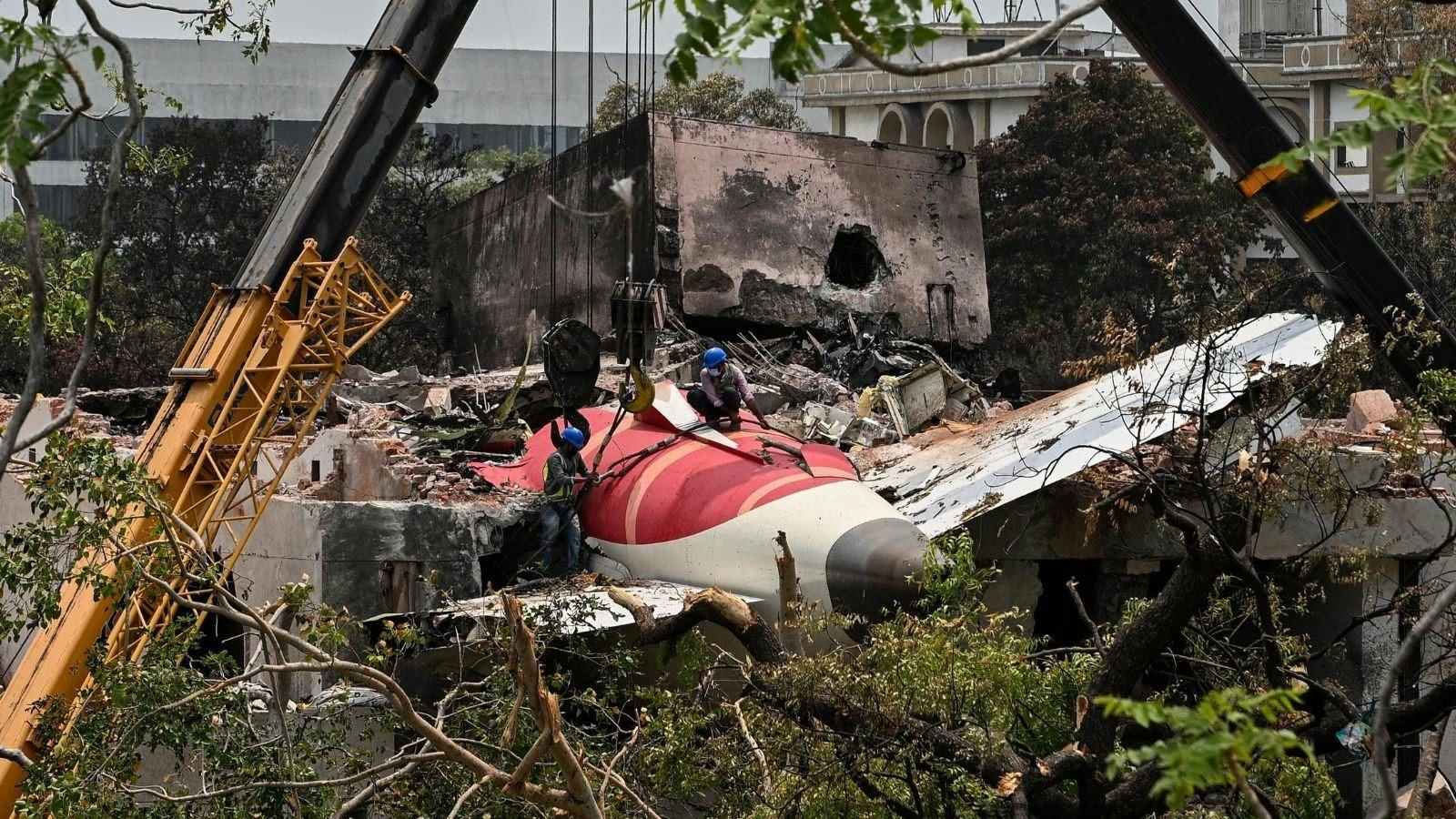
Preliminary Air India Crash Report: Key Findings and Unanswered Questions
The Aircraft Accident Investigation Bureau (AAIB) has published its preliminary report on the Air India AI 171 crash, which resulted in the tragic loss of 261 lives. The initial findings have ruled out earlier theories involving fuel contamination, configuration errors, flap positions, or weight-related issues. Instead, the investigation narrows the cause to a sudden and unexplained fuel supply cutoff, which led to the simultaneous shutdown of both engines within one second.
Cause of the Accident and Technical Details
The AAIB identifies the immediate cause of the accident as twin-engine failure due to fuel starvation. However, the report leaves a critical question unresolved: what initiated the fuel starvation? Investigators discovered that the fuel control switches, which regulate fuel flow to the engines, were moved from the 'run' to the 'cut off' position during a vital phase of the flight. These switches are equipped with a detent mechanism and are spring-loaded to prevent accidental movement, implying that a deliberate action by the pilot would have been necessary to change their position.
Following the engine failures, the flight crew attempted to restart the engines. These efforts were unsuccessful because the aircraft had not attained the required altitude and speed for a safe twin-engine restart. The consequent loss of thrust culminated in a crash landing within a populated area.
Unresolved Questions and Industry Response
The preliminary report raises significant questions regarding whether the movement of the fuel control switches was the result of human error, mechanical malfunction, or another factor. The AAIB has not yet clarified this aspect, leaving a crucial gap in understanding the sequence of events that led to the disaster. The ongoing investigation aims to address these uncertainties.
Market reactions to the report have been varied. Some investors have expressed concern about the potential repercussions for the airline industry, while others remain cautiously optimistic, awaiting further information. Competitor airlines have responded with measured statements, reaffirming their commitment to stringent safety protocols and emphasizing the importance of thorough investigations.
Under Rule 3 of the Aircraft (Investigation of Accidents and Incidents) Rules, 2017, the primary objective of such inquiries is to prevent future accidents rather than to assign blame or liability. The AAIB’s preliminary findings are subject to revision as additional evidence becomes available.
Readers seeking the most current and comprehensive information are advised to follow official investigation updates. The focus remains on uncovering the technical and operational factors behind the crash to improve aviation safety and prevent similar tragedies.

Etihad Airways Suspends Airbus A380 Flights on Key Route

Aditya Birla Group Seeks Approval for Aircraft Leasing in GIFT City

Qatar Airways Highlights Innovation and Connectivity at Arabian Travel Market 2026

Hong Kong's Five-Year Plan Includes Andrew Fan's Aircraft Parts Processing Hub Proposal

ACIA Aero Leasing Delivers ATR72-600 to Air Nostrum

RTX Appoints Jill Albertelli as Head of Pratt & Whitney

TAT Technologies Joins Beyond Aero Hydrogen Aircraft Program

AURAK Study Highlights Barriers to Air Taxi Adoption in Emerging Economies

Xiamen Air Selects Altitude for 787 Maintenance at Heathrow

Etihad and Swissport Extend Global Partnership
