
Trasforma le intuizioni dell’IA in azioni concrete

Tendenze
Categories
Qantas to Replace Airbus A380s with A350s on Los Angeles and Singapore Routes
Qantas to Replace Airbus A380s with A350s on Los Angeles and Singapore Routes
Qantas has announced a significant modernization of its long-haul fleet, planning to replace its iconic Airbus A380 aircraft with the next-generation Airbus A350-1000 on key international routes, including Los Angeles and Singapore, beginning in early 2030. This transition signals a major shift for Australia’s flag carrier as it prepares to gradually retire its fleet of ten double-decker A380-800s, which currently serve major destinations such as Sydney, Singapore, Dallas/Fort Worth, London, and Los Angeles.
Fleet Modernization and Passenger Experience
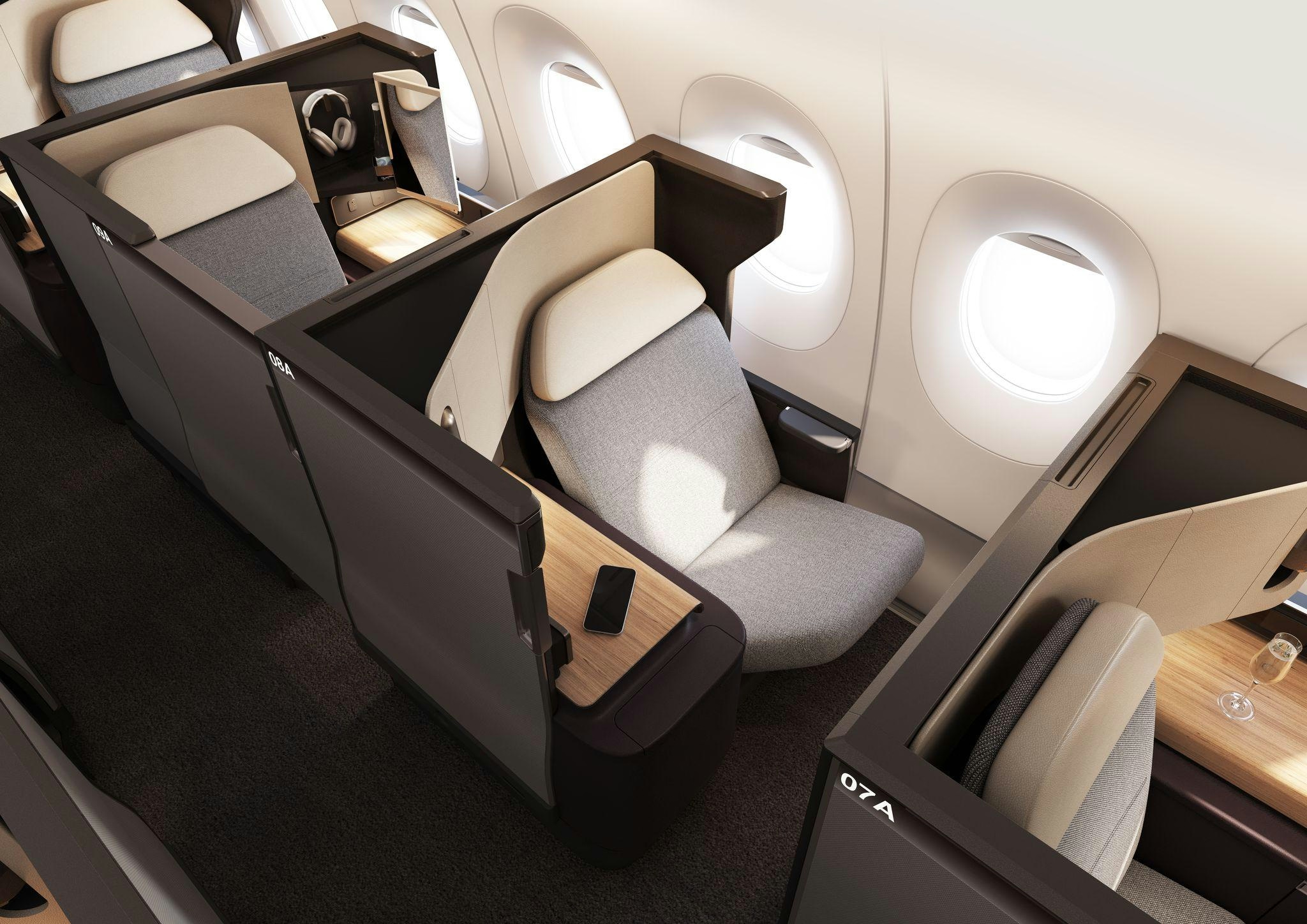
The introduction of the A350-1000 will bring a markedly enhanced onboard experience. The aircraft will be configured to include first-class roomettes, upgraded business class suites, premium economy, and refreshed economy seating. Notably, the A350 will accommodate 238 passengers, less than half the capacity of the A380’s 485 seats. This reduction reflects a strategic emphasis on operational efficiency and premium service rather than sheer capacity. Despite the smaller size, Qantas expects robust demand for the new nonstop services, particularly on routes such as Sydney to London, where both direct and one-stop options will remain available.
Qantas CEO Vanessa Hudson highlighted the importance of offering both nonstop and one-stop flights to London to meet diverse passenger preferences. The A350-1000 is poised to become the airline’s new flagship aircraft, supporting broader ambitions including Project Sunrise, which aims to establish direct connections between Australia’s East Coast and Europe and North America for the first time.
Challenges and Competitive Implications
The transition to the A350 presents operational challenges. Moving from the high-capacity A380 to the smaller A350 may affect market share on competitive routes, placing a premium on operational efficiency. Passenger experience will also be under scrutiny, as the removal of features such as the ‘Wellbeing Zone’—replaced by increased economy seating—could influence customer perceptions. This strategic shift may prompt competitors to enhance their own long-haul offerings or adjust route networks, potentially reshaping the competitive landscape on transpacific and Europe-bound flights.
Broader Fleet Renewal Strategy
Qantas’s fleet renewal extends beyond the A380 replacement. The airline plans to phase out its aging Airbus A330s, currently used on medium- and long-haul routes, replacing them with additional A350-1000s and a new batch of Boeing 787s expected from 2028. These changes align with Qantas’s wider strategy, which also includes the introduction of A321XLRs for domestic and regional operations alongside the ambitious Project Sunrise initiative.
As Qantas prepares for the coming decade, the shift to the A350-1000 underscores its commitment to modernizing its fleet, enhancing passenger comfort, and maintaining a competitive position in the evolving global aviation market. The airline’s success will depend on its ability to balance operational efficiency, customer loyalty, and market positioning throughout this major transition.

Etihad Airways Suspends Airbus A380 Flights on Key Route

Aditya Birla Group Seeks Approval for Aircraft Leasing in GIFT City

Qatar Airways Highlights Innovation and Connectivity at Arabian Travel Market 2026

Hong Kong's Five-Year Plan Includes Andrew Fan's Aircraft Parts Processing Hub Proposal

ACIA Aero Leasing Delivers ATR72-600 to Air Nostrum

RTX Appoints Jill Albertelli as Head of Pratt & Whitney

TAT Technologies Joins Beyond Aero Hydrogen Aircraft Program

AURAK Study Highlights Barriers to Air Taxi Adoption in Emerging Economies

Xiamen Air Selects Altitude for 787 Maintenance at Heathrow

Etihad and Swissport Extend Global Partnership
