
Trasforma le intuizioni dell’IA in azioni concrete

Tendenze
Categories
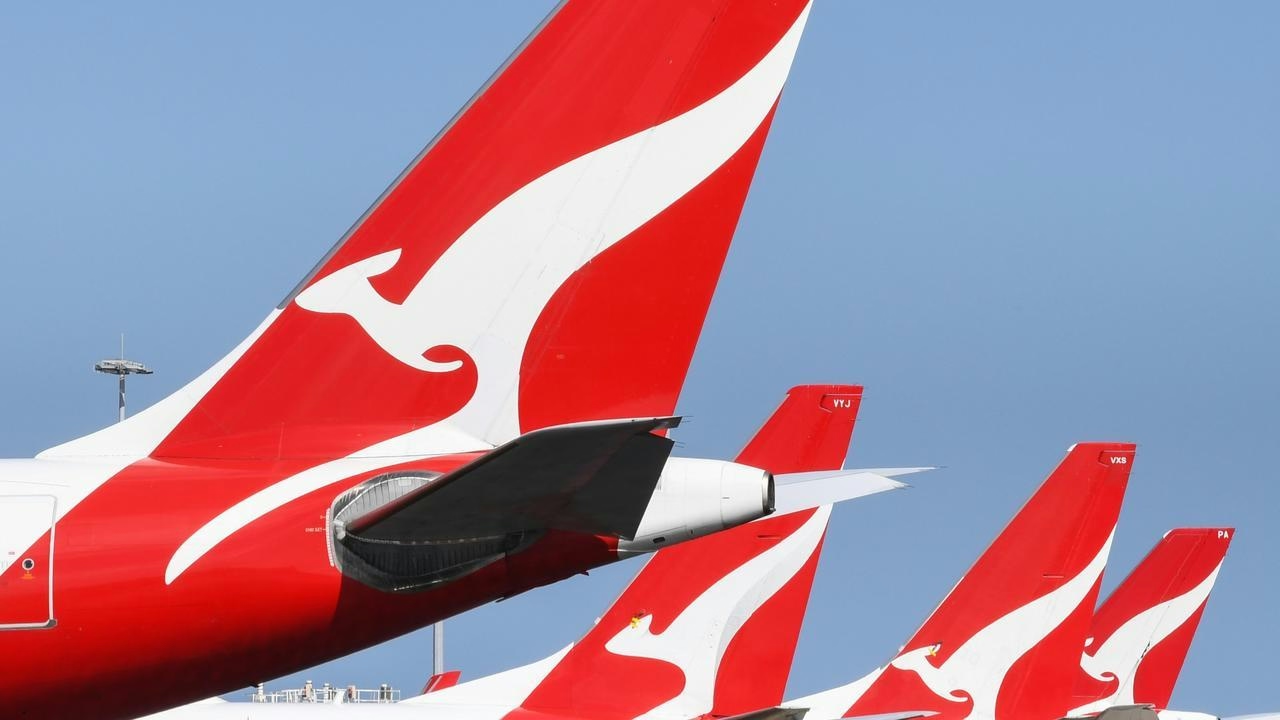
Qantas Uses AI to Improve On-Time Performance and Save $30 Million
Qantas Uses AI to Improve On-Time Performance and Save $30 Million
Enhancing Operational Efficiency Through Artificial Intelligence
Ben Holland, a seasoned veteran with three decades of experience overseeing Qantas’ operations nerve centre in Mascot, describes each day at the airline as “game day.” Central to his focus is the critical interval known as “the turn,” the tightly coordinated period between an aircraft’s landing and its subsequent takeoff. It is within this narrow window that Qantas has deployed artificial intelligence, employing sophisticated algorithms to streamline operations, reduce delays, and enhance on-time performance.
The airline’s investment in AI-driven systems has already produced substantial benefits, with reported savings reaching $30 million. These technologies process vast quantities of operational data in real time, enabling staff to anticipate disruptions, optimise crew and aircraft scheduling, and ensure seamless ground operations. By refining the efficiency of “the turn,” Qantas aims to maintain punctual flights and improve passenger satisfaction, even as the aviation sector contends with increasing pressures.
Navigating Market Challenges Amid Rising Fuel Costs
These technological advancements come at a time of significant market challenges. Escalating fuel prices, intensified by the ongoing conflict in Iran, have compelled Qantas to implement difficult measures. The airline has reduced domestic capacity by five percentage points for the April to June quarter and slowed the growth of international capacity by two percentage points for the July to September period. These adjustments form part of a broader strategy to control costs and preserve profitability amid persistently high fuel expenses.
Qantas’ main domestic competitor, Virgin Australia, has also curtailed its domestic capacity but continues to maintain a stable financial outlook. Meanwhile, Qantas is reallocating some of its capacity towards European routes in an effort to balance demand and offset the impact of rising operational costs.
The industry-wide response to the fuel crisis highlights the critical importance of operational efficiency. For Qantas, the integration of AI extends beyond improving punctuality; it represents a vital instrument for navigating volatile market conditions and sustaining competitiveness. As Holland and his team continue to refine their approach, the airline’s capacity to adapt swiftly and harness technological innovation may prove pivotal in the coming months.

Etihad Airways Suspends Airbus A380 Flights on Key Route

Aditya Birla Group Seeks Approval for Aircraft Leasing in GIFT City

Qatar Airways Highlights Innovation and Connectivity at Arabian Travel Market 2026

Hong Kong's Five-Year Plan Includes Andrew Fan's Aircraft Parts Processing Hub Proposal

ACIA Aero Leasing Delivers ATR72-600 to Air Nostrum

RTX Appoints Jill Albertelli as Head of Pratt & Whitney

TAT Technologies Joins Beyond Aero Hydrogen Aircraft Program

AURAK Study Highlights Barriers to Air Taxi Adoption in Emerging Economies

Xiamen Air Selects Altitude for 787 Maintenance at Heathrow

Etihad and Swissport Extend Global Partnership
