
Trasforma le intuizioni dell’IA in azioni concrete

Tendenze
Categories
Replacing an Engine Quickly
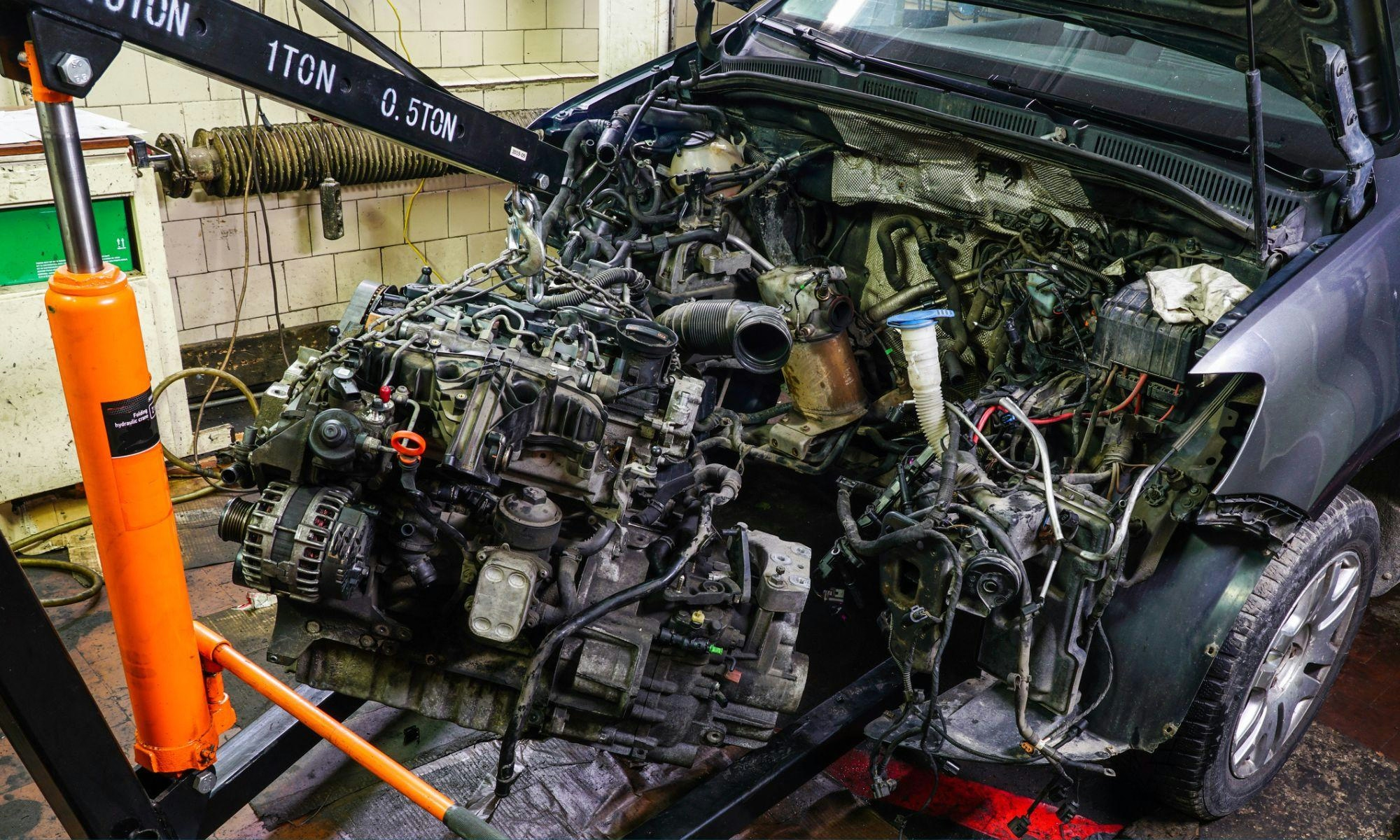
Etihad Airways Breaks Record for Fastest Engine Replacement
Etihad Airways has set a new benchmark in aircraft maintenance by completing the fastest replacement of a GE90 engine. On January 30, the airline’s Technical Maintenance team replaced a GE90-115B engine on a Boeing 777-200LR in an impressive two hours and 13 minutes. This feat significantly surpasses their previous record of under seven hours, established in 2014, underscoring the airline’s commitment to operational excellence and technical expertise.
The Importance and Complexity of Rapid Engine Replacement
This achievement highlights the critical role of swift engine replacements in minimizing aircraft downtime and maintaining stringent flight schedules amid increasing operational demands. However, the process remains highly complex, requiring meticulous engineering and coordination. The aviation sector is simultaneously navigating the challenges posed by emerging propulsion technologies and alternative fuels. For instance, Rolls-Royce’s recent tests of a pure methanol engine illustrate the technical hurdles involved in developing reliable and efficient new injection systems. These innovations demand significant investment in research and development, and their adoption is met with cautious scrutiny by some traditional operators wary of unproven technologies.
Industry Challenges and Market Dynamics
The response to these technological advancements varies across the industry. While some airlines actively pursue sustainable propulsion solutions, others remain hesitant, resulting in uneven adoption rates. Competitors are also accelerating their investments in alternative fuel and propulsion projects, reflecting broader trends similar to those seen in the automotive sector’s transition toward electric and alternative fuel vehicles.
Compounding these challenges are ongoing supply chain disruptions that affect the availability of critical components, including aircraft engines. Delays in the automotive industry, such as those experienced with the rollout of Toyota’s RAV4, exemplify the widespread impact of logistical constraints. Such disruptions pose significant obstacles for airlines striving to maintain rapid turnaround times.
Despite these complexities, Etihad Airways’ record-setting engine replacement exemplifies the potential of a highly skilled workforce combined with streamlined processes. As the aviation industry evolves, the capacity to adapt swiftly—whether through efficient maintenance operations or embracing new technologies—will remain a vital competitive advantage.

Etihad Airways Suspends Airbus A380 Flights on Key Route

Aditya Birla Group Seeks Approval for Aircraft Leasing in GIFT City

Qatar Airways Highlights Innovation and Connectivity at Arabian Travel Market 2026

Hong Kong's Five-Year Plan Includes Andrew Fan's Aircraft Parts Processing Hub Proposal

ACIA Aero Leasing Delivers ATR72-600 to Air Nostrum

RTX Appoints Jill Albertelli as Head of Pratt & Whitney

TAT Technologies Joins Beyond Aero Hydrogen Aircraft Program

AURAK Study Highlights Barriers to Air Taxi Adoption in Emerging Economies

Xiamen Air Selects Altitude for 787 Maintenance at Heathrow

Etihad and Swissport Extend Global Partnership
