
Trasforma le intuizioni dell’IA in azioni concrete

Tendenze
Categories
Rising Aircraft Engine Costs Challenge Airlines
Rising Aircraft Engine Costs Challenge Airlines
Escalating Prices Amid Limited Competition
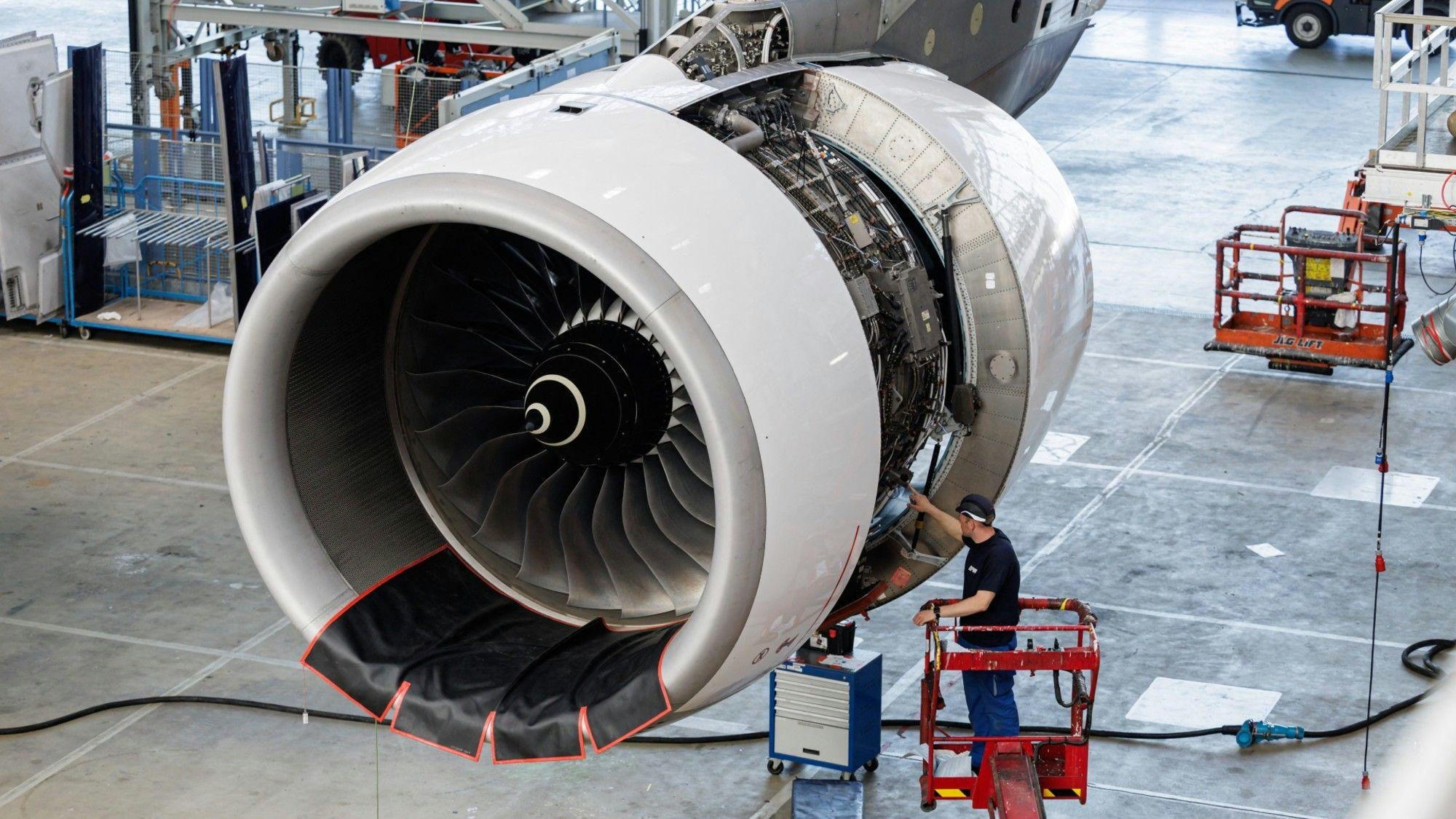
Aircraft engine costs are surging, presenting significant challenges for airlines already contending with robust demand and ongoing supply chain disruptions. Engine manufacturers have come under increasing scrutiny from carriers, who accuse them of price gouging as the rising expenses make acquiring new aircraft progressively less affordable. This issue is exacerbated by the industry's dependence on a small number of engine producers, creating quasi-monopolistic conditions that enable manufacturers to elevate prices with limited competitive pressure.
The transition toward more energy-efficient engines has intensified these dynamics. Advanced engines, which are critical to meeting environmental and performance standards, remain in short supply due to production constraints. This scarcity has driven market values sharply upward, compounding the financial strain on airlines seeking to modernize their fleets.
Financial and Operational Impacts on Airlines
The financial implications are profound. According to aviation finance firm Avolon, the cost of a pair of jet engines can now represent up to 80% of a new aircraft’s total market value, a stark increase from the 20% to 30% share observed two decades ago. Data from aviation consultancy Cirium reveals that leasing two Pratt & Whitney engines reached $400,000 per month in January 2025, surpassing the $306,000 monthly lease cost of an entire Airbus A320neo aircraft.
These rising engine costs coincide with other escalating expenses, notably jet fuel, which is expected to cost airlines an additional $100 billion this year. The International Air Transport Association (IATA) projects that global airline profitability will be halved in 2026 as a result of these surging fuel prices, further pressuring carriers’ financial health.
Operationally, the industry faces mounting difficulties. United Airlines CEO Scott Kirby recently identified engine shortages as the foremost constraint confronting the sector in the near term. Hundreds of A320neo aircraft remain grounded worldwide, awaiting extensive engine inspections and repairs. Airlines report that engines are being removed for maintenance earlier than scheduled, leading to congested repair facilities and undermining the anticipated fuel savings from newer engine models.
Industry Repercussions and Future Outlook
The strain on airlines has also led to contract disputes and canceled orders. United Airlines, for example, canceled its order for Airbus A350 jets following disagreements with Rolls-Royce, the exclusive engine supplier for that model. Additionally, supply chain failures across the aviation sector resulted in losses exceeding $11 billion in 2025, a trend expected to continue into the coming year.
As the global aviation industry grapples with these intertwined challenges, the rising cost and limited availability of aircraft engines remain a critical and unresolved issue, shaping the operational and financial landscape for airlines worldwide.

Etihad Airways Suspends Airbus A380 Flights on Key Route

Aditya Birla Group Seeks Approval for Aircraft Leasing in GIFT City

Qatar Airways Highlights Innovation and Connectivity at Arabian Travel Market 2026

Hong Kong's Five-Year Plan Includes Andrew Fan's Aircraft Parts Processing Hub Proposal

ACIA Aero Leasing Delivers ATR72-600 to Air Nostrum

RTX Appoints Jill Albertelli as Head of Pratt & Whitney

TAT Technologies Joins Beyond Aero Hydrogen Aircraft Program

AURAK Study Highlights Barriers to Air Taxi Adoption in Emerging Economies

Xiamen Air Selects Altitude for 787 Maintenance at Heathrow

Etihad and Swissport Extend Global Partnership
