
Trasforma le intuizioni dell’IA in azioni concrete

Tendenze
Categories
Russian Airline Izhavia Grounded Over Safety Concerns
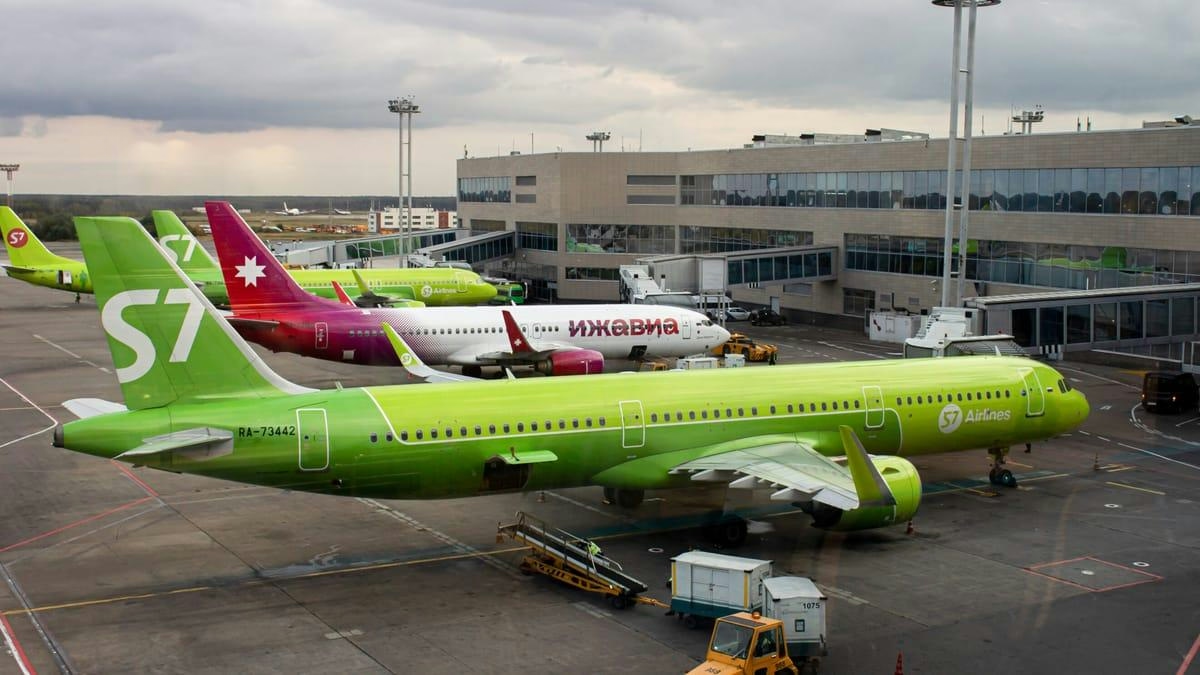
Russian Airline Izhavia Grounded Over Safety Concerns
Russian aviation authorities have revoked the air operator’s certificate of Izhavia, effectively grounding the regional carrier due to significant safety violations. The federal air transport regulator, Rosaviatsia, announced the suspension following inspections conducted in April that uncovered serious breaches in maintenance procedures and crew scheduling. The suspension will take effect on 1 August, rendering Izhavia unable to operate commercial flights.
Background and Inspection Findings
Izhavia, headquartered in Izhevsk—the capital of the Udmurt republic located between Kazan and Ekaterinburg—operates flights to major Russian cities including Moscow, St Petersburg, and Ekaterinburg. Its fleet comprises Boeing 737-800 and Yakovlev Yak-42 aircraft. Established in 1944 and wholly owned by the Udmurt republic, the airline also manages a tour company, an airport, and a technical division.
Rosaviatsia’s inspections revealed that certain aircraft were cleared for flight without completing all mandatory maintenance checks. The regulator further identified deficiencies in Izhavia’s safety-management system and violations of duty-time regulations affecting both crew and technical staff. Despite directives to conduct a comprehensive internal audit and rectify these issues, Izhavia failed to implement the necessary corrective measures within the stipulated timeframe.
Broader Industry Context and Market Response
The grounding of Izhavia occurs amid broader challenges facing Russia’s aviation sector. The industry is contending with systemic difficulties in maintaining airworthiness, largely due to reliance on aging fleets and obstacles in procuring aircraft engines, certified spare parts, and qualified maintenance personnel. These challenges have been intensified by Western sanctions, raising concerns about the long-term viability of Russia’s commercial aviation. Analysts warn that the country’s fleet could contract by more than half by 2026.
Market reactions to Izhavia’s suspension have been measured, with investors closely monitoring potential repercussions for the sector. Competing airlines such as Aeroflot, S7 Airlines, Red Wings, and Nordwind have reaffirmed their commitment to safety standards and pledged to accommodate passengers affected by Izhavia’s grounding. Approximately 46,000 tickets remain valid for travel through early February 2025, and Izhavia has indicated that flights will be transferred to partner carriers. The airline has committed to fulfilling its obligations to passengers until all transportation issues are resolved.
Roman Efimov, chair of the Udmurt republic government, described the suspension as a “necessary measure” that will enable Izhavia to reorganize and enhance its safety practices. This development highlights the ongoing struggle within Russia’s aviation industry to maintain safety standards amid tightening restrictions and operational challenges.

Hong Kong's Five-Year Plan Includes Andrew Fan's Aircraft Parts Processing Hub Proposal

ACIA Aero Leasing Delivers ATR72-600 to Air Nostrum

RTX Appoints Jill Albertelli as Head of Pratt & Whitney

TAT Technologies Joins Beyond Aero Hydrogen Aircraft Program

AURAK Study Highlights Barriers to Air Taxi Adoption in Emerging Economies

Xiamen Air Selects Altitude for 787 Maintenance at Heathrow

Etihad and Swissport Extend Global Partnership

Sepehran Airlines B737 Returns to Mashhad After Tyre and Engine Issues

Etihad Deploys Widebody Fleet to Meet Strong Demand

Korean Air Finalizes $36.2 Billion Deal with Boeing
